Chittaranjan Ray – författare
506 kr
Skickas inom 10-15 vardagar
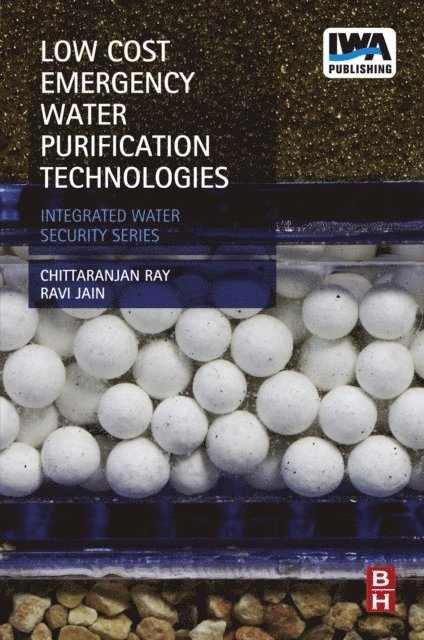
Natural disasters, tornadoes, hurricanes, and floods are occurring with increasing frequency. In emergencies, pure drinking water is quickly the most important item. Low Cost Emergency Water Purification Technologies provides the tips and techniques for supplying potable drinking water at low cost in the direst circumstances.
Succinct and readable, this manual describes the various options for correcting unsanitary or unsatisfactory drinking water. Several treatment methods for contaminated water are reviewed and the pros and cons of each are discussed.
Covers long-term technologies including sand filtration, packaged filtration units, pressurized filtration systems and natural filtration Addresses short-term strategies such as reverse osmosis-based filtration, cartridge filtration systems, and solar pasteurizations systems Describes disinfection systems, energy-saving applications, cost considerations and HA/DR applications636 kr
Läs direkt efter köp
2 151 kr
Skickas inom 10-15 vardagar
730 kr
Läs direkt efter köp
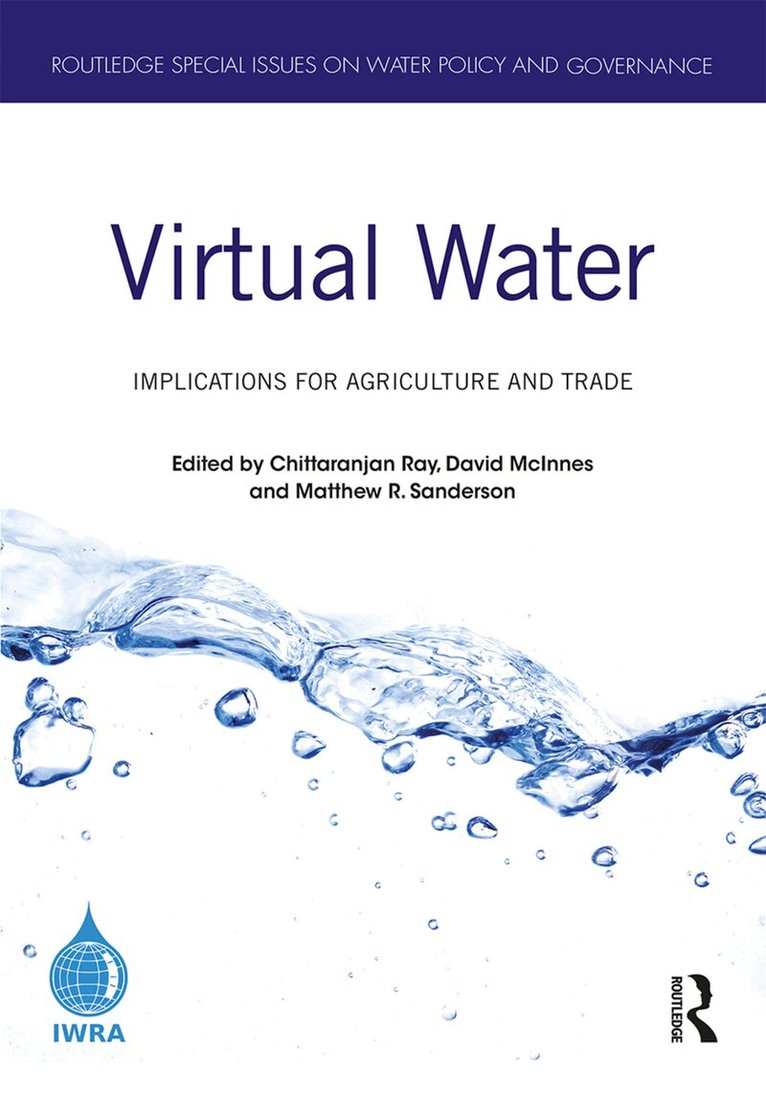
Virtual Water explores the role of "virtual water" – the water embedded in a product – in ongoing conversations of agriculture, trade and sustainability in an increasingly inter-connected world.
A pervasive theme throughout the book is the general lack of knowledge of the use of water in producing and consuming food. The chapters, arising from a workshop supported by the OECD Co-operative Research Programme: Biological Resources Management for Sustainable Agricultural Systems, on virtual water, agriculture and trade at the University of Nebraska-Lincoln, consider questions of gaps in knowledge, why sustainability matters and the policy implications of virtual water trade. Contributors show how water is a lens through which to examine an array of vital issues facing humanity and the planet: human and animal health; food production; environmental management; resource consumption; climate change adaptation and mitigation; economic development, trade and competitiveness; and ethics and consumer trust.
Virtual Water will be of great interest to scholars of water, resource management and consumption, the environmental aspects of development, agriculture and food production.
It originally published as a special issue of Water International.
730 kr
Läs direkt efter köp
Virtual Water explores the role of "virtual water" – the water embedded in a product – in ongoing conversations of agriculture, trade and sustainability in an increasingly inter-connected world.
A pervasive theme throughout the book is the general lack of knowledge of the use of water in producing and consuming food. The chapters, arising from a workshop supported by the OECD Co-operative Research Programme: Biological Resources Management for Sustainable Agricultural Systems, on virtual water, agriculture and trade at the University of Nebraska-Lincoln, consider questions of gaps in knowledge, why sustainability matters and the policy implications of virtual water trade. Contributors show how water is a lens through which to examine an array of vital issues facing humanity and the planet: human and animal health; food production; environmental management; resource consumption; climate change adaptation and mitigation; economic development, trade and competitiveness; and ethics and consumer trust.
Virtual Water will be of great interest to scholars of water, resource management and consumption, the environmental aspects of development, agriculture and food production.
It originally published as a special issue of Water International.
625 kr
Skickas inom 10-15 vardagar
1 619 kr
Skickas inom 10-15 vardagar
1 321 kr
Skickas
1 667 kr
Skickas inom 10-15 vardagar
2 036 kr
Läs direkt efter köp
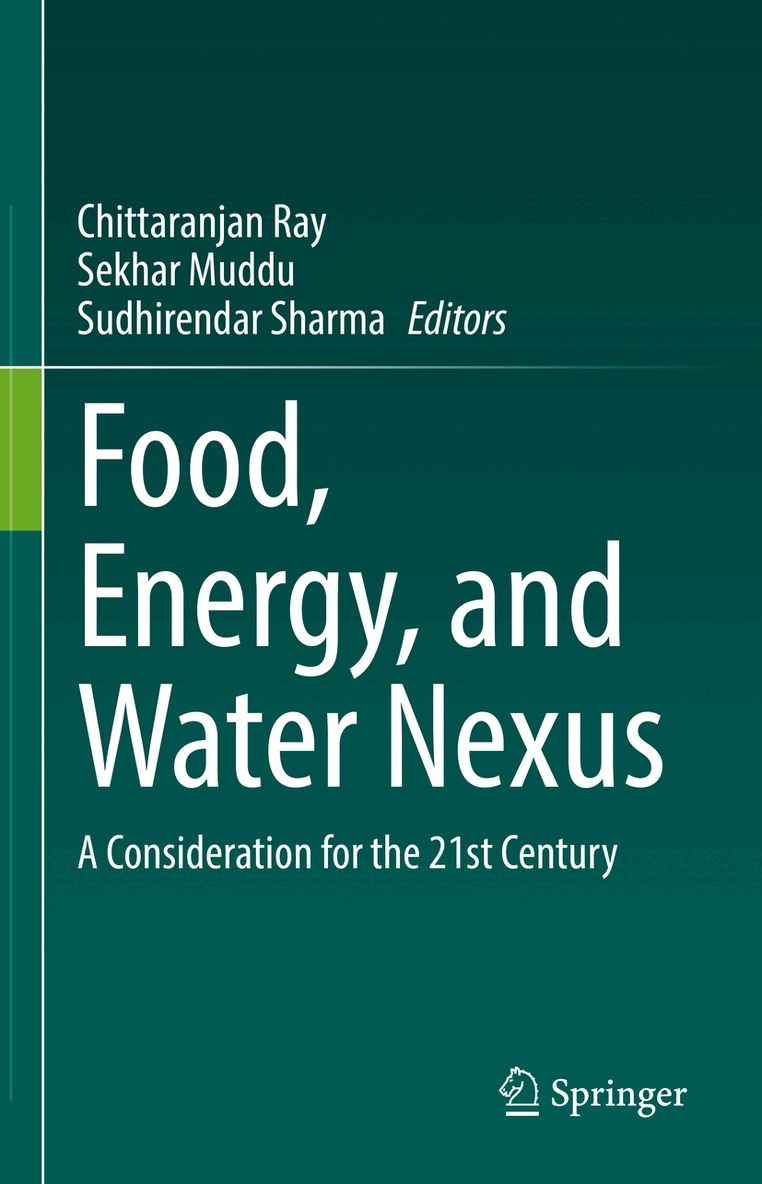
In this book, major issues surrounding importance of water and energy for food security in the United States and India are described representing two extremes in yield, irrigation efficiency, and automation. The farming systems in these two countries face different risks in terms of climatic shifts and systems’ resiliency to handle the shocks. One may have comparative advantage over the other, but both are susceptible. Innovations in irrigation for food and fuel production, improvements in nitrogen and water use efficiency, and rural sociological issues are discussed here. We also look into some of the unintended consequences of high productivity agriculture in terms of surface and ground water quality and impacts on ecosystem services. Finally, we present ways to move forward to meet the food demands in the next half-century in both countries.
As the current world population of 7 billion is expected to reach or exceed 10 billion in the next 40 years, there will be significant additional demand for food. A rising middle class and its preference for a meat-based diet also increases the demand for animal feed. This additional food and feed production needs special considerations in water and energy management besides the development of appropriate crop hybrids to withstand future climatic shifts and other environmental factors. A resilient agricultural landscapes will also be needed to withstand climatic fluctuations, disease pressures, etc.
While the upper and many middle income countries have made significant improvements in crop yield due to pressurized irrigation and automation in farming systems, the lower income countries are struggling with yield enhancements due to such limitations. The rise in population is expected to be more in Sub-Sharan Africa and Middle East (Low to middle-income countries) where the crop yields are expected to be low.
1 667 kr
Skickas inom 10-15 vardagar
2 138 kr
Skickas inom 10-15 vardagar
2 765 kr
Läs direkt efter köp
2 138 kr
Skickas inom 10-15 vardagar
1 073 kr
Skickas inom 10-15 vardagar
1 367 kr
Läs direkt efter köp
Sustainable technologies for water supply are urgently needed if water has to be supplied to billions of less fortunate people with inadequate access to water. These technologies must be simple, less expensive, less energy intensive, and easy to maintain for their adaptation among the poor masses.
Four appropriate technologies are discussed here: solar pasteurization, membrane desalination, natural filtration (riverbank filtration), and solar distillation. Solar pasteurization can be a useful means of producing water at remote, but sunny locations where fuel may not be easily available for boiling water. Membrane desalination will remain as a viable means of drinking water production for individual households to large communities. Various membrane filtration techniques as well as the means to “democratize” membrane filtration have been presented. Riverbank filtration is a “natural” filtration technique where drinking water is produced by placing wells on the banks of rivers. The riverbed/bank material and the underlying aquifer act as natural filters to remove pollutants from river water. Solar distillation can be a viable method of drinking water production for individual households to small communities without the input of external energy. Sustainability framework and technology transfer are discussed through transdisciplinary analysis.
1 501 kr
Skickas inom 10-15 vardagar