
Chris Czerkawski – författare
Visar alla böcker från författaren Chris Czerkawski. Handla med fri frakt och snabb leverans.
2 produkter
2 produkter
Häftad, Engelska, 1991
1 113 kr
Skickas inom 10-15 vardagar
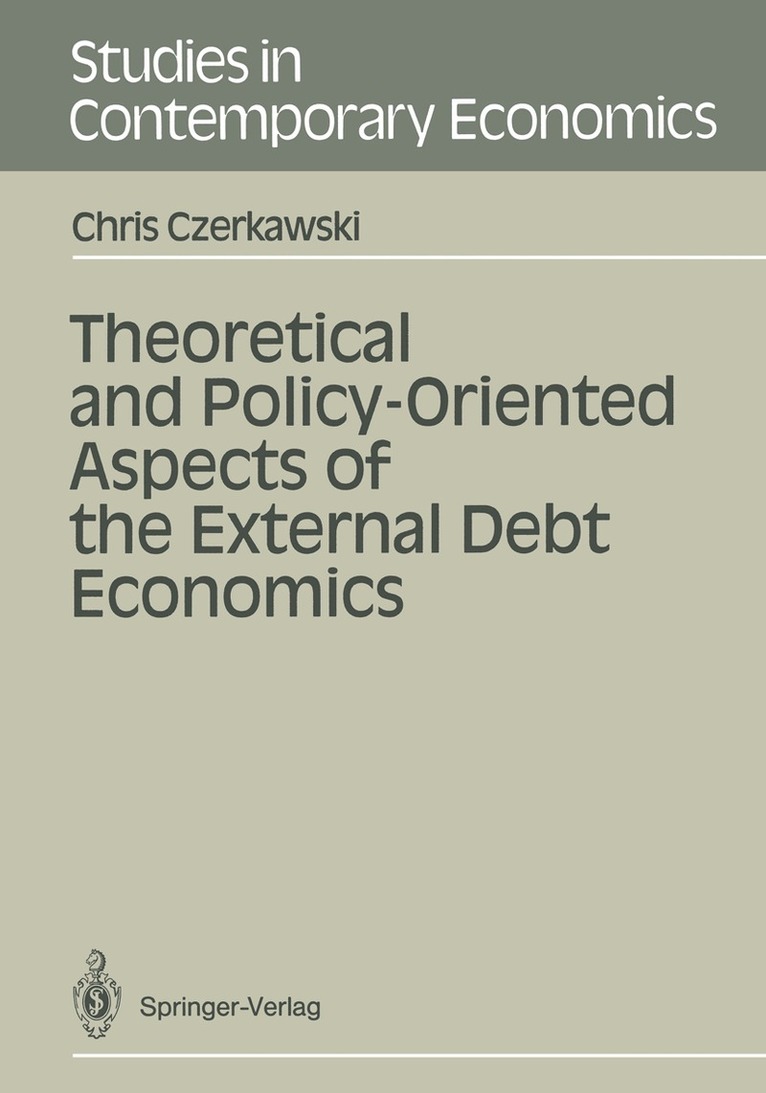
The past approach to the international debt crisis has been traditionally based on conventional banking principle in which debt had to be paid back in fuH and in time. International lending was a function of the perceived credit standing of debtor country and the return on investment (ROI). If debtor country run into difficulties and had problems with service payments - it was generally assumed that the debt-related expenditures were mismanaged. With economic stability and firm financial rules - the debt crisis was supposed to disappear after application of appropriate adjustment measures. However in the world of inconsistent lending criteria greater uncertainty and increased volatility of expectations - the problem has continued to get worse. At the beginning of the 1990s a number of countries are more indebted than at any other time in the past. Until mid 1980s extern al debt economics has been rather a disembodied concept for most economists and business leaders. The main reason for this neglect of one of the most important macroeconomic categories was difficulty of distinguishing terminologically and methodologically the domestic determinants of national expenditures from the external ones. Then there were conceptual problems in distinguishing the functional determinants of macroeconomic liquidity from external and domestic determinants of macro-economic solvency. Moreover many studies of the debt crisis were one-sided. Usually debt was seen as a 'white-black' phenomenon with debtor countries accusing creditor countries for causing the crisis and vice versa.
E-bok
PDF, Engelska, 20121 459 kr
Läs direkt efter köp
The past approach to the international debt crisis has been traditionally based on conventional banking principle in which debt had to be paid back in fuH and in time. International lending was a function of the perceived credit standing of debtor country and the return on investment (ROI). If debtor country run into difficulties and had problems with service payments - it was generally assumed that the debt-related expenditures were mismanaged. With economic stability and firm financial rules - the debt crisis was supposed to disappear after application of appropriate adjustment measures. However in the world of inconsistent lending criteria greater uncertainty and increased volatility of expectations - the problem has continued to get worse. At the beginning of the 1990s a number of countries are more indebted than at any other time in the past. Until mid 1980s extern al debt economics has been rather a disembodied concept for most economists and business leaders. The main reason for this neglect of one of the most important macroeconomic categories was difficulty of distinguishing terminologically and methodologically the domestic determinants of national expenditures from the external ones. Then there were conceptual problems in distinguishing the functional determinants of macroeconomic liquidity from external and domestic determinants of macro-economic solvency. Moreover many studies of the debt crisis were one-sided. Usually debt was seen as a ''white-black'' phenomenon with debtor countries accusing creditor countries for causing the crisis and vice versa.