Christian de Quincey – författare
Visar alla böcker från författaren Christian de Quincey. Handla med fri frakt och snabb leverans.
5 produkter
5 produkter
Häftad, Engelska, 2008
229 kr
Skickas inom 5-8 vardagar
E-bok
Engelska, 2016168 kr
Läs direkt efter köp
''Confessions of an English Opium-Eater'' (1821) is an autobiographical account written by Thomas De Quincey, about his laudanum (opium and alcohol) addiction and its effect on his life. The ''Confessions'' was the first major work De Quincey published and the one which won him fame almost overnight.
E-bok
Engelska, 2005219 kr
Läs direkt efter köp
A radical reassessment of what we mean by "consciousness" and how we experience it in relation to others • Shows the importance of integrating different ways of knowing--such as feeling and intuition, reason and the senses--in our approach to life • Discusses the technique of Bohmian Dialogue where you can learn not only to "feel your thinking," but also to experience true communion with others In Radical Knowing Christian de Quincey makes a provocative claim: We are not who we think we are. Instead, we are what we feel. Giving disciplined attention to feelings reveals the most fundamental fact of life and reality: We are our relationships. Most of us think we are individuals first and foremost who then come together to form relationships. De Quincey turns this "obvious fact" on its head and shows that relationship comes first, and that our individual sense of self--our "private" consciousness--actually arises from shared consciousness. This shared, collective consciousness is at the heart of indigenous ways of life and their worldviews. De Quincey explains that participating in shared consciousness literally builds the fabric of reality, and that understanding this process is key to unlocking our potential for higher consciousness and spiritual evolution. He presents the technique of Bohmian Dialogue, developed by groundbreaking quantum physicist David Bohm, as one method for experiencing this powerful process. He also explores the mystery of synchronicity, offering a new understanding of the relationship between matter and mind and the underlying nature of reality.
E-bok
Engelska, 2010160 kr
Läs direkt efter köp
An exploration of consciousness in all matter--from quantum to cosmos • Outlines theories of consciousness in ancient and modern philosophy from before Plato to Alfred North Whitehead • Reveals the importance of understanding mind-in-matter for our relationships with the environment, with other people, even with ourselves Are rocks conscious? Do animals or plants have souls? Can trees feel pleasure or pain? Where in the great unfolding of life did consciousness first appear? How we answer such questions can dramatically affect the way we live our lives, how we treat the world of nature, and even how we relate to our own bodies. In this new edition of the award-winning Radical Nature, Christian de Quincey explores the “hard problem” of philosophy--how mind and matter are related--and proposes a radical and surprising answer: that matter itself tingles with consciousness at the deepest level. It’s there in the cells of every living creature, even in molecules and atoms. Tracing the lineage of this idea through Western philosophy and science, he shows that it has a very noble history--from before Plato to Alfred North Whitehead. He reveals that the way to God is through nature and that understanding how body and soul fit together has surprising consequences for our relationships with our environment, with other people, and even with ourselves.
E-bok
Engelska, 2015160 kr
Läs direkt efter köp
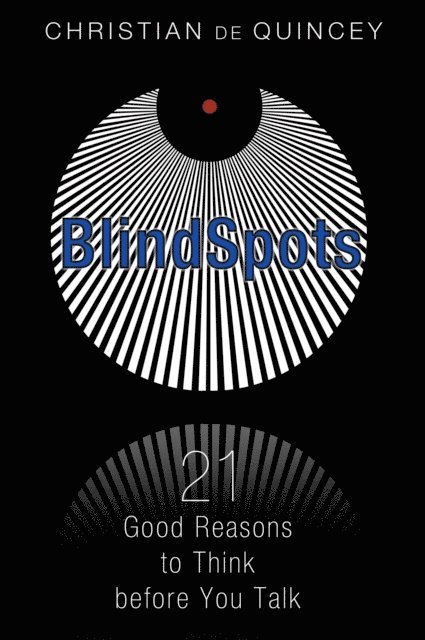
Examines 21 unquestioned assumptions that cloud our collective consciousness • Reveals faulty thinking and conceptual blindspots that distort beliefs in science, philosophy, and spirituality--from “the universe exploded from nothing in a Big Bang” to “we create our own reality” • Explains how “thought viruses” spread as we use these clichéd assumptions in our daily communications We live in a world filled with clichés--convenient assumptions and unquestioned conclusions that many of us use without giving them a second thought. We all spread these “thought viruses,” infecting everyone we come in contact with. But many of these blindspots in how we think about ourselves and the world do not withstand rigorous scrutiny--or even casual scrutiny in some cases--yet they fall out of the mouths of scientists, religious teachers, journalists, and authors with dumbfounding frequency. Over the years philosopher Christian de Quincey spotted these cognitive gremlins in books, blogs, websites, TV shows, movies, classrooms, and casual conversations--and he wondered: Why do so many people speak before thinking, spreading ideas that make no sense, yet fool us into thinking they do? How did these unquestioned beliefs about life, space, time, energy, consciousness, evolution, artificial intelligence, and even God take hold in our collective consciousness? In this book, de Quincey deliberately provokes and illuminates the dark side of jumping to conclusions, casting a skeptical eye on 21 beliefs that keep science, philosophy, and spirituality in the dark--from “the universe exploded from nothing in a Big Bang” and “we create our own reality” to “nobody knows what consciousness is” and “everything is energy.” These ideas distort and block our understanding and openness to important questions about life, the universe, mind, matter, God, and the miraculous. By exposing these thought viruses that take our minds hostage when we fail to think things through, de Quincey aims to help change the way we think not just about thinking but also about how we live our lives, interact with others, and contemplate the world around us.