Christian Ghymers - Böcker
Visar alla böcker från författaren Christian Ghymers. Handla med fri frakt och snabb leverans.
3 produkter
3 produkter
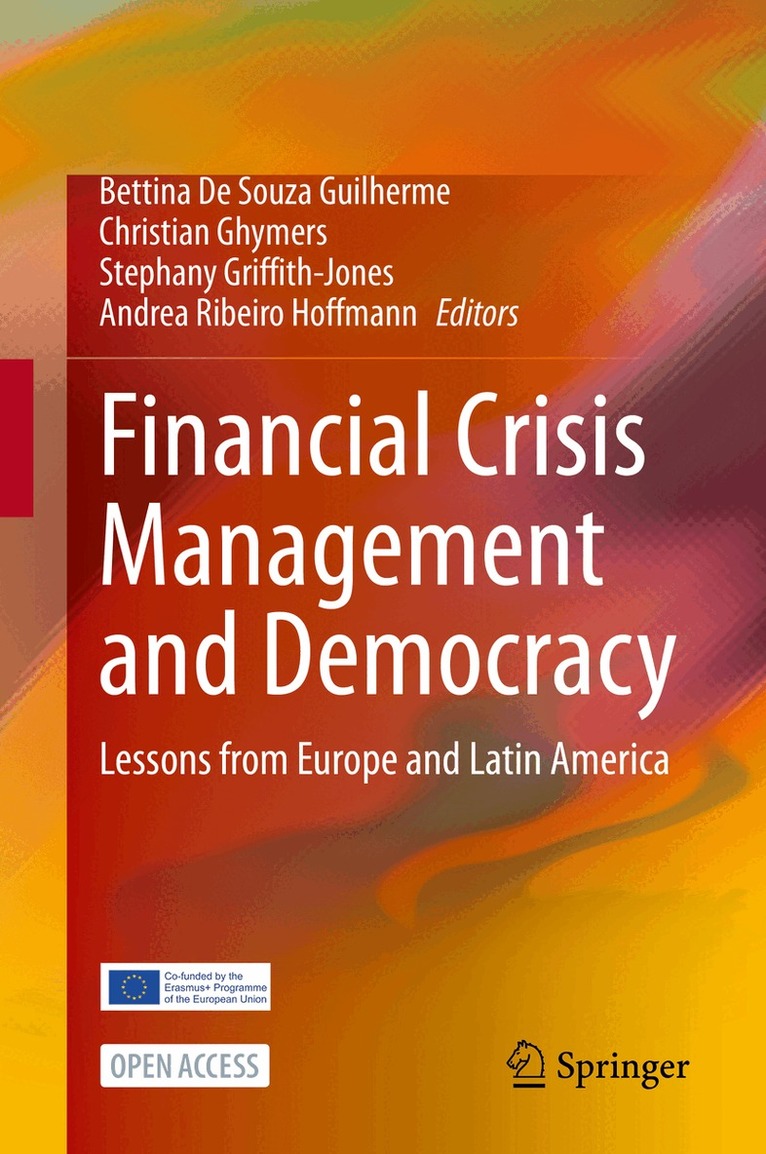
Financial Crisis Management and Democracy
Lessons from Europe and Latin America
Inbunden, Engelska, 2020
552 kr
Skickas inom 10-15 vardagar
This open access book discusses financial crisis management and policy in Europe and Latin America, with a special focus on equity and democracy. Based on a three-year research project by the Jean Monnet Network, this volume takes an interdisciplinary, comparative approach, analyzing both the role and impact of the EU and regional organizations in Latin America on crisis management as well as the consequences of crisis on the process of European integration and on Latin America’s regionalism.The book begins with a theoretical introduction, exploring the effects of the paradigm change on economic policies in Europe and in Latin America and analyzing key systemic aspects of the unsustainability of the present economic system explaining the global crises and their interconnections. The following chapters are divided into sections. The second section explores aspects of regional governance and how the economic and financial crises were managed on a macro level in Europe and Latin America. The third and fourth sections use case studies to drill down to the impact of the crises at the national and regional levels, including the emergence of political polarization and rise in populism in both areas. The last section presents proposals for reform, including the transition from finance capitalism to a sustainable real capitalism in both regions and at the inter-regional level of EU-LAC relations.The volume concludes with an epilogue on financial crises, regionalism, and domestic adjustment by Loukas Tsoukalis, President of the Hellenic Foundation for European and Foreign Policy (ELIAMEP).Written by an international network of academics, practitioners and policy advisors, this volume will be of interest to researchers and students interested in macroeconomics, comparative regionalism, democracy, and financial crisis management as well as politicians, policy advisors, and members of national and regional organizations in the EU and Latin America.
Financial Crisis Management and Democracy
Lessons from Europe and Latin America
Häftad, Engelska, 2022
588 kr
Skickas inom 10-15 vardagar
This open access book discusses financial crisis management and policy in Europe and Latin America, with a special focus on equity and democracy. Based on a three-year research project by the Jean Monnet Network, this volume takes an interdisciplinary, comparative approach, analyzing both the role and impact of the EU and regional organizations in Latin America on crisis management as well as the consequences of crisis on the process of European integration and on Latin America’s regionalism.The book begins with a theoretical introduction, exploring the effects of the paradigm change on economic policies in Europe and in Latin America and analyzing key systemic aspects of the unsustainability of the present economic system explaining the global crises and their interconnections. The following chapters are divided into sections. The second section explores aspects of regional governance and how the economic and financial crises were managed on a macro level in Europe and Latin America. The third and fourth sections use case studies to drill down to the impact of the crises at the national and regional levels, including the emergence of political polarization and rise in populism in both areas. The last section presents proposals for reform, including the transition from finance capitalism to a sustainable real capitalism in both regions and at the inter-regional level of EU-LAC relations.The volume concludes with an epilogue on financial crises, regionalism, and domestic adjustment by Loukas Tsoukalis, President of the Hellenic Foundation for European and Foreign Policy (ELIAMEP).Written by an international network of academics, practitioners and policy advisors, this volume will be of interest to researchers and students interested in macroeconomics, comparative regionalism, democracy, and financial crisis management as well as politicians, policy advisors, and members of national and regional organizations in the EU and Latin America.
Del 34 - United Nations University Series on Regionalism
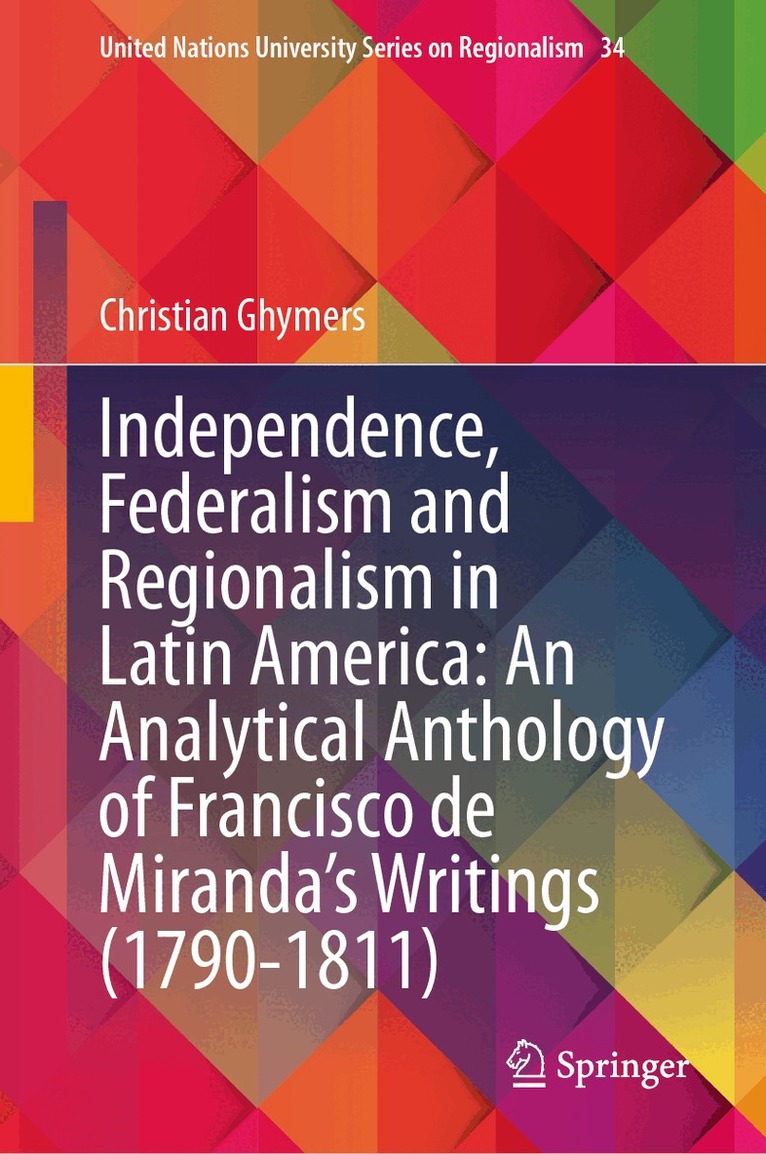
Independence, Federalism and Regionalism in Latin America: An Analytical Anthology of Francisco de Miranda’s Writings (1790-1811)
An Analytical Anthology of Francisco de Miranda’s Writings (1790-1811)
Inbunden, Engelska, 2025
1 473 kr
Skickas inom 10-15 vardagar
This book analyses the constitutional and political thinking of Venezuelan war general and political visionary, Francisco de Miranda (1750-1816). It unravels Miranda's emancipatory ideas that were hidden or discarded by local or doctrinal oligarchic interests, and which were not correctly perceived by most historians. The book presents Miranda’s political texts (constitutional projects, pamphlets, proclamations, publications, letters) in detail in their respective contexts with analytical commentaries. It rescues the philosophy of an atypical revolutionary and singular hero who proposed an original synthesis of Anglo-Saxon, French and Indigenous cultures. It showcases the farsightedness of Miranda’s projects for a federal constitution found in current principles of geographical subsidiarity, pre-empting the work of the European Union: strong federal powers but strictly limited to external defence/diplomacy, economic and monetary union, and human rights, while other policies remain decentralized for efficiency and to protect local identities. Miranda’s draft constitutions for Spanish America and Brazil show his belief in a new legal-institutional framework rooted in local and indigenous institutions and cultures, which would warrant regional, social and racial integration, which in turn was necessary to transform political independence into lasting emancipation and sustainable socioeconomic development.Written in a crucial period of revolutions and wars that shaped the Western world, Miranda’s work remains nonetheless very relevant in alleviating profound difficulties of governability, not only for Latin America and the stagnation of its regional integration but also for a globalized world and the socio-political challenge of multicultural societies. This important book appeals to a broad readership, including historians, policymakers, political scientists and constitutionalists, Latin America experts, and experts on regional integration.