Christine Oughton – författare
Visar alla böcker från författaren Christine Oughton. Handla med fri frakt och snabb leverans.
13 produkter
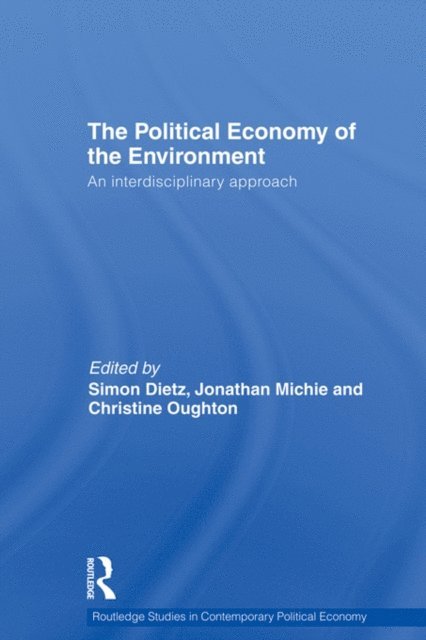
Political Economy of the Environment
An Interdisciplinary Approach
Av Simon Dietz, Jonathan Michie m. fl.
Inbunden, 2011
2588 kr
Lägg i varukorg
This book is the culmination of several years work by a group of academics, policy-makers and other professionals looking to understand how alternative economic thinking – and indeed thinking from quite different social-scientific disciplines – could enhance the mainstream economic approach to …
Changing Face of the Football Business
Supporters Direct
Av Sean Hamil, Jonathan Michie m. fl.
Inbunden, 2000
1883 kr
Lägg i varukorg
This examination of changes taking place in the world of football focuses on its growing commercialization. It covers such topics as fans becoming shareholders, with a say in the running of the clubs, and the setting-up of a government-sponsored scheme to support shareholder trusts.
Changing Face of the Football Business
Supporters Direct
Av Sean Hamil, Jonathan Michie m. fl.
Häftad, 2000
562 kr
Lägg i varukorg
This examination of changes taking place in the world of football focuses on its growing commercialization. It covers such topics as fans becoming shareholders, with a say in the running of the clubs, and the setting-up of a government-sponsored scheme to support shareholder trusts.
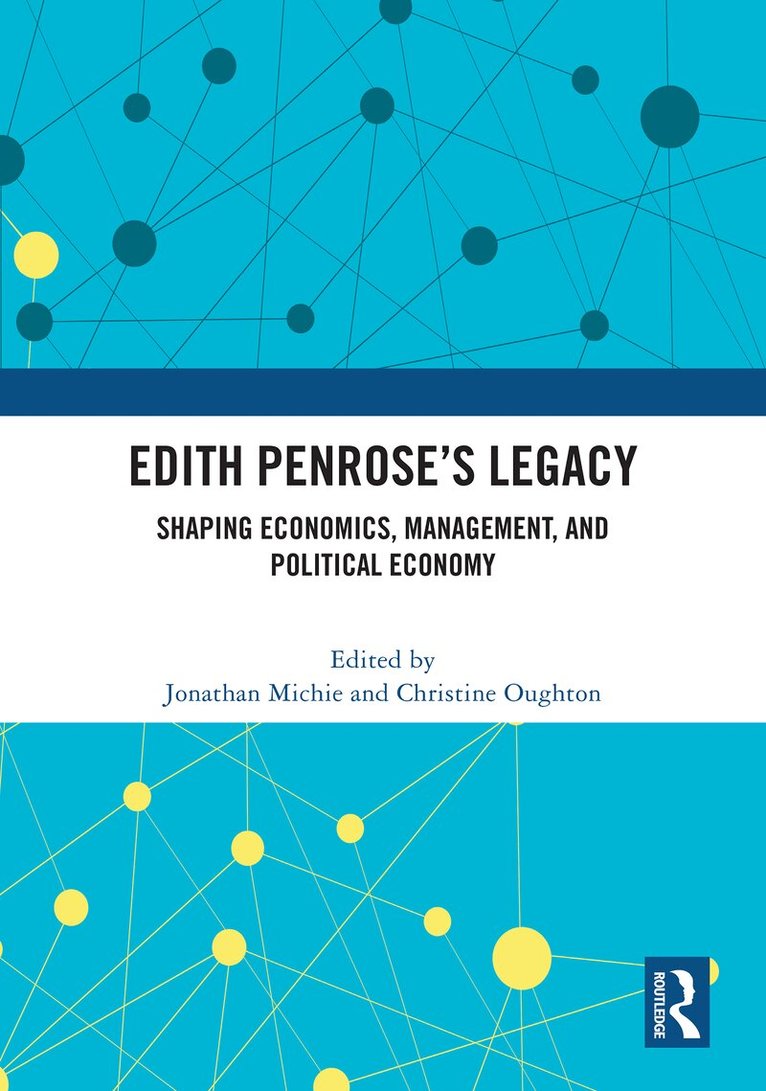
Edith Penrose’s Legacy
Shaping Economics, Management, and Political Economy
Av Jonathan Michie, Christine Oughton
Inbunden, 2025
2588 kr
Lägg i varukorg
Edith Penrose is best known for The Theory of the Growth of the Firm, originally published in 1959, but she made major contributions in other fields, including patents, the oil industry, and development economics. This book explores her work and legacy, not just on economics – she was the founding …
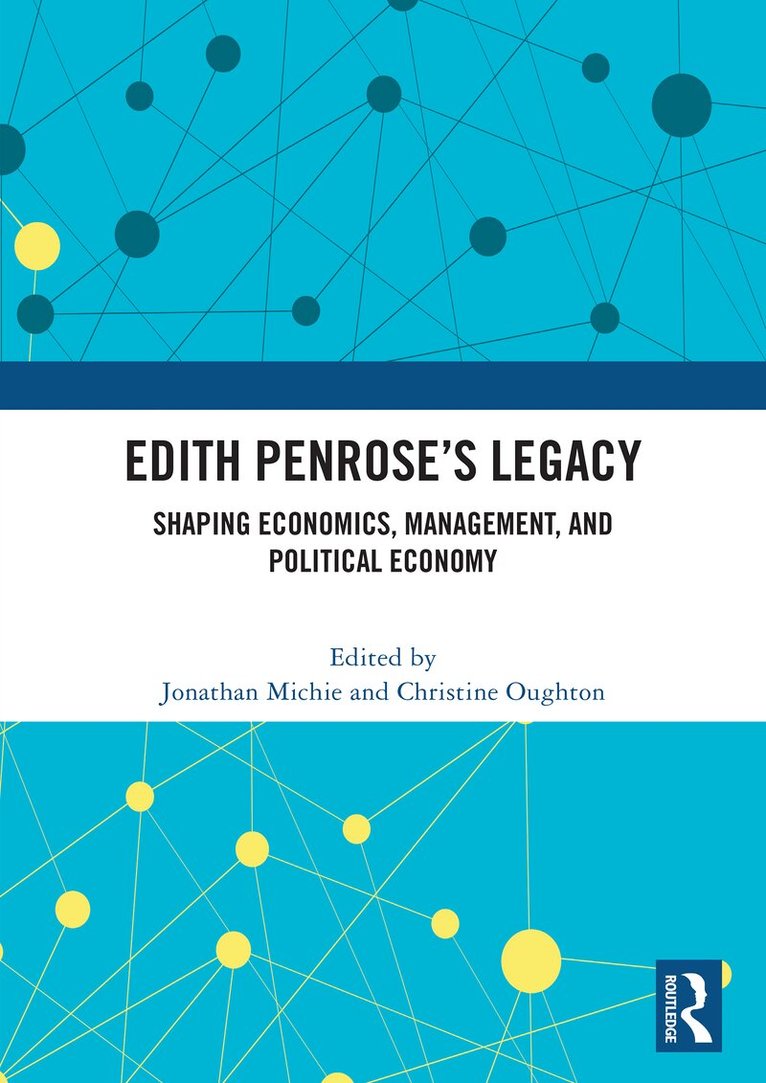
Edith Penrose’s Legacy
Shaping Economics, Management, and Political Economy
Av Jonathan Michie, Christine Oughton
Häftad, 2026
727 kr
Lägg i varukorg
Edith Penrose is best known for The Theory of the Growth of the Firm, originally published in 1959, but she made major contributions in other fields, including patents, the oil industry, and development economics. This book explores her work and legacy, not just on economics – she was the founding …
Edith Penrose's Legacy
Shaping Economics, Management, and Political Economy
Av Christine Oughton, Jonathan Michie
E-bok, 2025
1030 kr
Lägg i varukorg
Edith Penrose is best known for The Theory of the Growth of the Firm , originally published in 1959, but she made major contributions in other fields, including patents, the oil industry, and development economics. This book explores her work and legacy, not just on economics – she was the founding …
Edith Penrose's Legacy
Shaping Economics, Management, and Political Economy
Av Christine Oughton, Jonathan Michie
E-bok, 2025
1030 kr
Lägg i varukorg
Edith Penrose is best known for The Theory of the Growth of the Firm , originally published in 1959, but she made major contributions in other fields, including patents, the oil industry, and development economics. This book explores her work and legacy, not just on economics – she was the founding …
Changing Face of the Football Business
Supporters Direct
Av Steven Warby, Christine Oughton m. fl.
E-bok, 2013
660 kr
Lägg i varukorg
This examination of changes taking place in the world of football focuses on its growing commercialization. It covers such topics as fans becoming shareholders, with a say in the running of the clubs, and the setting-up of a government-sponsored scheme to support shareholder trusts.
Changing Face of the Football Business
Supporters Direct
Av Steven Warby, Christine Oughton m. fl.
E-bok, 2013
666 kr
Lägg i varukorg
This examination of changes taking place in the world of football focuses on its growing commercialization. It covers such topics as fans becoming shareholders, with a say in the running of the clubs, and the setting-up of a government-sponsored scheme to support shareholder trusts.
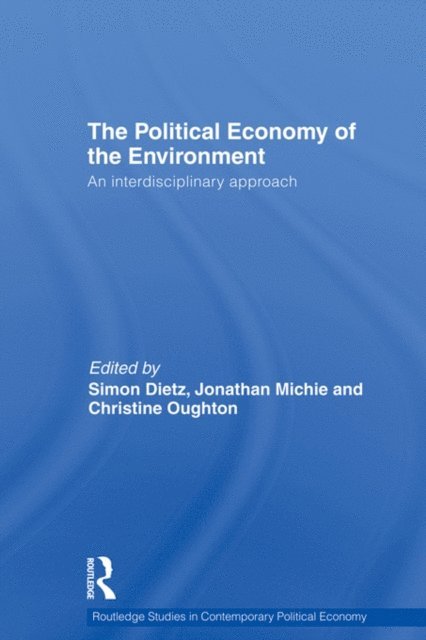
Political Economy of the Environment
An Interdisciplinary Approach
Av Christine Oughton, Jonathan Michie m. fl.
E-bok, 2011
866 kr
Lägg i varukorg
This book is the culmination of several years work by a group of academics, policy-makers and other professionals looking to understand how alternative economic thinking – and indeed thinking from quite different social-scientific disciplines – could enhance the mainstream economic approach to …
Political Economy of the Environment
An Interdisciplinary Approach
Av Christine Oughton, Jonathan Michie m. fl.
E-bok, 2011
866 kr
Lägg i varukorg
This book is the culmination of several years work by a group of academics, policy-makers and other professionals looking to understand how alternative economic thinking – and indeed thinking from quite different social-scientific disciplines – could enhance the mainstream economic approach to …
Political Economy of the Environment
An Interdisciplinary Approach
Av Simon Dietz, Jonathan Michie m. fl.
Häftad, 2014
757 kr
Lägg i varukorg
This book is the culmination of several years work by a group of academics, policy-makers and other professionals looking to understand how alternative economic thinking – and indeed thinking from quite different social-scientific disciplines – could enhance the mainstream economic approach to …
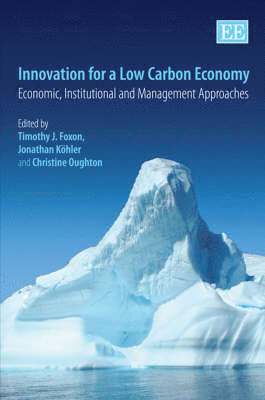
Innovation for a Low Carbon Economy
Economic, Institutional and Management Approaches
Av Timothy J. Foxon, Jonathan Köhler m. fl.
Inbunden, 2008
2011 kr
Lägg i varukorg
Innovation for a Low Carbon Economy analyses the interplay of technological, institutional, market and management factors in the dynamics of energy systems. The book aims to inform national and international policies to promote low carbon innovation.Featuring chapters by leading international …