Christof Paulus – författare
Visar alla böcker från författaren Christof Paulus. Handla med fri frakt och snabb leverans.
6 produkter
6 produkter
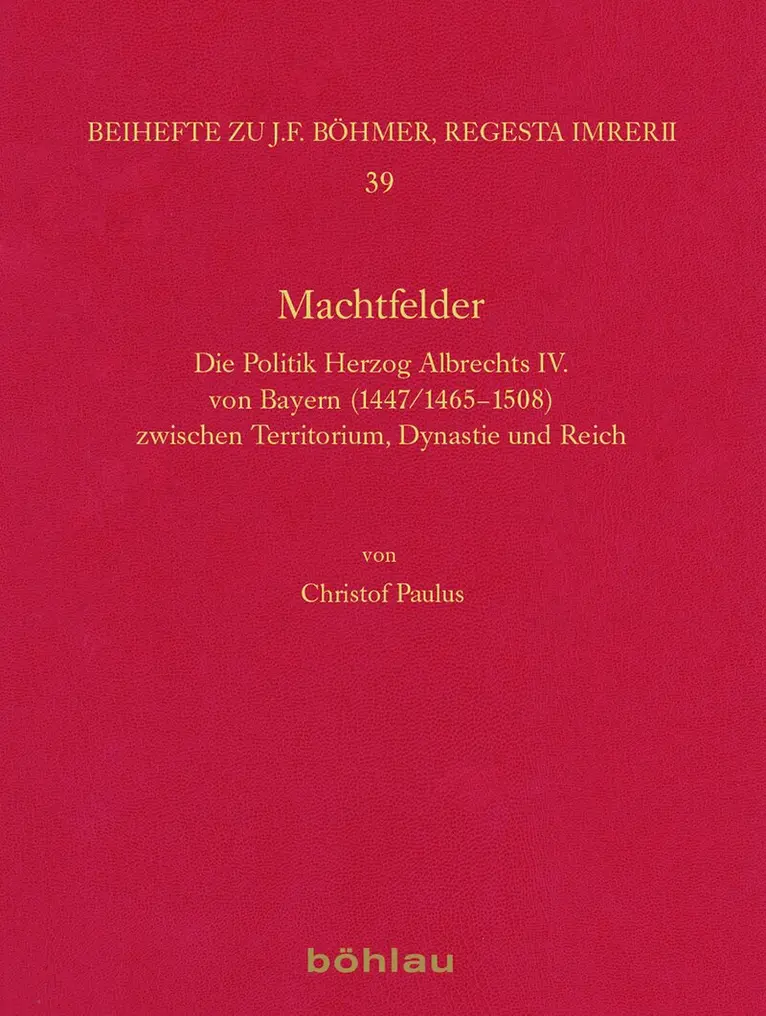
Inbunden, Tyska, 2015
1 275 kr
Skickas inom 11-20 vardagar
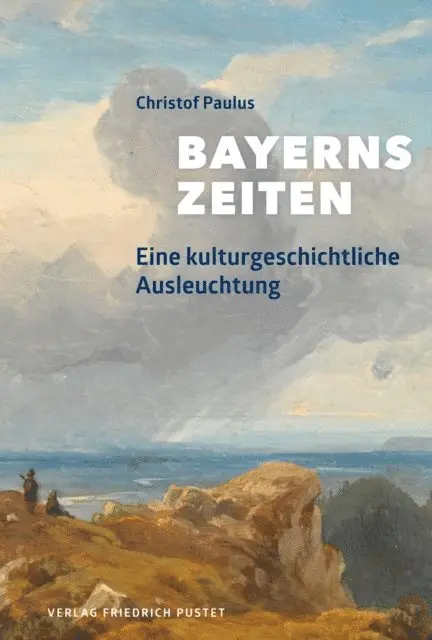
Inbunden, Tyska, 2021
416 kr
Skickas inom 3-6 vardagar
E-bok
Tyska, 2021307 kr
Läs direkt efter köp
Anhand von zwölf Themenfeldern wird die Vielfalt der bayerischen Kultur beschrieben – vom frühen Mittelalter bis zur Gegenwart. Der behandelte Raum umfasst das gesamte Bayern: Altbayern, Schwaben und Franken. Sowohl die Auswahl und Anordnung der Themen als auch die essayistische Schreibweise sind erfrischend anders. Der Autor widmet sich neuen oder bisher kaum beachteten Bereichen; spezifische Fragestellungen lauten etwa: Wie erlebten Menschen früher das Überschreiten einer "Landesgrenze"? Wo begann eine Stadt? Warum gingen in Bayern die Uhren anders? Das Rückgrat bildet eine "Klanggeschichte" im weiten Sinn: Geißelschläge, Saitenspiel, Schlachtenlärm, Klosterstille. Und noch etwas zeigt das Buch: Schriftquellen sind das eine – Bauten, Topografie, Glocken, Fresken, Volkslieder, versunkene Schiffe, Pigmente und Pestgenome können ein anderes Licht auf die bayerische Geschichte werfen.
E-bok
PDF, Tyska, 2023492 kr
Läs direkt efter köp
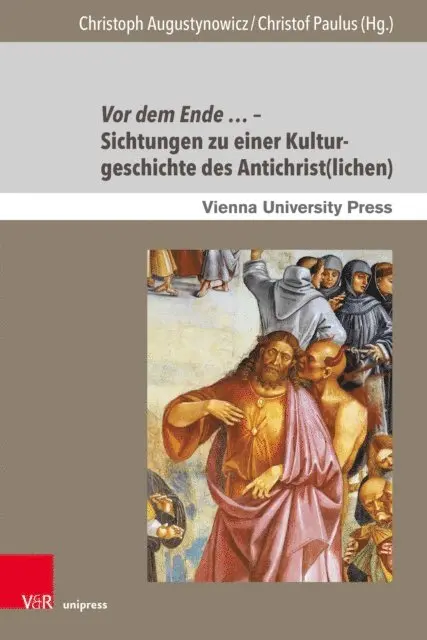
Die Figur des Antichrist ist auch Echokammer der Heiligkeit, aus der kollektive wie individuelle Ableitungen und Legitimationen für gewalttätiges Handeln gezogen werden und wurden. In der jüngsten Forschung erleben die Themen »Heilige« und »Heiligkeit« in ihren vielschichtigen Ausprägungsformen auf den (Herrschafts-)Alltag eine ausgesprochene Konjunktur. Der dadurch profilierte Heilig(en)-Diskurs bliebe aber unvollständig, würde man nicht auch auf das unheilige und damit kontrastierend-profilierende, eben im Antichrist metonymisch fassbare Gegenteil schauen. In diesem Sinne verbindet der vorliegende Band exemplarische Tiefenschürfungen und transkulturelle Perspektiven miteinander und setzt damit Impulse für ein weiterführend forschungstaugliches methodisches Instrumentarium.The figure of the Antichrist is likewise an echo chamber of the holiness from which both collective and individual derivations and legitimations for violent actions were and have been drawn. In recent studies, the "saint" and "holiness" in their various manifestations on the daily (ruling) routine have gained significant momentum. The hereby profiled discourse of saints would yet be incomplete if one did not consider the unholy and therefore regard the contrasting-profiling and the Antichrist metonymically tangible contrast, respectively. In this sense, the present volume combines not only examples of in-depth analysis and transcultural perspectives but also sets marks for further methodological research instruments.
Häftad, Engelska, 2026
1 693 kr
Kommande
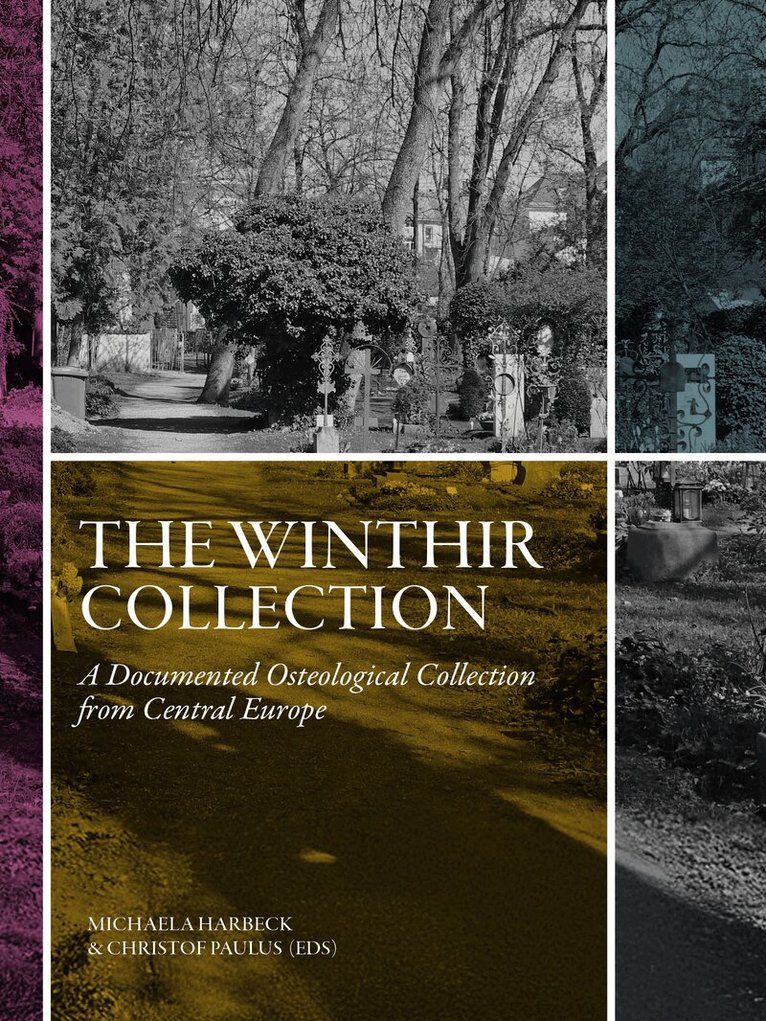
The Winthir Collection is one of the few identified skeletal collections from the 19th century, offering a rare insight into the lives of 245 individuals recovered from a long-forgotten section of Winthir Cemetery in Munich, southern Germany. Now housed in the State Collection for Anthropology in Munich, these remains have been analysed through an interdisciplinary project that combines historical and osteological research. For each individual, historical data such as demographics, cause of death, occupation, religious confession, number of children or burial class has been recorded. The osteological study reveals both population variation and the predominantly good preservation of the bones. Additionally, material finds accompanying the skeletons are described. This information is detailed in a comprehensive catalogue, enriched with numerous illustrations.Essays explore the methodological approaches, excavation details, historical context, and initial findings from the collection. As a reference resource, the Winthir Collection can play a crucial role in academic research and practical applications in fields like forensic science, archaeology, medicine, and human biology. It allows for the validation of osteological methods, deepens our understanding of human growth and variation, and helps differentiate normal morphology from pathological conditions.This book not only serves as an essential resource for researchers working with the Winthir Collection but also offers a fascinating window into life in 19th-century Munich. It may serve as a basis for further interdisciplinary and comparative research.
Inbunden, Engelska, 2026
2 937 kr
Kommande
The Winthir Collection is one of the few identified skeletal collections from the 19th century, offering a rare insight into the lives of 245 individuals recovered from a long-forgotten section of Winthir Cemetery in Munich, southern Germany. Now housed in the State Collection for Anthropology in Munich, these remains have been analysed through an interdisciplinary project that combines historical and osteological research. For each individual, historical data such as demographics, cause of death, occupation, religious confession, number of children or burial class has been recorded. The osteological study reveals both population variation and the predominantly good preservation of the bones. Additionally, material finds accompanying the skeletons are described. This information is detailed in a comprehensive catalogue, enriched with numerous illustrations.Essays explore the methodological approaches, excavation details, historical context, and initial findings from the collection. As a reference resource, the Winthir Collection can play a crucial role in academic research and practical applications in fields like forensic science, archaeology, medicine, and human biology. It allows for the validation of osteological methods, deepens our understanding of human growth and variation, and helps differentiate normal morphology from pathological conditions.This book not only serves as an essential resource for researchers working with the Winthir Collection but also offers a fascinating window into life in 19th-century Munich. It may serve as a basis for further interdisciplinary and comparative research.