Christopher A. Lawrence - Böcker
Visar alla böcker från författaren Christopher A. Lawrence. Handla med fri frakt och snabb leverans.
10 produkter
10 produkter
403 kr
Skickas inom 3-6 vardagar
War by Numbers assesses the nature of conventional warfare through the analysis of historical combat. Christopher A. Lawrence establishes what we know about conventional combat and why we know it. By demonstrating the impact a variety of factors have on combat he moves such analysis beyond the work of Carl von Clausewitz and into modern data and interpretation.Using vast data sets, Lawrence examines force ratios, the human factor in case studies from World War II and beyond, the combat value of superior situational awareness, and the effects of dispersion, among other elements. Lawrence challenges existing interpretations of conventional warfare and shows how such combat should be conducted in the future, simultaneously broadening our understanding of what it means to fight wars by the numbers.
183 kr
Skickas
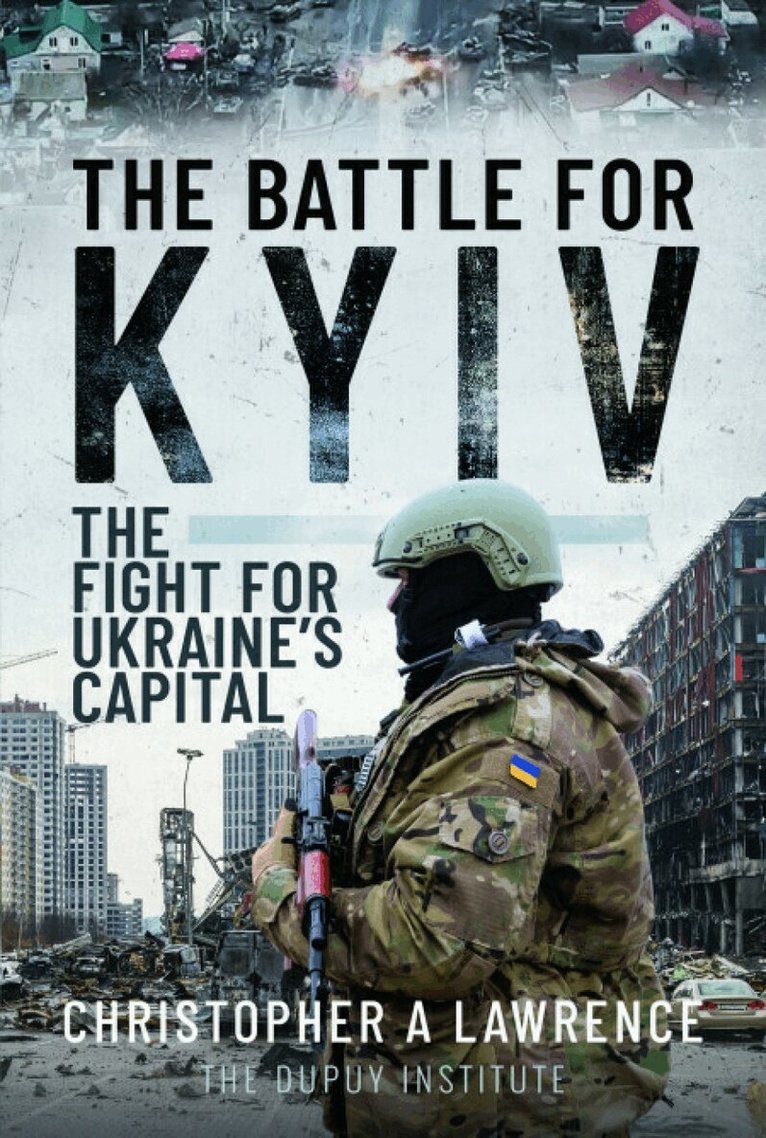
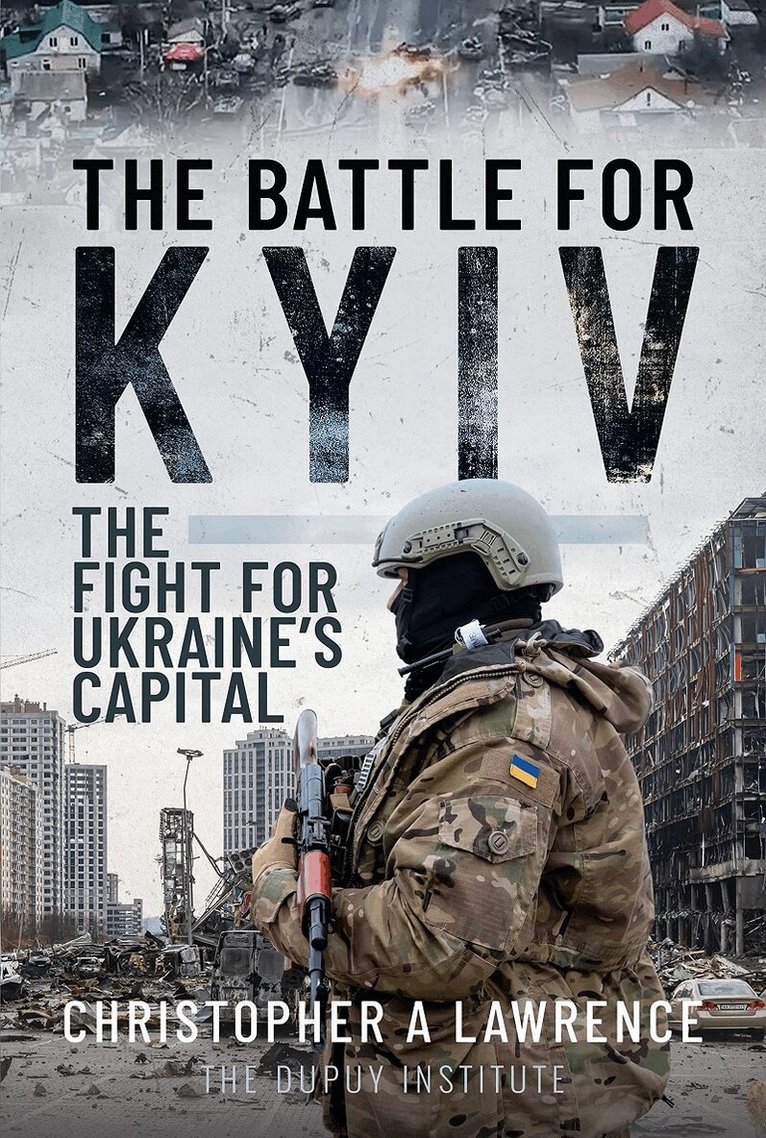
On 24 February 2022, Russian President Vladimir Putin launched an attack on Ukraine, marking the most significant European conflict since World War II. The invasion aimed to capture Kyiv and replace President Zelenskyy with a puppet regime, but the Russians faced fierce Ukrainian resistance, forcing them to retreat and re-direct their efforts to other fronts.The Battle of Kyiv chronicles the Ukrainians’ heroic resilience against a vastly more powerful enemy. Despite Russia’s population and economic superiority, Ukraine’s military, bolstered by NATO and international support, held its ground. The book details the early phase of the war, when Russian forces pushed toward Kyiv, surrounded cities like Chernihiv, seized Kherson, and threatened the Ukrainian state. U.S. intelligence predicted Kyiv’s fall within days and offered to evacuate Zelenskyy. His response: “I need ammunition, not a ride.”The book covers the fighting in Kyiv, Kherson, Chernihiv, Sumy, Kharkiv, Mykolaiv, and Mariupol, documenting military operations, destruction, civilian suffering, and survival struggles. Written as the battle unfolded, it provides an urgent historical account of the uncertainty, anxiety, and global significance of the war, reflecting the pivotal moments in Ukraine’s defense against the Russian invasion.
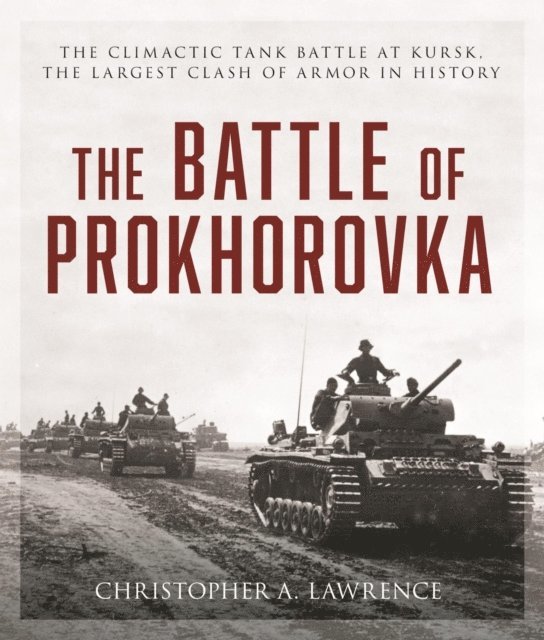
Battle of Prokhorovka
The Tank Battle at Kursk, the Largest Clash of Armor in History
Häftad, Engelska, 2024
426 kr
Skickas
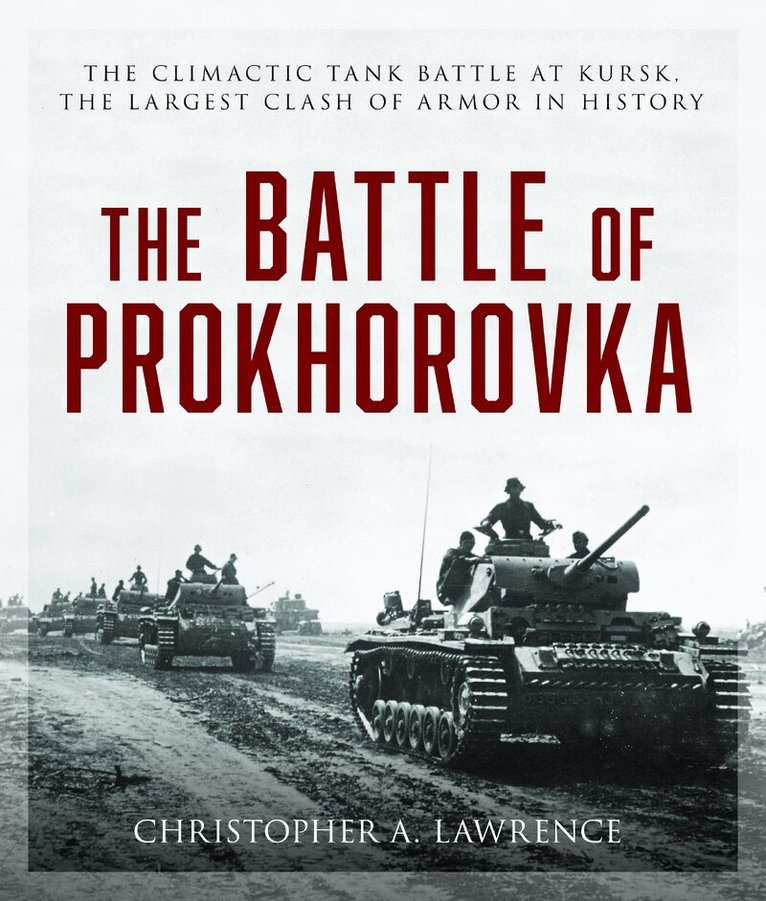
The Battle of Kursk was one of the defining moments of World War II. In July 1943, German forces under Erich von Manstein--one of Germany’s best generals--launched a massive attack in an offensive code-named Citadel. A week later, the Soviets counterattacked, sparking a huge clash of tanks at Prokhorovka, the largest armor battle in history, pitting more than 600 Soviet tanks against some 300 German panzers. Though the Germans gained a tactical victory, destroying huge numbers of Soviet tanks, they failed to achieve their objectives, and in the end the battle marked a turning point on the Eastern Front. The Red Army gained the strategic initiative and would not lose it.
Turning the Tide at Kursk
How the Red Army Thwarted German Tanks West of Prokhorovka
Inbunden, Engelska, 2026
475 kr
Kommande
Operation Spider’s Web
Ukraine’s Devastating Drone Attack on Russia’s Long-Range Aircraft
Inbunden, Engelska, 2026
266 kr
Kommande
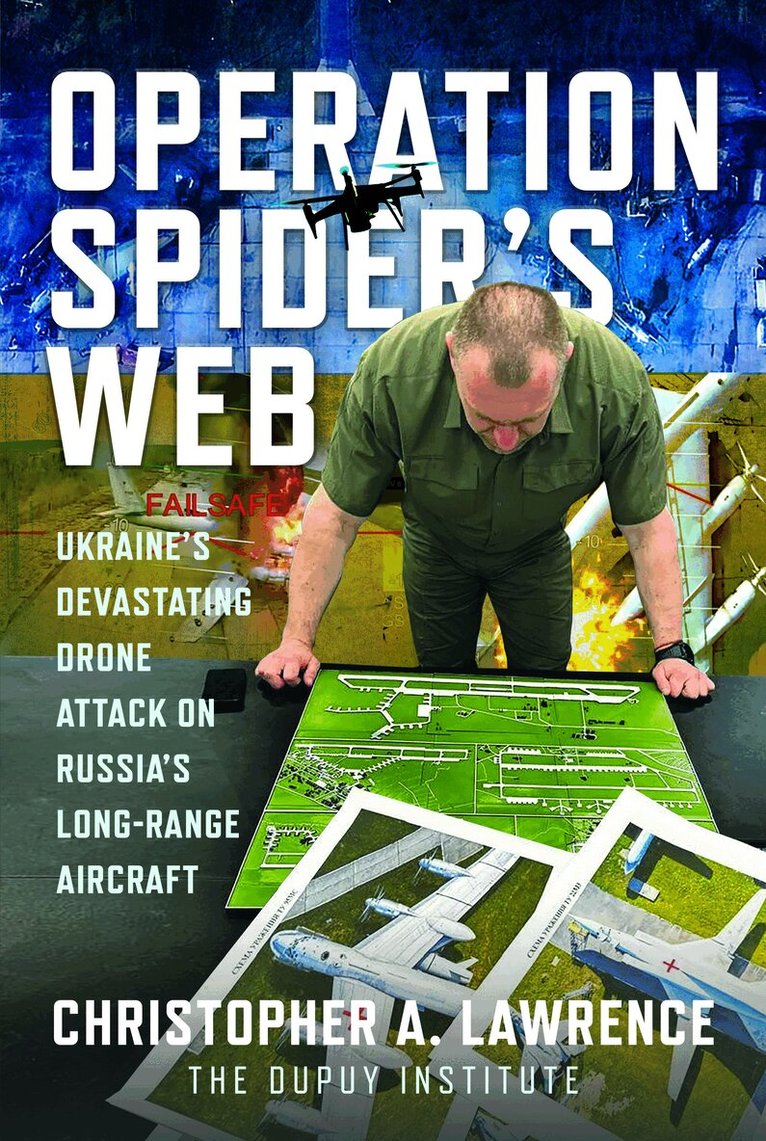
It was a lazy Sunday morning in Russia on 1 June 2025. The war with Ukraine had been going for over three years. That morning 117 Ukrainian drones rose up from the back of four trucks deep inside Russia itself and started flying towards their targets – a number of Russian airbases. They were Ukrainian made Osa (‘Wasp’) quadcopters.They were packed in crates of around twenty-seven drones each and driven across the country in the back of cargo trucks. The unsuspecting Russian truck drivers thought they were delivering materials for pre-fabricated houses. Instead, several of the drivers were asked to pull over at a local gas station or parking lot, and then suddenly the cover of the cargo container came off and more than two dozen drones took off towards a nearby air base. The Russian drivers were taken completely by surprise.The drones then attacked the Russian bombers at four air bases across the vast expanse of Russia, from a base above the arctic circle near Murmansk, to the heart of European Russia, out to the middle of Siberia, near Lake Baikal. Large old Russian strategic bombers, like Tu-95s and Tu-22s came under attack, along with Russia’s valuable Airborne Early Warning and Control Beriat A-50s. Maybe two dozen planes were attacked by the drones on three of the airfields, and it appears that over a dozen were destroyed.This attack stunned Russia, as this was their strategic bomber force. Not only was it being used to regularly strike at Ukrainian infrastructure and cities, but these were the nuclear-capable strategic bombers that were an important part of their Strategic Deterrent Forces. Some Russians, in shock, equated it to a Russian Pearl Harbor.This book explores the full story of a covert attack that has changed the rules of military warfare forever.
297 kr
Skickas
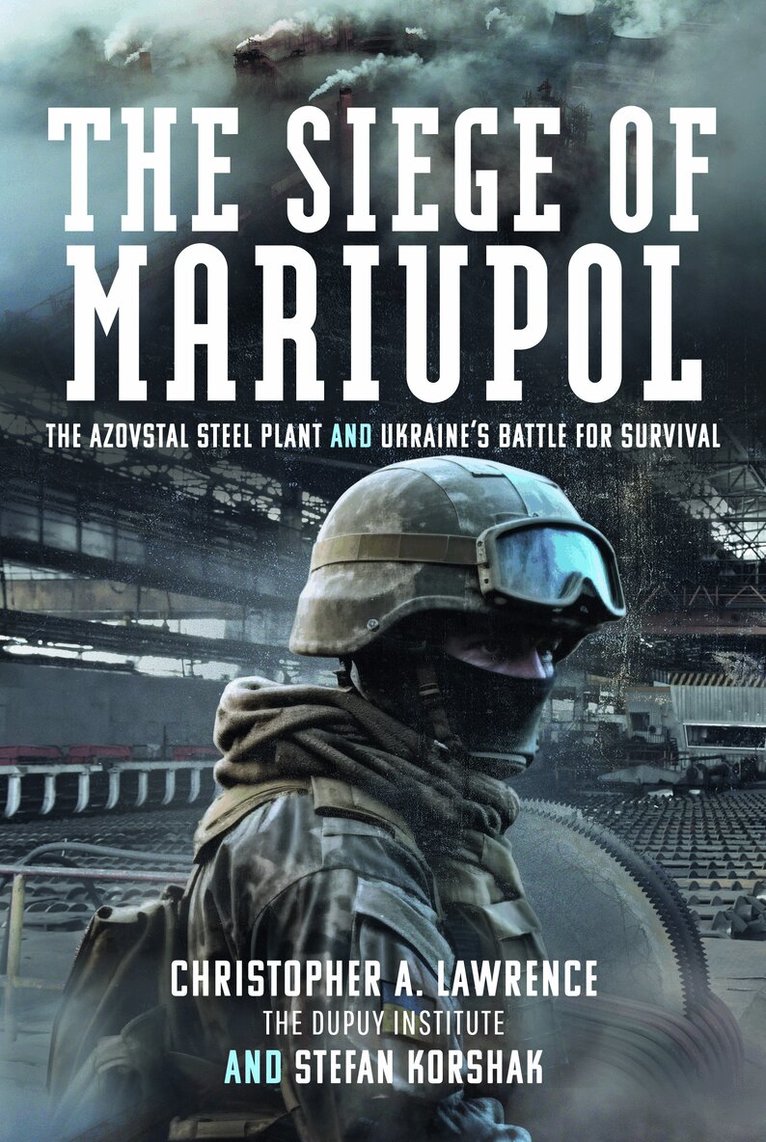
On 24 February 2022, the President of Russia, Vladimir Putin, unleashed an attack on Ukraine that has developed into the most significant war in Europe since the Second World War. The opening phase of this war was when Russian armour, along with mechanized and airmobile troops, advanced on Kyiv, surrounded Chernihiv, seized Kherson twice, and threatened the very existence of the Ukrainian state.The Siege of Mariupol tells the story of the heroic resistance of the Ukrainians in defending the areas in and around the large coastal city of Mariupol. Situated in the Donetsk Oblast, Mariupol was one of the initial objectives of the Russian offensive.By 2 March, Putin’s forces had surrounded the city and a fierce struggle ensued, in which Russian artillery bombarded Mariupol resulting in heavy civilian casualties. Conditions in the city rapidly deteriorated as water and electricity supplies were cut and food shortages became severe. The 700,000 inhabitants faced a devastating and growing humanitarian crisis as the siege continued for week after week. Repeated attempts to evacuate the civilians failed, until 15 March when just 20,000 people were able to escape.Week after week the bitter fighting raged on. Towards the end, however, it was the events at the Azovstal Iron and Steel Works that, to the whole world, came to define the dogged and determined Ukrainian defence. The plant became the heart of one of the main remaining pockets of resistance in Mariupol. Fiercely defended, it was described as a ‘fortress within a city’.The siege lasted until 20 May with the Russians finally taking control of the city. This book was written as the conflict ensued, giving it an unparalleled immediacy and poignancy. The Siege of Mariupol is an important historical document depicting the uncertainty and anxiety faced by the contesting forces and by the rest of the world as the war in Ukraine hung in the balance.
257 kr
Skickas
On 24 February 2022, the President of Russia, Vladimir Putin, unleashed an attack on Ukraine that developed into the most significant conflict in Europe since the Second World War. Fought over the same ground that the Germans and the Soviet Union battled on between 1941 and 1944, Russia attempted to advance to the Ukrainian capital of Kyiv and replace its president, Volodymyr Zelenskyy, with a puppet regime. Facing determined resistance, the Russians failed to reach the city, being compelled to withdraw and re-direct their forces to other fronts.The Battle of Kyiv tells the story of the heroic resilience of the Ukrainians over the military forces of a country which has more than three times its population and an economy almost ten times larger. This book is also an analysis of the enormous support given to Ukraine, both politically and militarily, by NATO and other nations, without which Ukraine's military might have failed to beat back the invaders.The author explores the first phase of the war, during which Russian armour, mechanized and air mobile troops drove on Kyiv, surrounded Chernihiv, seized Kherson twice, and threatened the very existence of the Ukrainian state. The United States' intelligence services estimated that the Russians would seize Kyiv within three days. They offered to evacuate President Zelensky back to Lviv. His alleged response to the Americans was: 'I need ammunition, not a ride.' He and his government stayed in Kyiv and the battle lines were drawn.The Russians continued their offensive. As well as bearing down on Kyiv and Kherson, Putin's troops also threatened Chernihiv, Sumy, Kharkiv, Mykolaiv, and the beleaguered port city of Mariupol. This book covers all the fighting for these areas up until Russia's subsequent withdraw from the region around Kyiv. It addresses the military operations on the ground, the destruction of the buildings and the Ukrainian infrastructure, the suffering of the civilian population and the day-by-day struggles for survival.Writing as the battle raged on, the author examines the conflict with an unparalleled immediacy and poignancy. The Battle of Kyiv is an important historical document depicting the uncertainty and anxiety faced by the contesting forces and by the rest of the world as the war in Ukraine hung in the balance.
318 kr
Skickas
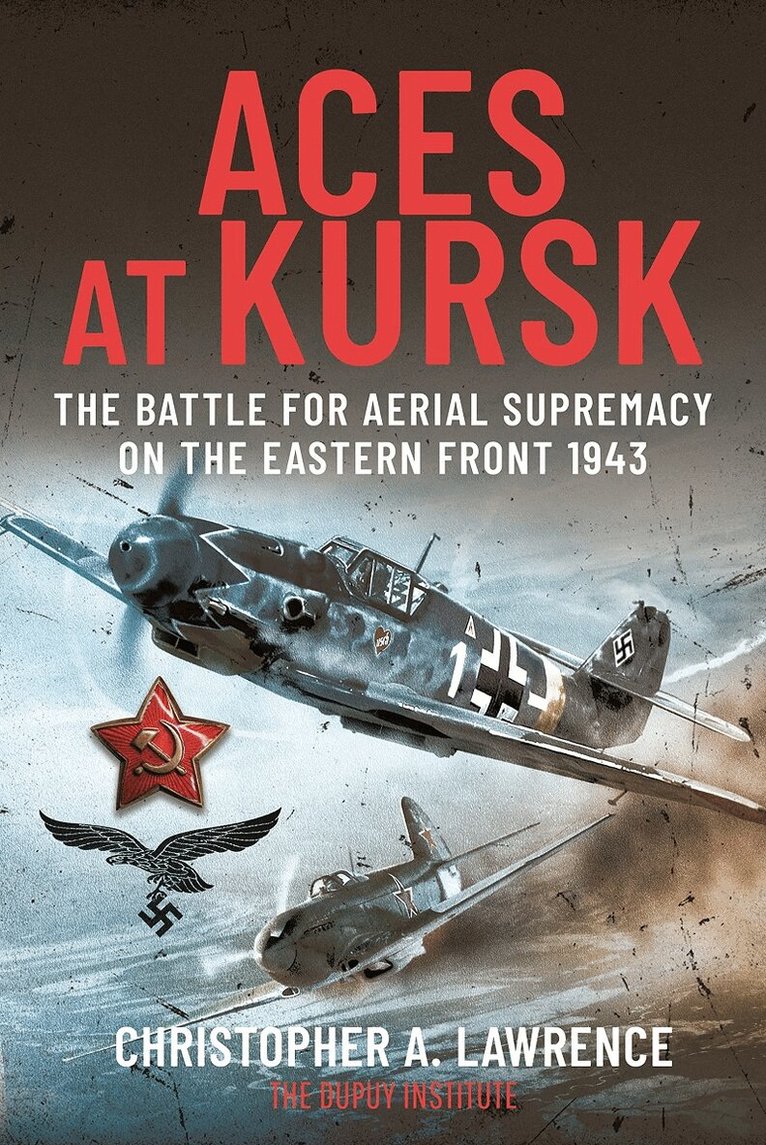
The Battle of Kursk in July 1943 is known for being the largest tank battle in history. A Russian victory, it marked the decisive end of the German offensive capability on the Eastern Front and set the scene for the Soviet successes that followed. While many have focused on the tank engagements, especially the Battle of Prokhorovka, there was an intense air battle going on overhead that was bigger than the Battle of Britain.As part of the German offensive, the Luftwaffe's VIII Air Corps deployed around 1,100 aircraft in the south alone, while the opposing Soviet Second and Seventeenth air armies initially deployed over 1,600 aircraft. There was a similar effort surrounding the German attack in the north.The battle in the south began with a Soviet air strike on German airfields and a fight for control of the air that continued throughout the day across the front. On the first day of the battle, 5 July 1943, the Germans flew at least 2,387 sorties in the south while the two Soviet air armies flew 1,688 sorties. That first day of battle resulted in 19 to 27 German planes and 189 Soviet aircraft shot down. This was an aerial engagement like no other ever seen before.Involved on the German side were the 52nd and 3rd Fighter Wings. The 52nd Fighter Wing was the most accomplished fighter wing in history and many of its top aces were involved in the combats over the Kursk battlefield. These included Walter Krupinski (197 claimed kills in the war), Gunther Rall, the third highest scoring ace in history (275 claimed kills), and the highest scoring ace in history, Erich Hartmann (352 claimed kills). Opposing them were what were to become three of the top five Soviet aces: Kirill Yevstigneyev (53 claimed kills), Nikolai Gulayev (55 claimed kills) and the top scoring Allied ace of the war, Ivan Kozhedub (62 claimed kills). This was indeed the battle of the aces.But there was also the massive ground attack effort by both sides, including the Junkers Ju 87 Stuka fitted with 37mm anti-tank guns flown by the man who would become most decorated soldier of the Third Reich, Hans-Ulrich Rudel. The aerial battle involved hundreds of Soviet Sturmoviks, or IL-2s, Stalin's armoured ground attack plane. The battle featured the famous attack by Luftwaffe Hs-129s and Fw-190s on Soviet armour on 8 July 1943.Aces at Kursk is not just a war story, but a revealing investigation that analyses the entire air battle that turned the tide of the war on the Eastern Front.
208 kr
Kommande
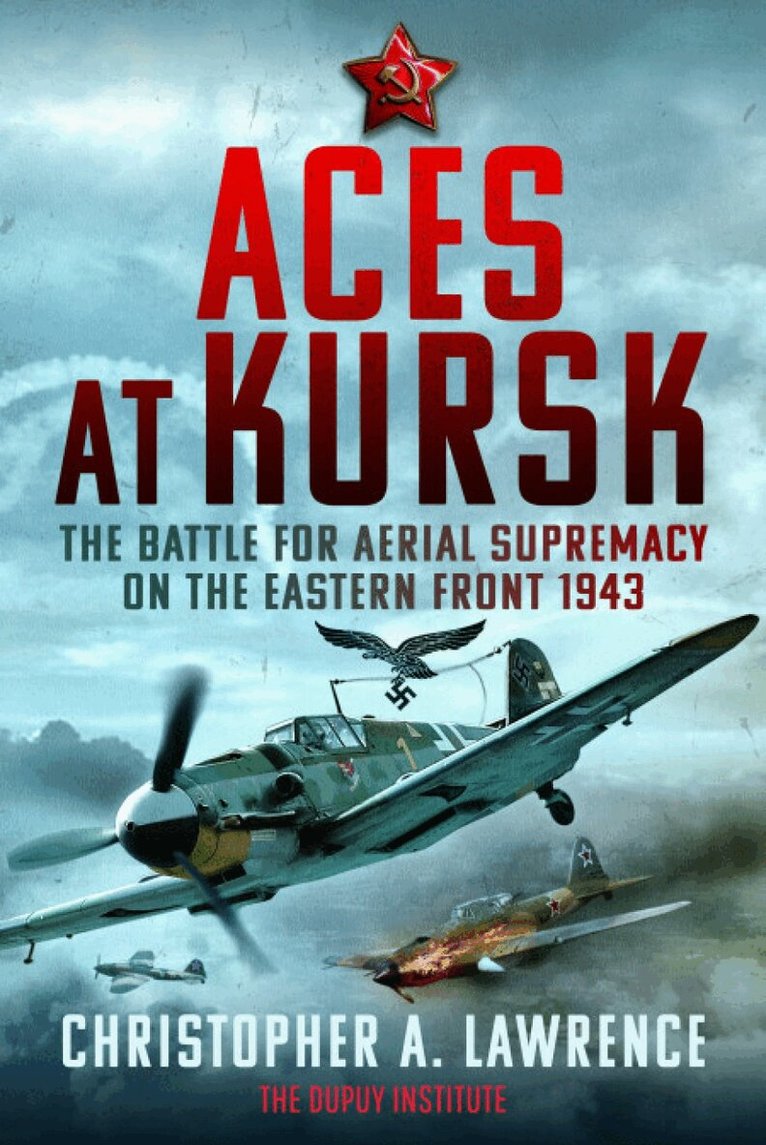
The Battle of Kursk in July 1943 is known for being the largest tank battle in history. A Russian victory, it marked the decisive end of the German offensive capability on the Eastern Front and set the scene for the Soviet successes that followed. While many have focused on the tank engagements, especially the Battle of Prokhorovka, there was an intense air battle going on overhead that was bigger than the Battle of Britain.As part of the German offensive, the Luftwaffe’s VIII Air Corps deployed around 1,100 aircraft in the south alone, while the opposing Soviet Second and Seventeenth air armies initially deployed over 1,600 aircraft. There was a similar effort surrounding the German attack in the north.The battle in the south began with a Soviet air strike on German airfields and a fight for control of the air that continued throughout the day across the front. On the first day of the battle, 5 July 1943, the Germans flew at least 2,387 sorties in the south while the two Soviet air armies flew 1,688 sorties. That first day of battle resulted in 19 to 27 German planes and 189 Soviet aircraft shot down. This was an aerial engagement like no other ever seen before.Involved on the German side were the 52nd and 3rd Fighter Wings. The 52nd Fighter Wing was the most accomplished fighter wing in history and many of its top aces were involved in the combats over the Kursk battlefield. These included Walter Krupinski (197 claimed kills in the war), Günther Rall, the third highest scoring ace in history (275 claimed kills), and the highest scoring ace in history, Erich Hartmann (352 claimed kills). Opposing them were what were to become three of the top five Soviet aces: Kirill Yevstigneyev (53 claimed kills), Nikolai Gulayev (55 claimed kills) and the top scoring Allied ace of the war, Ivan Kozhedub (62 claimed kills). This was indeed the battle of the aces.But there was also the massive ground attack effort by both sides, including the Junkers Ju 87 Stuka fitted with 37mm anti-tank guns flown by the man who would become most decorated soldier of the Third Reich, Hans-Ulrich Rudel. The aerial battle involved hundreds of Soviet Sturmoviks, or IL-2s, Stalin’s armoured ground attack plane. The battle featured the famous attack by Luftwaffe Hs-129s and Fw-190s on Soviet armour on 8 July 1943.Aces at Kursk is not just a war story, but a revealing investigation that analyses the entire air battle that turned the tide of the war on the Eastern Front.
266 kr
Skickas
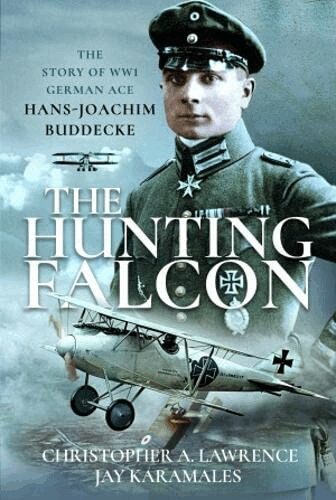
The Hunting Falcon was written by Hans-Joachim Buddecke, a top German First World War ace. Though his autobiography of his experiences as a combat pilot were published in the Spring of 1918, in the last year of the war, Buddecke did not see his book in print; he was shot down over the Western Front on 10 March 1918. His father was left to write the forward.Hans Buddecke's journey to war started in America in 1913-1914, where he was working in Indianapolis at his uncle's car factory. A new immigrant to the United States, he was very much part of the German community of Indianapolis. Ambitious, he learned to fly at Cicero Flying Field near Chicago. He then lined up Indianapolis investors to establish a new plane manufacturing company. The deal was sealed just as war broke out in Europe in 1914.Buddecke then travelled to New York and, disguised as a man from Alsace-Lorraine, travelled to Italy on a Greek ship to bypass the British blockade. He was one of the few Germans in America who found his way home. Being a pilot, he joined the German air force and flew with his good friend, future ace Rudolf Berthold. As one of the first Eindecker pilots, he began scoring kills. His second victim was Lawrence of Arabia's younger brother.In time, Buddecke was posted to Turkey, where he became a top ace fighting in the skies over Gallipoli. His exploits in this theatre earned him the nickname El-Schahin', the Hunting Falcon'. He was the third German pilot to be awarded the Pour le Merite, the Blue Max, Germany's highest award. The two earlier recipients were the legendary ace Max Immelmann (the source of the medal's nickname) and Oswald Boelcke, Germany's great combat aviation leader and ace.Returning to the Western Front from Gallipoli, Hans Buddecke was recognized as one of the top pilots of his day. He was shot down and killed, by Sopwith Camels of 3 Squadron RNAS, on 10 March 1918. By this stage, he had been credited with thirteen kills'.