Christopher Choong – författare
Visar alla böcker från författaren Christopher Choong. Handla med fri frakt och snabb leverans.
2 produkter
2 produkter
Inbunden, Engelska, 2026
2 306 kr
Kommande
Raced-Gendered Capitalism in Malaysia explores how the international and the everyday interact in constituting and sustaining the developmental state in Malaysia as a specific form of raced-gendered capitalism. Juxtaposed with a methodological nationalist, male-elitist, and “plan rational” conception, it provides a reading of the developmental state in Malaysia as a raced-gendered capitalist project navigating the international dynamics of the colonial-imperial capitalist world-system.The book draws out the everyday lives, labour, and households of non-elite Malay women as central to the processes and politics of raced capitalist reproduction. First, it reconstructs state-institutional accounts of raced capitalism in Malaysia to incorporate the gendered lives and labour of households. Then, by embracing oral history as a feminist method, it offers a reinterpretation of the racialised developmental state project through the textured rhythms of Malay women’s everyday lives. The book advances an empirical account that foregrounds gender in more foundational ways to understand raced capitalist development on the periphery of the global economy.By bringing feminist International Political Economy into closer dialogue with the theory of uneven and combined development (UCD), Raced-Gendered Capitalism in Malaysia engages students, academics and researchers interested in critical feminist approaches that centre the Global South as a paradigm for contesting Eurocentric accounts of global-racial capitalism.
Häftad, Engelska, 2023
340 kr
Skickas inom 10-15 vardagar
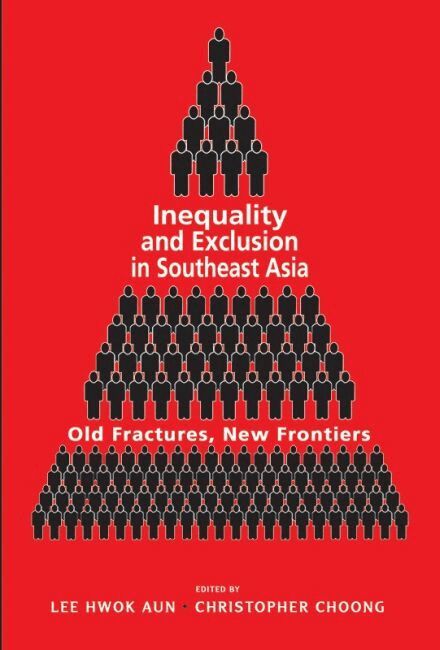
Inequality is a defining global issue of our times. Southeast Asia stands out in some ways; the 2010s have seen most countries in the region reduce income gaps. Nonetheless, inequality levels remain high, especially in the middle-income to high-income countries, and popular disaffection and economic anxiety prevail, even while official statistics may paint more buoyant scenarios. The age-old problem of group-based exclusion in the development process manifests in new ways. This book provides up-to-date overviews of inequality levels and trends, primarily related to income, but also wealth and other socio-economic variables pertaining to education and health. The country chapters also examine salient themes of inequality, especially structural changes and public policies to redress inequality and exclusion, labour market developments, population groups, regional dynamics, and informal economies. We gain an appreciation for the unique conditions and diverse experiences of each country, and draw comparative insights across the region.