Christopher Hallinan – författare
Visar alla böcker från författaren Christopher Hallinan. Handla med fri frakt och snabb leverans.
5 produkter
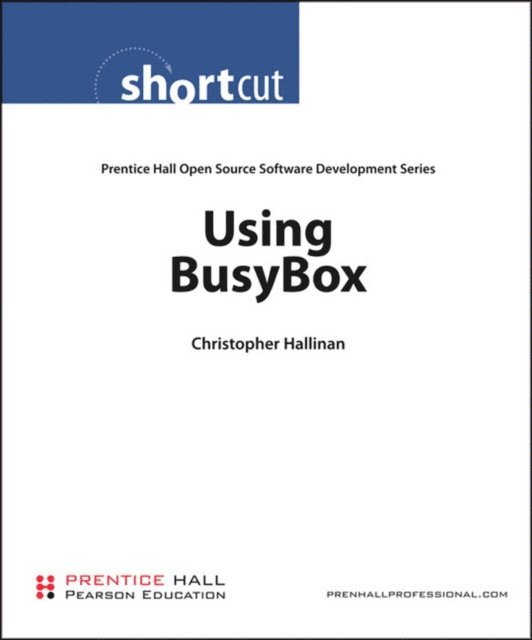
Using BusyBox (Digital Short Cut)
E-bok, 2006
236 kr
Lägg i varukorg
This digital Short Cut delivered in Adobe PDF format for quick and easy access, is an introduction to BusyBox, widely regarded as “The Swiss Army Knife of Embedded Linux.†After a brief introduction, we walk you through the BusyBox configuration utility. This is used to tailor BusyBox to your …
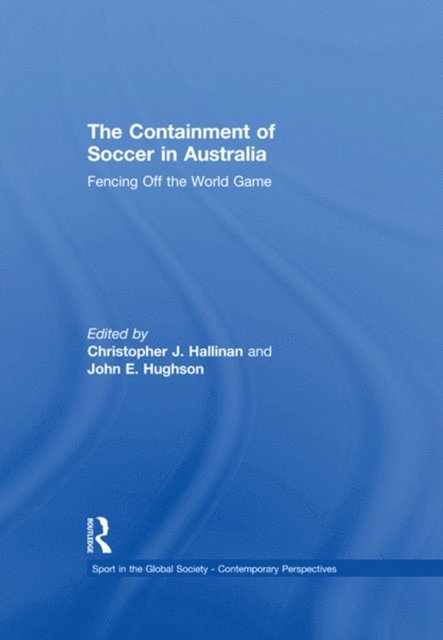
Containment of Soccer in Australia
Fencing Off the World Game
Av Christopher Hallinan, John Hughson
Inbunden, 2010
1517 kr
Lägg i varukorg
According to the Australian Bureau of Statistics, outdoor soccer was the second most popular organized sport for Australian children after swimming. It far outstripped the popularity of the three other football codes that are played in Australia – rugby league, rugby union and Australian Rules …
Containment of Soccer in Australia
Fencing Off the World Game
Av Christopher Hallinan, John Hughson
Häftad, 2015
502 kr
Lägg i varukorg
According to the Australian Bureau of Statistics, outdoor soccer was the second most popular organized sport for Australian children after swimming. It far outstripped the popularity of the three other football codes that are played in Australia – rugby league, rugby union and Australian Rules …
Containment of Soccer in Australia
Fencing Off the World Game
Av John Hughson, Christopher Hallinan
E-bok, 2013
589 kr
Lägg i varukorg
According to the Australian Bureau of Statistics, outdoor soccer was the second most popular organized sport for Australian children after swimming. It far outstripped the popularity of the three other football codes that are played in Australia – rugby league, rugby union and Australian Rules …
Containment of Soccer in Australia
Fencing Off the World Game
Av John Hughson, Christopher Hallinan
E-bok, 2013
589 kr
Lägg i varukorg
According to the Australian Bureau of Statistics, outdoor soccer was the second most popular organized sport for Australian children after swimming. It far outstripped the popularity of the three other football codes that are played in Australia – rugby league, rugby union and Australian Rules …