Christopher M. Dent – författare
959 kr
Skickas inom 10-15 vardagar
2 806 kr
Skickas inom 10-15 vardagar
959 kr
Skickas inom 10-15 vardagar
2 214 kr
Skickas inom 10-15 vardagar
683 kr
Skickas inom 10-15 vardagar
2 106 kr
Skickas inom 10-15 vardagar
1 103 kr
Läs direkt efter köp
1 136 kr
Läs direkt efter köp
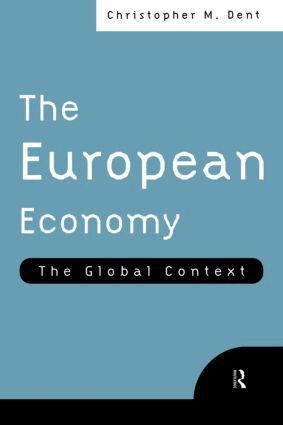
The shape of the world economy is changing. Globalisation and regionalism have led to the development of powerful but interdependent economic blocs. Much economic potential has shifted from the Atlantic to the Pacific area. In view of this The European Economy argues that economists need a broader, worldwide base of information if these processes and their effect on Europe are to be fully understood. Topics discussed include:* Europe''s experience of the growing trend of regionalism* the single market* plans for economic union* EU enlargement* Europe''s triad rivals* EU external trade and trade relations* technology and innovation* environmental issuesThis fresh approach highlights the issues which will challenge European countries into the twenty-first century.
1 136 kr
Läs direkt efter köp
The shape of the world economy is changing. Globalisation and regionalism have led to the development of powerful but interdependent economic blocs. Much economic potential has shifted from the Atlantic to the Pacific area. In view of this The European Economy argues that economists need a broader, worldwide base of information if these processes and their effect on Europe are to be fully understood. Topics discussed include:* Europe''s experience of the growing trend of regionalism* the single market* plans for economic union* EU enlargement* Europe''s triad rivals* EU external trade and trade relations* technology and innovation* environmental issuesThis fresh approach highlights the issues which will challenge European countries into the twenty-first century.
746 kr
Läs direkt efter köp
784 kr
Läs direkt efter köp
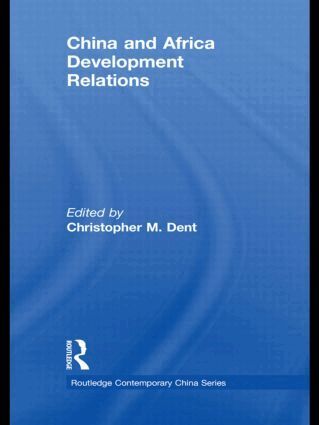
China is among a number of large developing country or new powers on the ascendance in the international system, all of which are deepening their economic relations with Africa However, China is the largest and most powerful of this group. it has sought closer economic relationships with other developing country regions and continents such as Latin America and Central Asia, but it is with Africa – the continent that hosts more developing countries than any other – that China has fostered the closest links.
This book provides an overview of how the China – Africa relationship has evolved over the last few decades and examines whether it presents a new paradigm of ‘development relations’ in the international system. The contributors investigate what is particularly special about the emerging development partnership between Africa and China, and how it may evolve in the future. The contributors focus on various development capacity issues – infrastructural, industrial, technocratic, institutional, human capital, sustainable economic practices – and consider various debates on ‘development’ and development ideologies, including whether China’s practices in Africa pose a challenge to Western conventions on development assistance.
China-Africa Development Relations will be of interest to those students and scholars of African studies, Chinese studies, international development and development studies.
784 kr
Läs direkt efter köp
China is among a number of large developing country or new powers on the ascendance in the international system, all of which are deepening their economic relations with Africa However, China is the largest and most powerful of this group. it has sought closer economic relationships with other developing country regions and continents such as Latin America and Central Asia, but it is with Africa – the continent that hosts more developing countries than any other – that China has fostered the closest links.
This book provides an overview of how the China – Africa relationship has evolved over the last few decades and examines whether it presents a new paradigm of ‘development relations’ in the international system. The contributors investigate what is particularly special about the emerging development partnership between Africa and China, and how it may evolve in the future. The contributors focus on various development capacity issues – infrastructural, industrial, technocratic, institutional, human capital, sustainable economic practices – and consider various debates on ‘development’ and development ideologies, including whether China’s practices in Africa pose a challenge to Western conventions on development assistance.
China-Africa Development Relations will be of interest to those students and scholars of African studies, Chinese studies, international development and development studies.
749 kr
Skickas inom 10-15 vardagar
2 316 kr
Skickas inom 10-15 vardagar
2 674 kr
Skickas inom 10-15 vardagar
771 kr
Skickas inom 10-15 vardagar
886 kr
Läs direkt efter köp
East Asia is one of the world''s most dynamic and diverse regions and is also becoming an increasingly coherent region through the inter-play of various integrative economic, political and socio-cultural processes. Fully updated and revised throughout, this new edition explores the various ways in which East Asian regionalism continues to deepen.
The second edition has been expanded to incorporate coverage of significant issues that have emerged in recent years including:
Growing tensions in the region over maritime territory and historical issues
Competing regional free trade agreement negotiations
The impact of the global financial crisis on financial co-operation and engagement with global governance
Obama’s ‘pivot to Asia’ and developments in US relations with East Asia
The influence of new technology and social media on micro-level regional relations
The growing importance of ‘new diplomacy’ issues such as energy security, climate change, food security and international migration.
Key pedagogical features include:
end of chapter ''study questions''
case studies that discuss topical issues with study questions also provided
useful tables and figures which illustrate key regional trends in East Asia
Extensive summary conclusions covering the chapter''s main findings from different international political economy perspectives.
East Asian Regionalism is an essential text for courses on East Asian regionalism, Asian politics and Asian economics.
886 kr
Läs direkt efter köp
East Asia is one of the world''s most dynamic and diverse regions and is also becoming an increasingly coherent region through the inter-play of various integrative economic, political and socio-cultural processes. Fully updated and revised throughout, this new edition explores the various ways in which East Asian regionalism continues to deepen.
The second edition has been expanded to incorporate coverage of significant issues that have emerged in recent years including:
Growing tensions in the region over maritime territory and historical issues
Competing regional free trade agreement negotiations
The impact of the global financial crisis on financial co-operation and engagement with global governance
Obama’s ‘pivot to Asia’ and developments in US relations with East Asia
The influence of new technology and social media on micro-level regional relations
The growing importance of ‘new diplomacy’ issues such as energy security, climate change, food security and international migration.
Key pedagogical features include:
end of chapter ''study questions''
case studies that discuss topical issues with study questions also provided
useful tables and figures which illustrate key regional trends in East Asia
Extensive summary conclusions covering the chapter''s main findings from different international political economy perspectives.
East Asian Regionalism is an essential text for courses on East Asian regionalism, Asian politics and Asian economics.
860 kr
Läs direkt efter köp
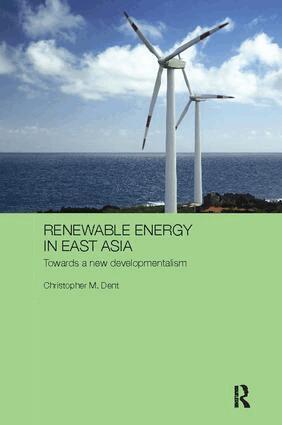
Energy is crucial to the functioning of any human society and central to understanding East Asia’s ‘economic miracle’. The region’s rapid development over the last few decades has been inherently energy-intensive and the impact on global energy security, climate change and the twenty-first-century global system generally is now very significant and will become more so over foreseeable years and decades to come. The region is already the world’s largest energy consumer and greenhouse gas emitter, so establishing cleaner energy systems in East Asia is both a regional and global challenge, and renewable energy has a critically important part to play in meeting it.
This book presents a comprehensive study of renewable energy development in East Asia. It begins by examining renewable energy development in global and historic contexts, and situates East Asia’s position in the recent worldwide expansion of renewables. This same approach is applied on sector-specific chapter studies on wind, solar, hydropower, geothermal, ocean (wave and tidal) and bioenergy, and to general trends in renewable energy policy. Governments play a critical role in promoting renewables and their contribution to tackling climate change and other environmental challenges. Christopher M. Dent argues this is particularly relevant to East Asia, where state capacity practice has been increasingly allied to ecological modernisation thinking to form what he calls ‘new developmentalism’, the principal foundation on which renewables have developed in the region as well as how East Asia’s low carbon development is being generally promoted.
Renewable Energy in East Asia will be of huge interest to students and scholars of Asian studies, economics, political economy, energy studies, business, development, international relations and environmental studies. It will also appeal to researchers working on the subject matter in government, business, international organisations, think tanks and civil society organisations.
860 kr
Läs direkt efter köp
Energy is crucial to the functioning of any human society and central to understanding East Asia’s ‘economic miracle’. The region’s rapid development over the last few decades has been inherently energy-intensive and the impact on global energy security, climate change and the twenty-first-century global system generally is now very significant and will become more so over foreseeable years and decades to come. The region is already the world’s largest energy consumer and greenhouse gas emitter, so establishing cleaner energy systems in East Asia is both a regional and global challenge, and renewable energy has a critically important part to play in meeting it.
This book presents a comprehensive study of renewable energy development in East Asia. It begins by examining renewable energy development in global and historic contexts, and situates East Asia’s position in the recent worldwide expansion of renewables. This same approach is applied on sector-specific chapter studies on wind, solar, hydropower, geothermal, ocean (wave and tidal) and bioenergy, and to general trends in renewable energy policy. Governments play a critical role in promoting renewables and their contribution to tackling climate change and other environmental challenges. Christopher M. Dent argues this is particularly relevant to East Asia, where state capacity practice has been increasingly allied to ecological modernisation thinking to form what he calls ‘new developmentalism’, the principal foundation on which renewables have developed in the region as well as how East Asia’s low carbon development is being generally promoted.
Renewable Energy in East Asia will be of huge interest to students and scholars of Asian studies, economics, political economy, energy studies, business, development, international relations and environmental studies. It will also appeal to researchers working on the subject matter in government, business, international organisations, think tanks and civil society organisations.
2 062 kr
Skickas inom 5-8 vardagar
443 kr
Läs direkt efter köp
The expert contributors shed critical light on how significant developments are impacting on the global system. In particular, they consider emerging forms of global governance, and how the Asia-Pacific as a region, individual countries such as China, Japan, South Korea and the US, and regional organizations and forums like APEC are shaping the world. Uniquely, the discussion is not limited to East Asia but also takes Latin America prominently into the equation.
This timely book will prove to be a stimulating read for academics, students, researchers and policy makers with an interest in Asian studies, development and agriculture, economics, international studies.
Contributors: R.P. Appelbaum, M. Chen, C.M. Dent, H. Dobson, J. Dosch, M. Falck Reyes, Q. Fang, D.S.G. Goodman, J. Henderson, Y. Hong, J.L. Leon-Manriquez, S.A. Oyen, C.H. Park, R. Parker, J. Ravenhill, J. Reilly, A. Santa-Cruz, C. Yao
2 277 kr
Skickas inom 5-8 vardagar
669 kr
Skickas inom 5-8 vardagar
2 179 kr
Skickas inom 5-8 vardagar
602 kr
Läs direkt efter köp
Invaluably, the concluding chapter brings together the main findings of the book and presents new analytical approaches for studying the nature of, and prospects for leadership in East Asia.
China, Japan and Regional Leadership in East Asia will be essential reading for upper level undergraduate and postgraduate students and researchers of international relations, regional studies, international political economy and economics as well as Asian and development studies.
694 kr
Skickas inom 5-8 vardagar
1 638 kr
Skickas inom 5-8 vardagar
1 657 kr
Tillfälligt slut