Christopher Mark – Författare
Visar alla böcker från författaren Christopher Mark. Handla med fri frakt och snabb leverans.
3 produkter
3 produkter
791 kr
Skickas inom 10-15 vardagar
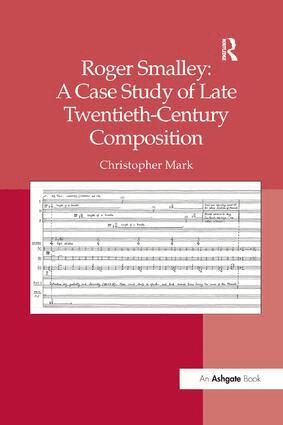
How does one go about writing the history of musical composition in the late twentieth century when, on the one hand, so much of it seems impossibly fractured and disassociated, and, on the other, there has been so little certainty about what the notion of 'music history' might entail under the critiques of post-modernism? One of the most productive ways forward is to pursue case studies involving single composers whose music reflects several aspects of recent activity. This enables the discussion of broad issues in a relatively focussed way whilst avoiding the pitfalls of traditional narrative histories and the centrifugal tendencies of the relativistic approach that some have called for. The music of the English-born (1943) and Australia-domiciled composer Roger Smalley is ideal material for such a study, because of his involvement with and response to an unusually large number of the myriad concerns and practices of post-1950s composition, including post-serial constructivism; parody; electro-acoustic composition and the electronic modification of conventionally-produced sound; Moment Form; aleatorism; minimalism; the use of non-Western resources (Aboriginal and South-East Asian sonorities); neo-Romanticism; and, arguably, the 'new classicism', as well as a brief flirtation with rock music in the late '60s. Employing an interview with the composer as a kind of cantus firmus, the book - the first extended single-author study of Smalley's music to be published - incorporates critical commentary on the composer's major works in a chronological narrative that engages with broad issues of central relevance to Smalley's generation, such as the process of learning the craft of composition in the early '60s; the motivation behind the adoption of certain technical and aesthetic positions; the effects on technical and aesthetic orientation of both the changing relationships between composer, performer, and audience and technological change; and the distinction betwe
2 386 kr
Skickas inom 10-15 vardagar
How does one go about writing the history of musical composition in the late twentieth century when, on the one hand, so much of it seems impossibly fractured and disassociated, and, on the other, there has been so little certainty about what the notion of 'music history' might entail under the critiques of post-modernism? One of the most productive ways forward is to pursue case studies involving single composers whose music reflects several aspects of recent activity. This enables the discussion of broad issues in a relatively focussed way whilst avoiding the pitfalls of traditional narrative histories and the centrifugal tendencies of the relativistic approach that some have called for. The music of the English-born (1943) and Australia-domiciled composer Roger Smalley is ideal material for such a study, because of his involvement with and response to an unusually large number of the myriad concerns and practices of post-1950s composition, including post-serial constructivism; parody; electro-acoustic composition and the electronic modification of conventionally-produced sound; Moment Form; aleatorism; minimalism; the use of non-Western resources (Aboriginal and South-East Asian sonorities); neo-Romanticism; and, arguably, the 'new classicism', as well as a brief flirtation with rock music in the late '60s. Employing an interview with the composer as a kind of cantus firmus, the book - the first extended single-author study of Smalley's music to be published - incorporates critical commentary on the composer's major works in a chronological narrative that engages with broad issues of central relevance to Smalley's generation, such as the process of learning the craft of composition in the early '60s; the motivation behind the adoption of certain technical and aesthetic positions; the effects on technical and aesthetic orientation of both the changing relationships between composer, performer, and audience and technological change; and the distinction betwe
229 kr
Skickas inom 5-8 vardagar
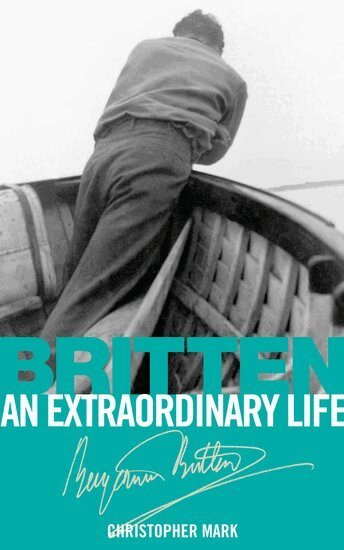
Can the claims for Britten as the greatest English composer since Purcell be justified? Was the composer of gloomily tragic operas himself depressed and obsessive? What effect did Britten's sexuality have on his career? In this accessible history, Christopher Mark traces the impact of Britten's physical and cultural environment, his shifting musical and personal relationships, and his emerging sense of sexual identity on his musical output. What is revealed is not only a life conditioned by a compulsion to compose, but one which seems increasingly to reflect Britten's aesthetic imperatives.