Christopher Tyerman - Böcker
Visar alla böcker från författaren Christopher Tyerman. Handla med fri frakt och snabb leverans.
13 produkter
13 produkter
129 kr
Skickas inom 5-8 vardagar
Crusading fervour gripped Europe for over 200 years, creating one of the most extraordinary, vivid episodes in world history. Whether the Crusades are regarded as the most romantic of Christian expeditions, or the last of the barbarian invasions, they have fascinated generations ever since, and their legacy of ideas and imagery has resonated through the centuries, inspiring Hollywood movies and great works of literature. Even today, to invoke the Crusades is to stir deep cultural myths, assumptions and prejudices.Yet despite their powerful hold on our imaginations, our knowledge of them remains obscured an distorted by time. Were the Crusaders motivated by spiritual rewards, or by greed? Were the Crusades an experiment in European colonialism, or a manifestation of religious love? How were they organized and founded?With customary flair and originality, Christopher Tyerman picks his way through the many debates to present a clear and lively discussion of the Crusades; bringing together issues of colonialism, cultural exchange, economic exploitation, and the relationship between past and present. ABOUT THE SERIES: The Very Short Introductions series from Oxford University Press contains hundreds of titles in almost every subject area. These pocket-sized books are the perfect way to get ahead in a new subject quickly. Our expert authors combine facts, analysis, perspective, new ideas, and enthusiasm to make interesting and challenging topics highly readable.
235 kr
Skickas
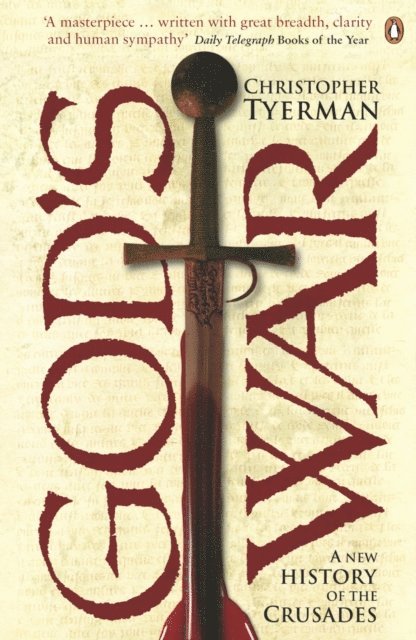
The story of how a group of warriors, driven by faith, greed and wanderlust, carved out new Christian-ruled states in the Middle East is one of the most extraordinary of all epics. The crusaders' stunning initial success started a sequence of great Crusades, each with its own story, that fundamentally shaped the Christian and Muslim worlds for two centuries, until the last Crusader castles were finally expunged. The energy and commitment that sent army after army into the eastern Mediterranean also led to the invasion and conversion of Central and Baltic Europe, Spain, Portugal, the destruction of the Cathars in Provence and the settlement of America. Told with great verve and authority, God's War is the definitive account of a fascinating but also horrifying story.‘We are still living with the images and legends of the crusades…Tyerman tells us how the Church set about preaching the crusades, exploiting the perennial pessimism and guilt of the European nobility of the Middle Ages. He shows how crusading ideology penetrated the religious sensibility of the period, as well as its secular fiction and poetry…Of all the modern histories of the crusades it is the shrewdest, the most reliable and the most complete.’ – The Spectator
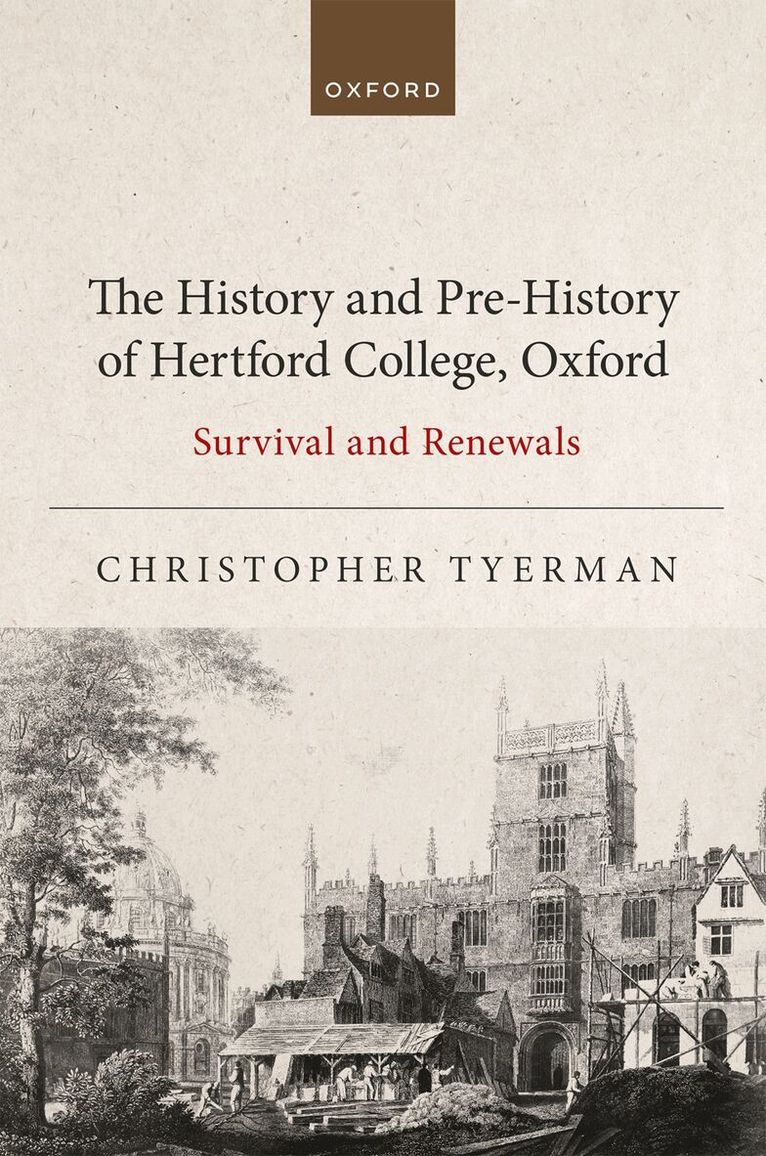
The History and Pre-History of Hertford College, Oxford
Survival and Renewals
Inbunden, Engelska, 2025
2 003 kr
Skickas inom 5-8 vardagar
Modern Hertford is one of Oxford's least famous colleges. Its chief claims to attention are its pioneering egalitarian reforms of its admissions system in the 1960s and 70s, its early embrace of co-residence in 1974, and its deliberate transformation from a poor, obscure, dilapidated, ill-favoured, and introspective conservative backwater to an open, outward-looking, financially secure, and academically sound partner in the collegiate university - such rapid transformations being somewhat rare in Oxford. It is also one of Oxford's youngest colleges and, having been founded only in 1874, ostensibly unsuitable for a book-length history. But behind modern Hertford sits an institutional history reaching back to the thirteenth century and the early days of the university itself, the direct residual legatee of two medieval academic halls (usually precarious, non-corporate licensed student hostels that dominated Oxford's first quarter millenium, providing teaching, accommodation, and the model for later more solidly established endowed colleges) Hart Hall (c. 1280-1740) and Magdalen Hall (c. 1480-1874) and the failed first Hertford College (1740-1816). On a small, intimate but precise scale, Hertford and its precursors map not only the internal history of the university but also the wider social, political, religious and educational settings over seven centuries: the creation of a medieval literate clerisy; sixteenth century humanism, gentrification and Reformation; seventeenth century religious and political upheaval and Civil War; the post-Restoration triumph of Tory Oxford; the latitudinarian eighteenth century; the beginnings of empire; nineteenth century, imperialism, plutocracy and reform; twentieth century slow democratisation; and twenty-first century technology. Based at every stage on deep trawls through rich, much hitherto unexplored archival evidence, and lit by close portraits of dons, grandees, scholars, students, and staff through the centuries, this book charts a story of repeated dislocation, precarity, ingenuity, and renewal, very different from the more familiar image of Oxford's established grandeur and serene progress towards modernity.
2 520 kr
Skickas inom 7-10 vardagar
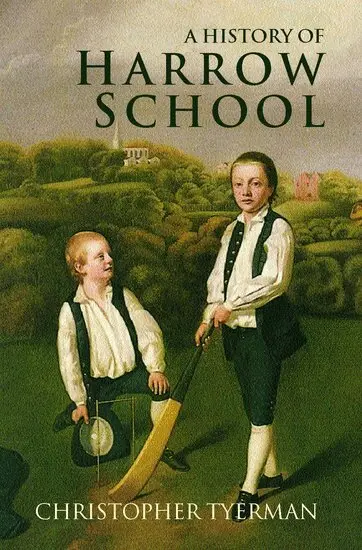
Harrow School rose from being one of scores of local grammar schools founded in the sixteenth and seventeenth centuries to become the second most famous school in the English-speaking world. Still shorthand for social exclusivity, its development supplies insights into British educational, cultural, and political history, as well as providing evidence for the study of public schools in general, one of Britain's most idiosyncratic yet successful social inventions. Avoiding polemic or apologia, this new history of Harrow, the first for over half a century, and the first to be based on unfettered access to the school and governors' archives, investigates the school's governors, masters, pupils, finances, social position, and curriculum, within the context of shifting political, cultural, and educational circumstances. It is a contribution to the social history of Britain as well as a critical study of a famous school. Unusually for school histories, this book, supported by a full academic apparatus of source references, frankly confronts the school's failings as well as its successes; its financial, educational, and sexual scandals as openly as its well-publicized eminence as the school of Byron, Churchill (and six other British prime ministers), and Nehru.
365 kr
Skickas inom 7-10 vardagar
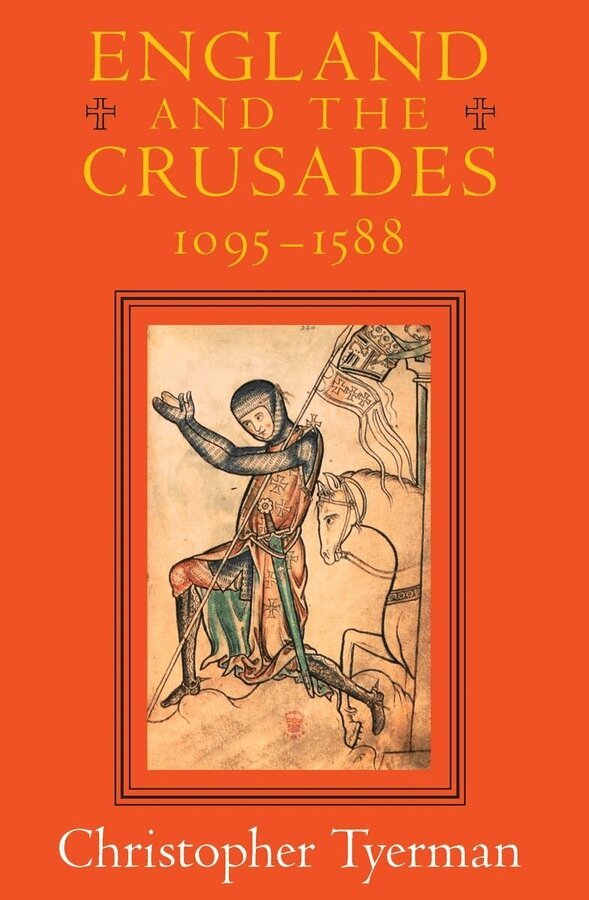
A potent mix of salvation and adventure, the Crusades were one of the most prominent features of medieval Europe, reflecting and directing religious and secular movements in Western society for half a millennium. Christopher Tyerman offers this book-length study of the role of England in the Crusades which focuses on the courtroom and council chamber rather than the battlefield. Tyerman seeks to demonstrate the impact of the Crusades on the political and economic functions of English society. Drawing on a wide range of archival, chronicle, and literary evidence, the text illustrates royal personalities, foreign policy, political intrigue, taxation and fundraisingm, and the crusading ethos that gripped England for hundreds of years.
148 kr
Skickas
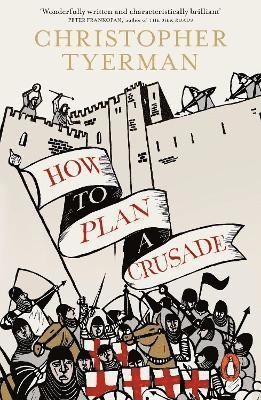
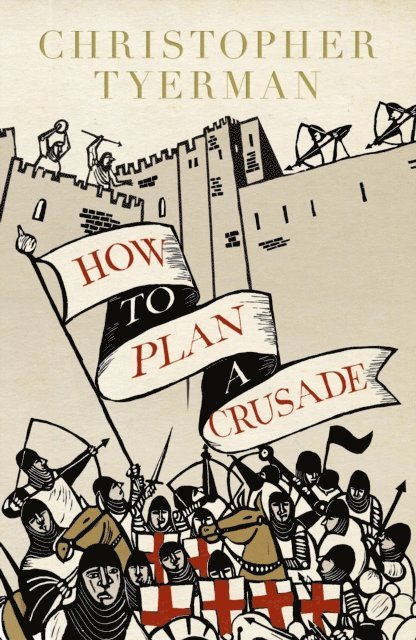
'Wonderfully written and characteristically brilliant' Peter Frankopan, author of The Silk Roads'Elegant, readable ... an impressive synthesis ... Not many historians could have done it' - Jonathan Sumption, Spectator'Tyerman's book is fascinating not just for what it has to tell us about the Crusades, but for the mirror it holds up to today's religious extremism' - Tom Holland, SpectatorThousands left their homelands in the Middle Ages to fight wars abroad. But how did the Crusades actually happen? From recruitment propaganda to raising money, ships to siege engines, medicine to the power of prayer, this vivid, surprising history shows holy war - and medieval society - in a new light.
342 kr
Tillfälligt slut
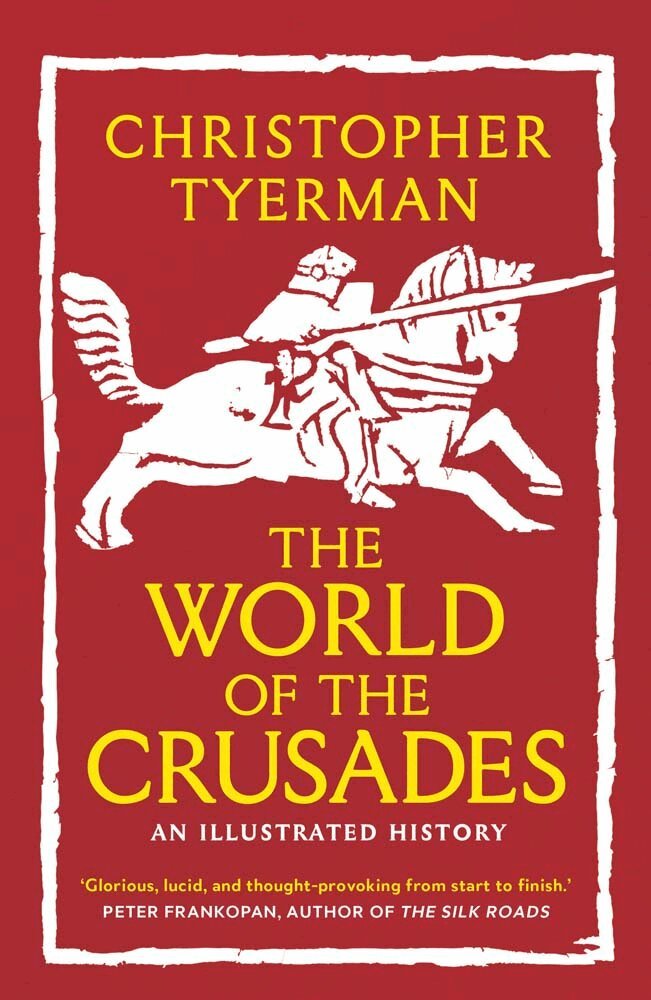
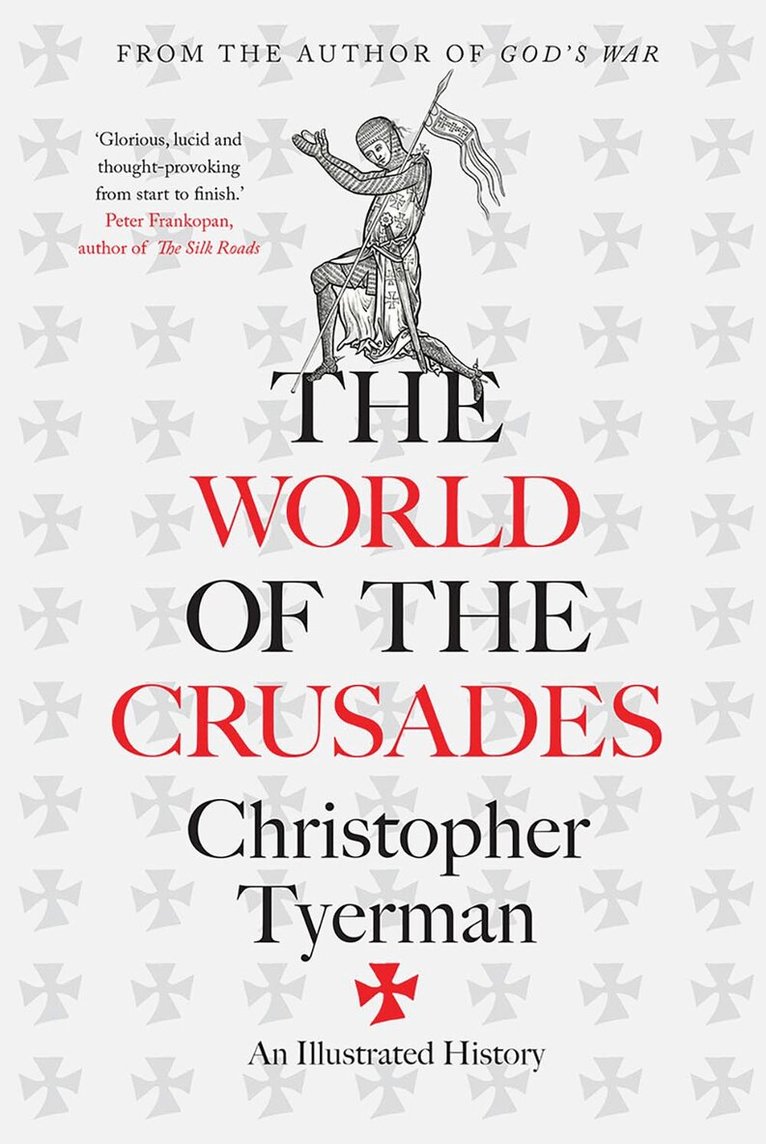
A lively reimagining of how the distant medieval world of war functioned, drawing on the objects used and made by crusaders Throughout the Middle Ages crusading was justified by religious ideology, but the resulting military campaigns were fueled by concrete objectives: land, resources, power, reputation. Crusaders amassed possessions of all sorts, from castles to reliquaries. Campaigns required material funds and equipment, while conquests produced bureaucracies, taxation, economic exploitation, and commercial regulation. Wealth sustained the Crusades while material objects, from weaponry and military technology to carpentry and shipping, conditioned them. This lavishly illustrated volume considers the material trappings of crusading wars and the objects that memorialized them, in architecture, sculpture, jewelry, painting, and manuscripts. Christopher Tyerman’s incorporation of the physical and visual remains of crusading enriches our understanding of how the crusaders themselves articulated their mission, how they viewed their place in the world, and how they related to the cultures they derived from and preyed upon. A note to readers: the grey-shaded pages throughout this volume look at the Crusades in detail, exploring individual themes such as food and drink, medicine, weapons, and women’s role in the Crusades. These short essays are interspersed throughout the chapters and the main text will continue after each one. For instance, “Taking the Cross” runs from pages 4 to 7, and the Introduction continues on p. 8.
202 kr
Skickas inom 7-10 vardagar
A lively reimagining of how the distant medieval world of war functioned, drawing on the objects used and made by crusaders Throughout the Middle Ages crusading was justified by religious ideology, but the resulting military campaigns were fueled by concrete objectives: land, resources, power, reputation. Crusaders amassed possessions of all sorts, from castles to reliquaries. Campaigns required material funds and equipment, while conquests produced bureaucracies, taxation, economic exploitation, and commercial regulation. Wealth sustained the Crusades while material objects, from weaponry and military technology to carpentry and shipping, conditioned them. This lavishly illustrated volume considers the material trappings of crusading wars and the objects that memorialized them, in architecture, sculpture, jewelry, painting, and manuscripts. Christopher Tyerman’s incorporation of the physical and visual remains of crusading enriches our understanding of how the crusaders themselves articulated their mission, how they viewed their place in the world, and how they related to the cultures they derived from and preyed upon. A note to readers: the grey-shaded pages throughout this volume look at the Crusades in detail, exploring individual themes such as food and drink, medicine, weapons, and women’s role in the Crusades. These short essays are interspersed throughout the chapters and the main text will continue after each one. For instance, “Taking the Cross” runs from pages 4 to 7, and the Introduction continues on p. 8.
488 kr
Skickas inom 10-15 vardagar
What were the 'Crusades'? Were the great Christian expeditions to invade the Holy Land in fact 'Crusades' at all? In this radical and compelling new treatment, Christopher Tyerman questions the very nature of our belief in the Crusades, showing how historians writing more than a century after the First Crusade retrospectively invented the idea of the 'Crusade'. Using these much later sources, all subsequent historians up to the present day have fallen into the same trap of following propaganda from a much later period to explain events that were understood quite differently by contemporaries.
Practices of Crusading
Image and Action from the Eleventh to the Sixteenth Centuries
Häftad, Engelska, 2020
638 kr
Skickas inom 10-15 vardagar
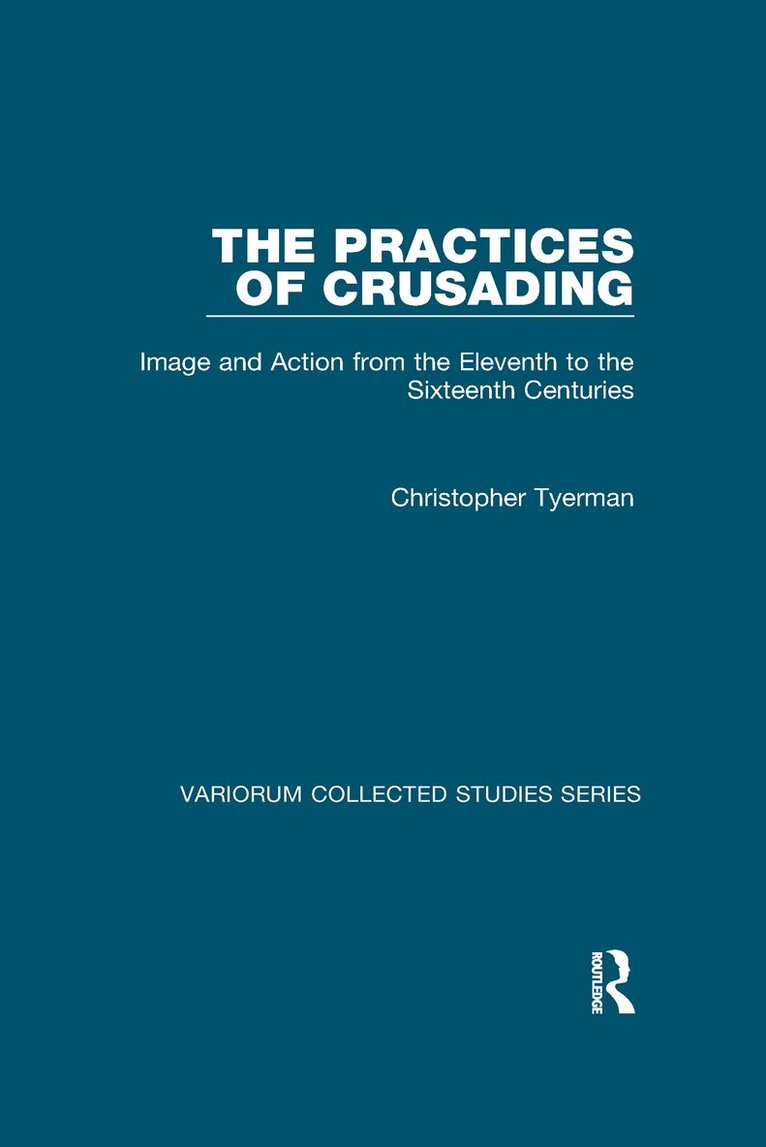
The crusades influenced western European society in the middle ages far beyond the military campaigns themselves. Reactions and involvement did not always follow the assumptions of ideology or supporters, medieval or modern. In this wide ranging collection of articles spanning thirty years, Christopher Tyerman explores the relationships between action and perception, ambition and practice, propaganda and support. One section concentrates on the role the crusade played in the politics and elite culture of the early fourteenth century, particularly in France. A further series of essays examines the nature of crusading as a phenomenon from the twelfth to the sixteenth centuries, notably the contrasts between official, literary and popular reception, and how it was variously understood by contemporaries and promoted by apologists in England, continental Europe and the Baltic. Finally, the structure of crusading armies is explored in a sequence that analyses the organisation of expeditions, including communal decision-making on the First Crusade, the sociology of recruitment and, in a previously unpublished major study, the importance of pay to crusaders from 1096 onwards.The crusades influenced western European society in the middle ages far beyond the military campaigns themselves. Reactions and involvement did not always follow the assumptions of ideology or supporters, medieval or modern. In this wide ranging collection of articles spanning thirty years, Christopher Tyerman explores the relationships between action and perception, ambition and practice, propaganda and support. One section concentrates on the role the crusade played in the politics and elite culture of the early fourteenth century, particularly in France. A further series of essays examines the nature of crusading as a phenomenon from the twelfth to the sixteenth centuries, notably the contrasts between official, literary and popular reception, and how it was variously understood by contemporaries and promoted by apologists in England, continental Europe and the Baltic. Finally, the structure of crusading armies is explored in a sequence that analyses the organisation of expeditions, including communal decision-making on the First Crusade, the sociology of recruitment and, in a previously unpublished major study, the importance of pay to crusaders from 1096 onwards.
1 202 kr
Skickas inom 5-8 vardagar
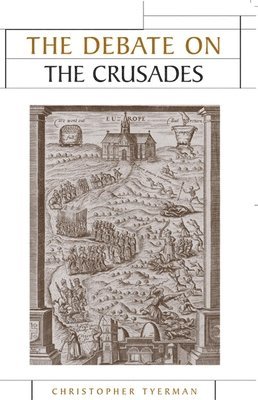
David Hume, the eighteenth century philosopher, famously declared that ‘the crusades engrossed the attention of Europe and have ever since engaged the curiosity of man kind’. This is the first book length study of how succeeding generations from the First Crusade in 1099 to the present day have understood, refashioned, moulded and manipulated accounts of these medieval wars of religion to suit changing contemporary circumstances and interests. The crusades have attracted some of the leading historical writers, scholars and controversialists from John Foxe (of Book of Martyrs fame), to the philosophers G.W. Leibniz, Voltaire and David Hume, to historians such as William Robertson, Edward Gibbon and Leopold Ranke. Accessibly written, a history of histories and historians, the book will be of interest to students and researchers of crusading history from sixth form to postgraduate level and beyond and to cultural historians of the use of the past and of medievalism.
266 kr
Skickas inom 7-10 vardagar
David Hume, the eighteenth century philosopher, famously declared that ‘the crusades engrossed the attention of Europe and have ever since engaged the curiosity of man kind’. This is the first book length study of how succeeding generations from the First Crusade in 1099 to the present day have understood, refashioned, moulded and manipulated accounts of these medieval wars of religion to suit changing contemporary circumstances and interests. The crusades have attracted some of the leading historical writers, scholars and controversialists from John Foxe (of Book of Martyrs fame), to the philosophers G.W. Leibniz, Voltaire and David Hume, to historians such as William Robertson, Edward Gibbon and Leopold Ranke. Accessibly written, a history of histories and historians, the book will be of interest to students and researchers of crusading history from sixth form to postgraduate level and beyond and to cultural historians of the use of the past and of medievalism.
Practices of Crusading
Image and Action from the Eleventh to the Sixteenth Centuries
Inbunden, Engelska, 2013
1 570 kr
Tillfälligt slut
The crusades influenced western European society in the middle ages far beyond the military campaigns themselves. Reactions and involvement did not always follow the assumptions of ideology or supporters, medieval or modern. In this wide ranging collection of articles spanning thirty years, Christopher Tyerman explores the relationships between action and perception, ambition and practice, propaganda and support. One section concentrates on the role the crusade played in the politics and elite culture of the early fourteenth century, particularly in France. A further series of essays examines the nature of crusading as a phenomenon from the twelfth to the sixteenth centuries, notably the contrasts between official, literary and popular reception, and how it was variously understood by contemporaries and promoted by apologists in England, continental Europe and the Baltic. Finally, the structure of crusading armies is explored in a sequence that analyses the organisation of expeditions, including communal decision-making on the First Crusade, the sociology of recruitment and, in a previously unpublished major study, the importance of pay to crusaders from 1096 onwards.The crusades influenced western European society in the middle ages far beyond the military campaigns themselves. Reactions and involvement did not always follow the assumptions of ideology or supporters, medieval or modern. In this wide ranging collection of articles spanning thirty years, Christopher Tyerman explores the relationships between action and perception, ambition and practice, propaganda and support. One section concentrates on the role the crusade played in the politics and elite culture of the early fourteenth century, particularly in France. A further series of essays examines the nature of crusading as a phenomenon from the twelfth to the sixteenth centuries, notably the contrasts between official, literary and popular reception, and how it was variously understood by contemporaries and promoted by apologists in England, continental Europe and the Baltic. Finally, the structure of crusading armies is explored in a sequence that analyses the organisation of expeditions, including communal decision-making on the First Crusade, the sociology of recruitment and, in a previously unpublished major study, the importance of pay to crusaders from 1096 onwards.