Chun Lai – författare
Visar alla böcker från författaren Chun Lai. Handla med fri frakt och snabb leverans.
14 produkter
Routledge Handbook of Language Learning and Teaching Beyond the Classroom
Av Hayo Reinders, Chun Lai m. fl.
Inbunden, 2022
3675 kr
Lägg i varukorg
Informal language learning beyond the classroom plays an important and growing role in language learning and teaching. This Handbook brings together the existing body of research and unites the various disciplines that have explored this area, in order to present the current state of knowledge in …
Routledge Handbook of Language Learning and Teaching Beyond the Classroom
Av Hayo Reinders, Chun Lai m. fl.
Häftad, 2024
684 kr
Lägg i varukorg
Informal language learning beyond the classroom plays an important and growing role in language learning and teaching. This Handbook brings together the existing body of research and unites the various disciplines that have explored this area, in order to present the current state of knowledge in …
Routledge Handbook of Language Learning and Teaching Beyond the Classroom
Av Pia Sundqvist, Chun Lai m. fl.
E-bok, 2022
724 kr
Lägg i varukorg
Informal language learning beyond the classroom plays an important and growing role in language learning and teaching. This Handbook brings together the existing body of research and unites the various disciplines that have explored this area, in order to present the current state of knowledge in …
Routledge Handbook of Language Learning and Teaching Beyond the Classroom
Av Pia Sundqvist, Chun Lai m. fl.
E-bok, 2022
724 kr
Lägg i varukorg
Informal language learning beyond the classroom plays an important and growing role in language learning and teaching. This Handbook brings together the existing body of research and unites the various disciplines that have explored this area, in order to present the current state of knowledge in …
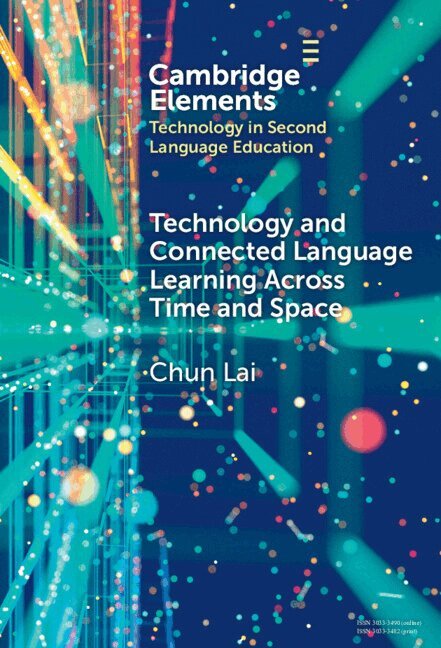
Technology and Connected Language Learning Across Time and Space
Av Chun Lai
Inbunden, 2026
938 kr
Lägg i varukorg
Language is integral to human doing, being, becoming and belonging, and its acquisition is naturally distributed in and across activity spaces over time. Different learning experiences form 'a dialectical unity', where one brings the others into existence, and the capacities fostered in one inform …
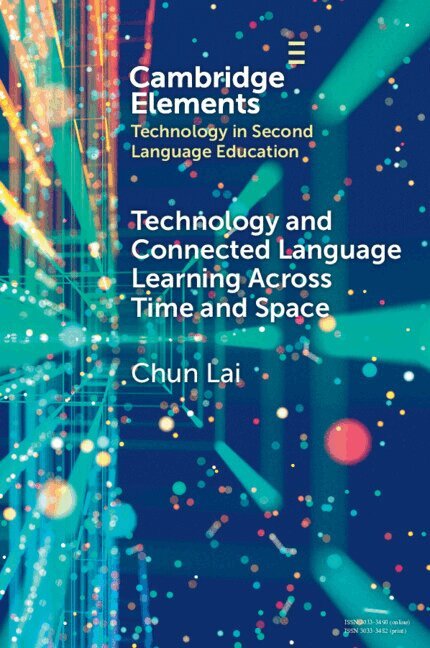
Technology and Connected Language Learning Across Time and Space
Av Chun Lai
Häftad, 2026
291 kr
Lägg i varukorg
Language is integral to human doing, being, becoming and belonging, and its acquisition is naturally distributed in and across activity spaces over time. Different learning experiences form 'a dialectical unity', where one brings the others into existence, and the capacities fostered in one inform …
Technology and Connected Language Learning Across Time and Space
Av Chun Lai
E-bok, 2026
296 kr
Lägg i varukorg
Technology and Connected Language Learning Across Time and Space
Av Chun Lai
E-bok, 2026
303 kr
Lägg i varukorg
Autonomous Language Learning with Technology
Beyond The Classroom
Häftad, 2018
515 kr
Lägg i varukorg
This book looks beyond the classroom, and focuses on out-of-class autonomous use of technology for language learning, discussing the theoretical frameworks, key findings and critical issues. The proliferation of digital language learning resources and tools is forcing language education into an era …
Autonomous Language Learning with Technology
Beyond The Classroom
Inbunden, 2017
2038 kr
Lägg i varukorg
This book looks beyond the classroom, and focuses on out-of-class autonomous use of technology for language learning, discussing the theoretical frameworks, key findings and critical issues. The proliferation of digital language learning resources and tools is forcing language education into an era …
Autonomous Language Learning with Technology
Beyond the Classroom
Av Chun Lai
E-bok, 2017
546 kr
Lägg i varukorg
This book looks beyond the classroom, and focuses on out-of-class autonomous use of technology for language learning, discussing the theoretical frameworks, key findings and critical issues. The proliferation of digital language learning resources and tools is forcing language education into an era …
Autonomous Language Learning with Technology
Beyond the Classroom
Av Chun Lai
E-bok, 2017
562 kr
Lägg i varukorg
This book looks beyond the classroom, and focuses on out-of-class autonomous use of technology for language learning, discussing the theoretical frameworks, key findings and critical issues. The proliferation of digital language learning resources and tools is forcing language education into an era …
Insights into Autonomy and Technology in Language Teaching
Av Chun Lai
Häftad, 2023
288 kr
Lägg i varukorg
Insights into Autonomy and Technology in Language Teaching
Av Chun Lai
E-bok, 2023
688 kr
Lägg i varukorg
Technology and autonomy share a common mission in language education, that is, to transform language education into learner-centered learning across boundaries. With this shared mission, technology and autonomy are closely intertwined, shaping the role of each other in language education. The two, …