Chung-Kuan Cheng – författare
Visar alla böcker från författaren Chung-Kuan Cheng. Handla med fri frakt och snabb leverans.
3 produkter
3 produkter
1 066 kr
Skickas inom 10-15 vardagar
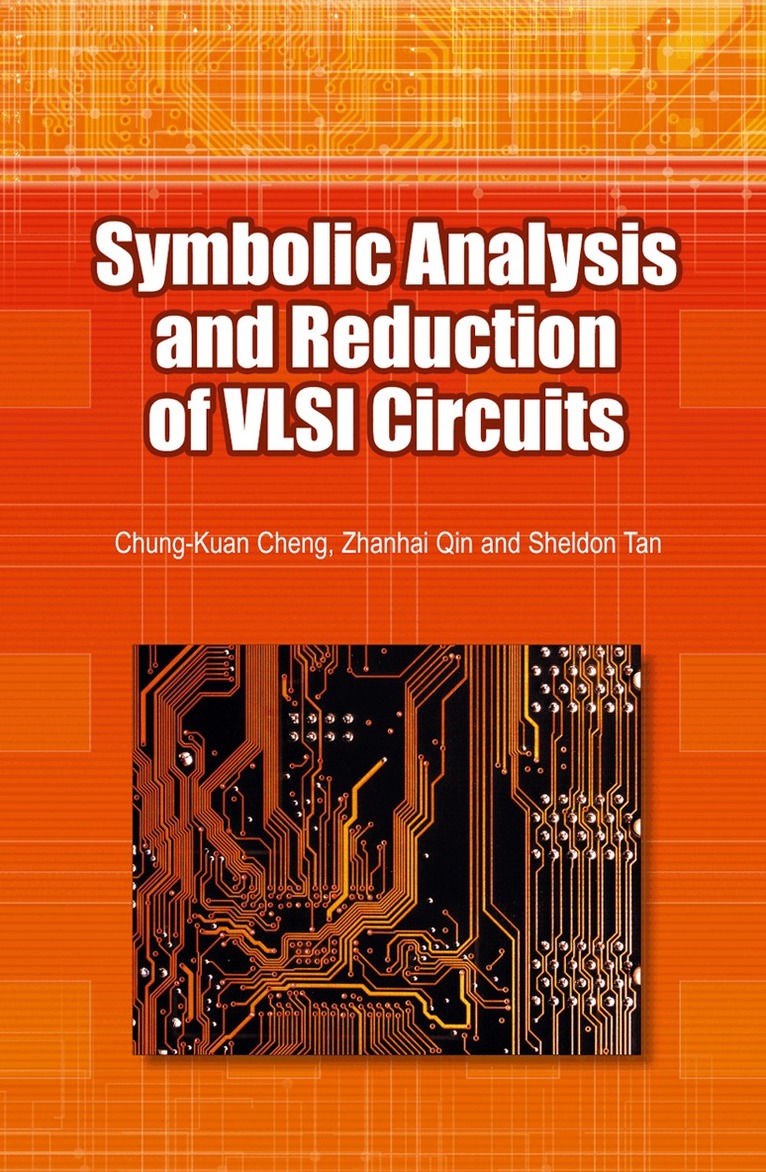
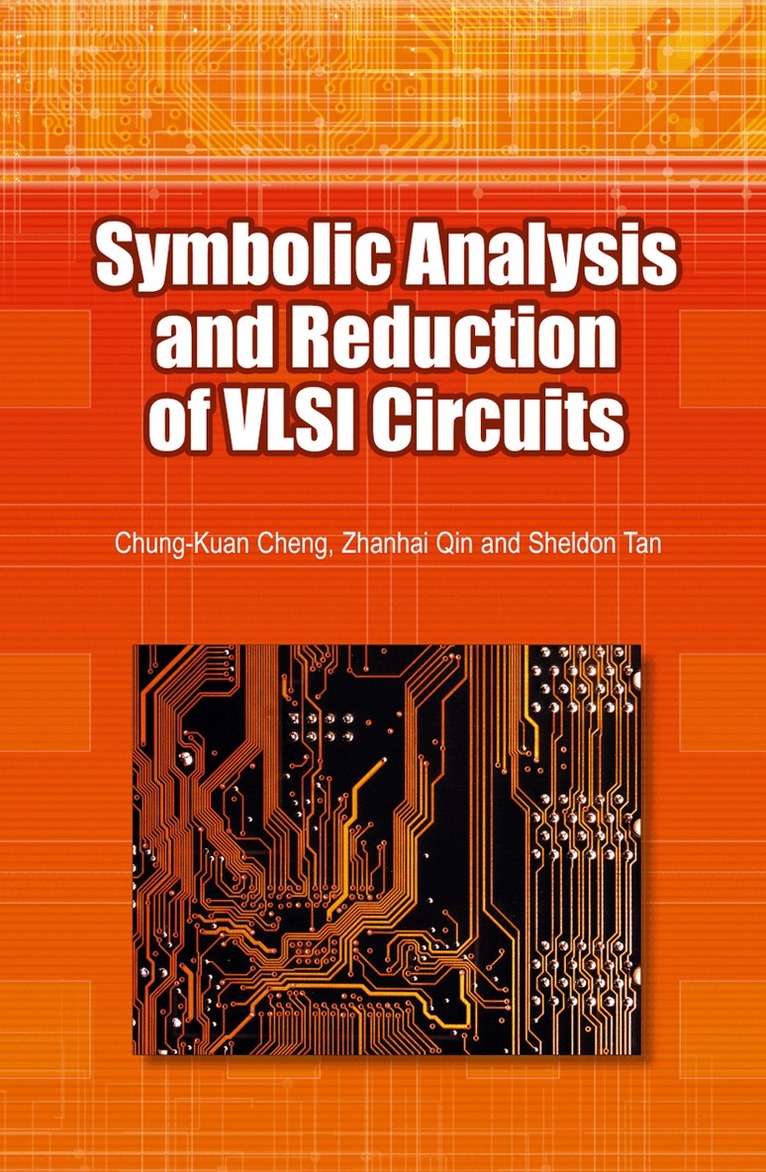
The IC industry, including digital and analog circuit design houses, electrical design automation software vendors, library and IP providers, faces significant challenges in designing nanometer VLSI systems. The design productivity gap between nanometer VLSI technologies and today's design capabilities mainly comes from the exponentially growing complexity of VLSI systems due to relentless pressures for higher integration. The physical effects on the performance and reliability of these systems are becoming more pronounced. The book includes the most updated discoveries such as Y-Delta transformation and DDD-graph symbolic representation, which allow analysis and modeling of much larger circuitry than ever before.
1 778 kr
Skickas inom 5-8 vardagar
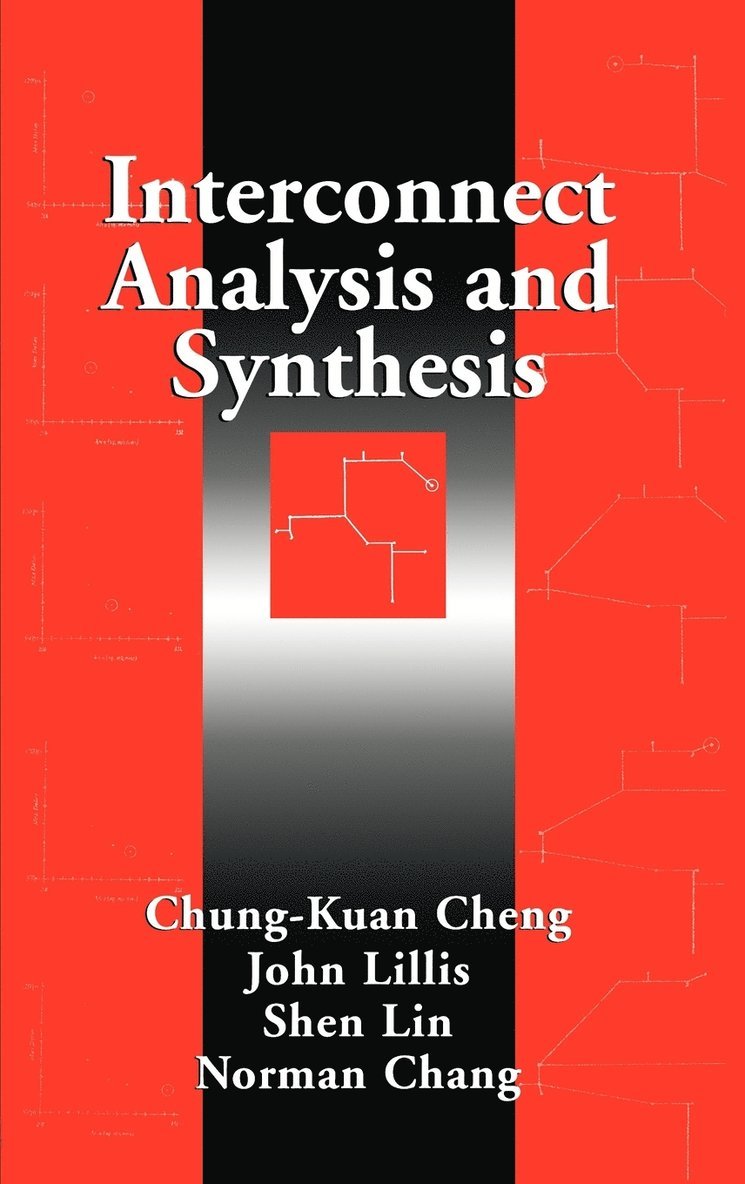
State-of-the-art methods and current perspectives on interconnect The irrepressible march toward smaller and faster integrated circuits has made interconnect a hot topic for semiconductor research. The effects of wire size, topology construction, and network design on system performance and reliability have all been thoroughly investigated in recent years. Interconnect Analysis and Synthesis provides CAD researchers and engineers with powerful, state-of-the-art tools for the analysis, design, and optimization of interconnect. It brings together a wealth of information previously scattered throughout the literature, explaining in depth available analysis techniques and presenting a range of CAD algorithms for synthesizing and optimizing interconnect. Along with examples and results from the semiconductor industry and 150 illustrations, this practical work features: Models for interconnect as well as devices and the impact of scaling trendsModern analysis techniques, from matrix reduction and moment matching to transmission-line analysisAn overview of the effects of inductance on on-chip interconnectFlexible CAD algorithms that can be generalized for different needs, from buffer insertion to wire sizing to routing topologyEmphasis on realistic problem formulations, addressing key design tradeoffs such as those between area and performance
1 066 kr
Skickas inom 10-15 vardagar
Symbolic analysis is an intriguing topic in VLSI designs.The analysis methods are crucial for the applications to the parasitic reduction and analog circuit evaluation. However, analyzing circuits symbolically remains a challenging research issue. Therefore, in this book, we survey the recent results as the progress of on-going works rather than as the solution of the field.For parasitic reduction, we approximate a huge amount of electrical parameters into a simplified RLC network. This reduction allows us to handle very large integrated circuits with given memory capacity and CPU time. A symbolic analysis approach reduces the circuit according to the network topology. Thus, the designer can maintain the meaning of the original network and perform the analysis hierarchically.For analog circuit designs, symbolic analysis provides the relation between the tunable parameters and the characteristics of the circuit. The analysis allows us to optimize the circuit behavior.The book is divided into three parts. Part I touches on the basics of circuit analysis in time domain and in s domain. For an s domain expression, the Taylor's expansion with s approaching infinity is equivalent to the time domain solution after the inverse Laplace transform. On the other hand, the Taylor's expansion when s approaches zero derives the moments of the output responses in time domain.Part II focuses on the techniques for parasitic reduction.In Chapter 2, we present the approximation methods to matchthe first few moments with reduced circuit orders.In Chapter 3, we apply the Y-Delta transformation to reduce the dynamic linear network. The method finds the exact values of the low order coefficients of the numerator and denominator of the transfer function and thus matches part of the moments. In Chapter 4, we handle two major issues of the Y-Deltatransformation: common factors in fractional expressions and round-off errors. Chapter 5 explains the stability of the reduced expression, in particular the Ruth-Hurwitz Criterion. We make an effort to describe the proof of the Criterion because the details are omitted in most of the contemporary textbooks. In Chapter 6, we present techniques to synthesize circuits to approximate the reduced expressions after the transformation.In Part III, we discuss symbolic generation of the determinants and cofactors for the application to analog designs. In Chapter 7, we depict the classical topological analysis approach. In Chapter 8, we describe a determinant decision diagram approach that exploits the sparsity of the matrix to accelerate the computation. In Chapter 9, we take only significant terms when we search through determinant decision diagram to approximate the solution.In Chapter 10, we extend the determinant decision diagramto a hierarchical model. The construction of the modules through the hierarchy is similar to the Y-Delta transformation in the sense that a byproduct of common factors appears in the numerator and denominator. Therefore, we describe the method to prune the common factors.