Claude Jeanrenaud - Böcker
Visar alla böcker från författaren Claude Jeanrenaud. Handla med fri frakt och snabb leverans.
3 produkter
3 produkter
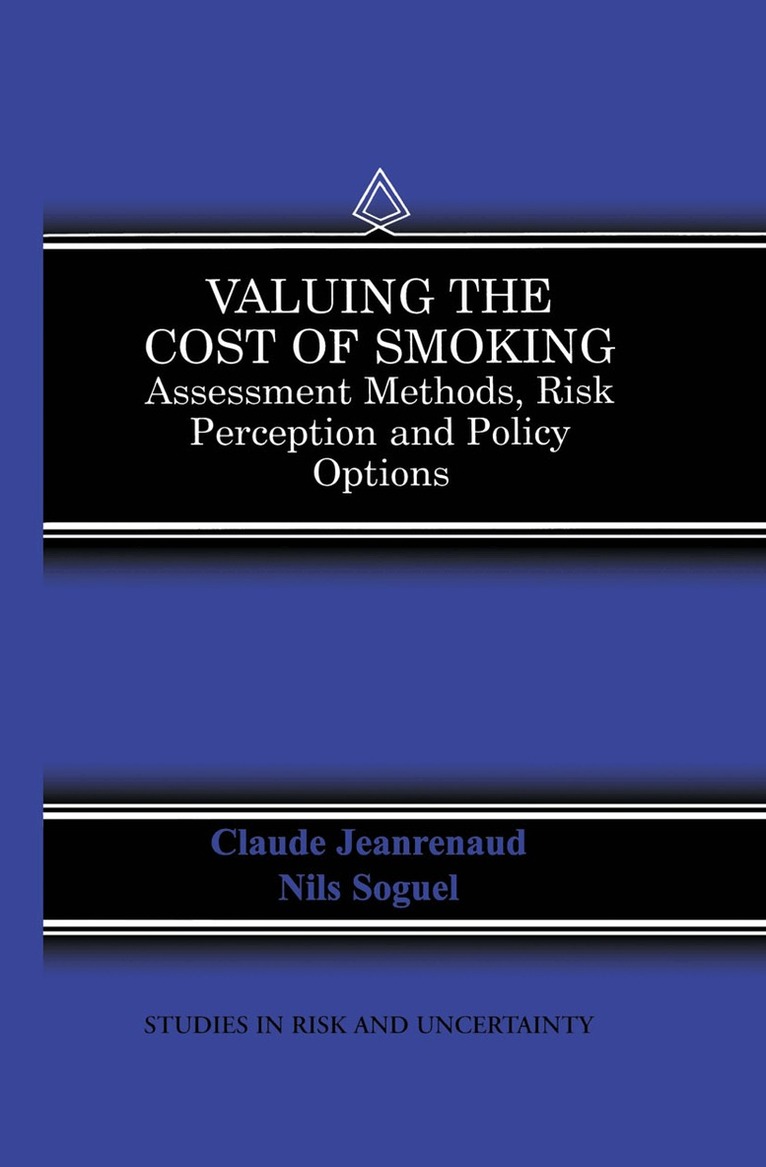
Valuing the Cost of Smoking
Assessment Methods, Risk Perception and Policy Options
Inbunden, Engelska, 1999
1 096 kr
Skickas inom 10-15 vardagar
The economic analysis of tobacco consumption is a complex and challenging issue which entails addressing many different questions: what is the economic burden of smoking and do smokers "pay their way"?; how do individuals perceive their own health risks?; what is the effect of the addictive properties of nicotine on the behaviour of a rational, utility-maximizing individual?; and what is the most effective way to discourage tobacco consumption? In this context, the assessment of the social burden of smoking using a cost-of-illness framework has played a central role since the beginning of the 1970s. Interest in this type of study has grown even more in the wake of the lawsuits brought by American states against the tobacco companies with the aim of recovering excessive medical costs resulting from smoking-related diseases. Economists argue that there is no need for government intervention on condition that smokers receive accurate information about the health hazards - including the risk of addiction - and that they bear all the costs of smoking themselves.The purpose of this text is to review the various methods used to value the adverse health outcomes of smoking, from the standard human capital approach to the preference-based methods with which intangibles can be assessed. The volume also also aims to help readers better understand the behaviour of smokers as well as the factors that determine the demand for cigarettes. Finally, the volume contains a review of the scientific evidence regarding the effectiveness of taxes in reducing tobacco use.
1 757 kr
Skickas inom 7-10 vardagar
The relationship between sport and the media raises numerous issues and problems. This book outlines the current major policy concerns relating to the commercialization of sports broadcasting rights. What is the impact of marketing arrangements between content owners and media companies - a combination of joint selling with exclusivity - on fans, big-city and small-city clubs, TV markets, and finally on consumer welfare? Do consumers in Europe and the USA receive good value for the fees they pay to broadcasters? And does the way programs are delivered to the viewers (free-to-air, pay-TV or pay-per-view) have a positive or negative influence on the deal consumers receive? These are some of the central issues discussed within this book by the international team of contributors.Providing a comprehensive view on the relations between the sports media rights market, the sports market and the different partakers in the process (club, leagues, events organisers, TV operators, intellectual property owners), this book will be of great interest to academics and sports economists alike. With its clear and simple presentation, The Economics of Sport and the Media will also be accessible to sport federations, leagues, clubs, and policy makers at governmental and non-governmental agencies.
Valuing the Cost of Smoking
Assessment Methods, Risk Perception and Policy Options
Häftad, Engelska, 2012
1 096 kr
Skickas inom 10-15 vardagar
CLAUDEJEANRENAUD NILS SOGUEL Smoking is a very common habit all over the world. The prevalence rate ranges from 20% - 40% in industrialised countries, and is dramatically increasing in the developing world. Smoking is risky and there is ample scientific evidence to support this statement. We know that smoking is a major cause of disease and premature death, in view of the fact that 3 million people die each year worldwide as a result of their smoking habit. Twenty years ago, the U. S. Surgeon General identified smoking as the single most important cause of morbidity and premature death (USDHEW, 1979). Tobacco consnmption reduces life expectancy vastly. Epidemiological research shows that people who have died from a smoking-related disease would, on average, have lived for an additional 15 years had they not been smokers (Warner, 1987). The economic analysis of tobacco consumption is a complex and challenging issue, which entails addressing many different questions. What is the economic burden of smoking and do smokers "pay their way"? How do individuals perceive their own health risks? What is the effect of the addicting properties of nicotine on the behaviour of a rational, utility maximizing individual? Lastly, what is the most effective way to discourage tobacco consumption? In this context, the assessment of the social burden of smoking using a cost-of-illness framework has played a central role since the beginning of the seventies.