Clayton Pierce – författare
Visar alla böcker från författaren Clayton Pierce. Handla med fri frakt och snabb leverans.
10 produkter
Philosophy, Psychoanalysis and Emancipation
Collected Papers of Herbert Marcuse, Volume 5
Av Herbert Marcuse, Douglas Kellner m. fl.
Inbunden, 2010
2510 kr
Lägg i varukorg
Edited by Douglas Kellner and Clayton Pierce, Philosophy, Psychoanalysis and Emancipation is the fifth volume of Herbert Marcuse's collected papers. Containing some of Marcuse’s most important work, this book presents for the first time his unique syntheses of philosophy, psychoanalysis, and …
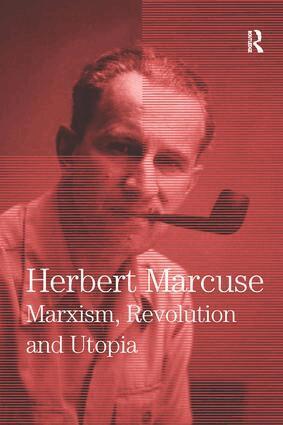
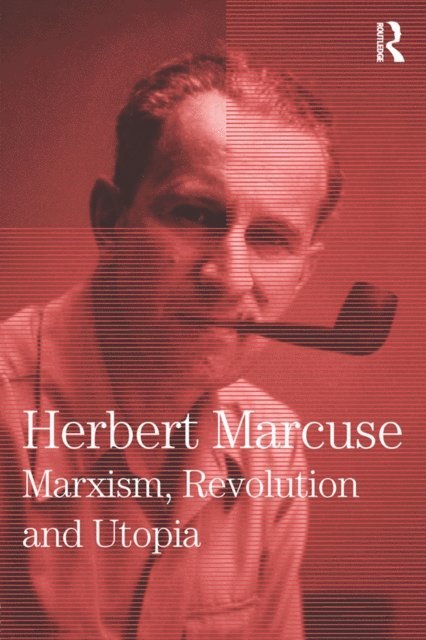
Marxism, Revolution and Utopia
Collected Papers of Herbert Marcuse, Volume 6
Av Herbert Marcuse, Douglas Kellner m. fl.
Inbunden, 2014
2887 kr
Lägg i varukorg
This collection assembles some of Herbert Marcuse’s most important work and presents for the first time his responses to and development of classic Marxist approaches to revolution and utopia, as well as his own theoretical and political perspectives.This sixth and final volume of Marcuse's …
Marcuse's Challenge to Education
Av Douglas Kellner, Tyson Lewis m. fl.
Inbunden, 2009
1310 kr
Lägg i varukorg
Marcuse’s Challenge to Education, a collection of unpublished lecture notes by the thinker himself as well as essays by scholars who have explicated his theories, examines Herbert Marcuse’s ground-breaking critique of education as well as his own pedagogical alternatives. Edited by Douglas Kellner, …
Marcuse's Challenge to Education
Av Douglas Kellner, Tyson Lewis m. fl.
E-bok, 2009
1394 kr
Lägg i varukorg
Marcuse''s Challenge to Education , a collection of unpublished lecture notes by the thinker himself as well as essays by scholars who have explicated his theories, examines Herbert Marcuse''s ground-breaking critique of education as well as his own pedagogical alternatives. Edited by Douglas …
Philosophy, Psychoanalysis and Emancipation
Collected Papers of Herbert Marcuse, Volume 5
Av Herbert Marcuse, Douglas Kellner m. fl.
Häftad, 2017
807 kr
Lägg i varukorg
Edited by Douglas Kellner and Clayton Pierce, Philosophy, Psychoanalysis and Emancipation is the fifth volume of Herbert Marcuse's collected papers. Containing some of Marcuse’s most important work, this book presents for the first time his unique syntheses of philosophy, psychoanalysis, and …
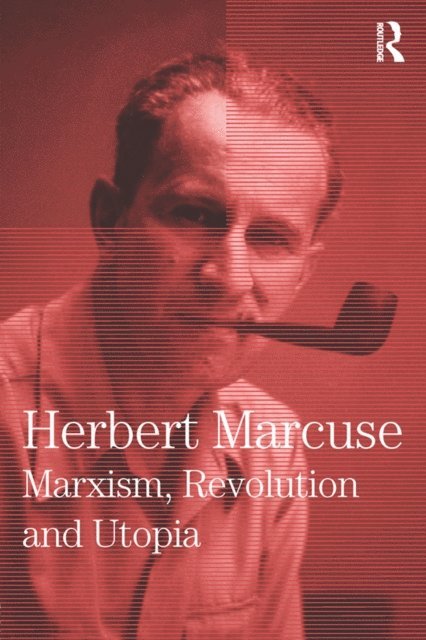
Marxism, Revolution and Utopia
Collected Papers of Herbert Marcuse, Volume 6
Av Herbert Marcuse, Douglas Kellner m. fl.
Häftad, 2017
807 kr
Lägg i varukorg
This collection assembles some of Herbert Marcuse’s most important work and presents for the first time his responses to and development of classic Marxist approaches to revolution and utopia, as well as his own theoretical and political perspectives.This sixth and final volume of Marcuse's …
Philosophy, Psychoanalysis and Emancipation
Collected Papers of Herbert Marcuse, Volume 5
Av Herbert Marcuse, Clayton Pierce m. fl.
E-bok, 2010
932 kr
Lägg i varukorg
Edited by Douglas Kellner and Clayton Pierce, Philosophy, Psychoanalysis and Emancipation is the fifth volume of Herbert Marcuse''s collected papers. Containing some of Marcuse’s most important work, this book presents for the first time his unique syntheses of philosophy, psychoanalysis, and …
Philosophy, Psychoanalysis and Emancipation
Collected Papers of Herbert Marcuse, Volume 5
Av Herbert Marcuse, Clayton Pierce m. fl.
E-bok, 2010
932 kr
Lägg i varukorg
Edited by Douglas Kellner and Clayton Pierce, Philosophy, Psychoanalysis and Emancipation is the fifth volume of Herbert Marcuse''s collected papers. Containing some of Marcuse’s most important work, this book presents for the first time his unique syntheses of philosophy, psychoanalysis, and …
Marxism, Revolution and Utopia
Collected Papers of Herbert Marcuse, Volume 6
Av Herbert Marcuse, Clayton Pierce m. fl.
E-bok, 2014
953 kr
Lägg i varukorg
This collection assembles some of Herbert Marcuse’s most important work and presents for the first time his responses to and development of classic Marxist approaches to revolution and utopia, as well as his own theoretical and political perspectives. This sixth and final volume of Marcuse''s …
Marxism, Revolution and Utopia
Collected Papers of Herbert Marcuse, Volume 6
Av Herbert Marcuse, Clayton Pierce m. fl.
E-bok, 2014
953 kr
Lägg i varukorg
This collection assembles some of Herbert Marcuse’s most important work and presents for the first time his responses to and development of classic Marxist approaches to revolution and utopia, as well as his own theoretical and political perspectives. This sixth and final volume of Marcuse''s …