Colette Colligan – författare
Visar alla böcker från författaren . Handla med fri frakt och snabb leverans.
9 produkter
9 produkter
8 201 kr
Skickas inom 10-15 vardagar
The four-volume set provides a compendium of rare primary sources focusing on pornography in nineteenth-century Britain for students and scholars alike. The collection contains police records, criminal trial accounts, social purity files and clippings, catalogues, advertisements, parliamentary debates, bibliographic information produced during the period, and hard to find original pornographic publications. These sources can be used individually and in combination to historicise the emergence of pornography and investigate the aspects of society that it illuminates. Despite its current cultural impact, pornography has a surprisingly short history. The Oxford English Dictionary notes usage of the term only as far back as 1824, but something can exist before a term arises to define it. Before pornography as a term emerged, the categories of obscenity and indecency were used to prosecute erotic materials that would be disruptive to the social order. Over the course of the nineteenth century, pornography emerged from a philosophic tradition that emphasized liberalism. Satirists, printers, writers, and publishers connected liberty in sexuality with liberty in politics. Alongside the radical milieu came the development of scientific pornography. Both science and pornography fed the need for information about sexuality but the margins between the two remained ambiguous and much contested in the nineteenth century. After the mid-century mark, the growth of consumer culture allowed for the deepening of an elite market for the rich and a separate market for the masses. While Britain’s global reach expanded outwards, mass pornography made for and about the poor materialized based upon industrialization and the development of urban working-class culture. Both the elite and mass markets built off and eroticized modernizing gender ideals and new sexual identities. Finally, new technologies like photography and stereolithography allowed for an eventual emphasis on the visual form. Visual pornography remained subsidiary to erotic texts in the nineteenth century, but the kernel of the triumph of the visual began in the period. With these changes, pornography emerged as both a word and a concept. Pornography proves key to understanding some of the main attractions of the modern world. The pornography of the period documents how people imagined sexuality in their changing society. It thus forms a record that can be used to investigate people’s fantasies about self and others, about emergent identities, about sexual desires, about the pleasures of wealth and power. It shows their assumptions about bodies, about social class, race, and gender. And it demonstrates the battles that took place over the articulation of those fantasies. These volumes provide primary sources that give scholars and students a starting point to explore these shifts and how the historic context shaped ideas of sexuality at every level.

Inbunden, Engelska, 2026
1 744 kr
Skickas inom 10-15 vardagar
This volume examines the growth of high-end literary pornographic productions that took place towards the final quarter of the nineteenth century and were largely published on the continent where control of production was lax. These publications were published and circulated for the elite. Publications that came from this group and period include The Pearl, My Secret Life, Romance of Lust, and The Sins of the Cities of the Plain; or, The Recollections of a Mary-Ann, with Short Essays on Sodomy and Tribadism. The volume includes Home Office and Foreign Office records that detail the methods attempted to limit the spread of pornography.
E-bok
PDF, Engelska, 2026970 kr
Läs direkt efter köp
This volume examines the growth of high-end literary pornographic productions that took place towards the final quarter of the nineteenth century and were largely published on the continent where control of production was lax. These publications were published and circulated for the elite. Publications that came from this group and period include The Pearl, My Secret Life, Romance of Lust, and The Sins of the Cities of the Plain; or, The Recollections of a Mary-Ann, with Short Essays on Sodomy and Tribadism. The volume includes Home Office and Foreign Office records that detail the methods attempted to limit the spread of pornography.
E-bok
Engelska, 2026970 kr
Läs direkt efter köp
This volume examines the growth of high-end literary pornographic productions that took place towards the final quarter of the nineteenth century and were largely published on the continent where control of production was lax. These publications were published and circulated for the elite. Publications that came from this group and period include The Pearl, My Secret Life, Romance of Lust, and The Sins of the Cities of the Plain; or, The Recollections of a Mary-Ann, with Short Essays on Sodomy and Tribadism. The volume includes Home Office and Foreign Office records that detail the methods attempted to limit the spread of pornography.
Häftad, Engelska, 2016
1 026 kr
Skickas inom 10-15 vardagar
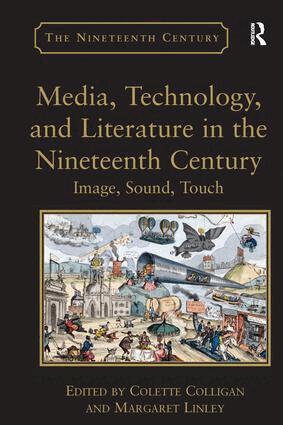
Operating at the intersection where new technology meets literature, this collection discovers the relationship among image, sound, and touch in the long nineteenth century. The chapters speak to the special mixed-media properties of literature, while exploring the important interconnections of science, technology, and art at the historical moment when media was being theorized, debated, and scrutinized. Each chapter focuses on a specific visual, acoustic, or haptic dimension of media, while also calling attention to the relationships among the three. Famous works such as Wordsworth's "I wandered lonely as a cloud" and Shelley's Frankenstein are discussed alongside a range of lesser-known literary, scientific, and pornographic writings. Topics include the development of a print culture for the visually impaired; the relationship between photography and narrative; the kaleidoscope and modern urban experience; Christmas gift books; poetry, painting and music as remediated forms; the interface among the piano, telegraph, and typewriter; Ernst Heinrich Weber's model of rationalized tactility; and how the shift from visual to auditory telegraphic instruments amplified anxieties about the place of women in nineteenth-century information networks. Full of surprising insights and connections, the collection offers new impetus for stimulating historical conversations and debates about nineteenth-century media, while also contributing fresh perspectives on new media and (re)mediation today.
1 218 kr
Läs direkt efter köp
Operating at the intersection where new technology meets literature, this collection discovers the relationship among image, sound, and touch in the long nineteenth century. The chapters speak to the special mixed-media properties of literature, while exploring the important interconnections of science, technology, and art at the historical moment when media was being theorized, debated, and scrutinized. Each chapter focuses on a specific visual, acoustic, or haptic dimension of media, while also calling attention to the relationships among the three. Famous works such as Wordsworth''s "I wandered lonely as a cloud" and Shelley''s Frankenstein are discussed alongside a range of lesser-known literary, scientific, and pornographic writings. Topics include the development of a print culture for the visually impaired; the relationship between photography and narrative; the kaleidoscope and modern urban experience; Christmas gift books; poetry, painting and music as remediated forms; the interface among the piano, telegraph, and typewriter; Ernst Heinrich Weber''s model of rationalized tactility; and how the shift from visual to auditory telegraphic instruments amplified anxieties about the place of women in nineteenth-century information networks. Full of surprising insights and connections, the collection offers new impetus for stimulating historical conversations and debates about nineteenth-century media, while also contributing fresh perspectives on new media and (re)mediation today.
E-bok
PDF, Engelska, 20161 218 kr
Läs direkt efter köp
Operating at the intersection where new technology meets literature, this collection discovers the relationship among image, sound, and touch in the long nineteenth century. The chapters speak to the special mixed-media properties of literature, while exploring the important interconnections of science, technology, and art at the historical moment when media was being theorized, debated, and scrutinized. Each chapter focuses on a specific visual, acoustic, or haptic dimension of media, while also calling attention to the relationships among the three. Famous works such as Wordsworth''s "I wandered lonely as a cloud" and Shelley''s Frankenstein are discussed alongside a range of lesser-known literary, scientific, and pornographic writings. Topics include the development of a print culture for the visually impaired; the relationship between photography and narrative; the kaleidoscope and modern urban experience; Christmas gift books; poetry, painting and music as remediated forms; the interface among the piano, telegraph, and typewriter; Ernst Heinrich Weber''s model of rationalized tactility; and how the shift from visual to auditory telegraphic instruments amplified anxieties about the place of women in nineteenth-century information networks. Full of surprising insights and connections, the collection offers new impetus for stimulating historical conversations and debates about nineteenth-century media, while also contributing fresh perspectives on new media and (re)mediation today.
Inbunden, Engelska, 2011
3 576 kr
Skickas inom 3-6 vardagar
Operating at the intersection where new technology meets literature, this collection discovers the relationship among image, sound, and touch in the long nineteenth century. The chapters speak to the special mixed-media properties of literature, while exploring the important interconnections of science, technology, and art at the historical moment when media was being theorized, debated, and scrutinized. Each chapter focuses on a specific visual, acoustic, or haptic dimension of media, while also calling attention to the relationships among the three. Famous works such as Wordsworth's "I wandered lonely as a cloud" and Shelley's Frankenstein are discussed alongside a range of lesser-known literary, scientific, and pornographic writings. Topics include the development of a print culture for the visually impaired; the relationship between photography and narrative; the kaleidoscope and modern urban experience; Christmas gift books; poetry, painting and music as remediated forms; the interface among the piano, telegraph, and typewriter; Ernst Heinrich Weber's model of rationalized tactility; and how the shift from visual to auditory telegraphic instruments amplified anxieties about the place of women in nineteenth-century information networks. Full of surprising insights and connections, the collection offers new impetus for stimulating historical conversations and debates about nineteenth-century media, while also contributing fresh perspectives on new media and (re)mediation today.
Inbunden, Engelska, 2026
890 kr
Skickas inom 5-8 vardagar
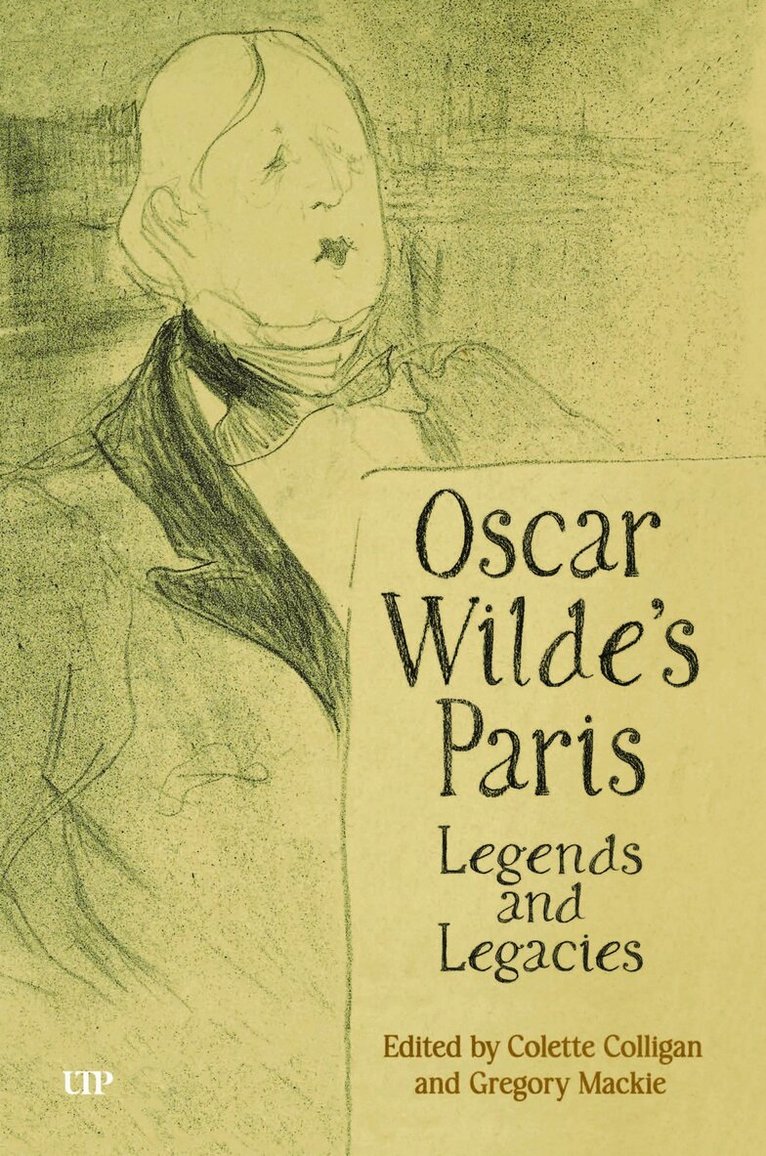
Oscar Wilde’s Paris: Legends and Legacies chronicles Wilde’s lifelong relationship with the French capital, the city he called “the most wonderful city in the world,” and the site of his rise to literary fame, self-imposed exile, and eventual death.Focused on the 1880s to the 1940s, editors Colette Colligan and Gregory Mackie shed light on this vibrant, transnational chapter of Wilde’s life and legacy. Contributors document how his relationship with the city developed in literature, journalism, and the visual arts, as well as in the city’s famous cafés, bars, restaurants, hotels, and cemeteries.This collection highlights three touchstones in the relationship between Wilde and Paris: his Parisian self-fashioning, the impact of the city’s cultural scene on his career, and his legacy’s absorption into the myth of Paris as a place of artistic and sexual freedom.Whether Wilde is viewed as ambitious aesthete, Francophile flâneur, or disreputable expatriate, Oscar Wilde’s Paris tells the story of how one man’s life became intertwined with the cultural imagination of a city, and how that city, in turn, claimed him as its own.