Colin Brooker – författare
Visar alla böcker från författaren Colin Brooker. Handla med fri frakt och snabb leverans.
5 produkter
5 produkter
Inbunden, Engelska, 2020
622 kr
Skickas inom 5-8 vardagar
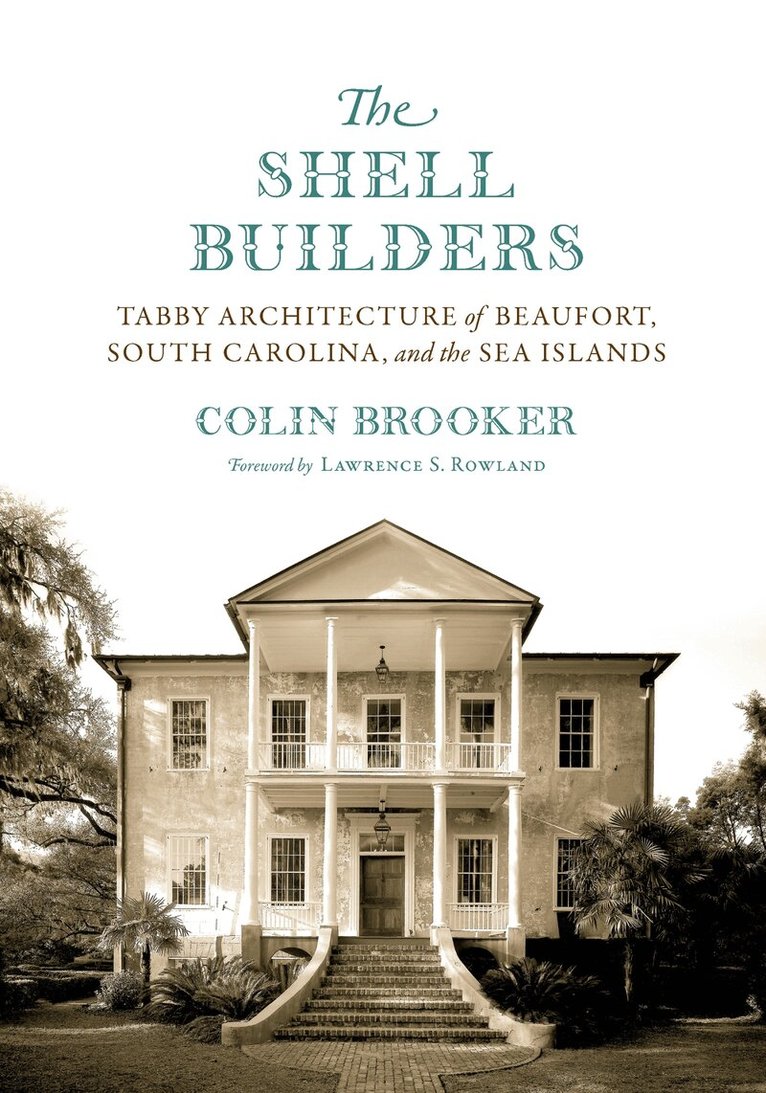
Beaufort, South Carolina, is well known for its historical architecture, but perhaps none is quite as remarkable as those edifices formed by tabby, sometimes called coastal concrete, comprising a mixture of lime, sand, water, and oyster shells. Tabby itself has a storied history stretching back to Iberian, Caribbean, Spanish American, and even African roots--brought to the United States by adventurers, merchants, military engineers, planters, and the enslaved.Tabby has been preserved most abundantly in the Beaufort area and its outlying islands, (and along the Sea Islands all the way to Florida as well) with Fort Frederick in 1734 having the earliest example of a diverse group of structures, which included town houses, seawalls, planters' homes, barns, agricultural buildings, and slave quarters. Tabby's insulating properties are excellent protection from long, hot, humid, and sometimes deadly summers; and on the islands, particularly, wealthy plantation owners built grand houses for themselves and improved dwellings for enslaved workers that after two hundred-plus years still stand today.An extraordinarily hardy material, tabby has a history akin to some of the world's oldest building techniques and is referred to as "rammed earth," as well as " tapia" in Spanish, "pisé de terre" in French, and "hangtu" in Chinese. The form that tabby construction took along the Sea Islands, however, was born of necessity. Here stone and brick were rare and expensive, but the oyster shells that were used as the source for the tabby's lime base were plentiful. Today these bits of shell, often visible in the walls and forms constructed long ago, give tabby its unique and iconic appearance.Colin Brooker, architect and expert on historic restoration, has not only made an exhaustive foray into local tabby architecture and heritage; he also has made a multinational tour as well in search of tabby origins, evolution, and diffusion from the Bahamas to Morocco to Andalusia, which can be traced back as far as the tenth century. Brooker has spent more than thirty years investigating the origins of tabby, its chemistry, its engineering, and its limitations. The Shell Builders lays out a sweeping, in-depth, and fascinating investigative journey--at once archaeological, sociological, and historical--into the ways prior inhabitants used and shaped their environment in order to house and protect themselves, leaving behind an architectural legacy that is both mysterious and beautiful.Lawrence S. Rowland, a distinguished professor emeritus of history at the University of South Carolina Beaufort and past president of the South Carolina Historical Society, provides a foreword.
Häftad, Engelska, 2025
329 kr
Skickas inom 5-8 vardagar
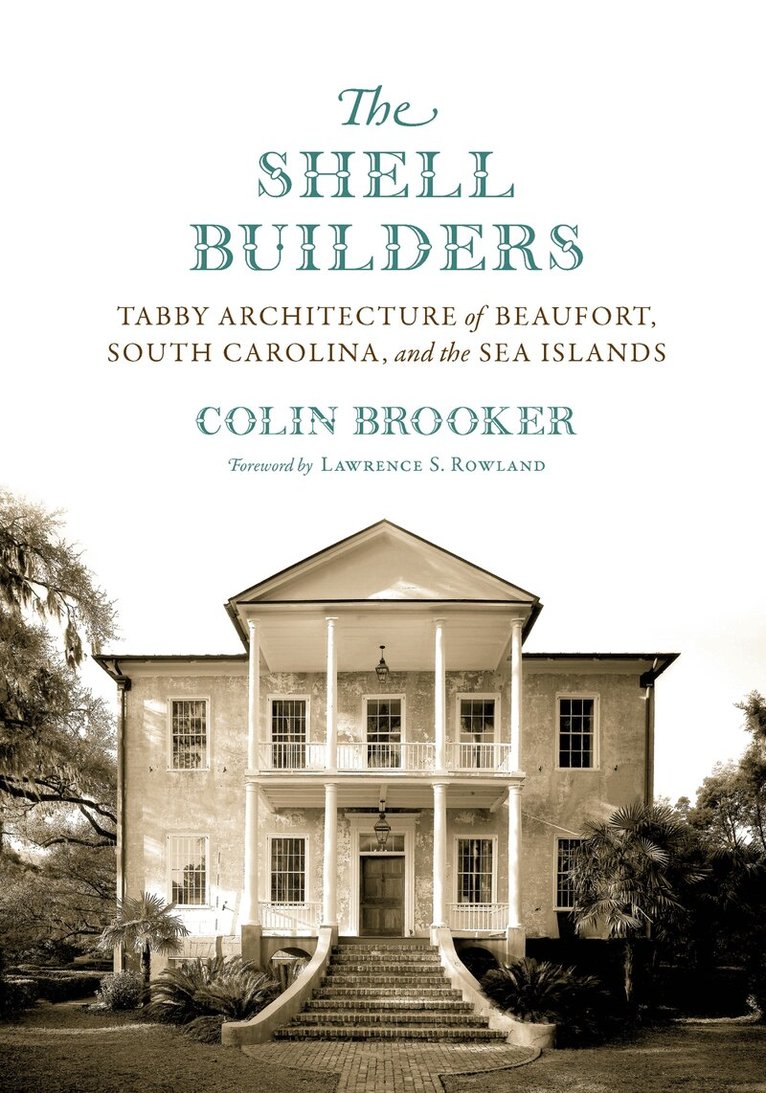
Beaufort, South Carolina, is well known for its historical architecture, but perhaps none is quite as remarkable as those edifices formed by tabby, sometimes called coastal concrete, comprising a mixture of lime, sand, water, and oyster shells. Tabby itself has a storied history stretching back to Iberian, Caribbean, Spanish American, and even African roots—brought to the United States by adventurers, merchants, military engineers, planters, and the enslaved.Tabby has been preserved most abundantly in the Beaufort area and its outlying islands, (and along the Sea Islands all the way to Florida as well) with Fort Frederick in 1734 having the earliest example of a diverse group of structures, which included town houses, seawalls, planters' homes, barns, agricultural buildings, and slave quarters. Tabby's insulating properties are excellent protection from long, hot, humid, and sometimes deadly summers; and on the islands, particularly, wealthy plantation owners built grand houses for themselves and improved dwellings for enslaved workers that after two hundred-plus years still stand today.An extraordinarily hardy material, tabby has a history akin to some of the world's oldest building techniques and is referred to as "rammed earth," as well as " tapia" in Spanish, "pisé de terre" in French, and "hangtu" in Chinese. The form that tabby construction took along the Sea Islands, however, was born of necessity. Here stone and brick were rare and expensive, but the oyster shells that were used as the source for the tabby's lime base were plentiful. Today these bits of shell, often visible in the walls and forms constructed long ago, give tabby its unique and iconic appearance.Colin Brooker, architect and expert on historic restoration, has not only made an exhaustive foray into local tabby architecture and heritage; he also has made a multinational tour as well in search of tabby origins, evolution, and diffusion from the Bahamas to Morocco to Andalusia, which can be traced back as far as the tenth century. Brooker has spent more than thirty years investigating the origins of tabby, its chemistry, its engineering, and its limitations. The Shell Builders lays out a sweeping, in-depth, and fascinating investigative journey—at once archaeological, sociological, and historical—into the ways prior inhabitants used and shaped their environment in order to house and protect themselves, leaving behind an architectural legacy that is both mysterious and beautiful.Lawrence S. Rowland, a distinguished professor emeritus of history at the University of South Carolina Beaufort and past president of the South Carolina Historical Society, provides a foreword.

E-bok
Engelska, 201951 kr
Läs direkt efter köp
Beginning in the mid-16th century and down through the 18th century, thousands of immigrants of Scots-Irish origin migrated to the Bahamas, which included the Turks and Caicos Islands. The first, and smaller wave of immigrants came via Bermuda in the mid to late 1600s in the wake of the mass migration of pro-Presbyterians from northern Ireland to the Americas seeking refuge from religious persecution. Later, in the 18th century, as a consequence of the American Revolution, thousands of so-called Loyalists were exiled from the union of the original 13 rebellious colonies. Many of those exiled were of Scots-Irish origin. Thousands migrated to the islands of the Bahamas, where they eventually emerged as some of the leaders of society in all facets of administration and culture.
Häftad, Engelska, 2019
205 kr
Skickas inom 5-8 vardagar
Inbunden, Engelska, 2019
297 kr
Skickas inom 5-8 vardagar