Committee on Hydrologic Science – författare
Visar alla böcker från författaren Committee on Hydrologic Science. Handla med fri frakt och snabb leverans.
11 produkter
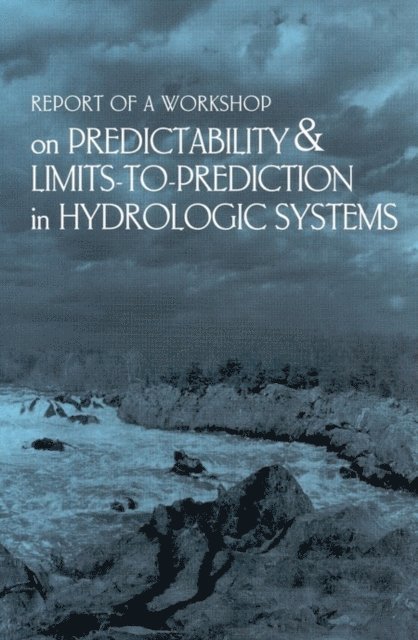
Report of a Workshop on Predictability and Limits-To-Prediction in Hydrologic Systems
Av Committee on Hydrologic Science, Water Science and Technology Board m. fl.
E-bok, 2002
641 kr
Lägg i varukorg
The Committee on Hydrologic Science (COHS) of the National Research Council (NRC) is engaged in studying the priorities and future strategies for hydrologic science. In order to involve a broad community representation, COHS is organizing workshops on priority topics in hydrologic science. These …
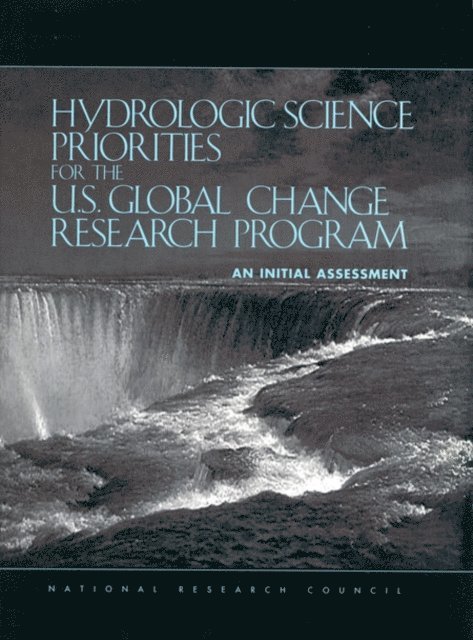
Hydrologic Science Priorities for the U.S. Global Change Research Program
An Initial Assessment
Av Committee on Hydrologic Science, Environment and Resources Commission on Geosciences m. fl.
E-bok, 1999
658 kr
Lägg i varukorg
The availability of fresh water is potentially one of the most pervasive crises of the coming century. Water-related decisions will determine the future of major ecosystems, the health of regional economies, and the political stability of nations. A vigorous program of research in hydrologic …
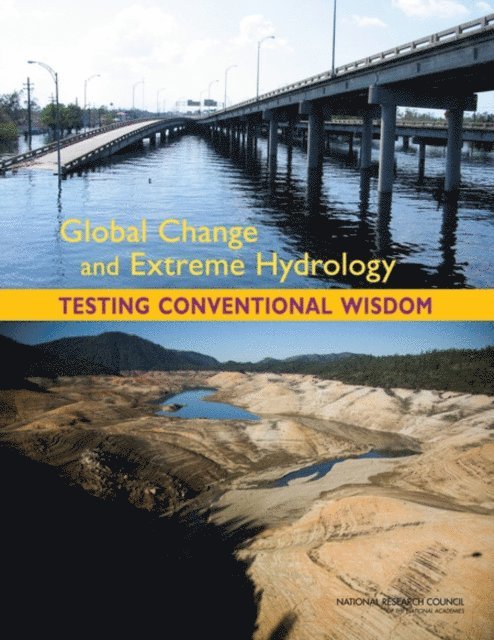
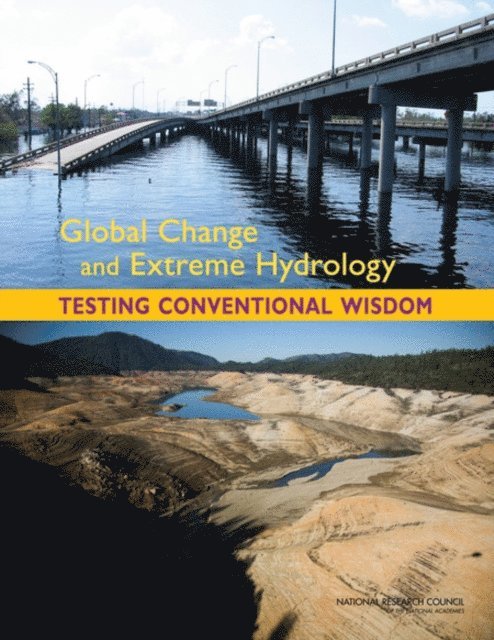
Global Change and Extreme Hydrology
Testing Conventional Wisdom
Av National Research Council, Division on Earth and Life Studies m. fl.
Häftad, 2011
279 kr
Lägg i varukorg
Climate theory dictates that core elements of the climate system, including precipitation, evapotranspiration, and reservoirs of atmospheric and soil moisture, should change as the climate warms, both in their means and extremes. A major challenge that faces the climate and hydrologic science …
Global Change and Extreme Hydrology
Testing Conventional Wisdom
Av Committee on Hydrologic Science, Water Science and Technology Board m. fl.
E-bok, 2011
364 kr
Lägg i varukorg
Climate theory dictates that core elements of the climate system, including precipitation, evapotranspiration, and reservoirs of atmospheric and soil moisture, should change as the climate warms, both in their means and extremes. A major challenge that faces the climate and hydrologic science …
Global Change and Extreme Hydrology
Testing Conventional Wisdom
Av Committee on Hydrologic Science, Water Science and Technology Board m. fl.
E-bok, 2011
373 kr
Lägg i varukorg
Climate theory dictates that core elements of the climate system, including precipitation, evapotranspiration, and reservoirs of atmospheric and soil moisture, should change as the climate warms, both in their means and extremes. A major challenge that faces the climate and hydrologic science …
Report of a Workshop on Predictability and Limits-To-Prediction in Hydrologic Systems
Av Committee on Hydrologic Science, Water Science and Technology Board m. fl.
E-bok, 2002
459 kr
Lägg i varukorg
The Committee on Hydrologic Science (COHS) of the National Research Council (NRC) is engaged in studying the priorities and future strategies for hydrologic science. In order to involve a broad community representation, COHS is organizing workshops on priority topics in hydrologic science. These …
Groundwater Fluxes Across Interfaces
Av Committee on Hydrologic Science, Water Science and Technology Board m. fl.
E-bok, 2004
468 kr
Lägg i varukorg
Estimates of groundwater recharge and discharge rates are needed at many differentscales for many different purposes. These include such tasks as evaluating landsliderisks, managing groundwater resources, locating nuclear waste repositories, and estimatingglobal budgets of water and greenhouse …
Hydrologic Science Priorities for the U.S. Global Change Research Program
An Initial Assessment
Av Committee on Hydrologic Science, Environment and Resources Commission on Geosciences m. fl.
E-bok, 1999
458 kr
Lägg i varukorg
The availability of fresh water is potentially one of the most pervasive crises of the coming century. Water-related decisions will determine the future of major ecosystems, the health of regional economies, and the political stability of nations. A vigorous program of research in hydrologic …
Hydrologic Science Priorities for the U.S. Global Change Research Program
An Initial Assessment
Av National Research Council, Division on Earth and Life Studies m. fl.
Häftad, 1999
1376 kr
Tillfälligt slut
The availability of fresh water is potentially one of the most pervasive crises of the coming century. Water-related decisions will determine the future of major ecosystems, the health of regional economies, and the political stability of nations. A vigorous program of research in hydrologic …
Report of a Workshop on Predictability and Limits-To-Prediction in Hydrologic Systems
Av National Research Council, Division on Earth and Life Studies m. fl.
Häftad, 2002
667 kr
Tillfälligt slut
The Committee on Hydrologic Science (COHS) of the National Research Council (NRC) is engaged in studying the priorities and future strategies for hydrologic science. In order to involve a broad community representation, COHS is organizing workshops on priority topics in hydrologic science. These …
Groundwater Fluxes Across Interfaces
Av National Research Council, Division on Earth and Life Studies m. fl.
Häftad, 2004
679 kr
Tillfälligt slut
Estimates of groundwater recharge and discharge rates are needed at many different scales for many different purposes. These include such tasks as evaluating landslide risks, managing groundwater resources, locating nuclear waste repositories, and estimating global budgets of water and greenhouse …