Cory Blad - Böcker
Visar alla böcker från författaren Cory Blad. Handla med fri frakt och snabb leverans.
4 produkter
4 produkter
708 kr
Skickas inom 7-10 vardagar
Several nations in the Global North have turned to austerity policies in an effort to resolve recent financial ills. What many failed to recognize is the longer history and varied pattern of such policies in the Global South over preceding decades – policies which had largely proven to fail. Shefner and Blad trace the 45-year history of austerity and how it became the go-to policy to resolve a host of economic problems. The authors use a variety of international cases to address how austerity has been implemented, who has been hurt, and who has benefited. They argue that the policy has been used to address very different kinds of crises, making states and polities responsible for a variety of errors and misdeeds of private actors. The book answers a number of important questions: why austerity persists as a policy aimed at resolving national crises despite evidence that it often does not work; how the policy has evolved over recent decades; and which powerful people and institutions have helped impose it across the globe.This timely book will appeal to students, researchers, and policymakers interested in globalization, development, political economy, and economic sociology.
250 kr
Skickas inom 7-10 vardagar
Several nations in the Global North have turned to austerity policies in an effort to resolve recent financial ills. What many failed to recognize is the longer history and varied pattern of such policies in the Global South over preceding decades – policies which had largely proven to fail. Shefner and Blad trace the 45-year history of austerity and how it became the go-to policy to resolve a host of economic problems. The authors use a variety of international cases to address how austerity has been implemented, who has been hurt, and who has benefited. They argue that the policy has been used to address very different kinds of crises, making states and polities responsible for a variety of errors and misdeeds of private actors. The book answers a number of important questions: why austerity persists as a policy aimed at resolving national crises despite evidence that it often does not work; how the policy has evolved over recent decades; and which powerful people and institutions have helped impose it across the globe.This timely book will appeal to students, researchers, and policymakers interested in globalization, development, political economy, and economic sociology.
Neoliberalism And National Culture: State-building And Legitimacy In Canada And Quebec
Studies in Critical Social Sciences, Volume 38
Häftad, Engelska, 2013
334 kr
Skickas inom 5-8 vardagar
Neoliberal globalisation is understood to have a corrosive effect on the state. Reductions in economic regulatory capacities combined with an ideological attack on the public necessity of social spending has left many with the impression that the state is a weakened institution, at best. This book argues that global capitalism actually requires state institutional authority, but the legitimation of this authority is increasingly tied to cultural rather than economic means. Canada and Quebec are presented examples of how neoliberal states achieve integration.
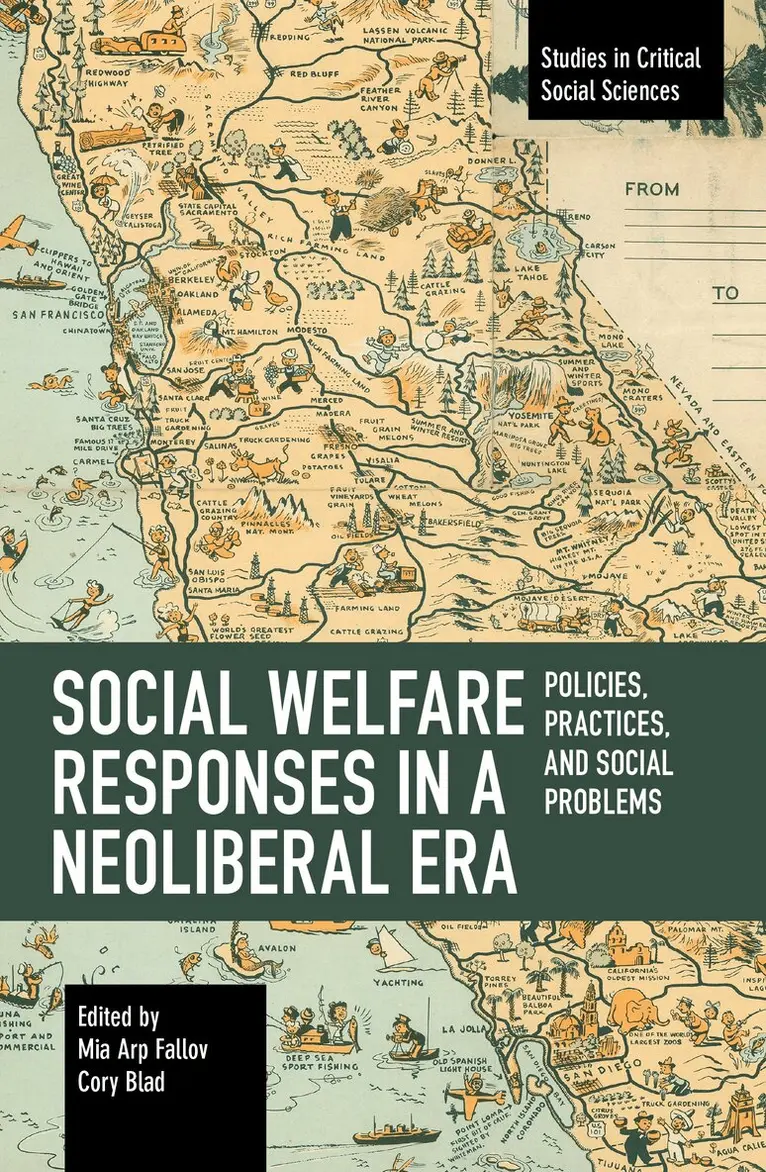
Social Welfare Responses in a Neoliberal Era
Policies, Practices, and Social Problems
Häftad, Engelska, 2021
346 kr
Skickas inom 5-8 vardagar
This book seeks to explore welfare responses by questioning and going beyond the assumptions found in Esping-Andersen's broad typologies of welfare capitalism. Specifically, the project seeks to reflect how the state engages, and creates general institutionalized responses to, market mechanisms and how such responses have created path dependencies in how states approach problems of inequality. Moreover, if the neoliberal era is defined as the dissemination and extension of market values to all forms of state institutions and social action, the need arises to critically investigate not only the embeddedness of such values and modes of thought in different contexts and institutional forms, but responses and modes of resistance arising from practices that might point to new forms of resilience.