Costas Douzinas – författare
Visar alla böcker från författaren Costas Douzinas. Handla med fri frakt och snabb leverans.
42 produkter
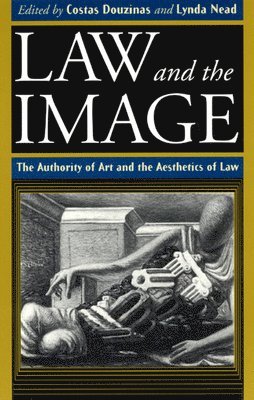
Law and the Image
The Authority of Art and the Aesthetics of Law
Av Costas Douzinas, Lynda Nead
Inbunden, 1999
849 kr
Lägg i varukorg
This collection brings together some of the important minds in both contemporary art history and theory, and law and legal history. The result is a discussion of the diverse relationships between law and the artistic image. The essays draw on the critical procedures of law, art history and cultural …
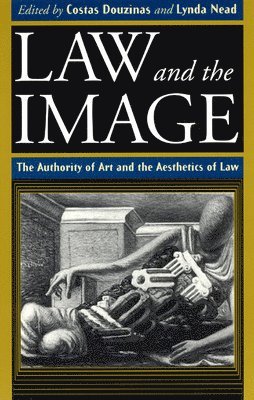
Law and the Image
The Authority of Art and the Aesthetics of Law
Av Costas Douzinas, Lynda Nead
Häftad, 1999
347 kr
Lägg i varukorg
This collection brings together some of the important minds in both contemporary art history and theory, and law and legal history. The result is a discussion of the diverse relationships between law and the artistic image. The essays draw on the critical procedures of law, art history and cultural …
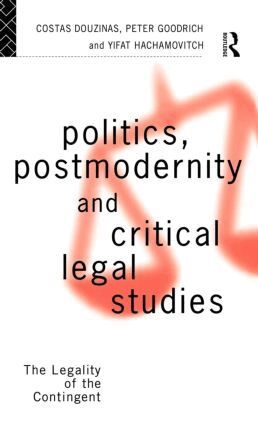
Politics, Postmodernity and Critical Legal Studies
The Legality of the Contingent
Av Costas Douzinas, Peter Goodrich m. fl.
Inbunden, 1994
2824 kr
Lägg i varukorg
This timely and assured book provides a unique guide to critical legal studies which is one of the most exciting developments within contemporary jurisprudence. It is the first book to systematically apply a critical philosophy to the substance of common law. The book develops a coruscating and …
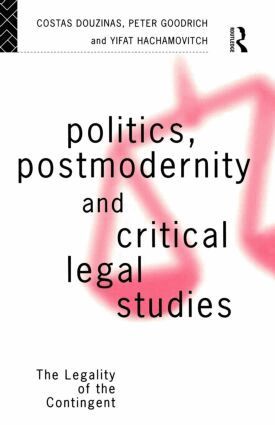
Politics, Postmodernity and Critical Legal Studies
The Legality of the Contingent
Av Costas Douzinas, Peter Goodrich m. fl.
Häftad, 1994
758 kr
Lägg i varukorg
This timely and assured book provides a unique guide to critical legal studies which is one of the most exciting developments within contemporary jurisprudence. It is the first book to systematically apply a critical philosophy to the substance of common law. The book develops a coruscating and …
Human Rights and Empire
The Political Philosophy of Cosmopolitanism
Inbunden, 2007
2824 kr
Lägg i varukorg
Erudite and timely, this book is a key contribution to the renewal of radical theory and politics. Addressing the paradox of a contemporary humanitarianism that has abandoned politics in favour of combating evil, Douzinas, a leading scholar and author in the field of human rights and legal theory, …
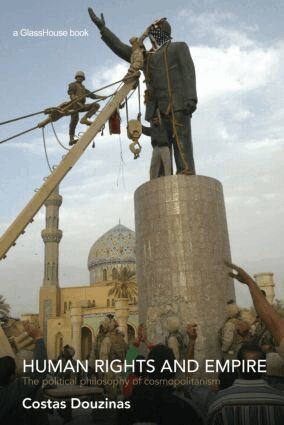
Human Rights and Empire
The Political Philosophy of Cosmopolitanism
Häftad, 2007
852 kr
Lägg i varukorg
Erudite and timely, this book is a key contribution to the renewal of radical theory and politics. Addressing the paradox of a contemporary humanitarianism that has abandoned politics in favour of combating evil, Douzinas, a leading scholar and author in the field of human rights and legal theory, …
Critical Legal Theory
Av Costas Douzinas, Colin Perrin
2011
18995 kr
Lägg i varukorg
Critical Legal Theory has conventionally been traced to the social, political, and philosophical movements of the 1960s and, before that, to the early-twentieth-century ‘realist’ critique of modern jurisprudence. In truth, however, its origins go back to classical and pre-modern thought, and to …
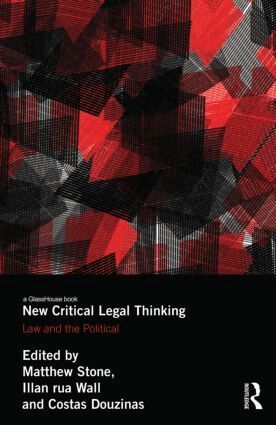
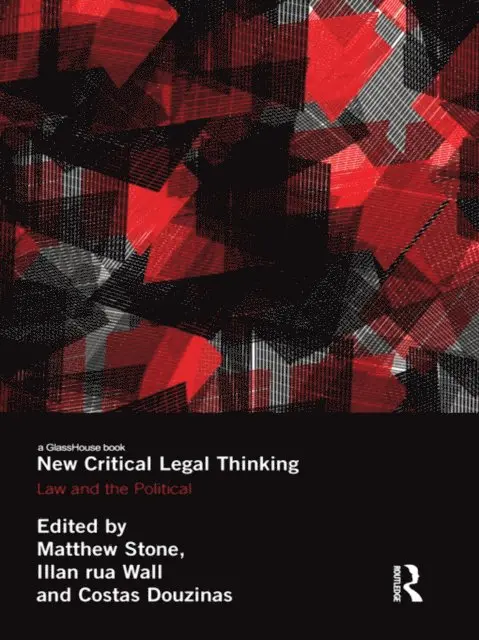
New Critical Legal Thinking
Law and the Political
Av Matthew Stone, Illan Wall m. fl.
Häftad, 2014
785 kr
Lägg i varukorg
New Critical Legal Thinking articulates the emergence of a stream of critical legal theory which is directly concerned with the relation between law and the political. The early critical legal studies claim that all law is politics is displaced with a different and more nuanced theoretical arsenal. …
New Critical Legal Thinking
Law and the Political
Av Matthew Stone, Illan Wall m. fl.
Inbunden, 2012
2314 kr
Lägg i varukorg
New Critical Legal Thinking articulates the emergence of a stream of critical legal theory which is directly concerned with the relation between law and the political. The early critical legal studies claim that all law is politics is displaced with a different and more nuanced theoretical arsenal. …
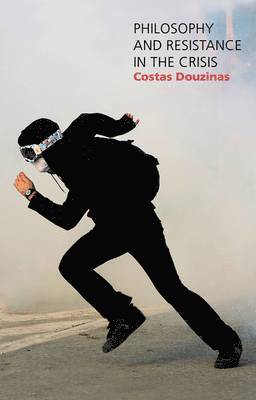
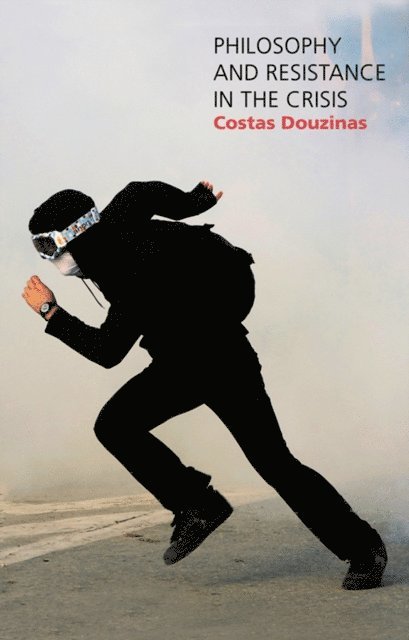
Philosophy and Resistance in the Crisis
Greece and the Future of Europe
Inbunden, 2013
791 kr
Lägg i varukorg
This book is about the global crisis and the right to resistance, about neoliberal biopolitics and direct democracy, about the responsibility of intellectuals and the poetry of the multitude. Using Greece as an example, Douzinas argues that the persistent sequence of protests, uprisings and …
Philosophy and Resistance in the Crisis
Greece and the Future of Europe
Häftad, 2013
217 kr
Lägg i varukorg
This book is about the global crisis and the right to resistance, about neoliberal biopolitics and direct democracy, about the responsibility of intellectuals and the poetry of the multitude. Using Greece as an example, Douzinas argues that the persistent sequence of protests, uprisings and …
Philosophy and Resistance in the Crisis
Greece and the Future of Europe
E-bok, 2013
245 kr
Lägg i varukorg
This book is about the global crisis and the right to resistance, about neoliberal biopolitics and direct democracy, about the responsibility of intellectuals and the poetry of the multitude. Using Greece as an example, Douzinas argues that the persistent sequence of protests, uprisings and …
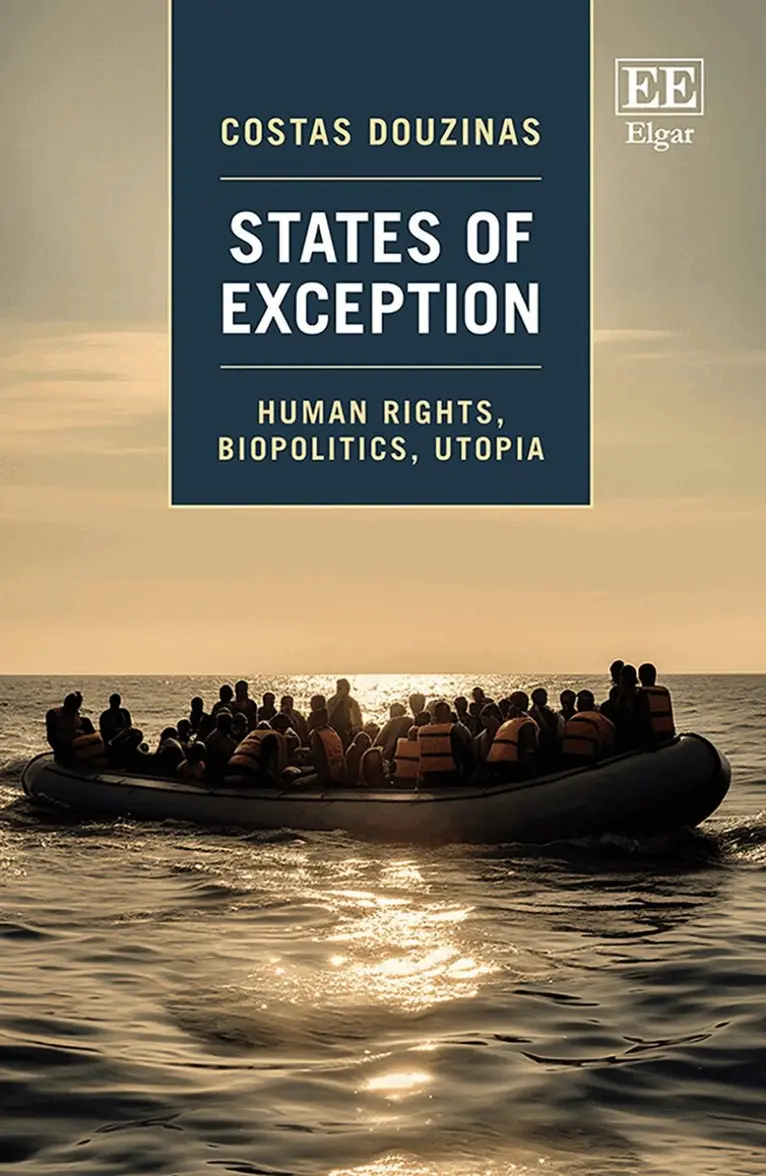
States of Exception
Human Rights, Biopolitics, Utopia
Häftad, 2024
478 kr
Lägg i varukorg
Considering the major crises Europe has faced over the last three decades, this unique book offers a multidisciplinary examination of the ways in which law, human rights and politics have evolved and were affected by recent emergencies.Costas Douzinas assesses and critiques the ways in which …
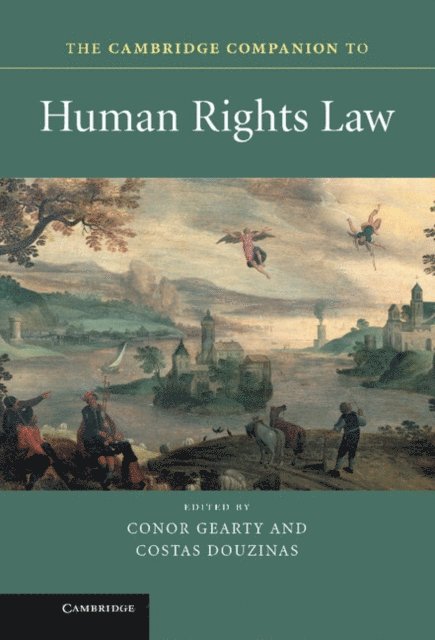
The Cambridge Companion to Human Rights Law
Av Conor Gearty, Costas Douzinas
Inbunden, 2012
1273 kr
Lägg i varukorg
Human rights are considered one of the big ideas of the early twenty-first century. This book presents in an authoritative and readable form the variety of platforms on which human rights law is practiced today, reflecting also on the dynamic inter-relationships that exist between these various …
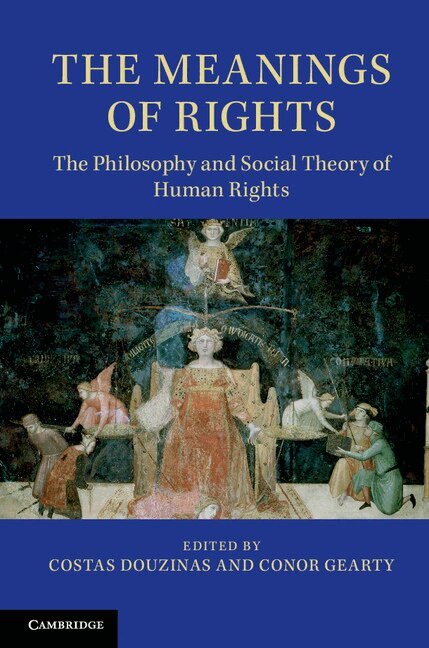
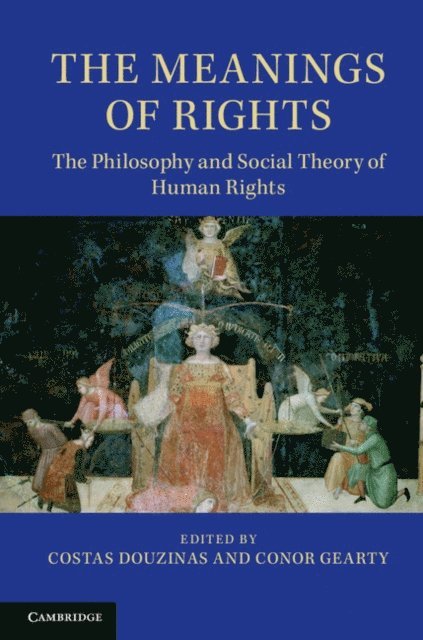
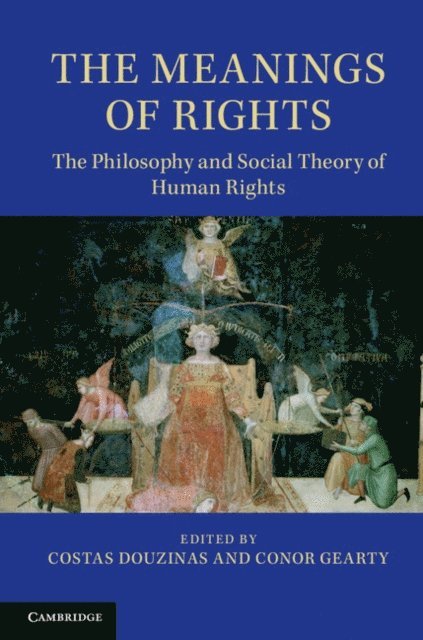
The Meanings of Rights
The Philosophy and Social Theory of Human Rights
Av Costas Douzinas, Conor Gearty
Inbunden, 2014
1449 kr
Lägg i varukorg
Does the apparent victory, universality and ubiquity of the idea of rights indicate that such rights have transcended all conflicts of interests and moved beyond the presumption that it is the clash of ideas that drives culture? Or has the rhetorical triumph of rights not been replicated in …
Cambridge Companion to Human Rights Law
Av Costas Douzinas, Conor Gearty
E-bok, 2012
510 kr
Lägg i varukorg
Human rights are considered one of the big ideas of the early twenty-first century. This book presents in an authoritative and readable form the variety of platforms on which human rights law is practiced today, reflecting also on the dynamic inter-relationships that exist between these various …
Cambridge Companion to Human Rights Law
Av Costas Douzinas, Conor Gearty
E-bok, 2012
510 kr
Lägg i varukorg
Human rights are considered one of the big ideas of the early twenty-first century. This book presents in an authoritative and readable form the variety of platforms on which human rights law is practiced today, reflecting also on the dynamic inter-relationships that exist between these various …
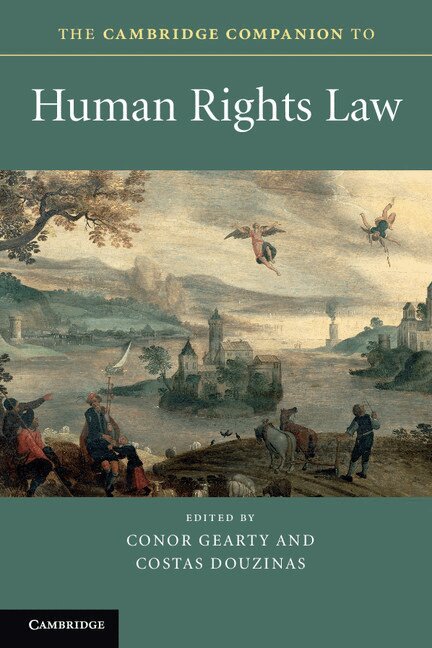
The Cambridge Companion to Human Rights Law
Av Conor Gearty, Costas Douzinas
Häftad, 2012
602 kr
Lägg i varukorg
Human rights are considered one of the big ideas of the early twenty-first century. This book presents in an authoritative and readable form the variety of platforms on which human rights law is practiced today, reflecting also on the dynamic inter-relationships that exist between these various …
The Meanings of Rights
The Philosophy and Social Theory of Human Rights
Av Costas Douzinas, Conor Gearty
Häftad, 2014
557 kr
Lägg i varukorg
Does the apparent victory, universality and ubiquity of the idea of rights indicate that such rights have transcended all conflicts of interests and moved beyond the presumption that it is the clash of ideas that drives culture? Or has the rhetorical triumph of rights not been replicated in …
Human Rights and Empire
The Political Philosophy of Cosmopolitanism
E-bok, 2007
982 kr
Lägg i varukorg
Erudite and timely, this book is a key contribution to the renewal of radical theory and politics. Addressing the paradox of a contemporary humanitarianism that has abandoned politics in favour of combating evil, Douzinas, a leading scholar and author in the field of human rights and legal theory, …
Human Rights and Empire
The Political Philosophy of Cosmopolitanism
E-bok, 2007
1091 kr
Lägg i varukorg
Erudite and timely, this book is a key contribution to the renewal of radical theory and politics. Addressing the paradox of a contemporary humanitarianism that has abandoned politics in favour of combating evil, Douzinas, a leading scholar and author in the field of human rights and legal theory, …
Politics, Postmodernity and Critical Legal Studies
The Legality of the Contingent
Av Yifat Hachamovitch, Peter Goodrich m. fl.
E-bok, 2005
892 kr
Lägg i varukorg
This timely and assured book provides a unique guide to critical legal studies which is one of the most exciting developments within contemporary jurisprudence. It is the first book to systematically apply a critical philosophy to the substance of common law. The book develops a coruscating and …
Politics, Postmodernity and Critical Legal Studies
The Legality of the Contingent
Av Yifat Hachamovitch, Peter Goodrich m. fl.
E-bok, 2005
892 kr
Lägg i varukorg
This timely and assured book provides a unique guide to critical legal studies which is one of the most exciting developments within contemporary jurisprudence. It is the first book to systematically apply a critical philosophy to the substance of common law. The book develops a coruscating and …
New Critical Legal Thinking
Law and the Political
Av Costas Douzinas, Illan Wall m. fl.
E-bok, 2012
924 kr
Lägg i varukorg
New Critical Legal Thinking articulates the emergence of a stream of critical legal theory which is directly concerned with the relation between law and the political. The early critical legal studies claim that all law is politics is displaced with a different and more nuanced theoretical arsenal. …
New Critical Legal Thinking
Law and the Political
Av Costas Douzinas, Illan Wall m. fl.
E-bok, 2012
924 kr
Lägg i varukorg
New Critical Legal Thinking articulates the emergence of a stream of critical legal theory which is directly concerned with the relation between law and the political. The early critical legal studies claim that all law is politics is displaced with a different and more nuanced theoretical arsenal. …
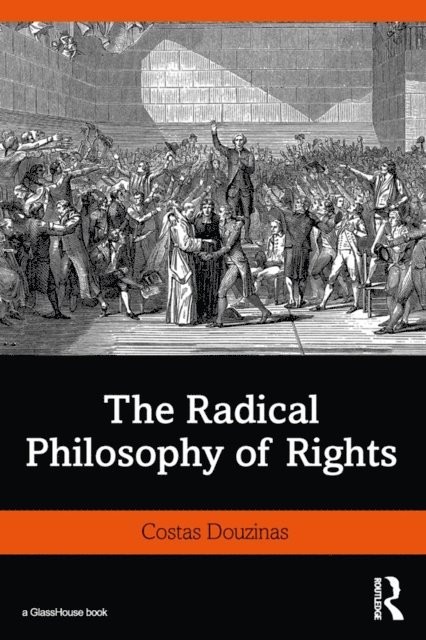
Radical Philosophy of Rights
Inbunden, 2019
2515 kr
Lägg i varukorg
After 1989 human rights have expanded into a vernacular touching every aspect of social life. They are seen as the key concept in morals and politics and a main tool for forging individual and collective identities. They are the ideology after ‘the end of ideologies’ – the only values left after …
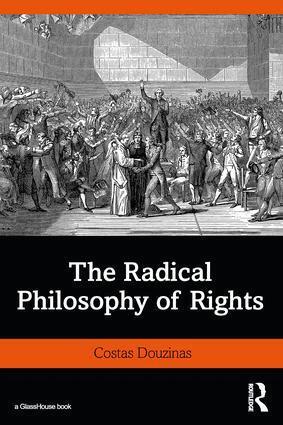
Radical Philosophy of Rights
Häftad, 2019
649 kr
Lägg i varukorg
After 1989 human rights have expanded into a vernacular touching every aspect of social life. They are seen as the key concept in morals and politics and a main tool for forging individual and collective identities. They are the ideology after ‘the end of ideologies’ – the only values left after …
Meanings of Rights
The Philosophy and Social Theory of Human Rights
Av Conor Gearty, Costas Douzinas
E-bok, 2014
555 kr
Lägg i varukorg
Does the apparent victory, universality and ubiquity of the idea of rights indicate that such rights have transcended all conflicts of interests and moved beyond the presumption that it is the clash of ideas that drives culture? Or has the rhetorical triumph of rights not been replicated in …
Meanings of Rights
The Philosophy and Social Theory of Human Rights
Av Conor Gearty, Costas Douzinas
E-bok, 2014
555 kr
Lägg i varukorg
Does the apparent victory, universality and ubiquity of the idea of rights indicate that such rights have transcended all conflicts of interests and moved beyond the presumption that it is the clash of ideas that drives culture? Or has the rhetorical triumph of rights not been replicated in …
Radical Philosophy of Rights
E-bok, 2019
686 kr
Lägg i varukorg
After 1989 human rights have expanded into a vernacular touching every aspect of social life. They are seen as the key concept in morals and politics and a main tool for forging individual and collective identities. They are the ideology after ‘the end of ideologies’ – the only values left after …