Craig Moore – författare
Visar alla böcker från författaren Craig Moore. Handla med fri frakt och snabb leverans.
13 produkter
13 produkter
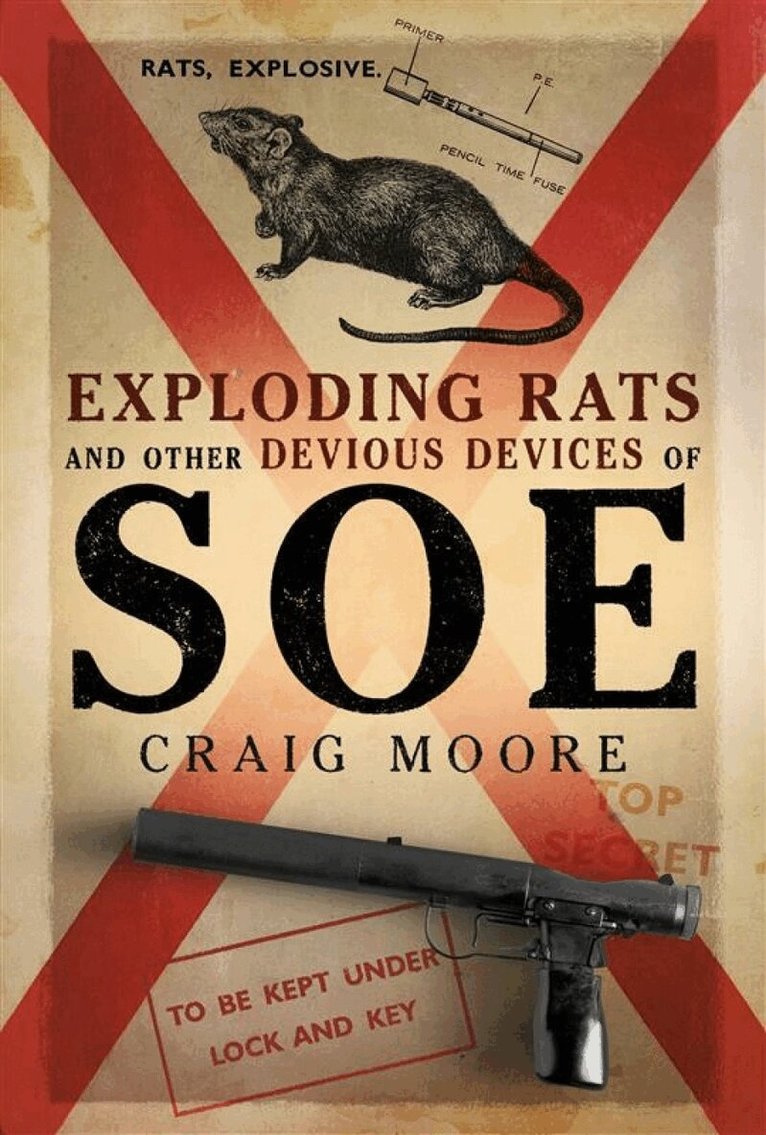
Exploding Rats and Other Devious Devices of SOE
The Camouflage Section 1941–1945
Inbunden, Engelska, 2025
235 kr
Skickas
James Bond has Q Branch to supply him with ingenious equipment to use on his missions; during the Second World War, SOE field agents had the Camouflage Section.The men and women of the Section, hailing from a variety of trades and professions, turned everyday items into concealment devices to carry weapons, ammunition, film, radios, false documents, microfilm and codes. These vessels ranged from oil cans, firewood and ornamental clocks, to record players, water bottles and tubes of toothpaste. Explosives and incendiary devices for industrial and military sabotage were concealed in dead rats, hollowed-out pieces of coal, books, torches, statues and suitcases. Convincing disguises were created to ensure that field agents would pass as locals in whatever region they were parachuted into. Essentially the Camouflage Section was responsible for keeping SOE agents behind enemy lines safe in the most nerve-wracking of circumstances—when under the suspicious gaze of the Gestapo.After the war, SOE’s Camouflage Section was dissolved, but not before its work was collated and published in a secret document. That document remained classified for thirty years. This is the first time it has been presented in book form to the general public.
301 kr
Skickas inom 3-6 vardagar
214 kr
Skickas
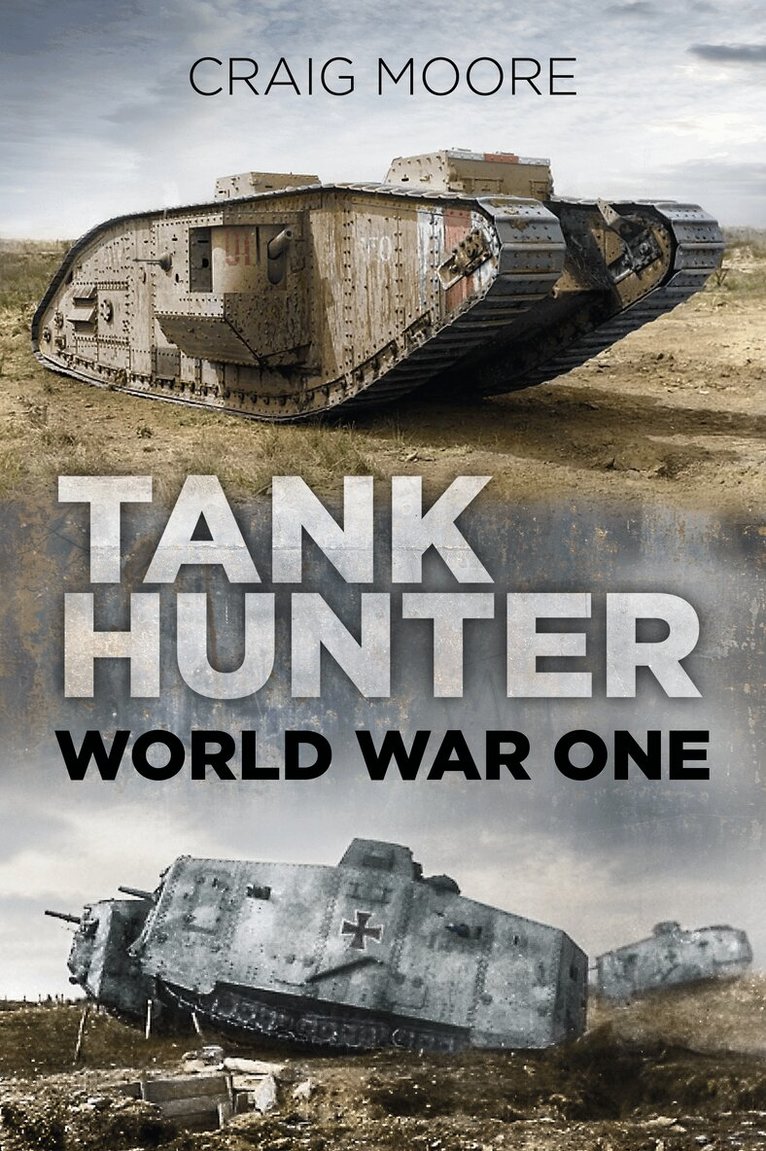
The First World War’s fierce battles saw the need to develop military technology beyond anything previously imagined: as exposed infantry and cavalry were mowed down by relentless machine-gun attacks, so tanks were developed. Here author Craig Moore presents every First World War tank, from the prototype ‘Little Willie’, through the French heavy tanks to the German light tank. He gives a focused history of the development of this game-changing vehicle and the engagements it was used in – vital battles such as the Somme and Cambrai. Stunningly illustrated in full colour throughout, Tank Hunter: World War One provides historical background, facts and figures for each First World War tank as well as the locations of any surviving examples, giving you the opportunity to become a Tank Hunter yourself.
Integrated Planning for the Air Force Senior Leader Workforce
Background and Methods
Häftad, Engelska, 2003
215 kr
Tillfälligt slut
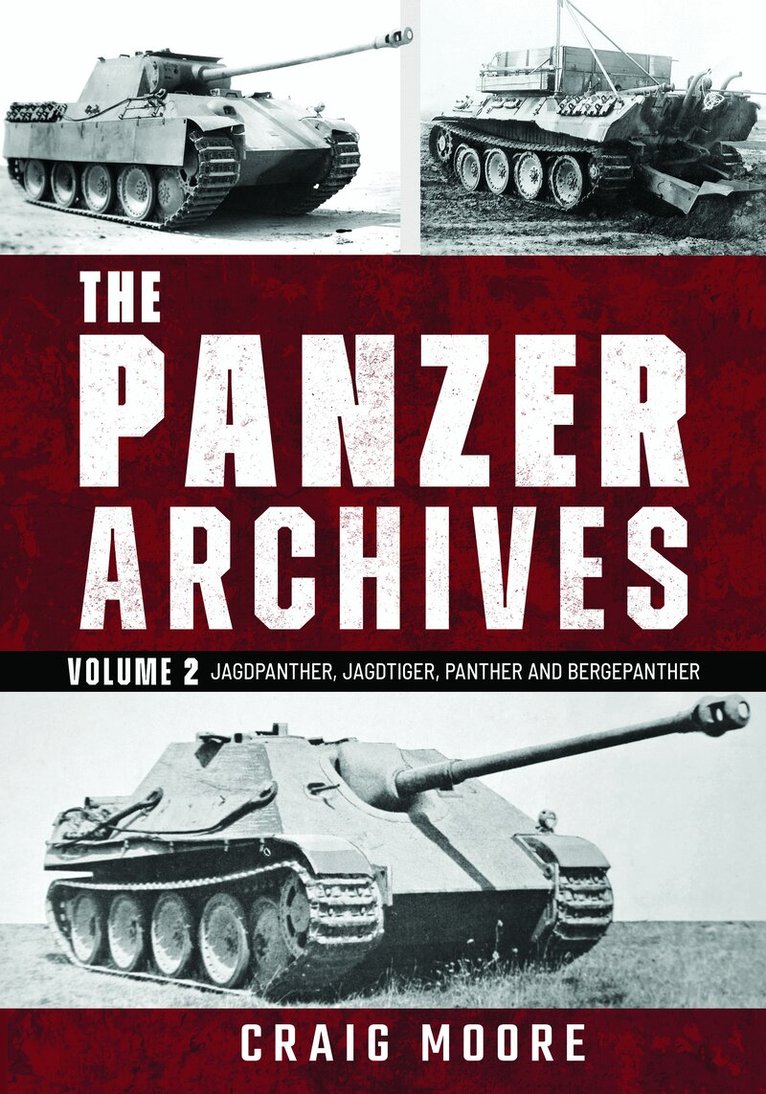
Panzer Archives, Volume 1
Panzer II–IV, Praga TNH-P (Panzer 38(t)), E-100, Mouse 1-Man Tank and Armoured Cars
Inbunden, Engelska, 2026
258 kr
Kommande
During the Second World War, the British War Office instructed their military engineers and scientists to examine captured enemy armoured vehicles and tanks and determine their mechanical specifications and abilities, and most importantly, how to destroy them. This vital information was then passed on to battlefield officers via briefings and technical summaries attached to General Orders. After the war, these secret reports were sent for storage to different archives around Britain. They have now been declassified.The Panzer Archives series reveals these reports in a single collection. Most have never been published. The original style of language and presentation has been retained, and the photographs have been reproduced. This first volume contains briefings on the Panzer 38(t), Panzer II, Panzer III and Panzer IV, wire mesh skirting, the E-100 tank, the Mouse 1-man light tank, and the Italian AB41 and German light amphibious Turtle armoured cars.
277 kr
Skickas inom 5-8 vardagar
195 kr
Tillfälligt slut
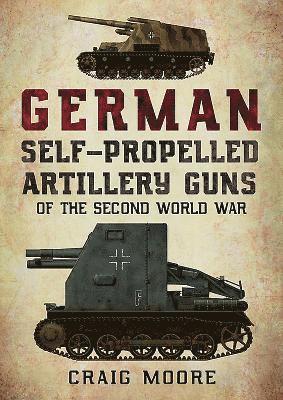
One towed artillery gun required a team of six horses and nine men. WW2 German engineers came up with the idea of mounting an artillery gun on top of a tank chassis. This new technology reduced the amount of resources required to deploy one artillery gun. Artillery self-propelled guns only needed a four or five man crew. They could also be made ready to fire more quickly. This book covers the development and use of this new weapon between 1939 and 1945. One type was successfully used in the invasion of France in May 1940. More were used on the Eastern Front against Soviet forces from 1941 until the end of the war in 1945. The 'Desert Fox', Ewin Rommel, needed artillery guns that could keep up with his Panzers in North Africa. Horses could not be used in the desert. He was sent 15 cm howitzers mounted on top of Panzer II tank chassis and captured French Army Lorraine 37L tracked armoured supply vehicles. Rommel's forces in Northern France were equipped with a variety of new artillery self-propelled guns. They were used against the Allies when they invaded the beaches of Normandy on D-Day 6th June 1944.
How to Kill a Panther Tank
Unpublished Scientific Reports from the Second World War
Häftad, Engelska, 2020
258 kr
Skickas
Using only original official period documents from the Second World War this book tries to provide the reader with the same information on the Panzer V Panther tank that was available to British and Commonwealth senior officers and tank crews during the war. As soon as intelligence reports confirmed the existence of the Panther tank the hunt was on to find reliable information on how to knock out this new German tank. Most people believe that the only way to stop a Panther was to penetrate its armour with an armour piercing A.P. round. Luckily the British 17 pdr anti-tank gun could do that but the British were also looking how to knock them out by using other weapons. They tested using high explosive artillery rounds and 20 mm air attack aircraft canon rounds to penetrate and damage the tank's rear engine deck and puncture the vehicle's radiators. Loss of water would cause the engine to overheat and stop working. Tank radiators were large and spares were not carried on the tank. If the Panther could not be recovered back to a maintenance depot the crew would have to abandon the tank and disable it by setting off internal explosive charges.
American Panther Tanks
An Examination of the Five Surviving Panzer V Tanks including the Rare Panther II
Häftad, Engelska, 2021
228 kr
Tillfälligt slut
‘American Panther Tanks’ sounds a strange title for a book, but currently there are five surviving WW2 German Panther tanks in America. It is believed that fourteen captured Panzer V Panther tanks were shipped to the United States after the Second World War. Most were cut up and scrapped after being used for testing and targets on live firing ranges. The Panzer V Ausf.A Panther tank at the American Heritage Museum, Hudson, Massachusetts, near Boston, has been completely restored to a very high standard. The other four Panther tanks are at Fort Benning, Columbus, Georgia, under the care of the U.S. Army Armor and Cavalry Collection (U.S. AACC). They are awaiting their turn to be restored. The first four chapters briefly cover the development and production of the Panzer V Panther tank from the first version, the Ausf.D, to the second version the Ausf.A and to the final production version the Ausf.G, using photographs from other surviving Panther tanks around the world. The fifth chapter explores the design history of the Panther II prototype hull. Only one was built. The remaining chapters are dedicated to a photographic walk-around of the surviving Panther tanks in America.
How to Kill a Tiger Tank
Unpublished Scientific Reports from the Second World War
Häftad, Engelska, 2021
359 kr
Skickas
When the Panzer VI Ausf. E Tiger I tank first arrived on the battlefield, it started the Allied and Soviet intelligence race to discover everything they could about this new threat. The British Army quickly needed to know how to knock it out, then communicate that information back to the troops that had to face this new German metal monster either by official means or via newspapers.This is not a typical book on the Tiger tank. It tries to show the reader what the British and Commonwealth forces knew about the Tiger I tank during the war and the results of scientific firing trials. Unpublished Second World War original documents, discovered in different archives, have been transcribed and reproduced along with any existing photographs found in those official secret reports. These include top-secret Bletchley Park and Enigma intercepts of German messages that were decoded and translated before being sent to wartime Prime Minister Winston Churchill. Illustrated with over 360 images, "How to Kill a Tiger Tank" is the definitive examination of a world-changing fighting vehicle.
173 kr
Skickas
197 kr
Skickas
168 kr
Skickas