Cristina Ferreira-Pinto – författare
Visar alla böcker från författaren Cristina Ferreira-Pinto. Handla med fri frakt och snabb leverans.
3 produkter
3 produkter
697 kr
Tillfälligt slut
Urban Voices brings together some of the best contemporary Brazilian writers to offer provocative insights into Brazilian life today. The stories included focus on some aspect of life in the city because it creates a microcosm of life in Brazil, incorporating all the different racial, ethnic, and regional elements, the various social strata, and foreign influences that shape Brazilian society, and serves as a stage for the interaction and conflicts among these different elements. The writers respond to the city in a variety of ways, addressing different aspects of the many conflicts faced by the contemporary urban inhabitant. As a whole, these tales represent the contemporary Brazilian short story and constitute a rich expression of the city voices of Brazil today.
612 kr
Tillfälligt slut
Urban Voices brings together some of the best contemporary Brazilian writers to offer provocative insights into Brazilian life today. The stories included focus on some aspect of life in the city because it creates a microcosm of life in Brazil, incorporating all the different racial, ethnic, and regional elements, the various social strata, and foreign influences that shape Brazilian society, and serves as a stage for the interaction and conflicts among these different elements. The writers respond to the city in a variety of ways, addressing different aspects of the many conflicts faced by the contemporary urban inhabitant. As a whole, these tales represent the contemporary Brazilian short story and constitute a rich expression of the city voices of Brazil today.
632 kr
Skickas inom 3-6 vardagar
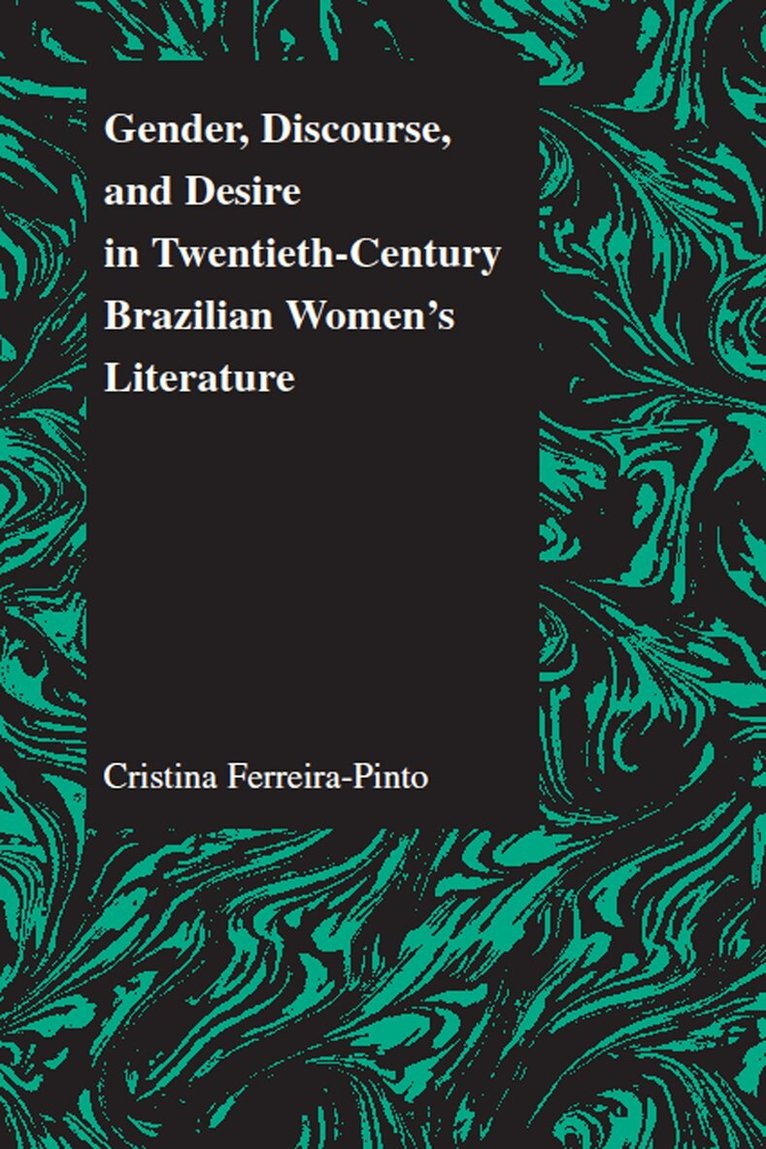
This study by Cristina Ferreira-Pinto explores the poetic and narrative strategies twentieth-century Brazilian women writers use to achieve new forms of representation of the female body, sexuality, and desire. Female writers discussed include: Gilka Machado, Lygia Fagundes Telles, Marcia Denser, and Marina Colasanti. While creating new forms, these writers are also deconstructing cultural myths of femininity and female behavior. In order to understand these myths, the book also presents new readings of some male-authored canonical novels by Jose de Alencar, Machado de Assis, Manuel Antonio de Almeida, and Aluisio Azevedo. The specific focus on female sexuality and desire acknowledges the intrinsic link between sexuality and an individual's sense of identity, and its importance for female identity, given the historical repression of women's bodies and the double standard of morality still pervasive in many Western cultures. In the discussion of the strategies Brazilian female poets and fiction writers employ, Ferreira-Pinto addresses some social and cultural issues that relate to a woman's sense of her own body and sexuality: the characterization of women based on racial features and class hierarchy; marriage; motherhood; the silencing of the lesbian subject; and aging. Ferreira-Pinto's analysis is informed by the works of various and diverse critics and theoreticians, among them Helene Cixous, Teresa De Lauretis, Adrienne Rich, Gloria Anzaldua, Georges Bataille, and Wilhelm Reich.