D. Heidrich – författare
Visar alla böcker från författaren D. Heidrich. Handla med fri frakt och snabb leverans.
6 produkter
6 produkter
Inbunden, Engelska, 1991
1 671 kr
Skickas inom 10-15 vardagar
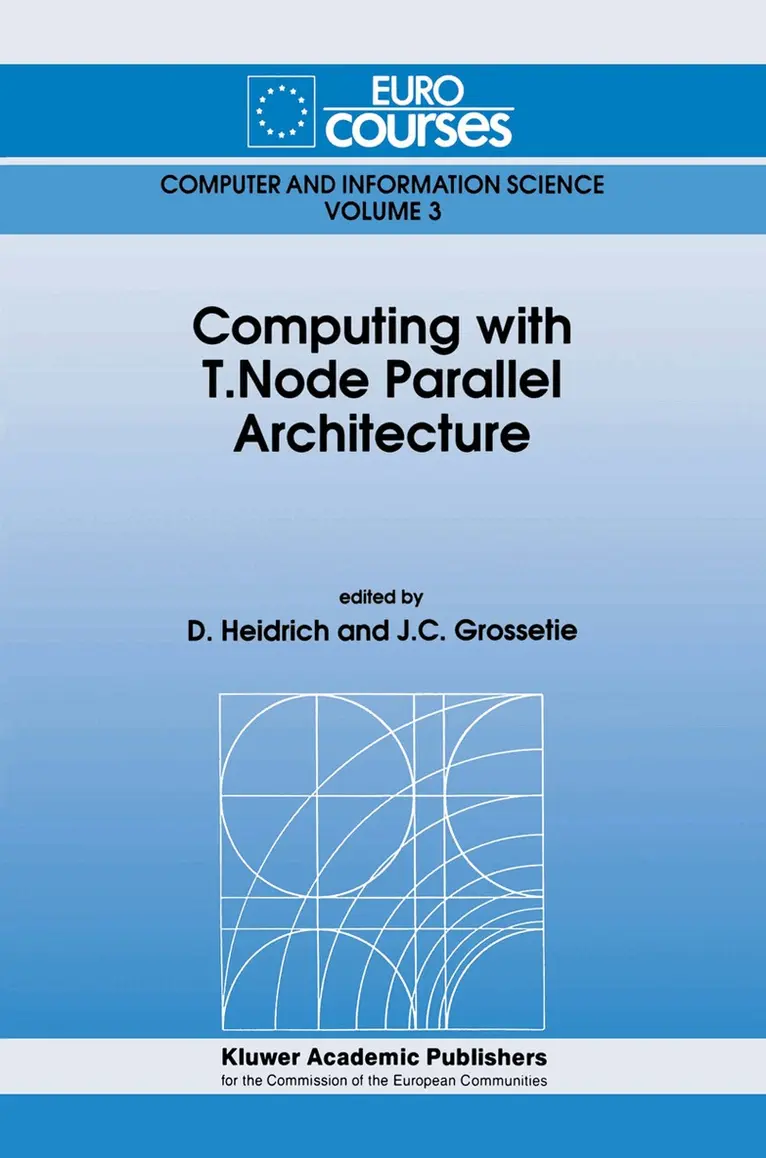
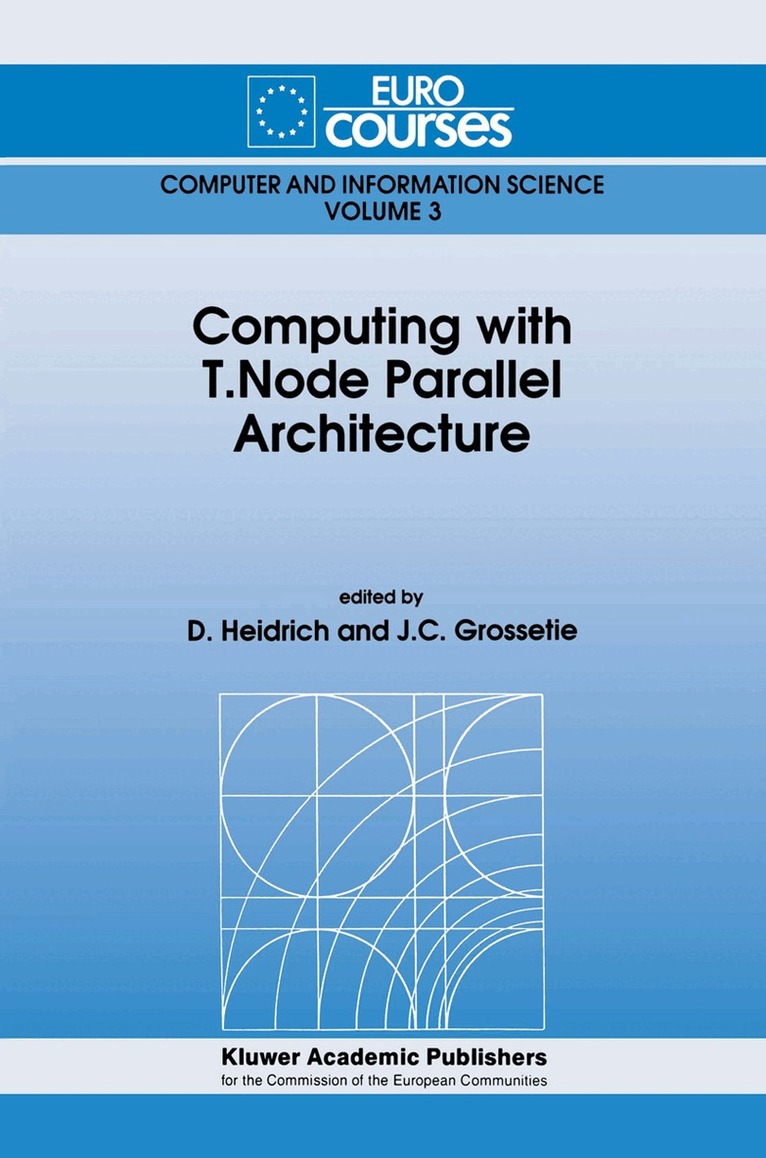
Parallel processing is seen today as the means to improve the power of computing facilities by breaking the Von Neumann bottleneck of conventional sequential computer architectures. By defining appropriate parallel computation models definite advantages can be obtained. Parallel processing is the center of the research in Europe in the field of Information Processing Systems so the CEC has funded the ESPRIT Supemode project to develop a low cost, high performance, multiprocessor machine. The result of this project is a modular, reconfigurable architecture based on !NMOS transputers: T.Node. This machine can be considered as a research, industrial and commercial success. The CEC has decided to continue to encourage manufacturers as well as research and end-users of transputers by funding other projects in this field. This book presents course papers of the Eurocourse given at the Joint Research Centre in ISPRA (Italy) from the 4th to 8 of November 1991. First we present an overview of various trends in the design of parallel architectures and specially of the T.Node with it's software development environments, new distributed system aspects and also new hardware extensions based on the !NMOS T9000 processor. In a second part, we review some real case applications in the field of image synthesis, image processing, signal processing, terrain modeling, particle physics simulation and also enhanced parallel and distributed numerical methods on T.Node.
Inbunden, Engelska, 1995
1 623 kr
Skickas inom 10-15 vardagar
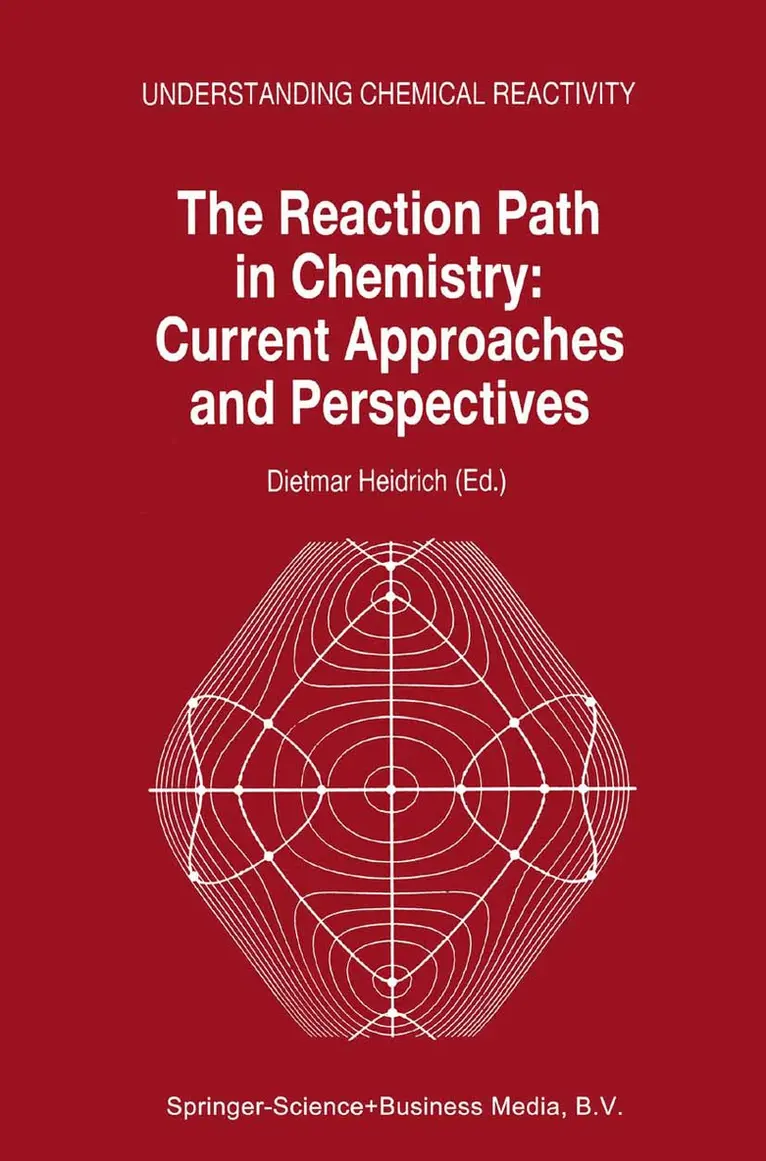
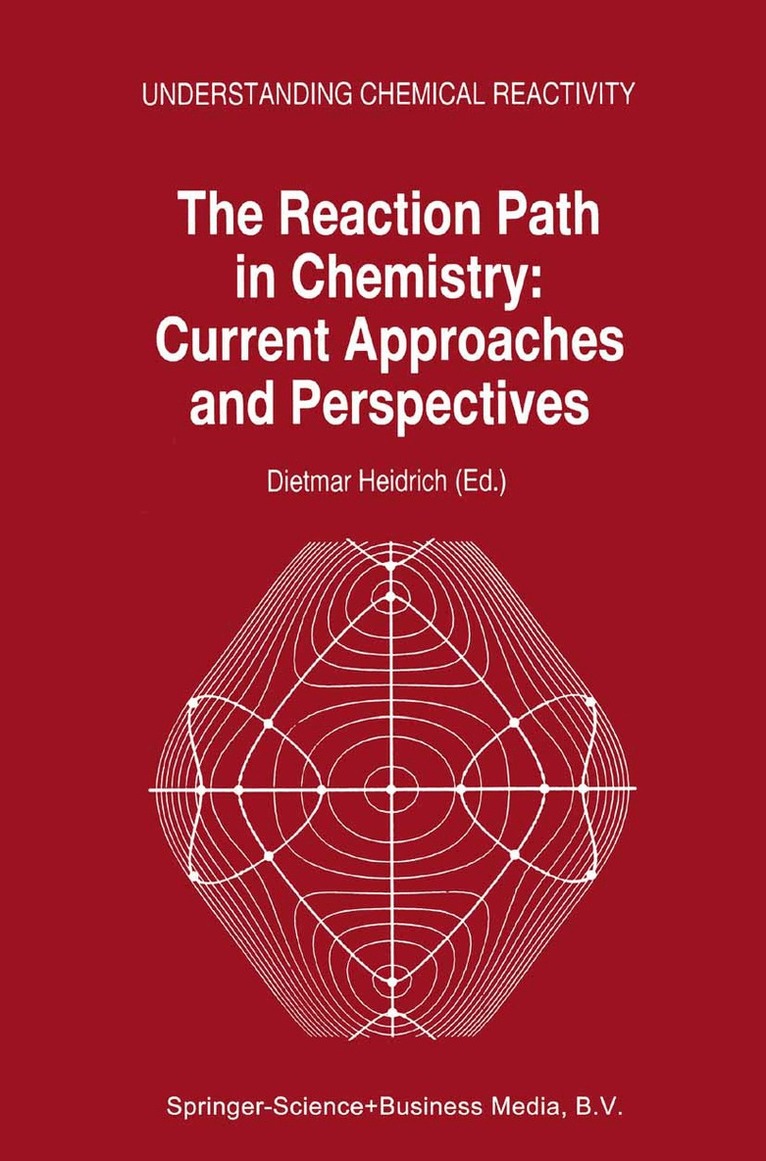
The reaction pathway (RP) technique is a powerful tool in theoretical chemistry and chemical reaction theory. The present book discusses the background of the concept, both mathematical and physical, and outlines new developments. Different approaches to the RP are described, with particular emphasis on gradient extremals and the treatment of zero eigenvalues of rotation in the Cartesian Hessian matrix along the RP. There is also a review of geometric optimization methods, together with an outline of density functional theory. Some contributions reveal the progress made in interface dynamics calculations based on RP potentials and tunnelling with electronic structure theory ("direct dynamics"). The study also includes the latest results in excited-state RP calculations (H transfer) and a theoretical view of the RPs of photodissociation processes using time-resolved femtosecond spectroscopy. The passage from the RP to the reaction mechanism is described by means of fundamental groups and symmetry rules.
Häftad, Engelska, 2010
1 623 kr
Skickas inom 10-15 vardagar
The so-called reaction path (RP) with respect to the potential energy or the Gibbs energy ("free enthalpy") is one of the most fundamental concepts in chemistry. It significantly helps to display and visualize the results of the complex microscopic processes forming a chemical reaction. This concept is an implicit component of conventional transition state theory (TST). The model of the reaction path and the TST form a qualitative framework which provides chemists with a better understanding of chemical reactions and stirs their imagination. However, an exact calculation of the RP and its neighbourhood becomes important when the RP is used as a tool for a detailed exploring of reaction mechanisms and particularly when it is used as a basis for reaction rate theories above and beyond TST. The RP is a theoretical instrument that now forms the "theoretical heart" of "direct dynamics". It is particularly useful for the interpretation of reactions in common chemical systems. A suitable definition of the RP of potential energy surfaces is necessary to ensure that the reaction theories based on it will possess sufficiently high quality. Thus, we have to consider three important fields of research: - Analysis of potential energy surfaces and the definition and best calculation of the RPs or - at least - of a number of selected and chemically interesting points on it. - The further development of concrete vers ions of reaction theory beyond TST which are applicable for common chemical systems using the RP concept.
Häftad, Engelska, 2012
1 671 kr
Skickas inom 10-15 vardagar
Parallel processing is seen today as the means to improve the power of computing facilities by breaking the Von Neumann bottleneck of conventional sequential computer architectures. By defining appropriate parallel computation models definite advantages can be obtained. Parallel processing is the center of the research in Europe in the field of Information Processing Systems so the CEC has funded the ESPRIT Supemode project to develop a low cost, high performance, multiprocessor machine. The result of this project is a modular, reconfigurable architecture based on !NMOS transputers: T.Node. This machine can be considered as a research, industrial and commercial success. The CEC has decided to continue to encourage manufacturers as well as research and end-users of transputers by funding other projects in this field. This book presents course papers of the Eurocourse given at the Joint Research Centre in ISPRA (Italy) from the 4th to 8 of November 1991. First we present an overview of various trends in the design of parallel architectures and specially of the T.Node with it's software development environments, new distributed system aspects and also new hardware extensions based on the !NMOS T9000 processor. In a second part, we review some real case applications in the field of image synthesis, image processing, signal processing, terrain modeling, particle physics simulation and also enhanced parallel and distributed numerical methods on T.Node.
E-bok
PDF, Engelska, 20122 110 kr
Läs direkt efter köp
Parallel processing is seen today as the means to improve the power of computing facilities by breaking the Von Neumann bottleneck of conventional sequential computer architectures. By defining appropriate parallel computation models definite advantages can be obtained. Parallel processing is the center of the research in Europe in the field of Information Processing Systems so the CEC has funded the ESPRIT Supemode project to develop a low cost, high performance, multiprocessor machine. The result of this project is a modular, reconfigurable architecture based on !NMOS transputers: T.Node. This machine can be considered as a research, industrial and commercial success. The CEC has decided to continue to encourage manufacturers as well as research and end-users of transputers by funding other projects in this field. This book presents course papers of the Eurocourse given at the Joint Research Centre in ISPRA (Italy) from the 4th to 8 of November 1991. First we present an overview of various trends in the design of parallel architectures and specially of the T.Node with it''s software development environments, new distributed system aspects and also new hardware extensions based on the !NMOS T9000 processor. In a second part, we review some real case applications in the field of image synthesis, image processing, signal processing, terrain modeling, particle physics simulation and also enhanced parallel and distributed numerical methods on T.Node.
E-bok
PDF, Engelska, 20132 049 kr
Läs direkt efter köp
The so-called reaction path (RP) with respect to the potential energy or the Gibbs energy ("free enthalpy") is one of the most fundamental concepts in chemistry. It significantly helps to display and visualize the results of the complex microscopic processes forming a chemical reaction. This concept is an implicit component of conventional transition state theory (TST). The model of the reaction path and the TST form a qualitative framework which provides chemists with a better understanding of chemical reactions and stirs their imagination. However, an exact calculation of the RP and its neighbourhood becomes important when the RP is used as a tool for a detailed exploring of reaction mechanisms and particularly when it is used as a basis for reaction rate theories above and beyond TST. The RP is a theoretical instrument that now forms the "theoretical heart" of "direct dynamics". It is particularly useful for the interpretation of reactions in common chemical systems. A suitable definition of the RP of potential energy surfaces is necessary to ensure that the reaction theories based on it will possess sufficiently high quality. Thus, we have to consider three important fields of research: - Analysis of potential energy surfaces and the definition and best calculation of the RPs or - at least - of a number of selected and chemically interesting points on it. - The further development of concrete vers ions of reaction theory beyond TST which are applicable for common chemical systems using the RP concept.