Daanish Faruqi – författare
Visar alla böcker från författaren Daanish Faruqi. Handla med fri frakt och snabb leverans.
3 produkter
3 produkter
Inbunden, Engelska, 2011
1 298 kr
Skickas inom 10-15 vardagar
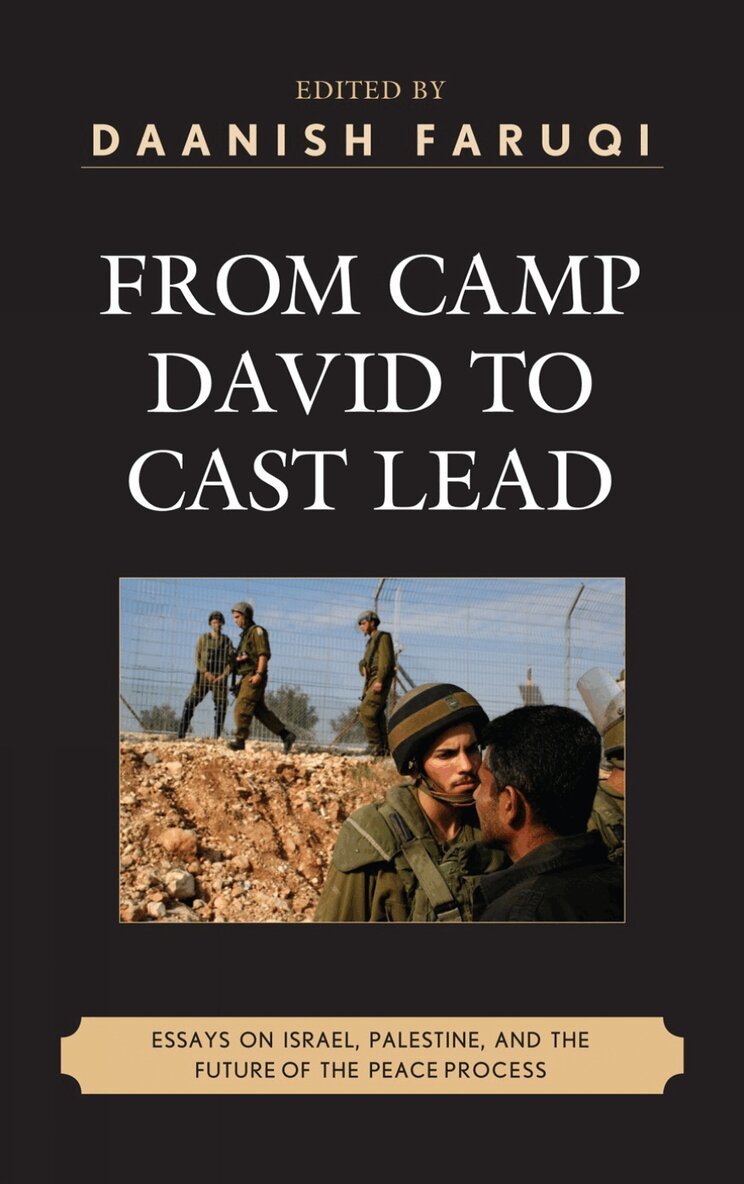
This volume is an appraisal of the past ten years of the Israel-Palestine conflict. Particularly following Israeli Operation Cast Lead in 2009, prospects for a viable Palestinian state existing alongside a secure and independent Israel seem increasingly out of reach. Nonetheless, peace initiatives remain largely limited to the prevailing two-state solution, without much serious attention paid to that paradigm's feasibility in the aftermath of: the Israeli separation barrier, rampant settlement of the West Bank, the crippling of Palestinian civil society by Israeli economic sanctions (and military campaigns), or growing loyalties among disillusioned Palestinians to militant groups like Hamas. Rather than attempt to articulate a new or more viable peace paradigm, this volume seeks to encourage more informed discussion of the present peace process by elaborating on its limitations in the aftermath of the past ten years. Featuring chapters from scholars of international law, political science, philosophy, history, and Middle East Studies, this interdisciplinary volume seeks to analyze the vicissitudes of the Israel-Palestine conflict over the past ten years, in a truly holistic manner.
Häftad, Engelska, 2017
400 kr
Skickas inom 7-10 vardagar
The liberatory sentiment that stoked the Arab Spring and saw the ousting of long-time Egyptian dictator Hosni Mubarak seems a distant memory. Democratically elected president Mohammad Morsi lasted only a year before he was forced from power to be replaced by precisely the kind of authoritarianism protestors had been railing against in January 2011. Paradoxically, this turn of events was encouraged by the same liberal activists and intelligentsia who’d pushed for progressive reform under Mubarak.This volume analyses how such a key contingent of Egyptian liberals came to develop outright illiberal tendencies. Interdisciplinary in scope, it brings together experts in Middle East studies, political science, philosophy, Islamic studies and law to address the failure of Egyptian liberalism in a holistic manner – from liberalism’s relationship with the state, to its role in cultivating civil society, to the role of Islam and secularism in the cultivation of liberalism. A work of impeccable scholarly rigour, Egypt and the Contradictions of Liberalism reveals the contemporary ramifications of the state of liberalism in Egypt.
E-bok
Engelska, 2017255 kr
Läs direkt efter köp
The liberatory sentiment that stoked the Arab Spring and saw the ousting of long-time Egyptian dictator Hosni Mubarak seems a distant memory. Democratically elected president Mohammad Morsi lasted only a year before he was forced from power to be replaced by precisely the kind of authoritarianism protestors had been railing against in January 2011. Paradoxically, this turn of events was encouraged by the same liberal activists and intelligentsia who’d pushed for progressive reform under Mubarak. This volume analyses how such a key contingent of Egyptian liberals came to develop outright illiberal tendencies. Interdisciplinary in scope, it brings together experts in Middle East studies, political science, philosophy, Islamic studies and law to address the failure of Egyptian liberalism in a holistic manner – from liberalism’s relationship with the state, to its role in cultivating civil society, to the role of Islam and secularism in the cultivation of liberalism. A work of impeccable scholarly rigour, Egypt and the Contradictions of Liberalism reveals the contemporary ramifications of the state of liberalism in Egypt.Contents 1. Egyptian liberals, from revolution to counterrevolution Daanish Faruqi and Dalia F. FahmySection I: Liberalism and The Egyptian State 2. Egypt’s structural illiberalism: How a weak party system undermines participatory politics Dalia F. Fahmy 3. Nasser’s comrades and Sadat’s brothers: Institutional legacies and the downfall of the Second Egyptian Republic Hesham Sallam 4. (De)liberalizing judicial independence in Egypt Sahar F. Aziz Section II: Liberalism and Egyptian Civil Society 5. The authoritarian state’s power over civil society Ann M. Lesch 6. Myth or reality?: The discursive construction of the Muslim Brotherhood in Egypt Mohamad Elmasry 7. Student political activism in democratizing Egypt Abdel-Fattah Mady Section III: Islam, Secularism, and the State 8. Egypt’s secularized intelligentsia and the guardians of truth Khaled Abou El Fadl 9. The truncated debate: Egyptian liberals, Islamists, and ideological statism Ahmed Abdel Meguid and Daanish Faruqi Section IV: Egyptian Liberals in Comparative Perspective Post-2013 10. Conflict and reconciliation: “Arab liberalism” in Syria and Egypt Emran El-Badawi 11. Egypt’s new liberal crisis Joel Gordon 12. Egyptian liberals and their anti-democratic deceptions: A contemporary sad narrative Amr HamzawyConclusion: Does liberalism have a future in Egypt? Emad El-Din Shahin