Daisy Delogu – författare
Visar alla böcker från författaren Daisy Delogu. Handla med fri frakt och snabb leverans.
7 produkter
7 produkter
E-bok
Engelska, 20151 124 kr
Läs direkt efter köp
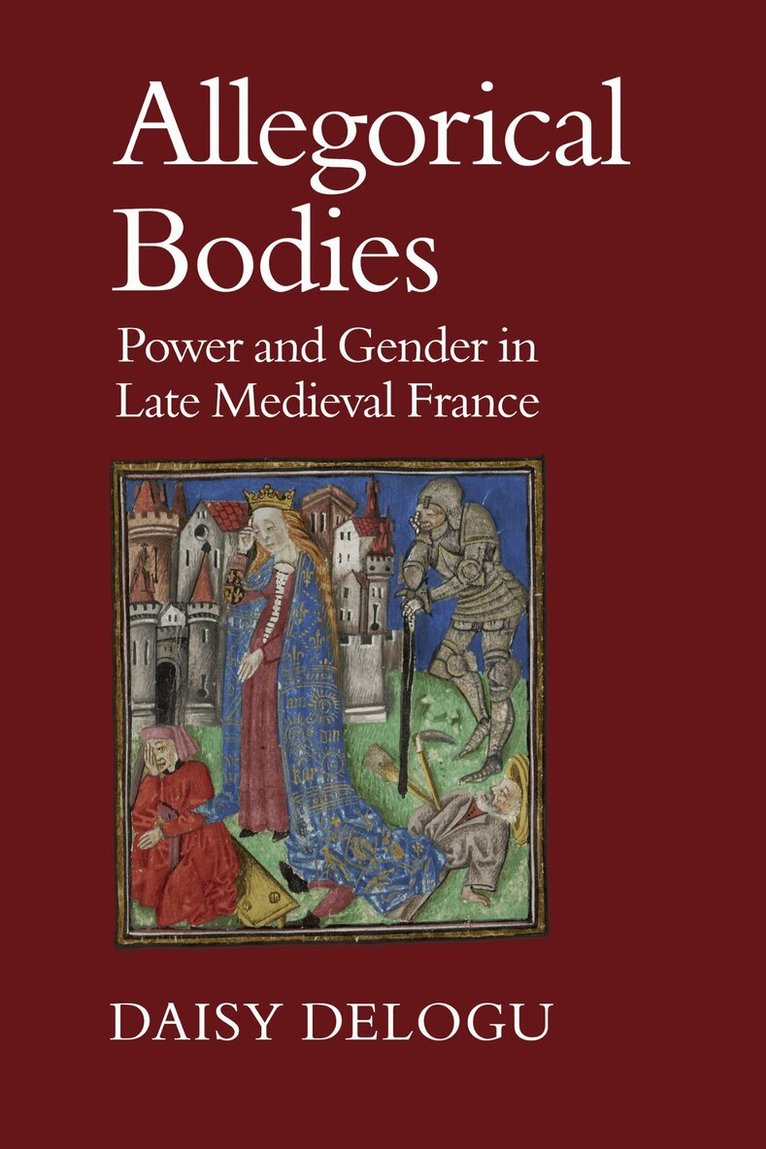
Allegorical Bodies begins with the paradoxical observation that at the same time as the royal administrators of late fourteenth and early fifteenth-century France excluded women from the royal succession through the codification of Salic law, writers of the period adopted the female form as the allegorical personification of France itself. Considering the role of female allegorical figures in the works of Eustache Deschamps, Christine de Pizan, and Alain Chartier, as well as in the sermons of Jean Gerson, Daisy Delogu reveals how female allegories of the Kingdom of France and the University of Paris were used to conceptualize, construct, and preserve structures of power during the tumultuous reign of the mad king Charles VI (1380–1422).An impressive examination of the intersection between gender, allegory, and political thought, Delogu’s book highlights the importance of gender to the functioning of allegory and to the construction of late medieval French identity.
Inbunden, Engelska, 2015
901 kr
Skickas inom 5-8 vardagar
Allegorical Bodies begins with the paradoxical observation that at the same time as the royal administrators of late fourteenth and early fifteenth-century France excluded women from the royal succession through the codification of Salic law, writers of the period adopted the female form as the allegorical personification of France itself. Considering the role of female allegorical figures in the works of Eustache Deschamps, Christine de Pizan, and Alain Chartier, as well as in the sermons of Jean Gerson, Daisy Delogu reveals how female allegories of the Kingdom of France and the University of Paris were used to conceptualize, construct, and preserve structures of power during the tumultuous reign of the mad king Charles VI (1380–1422).An impressive examination of the intersection between gender, allegory, and political thought, Delogu’s book highlights the importance of gender to the functioning of allegory and to the construction of late medieval French identity.
E-bok
PDF, Engelska, 20081 106 kr
Läs direkt efter köp
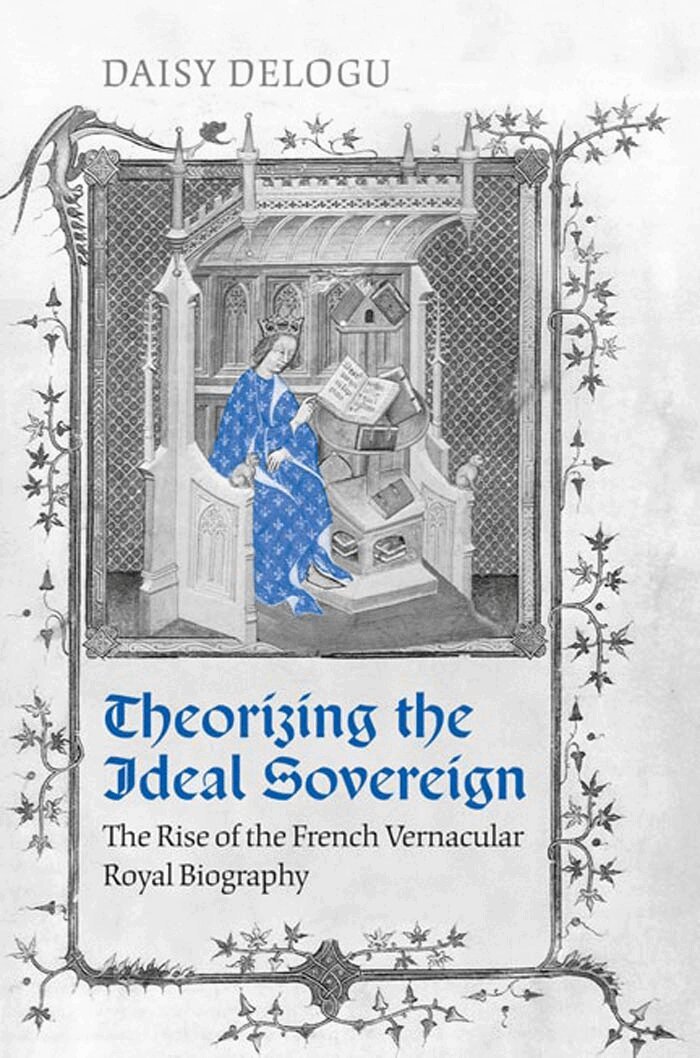
Theorizing the Ideal Sovereign, examines the ways in which vernacular biographies of kings from the later French Middle Ages reflected and contributed to transformations in late-medieval political and philosophical thought. Using a lens of literary analysis for works that have more often been read as historical source documents, Daisy Delogu demonstrates how theories of kingship evolved in the period of the "rediscovery" of Aristotle, the rise of the vernacular as a language of ethics and philosophy, and the Hundred Years' War.By means of a series of close readings of Jean de Joinville's Vie de Saint Louis, Guillaume de Machaut's Prise d'Alixandre, and Christine de Pizan's biography of Charles V, Delogu examines the ways in which biographical writings on kings could advance precise political aims. She also shows how these texts contributed to nascent ideas of nationhood, exerted pressure upon traditional ideals of kingship, and ultimately redefined the theoretical and practical bases of medieval kingship.This study of vernacular kings's lives illuminates the important role that literary works played in shaping ideas more traditionally discussed in legal, historical, or institutional terms. Theorizing the Ideal Sovereign restores late medieval kings's lives to ethical and political conversations of which they were an integral part, and revives the lively interaction between texts and readers that formed the basis for medieval reading experiences.
E-bok
PDF, Engelska, 20141 124 kr
Läs direkt efter köp
Allegorical Bodies begins with the paradoxical observation that at the same time as the royal administrators of late fourteenth and early fifteenth-century France excluded women from the royal succession through the codification of Salic law, writers of the period adopted the female form as the allegorical personification of France itself. Considering the role of female allegorical figures in the works of Eustache Deschamps, Christine de Pizan, and Alain Chartier, as well as in the sermons of Jean Gerson, Daisy Delogu reveals how female allegories of the Kingdom of France and the University of Paris were used to conceptualize, construct, and preserve structures of power during the tumultuous reign of the mad king Charles VI (1380–1422).An impressive examination of the intersection between gender, allegory, and political thought, Delogu’s book highlights the importance of gender to the functioning of allegory and to the construction of late medieval French identity.
1 194 kr
Läs direkt efter köp
Theorizing the Ideal Sovereign, examines the ways in which vernacular biographies of kings from the later French Middle Ages reflected and contributed to transformations in late-medieval political and philosophical thought. Using a lens of literary analysis for works that have more often been read as historical source documents, Daisy Delogu demonstrates how theories of kingship evolved in the period of the "rediscovery" of Aristotle, the rise of the vernacular as a language of ethics and philosophy, and the Hundred Years' War.By means of a series of close readings of Jean de Joinville's Vie de Saint Louis, Guillaume de Machaut's Prise d'Alixandre, and Christine de Pizan's biography of Charles V, Delogu examines the ways in which biographical writings on kings could advance precise political aims. She also shows how these texts contributed to nascent ideas of nationhood, exerted pressure upon traditional ideals of kingship, and ultimately redefined the theoretical and practical bases of medieval kingship.This study of vernacular kings's lives illuminates the important role that literary works played in shaping ideas more traditionally discussed in legal, historical, or institutional terms. Theorizing the Ideal Sovereign restores late medieval kings's lives to ethical and political conversations of which they were an integral part, and revives the lively interaction between texts and readers that formed the basis for medieval reading experiences.
Inbunden, Engelska, 2023
1 135 kr
Skickas inom 5-8 vardagar
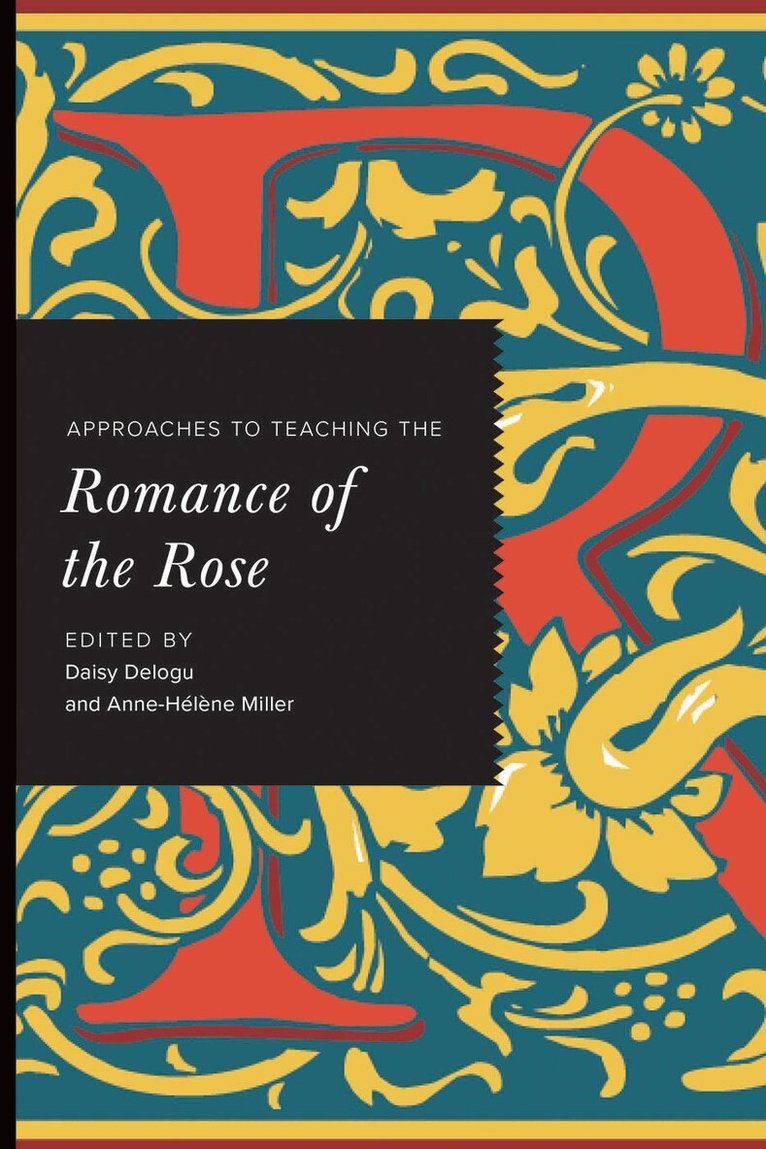
Essays on teaching love, ethics, and medieval allegory.One of the most influential texts of its time, the Romance of the Rose offers readers a window into the world view of the late Middle Ages in Europe, including notions of moral philosophy and courtly love. Yet the Rose also explores topics that remain relevant to readers today, such as gender, desire, and the power of speech. Students, however, can find the work challenging because of its dual authorship by Guillaume de Lorris and Jean de Meun, its structure as an allegorical dream vision, and its encyclopedic length and scope. The essays in this volume offer strategies for teaching the poem with confidence and enjoyment. Part 1, "Materials," suggests helpful background resources. Part 2, "Approaches," presents contexts, critical approaches, and strategies for teaching the work and its classical and medieval sources, illustrations, and adaptations as well as the intellectual debates that surrounded it.
Del 56 - Brill's Companions to the Christian Tradition
Companion to Alain Chartier (c.1385-1430)
Father of French Eloquence
Inbunden, Engelska, 2015
3 775 kr
Skickas inom 5-8 vardagar
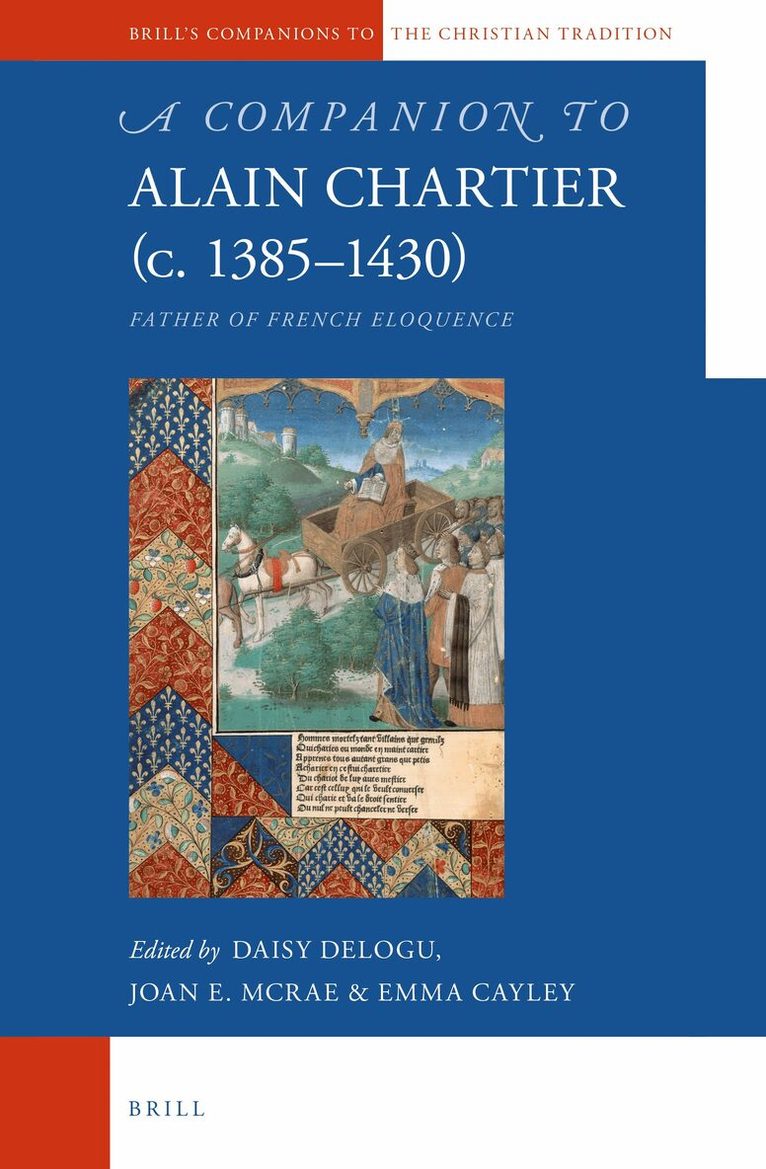
A Companion to Alain Chartier: Father of French Eloquence brings together fourteen contributions that offer a range of perspectives and insights into the works of this exceptional late medieval author. As heir to the past and herald of the future, Chartier reinvented the traditional, whether in Latin or French, verse or prose. Chartier’s open-ended, dialogic works and his own politically-engaged writing inspired his successors to think and write in new ways about ethics, the individual’s role in society, relationships between men and women, and the responsibility of a poet to his/her audience. As these essays show, Chartier’s renovation of poetic form and content had considerable influence over successive generations of writers in France and across Europe.Contributors are: Adrian Armstrong, Florence Bouchet, Emma Cayley, Daisy Delogu, Ashby Kinch, James C. Laidlaw, Marta Marfany, Deborah McGrady, Joan E. McRae, Jean-Claude Mühlethaler, Liv Robinson, Camille Serchuk, Andrea Tarnowski, Craig Taylor, and Hanno Wijsman.