Dan Lin – författare
562 kr
Skickas inom 10-15 vardagar
708 kr
Läs direkt efter köp
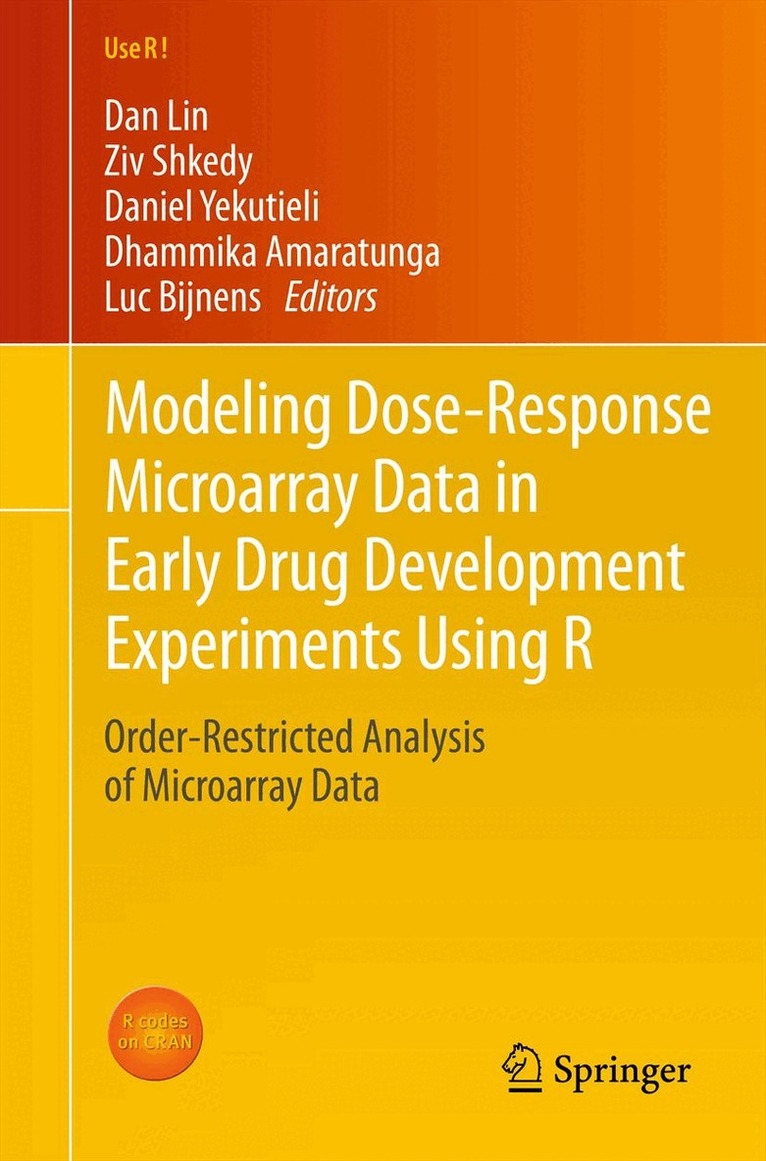
This book focuses on the analysis of dose-response microarray data in pharmaceutical settings, the goal being to cover this important topic for early drug development experiments and to provide user-friendly R packages that can be used to analyze this data. It is intended for biostatisticians and bioinformaticians in the pharmaceutical industry, biologists, and biostatistics/bioinformatics graduate students.
Part I of the book is an introduction, in which we discuss the dose-response setting and the problem of estimating normal means under order restrictions. In particular, we discuss the pooled-adjacent-violator (PAV) algorithm and isotonic regression, as well as inference under order restrictions and non-linear parametric models, which are used in the second part of the book.
Part II is the core of the book, in which we focus on the analysis of dose-response microarray data. Methodological topics discussed include:
• Multiplicity adjustment
• Test statistics and procedures for the analysis of dose-response microarray data
• Resampling-based inference and use of the SAM method for small-variance genes in the data
• Identification and classification of dose-response curve shapes
• Clustering of order-restricted (but not necessarily monotone) dose-response profiles
• Gene set analysis to facilitate the interpretation of microarray results
• Hierarchical Bayesian models and Bayesian variable selection
• Non-linear models for dose-response microarray data
• Multiple contrast tests
• Multiple confidence intervals for selected parameters adjusted for the false coverage-statement rate
All methodological issues in the book are illustrated using real-world examples of dose-response microarray datasets from early drug development experiments.
2 004 kr
Skickas inom 10-15 vardagar
2 599 kr
Läs direkt efter köp
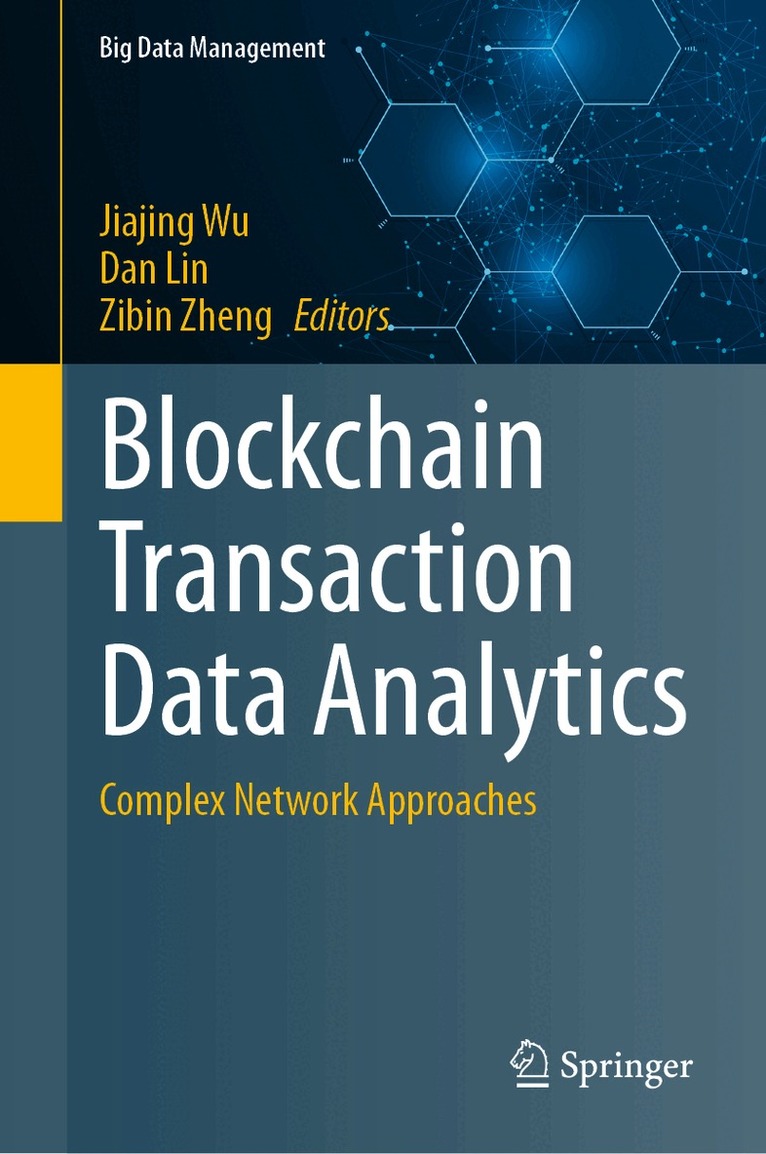
Blockchain, a decentralized ledger technology based on cryptographic algorithms, ensures the creation of immutable and tamper-proof ledgers in decentralized systems. The transparent nature of blockchain allows public access to transaction records, providing unprecedented opportunities for blockchain data analytics and mining. The primary value of blockchain transaction data analytics lies in two aspects: 1) by delving into the details of blockchain transaction data, we can extensively explore various types of user behavior patterns and the evolutionary process of blockchain transaction networks; and 2) analyzing blockchain transaction data aids in identifying illicit activities, offering effective regulatory solutions for the establishment of a healthier blockchain ecosystem. This book focuses on data analytics based on network-based approaches, providing a comprehensive analysis of blockchain data analytics problems, key technologies, and future directions.
Different from most existing book, this book takes a unique approach to blockchain data analysis research, focusing on data analytics based on network-based approaches. Leveraging network analysis methods, the book concentrates on three main aspects of blockchain transaction data analytics and mining: (1) transaction network modelling and pattern mining, including macro and micro-level account attributes, money laundering network patterns, and network evolution patterns; (2) account business classification, such as account label prediction based on graph neural networks; and (3) anomaly behavior identification, covering phishing detection, risk scoring, and transaction tracking.
Designed as a valuable resource for students, researchers, engineers, and policymakers in various fields related to blockchain data analytics, this book holds significant importance for understanding blockchain transaction behavior and addressing the detection of illicit activities in the blockchain space.
2 004 kr
Skickas inom 10-15 vardagar