Daniel Baldwin Hess - Böcker
Visar alla böcker från författaren Daniel Baldwin Hess. Handla med fri frakt och snabb leverans.
11 produkter
11 produkter
705 kr
Skickas inom 5-8 vardagar
760 kr
Skickas inom 5-8 vardagar
678 kr
Skickas inom 5-8 vardagar
732 kr
Skickas inom 5-8 vardagar
526 kr
Skickas inom 10-15 vardagar
In The Shoup Doctrine: Essays Celebrating Donald Shoup and Parking Reforms, edited by Daniel Baldwin Hess, 37 city planners, economists, journalists, and parking professionals analyze three major parking reforms proposed by Donald Shoup, a Distinguished Research Professor of Urban Planning at UCLA. First, remove off-street parking requirements; second, use market prices to manage on-street parking; third, spend the parking meter revenue to fund added public services on metered blocks. These parking reforms can align individual incentives with collective objectives and produce enormous benefits at low or no cost. All these benefits will result from subsidizing people, not parking. Shifting the cost of parking to the parkers will make cities more expensive for cars and more livable for people.Shoup has spent his career encouraging everyone to rethink relationships between parking and the built environment, traffic congestion, energy consumption, and local economic development. This book celebrates Shoup’s decades-long contributions to research, practice, and education and demonstrates how parking reform can support affordable housing development, lessen air pollution, and reduce automobile dependency.This book will be of interest to urban planners, developers, elected officials, students, and citizen advocates who are passionate about reducing automobile dependency and creating more sustainable and vital cities.
2 103 kr
Skickas inom 10-15 vardagar
In The Shoup Doctrine: Essays Celebrating Donald Shoup and Parking Reforms, edited by Daniel Baldwin Hess, 37 city planners, economists, journalists, and parking professionals analyze three major parking reforms proposed by Donald Shoup, a Distinguished Research Professor of Urban Planning at UCLA. First, remove off-street parking requirements; second, use market prices to manage on-street parking; third, spend the parking meter revenue to fund added public services on metered blocks. These parking reforms can align individual incentives with collective objectives and produce enormous benefits at low or no cost. All these benefits will result from subsidizing people, not parking. Shifting the cost of parking to the parkers will make cities more expensive for cars and more livable for people.Shoup has spent his career encouraging everyone to rethink relationships between parking and the built environment, traffic congestion, energy consumption, and local economic development. This book celebrates Shoup’s decades-long contributions to research, practice, and education and demonstrates how parking reform can support affordable housing development, lessen air pollution, and reduce automobile dependency.This book will be of interest to urban planners, developers, elected officials, students, and citizen advocates who are passionate about reducing automobile dependency and creating more sustainable and vital cities.
433 kr
Skickas inom 10-15 vardagar
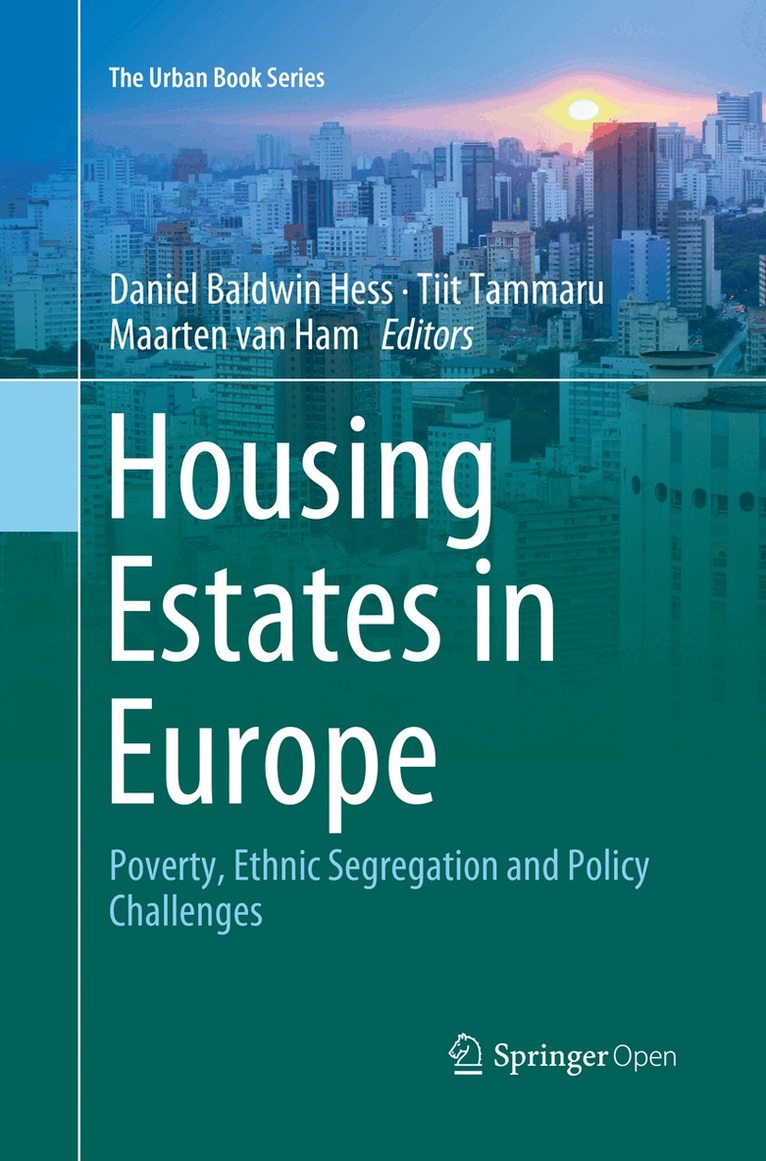
This open access book explores the formation and socio-spatial trajectories of large housing estates in Europe. Are these estates clustered or scattered? Which social groups originally had access to residential space in housing estates? What is the size, scale and geography of housing estates, their architectural and built environment composition, services and neighbourhood amenities, and metropolitan connectivity? How do housing estates contribute to the urban mosaic of neighborhoods by ethnic and socio-economic status? What types of policies and planning initiatives have been implemented in order to prevent the social downgrading of housing estates?The collection of chapters in this book addresses these questions from a new perspective previously unexplored in scholarly literature. The social aspects of housing estates are thoroughly investigated (including socio-demographic and economic characteristics of current and past inhabitants; ethnicity and segregation patterns; population dynamics; etc.), and the physical composition of housing estates is described in significant detail (including building materials; building form; architectural and landscape design; built environment characteristics; etc.). This book is timely because the recent global economic crisis and Europe’s immigration crisis demand a thorough investigation of the role large housing estates play in poverty and ethnic concentration. Through case studies of housing estates in 14 European centers, the book also identifies policy measures that have been used to address challenges in housing estates throughout Europe.
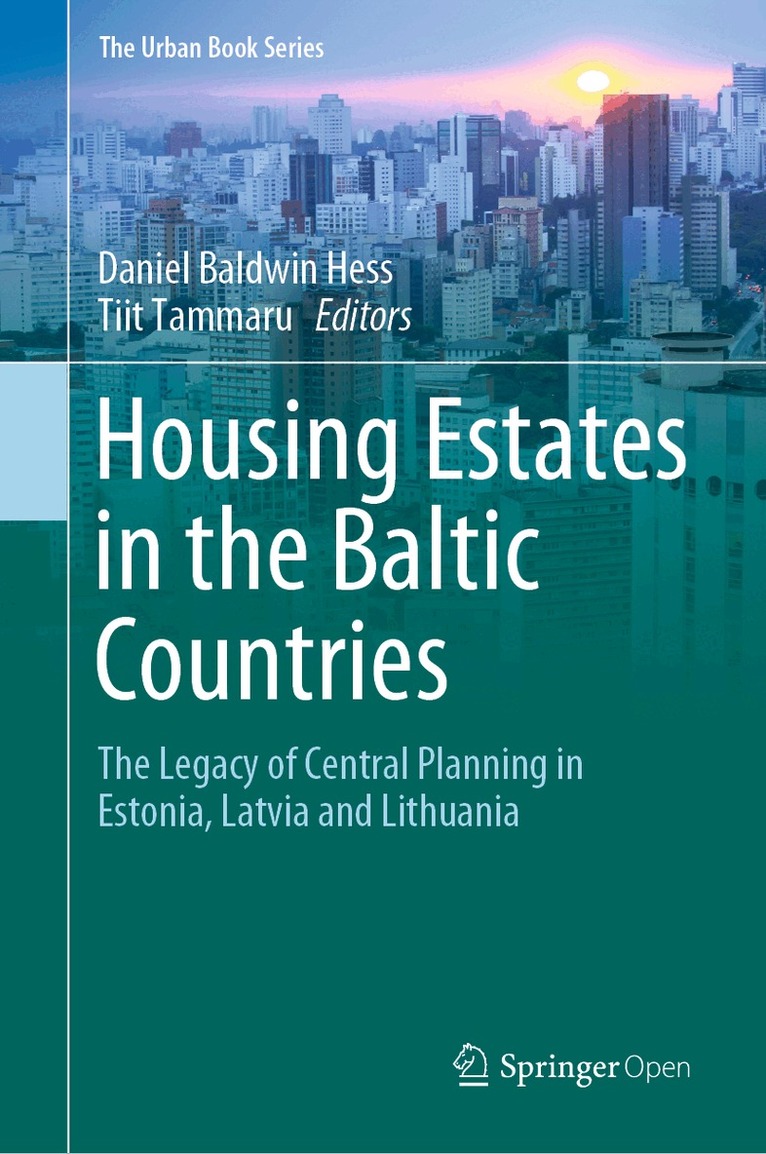
Housing Estates in the Baltic Countries
The Legacy of Central Planning in Estonia, Latvia and Lithuania
Inbunden, Engelska, 2019
537 kr
Skickas inom 10-15 vardagar
This open access book focuses on the formation and later socio-spatial trajectories of large housing estates in the Baltic countries—Estonia, Latvia, and Lithuania. It also explores claims that a distinctly “westward-looking orientation” in their design produced housing estates that were superior in design to those produced elsewhere in the Soviet Union (between 1944 and 1991, Estonia was a member republic of the USSR). The first two parts of the book provide contextual material to help readers understand the vision behind housing estates in Estonia, Latvia, and Lithuania. These sections present the background of housing estates in the Baltic Republics as well as challenges and debates concerning their formation, evolution, and present condition and importance. Subsequent parts of the book consist of:demographic analyses of the socioeconomic characteristics and ethnicity of housing estate residents (pastand present) in the three Baltic capital cities, case studies of people and places related to housing estates in the Baltic countries, and chapters exploring relevant special topics and themes.This book will be of interest to students, scholars, and advocates interested in understanding the past, present, and future importance of housing estates in the Baltic countries.
Housing Estates in the Baltic Countries
The Legacy of Central Planning in Estonia, Latvia and Lithuania
Häftad, Engelska, 2020
431 kr
Skickas inom 10-15 vardagar
This open access book focuses on the formation and later socio-spatial trajectories of large housing estates in the Baltic countries—Estonia, Latvia, and Lithuania. It also explores claims that a distinctly “westward-looking orientation” in their design produced housing estates that were superior in design to those produced elsewhere in the Soviet Union (between 1944 and 1991, Estonia was a member republic of the USSR). The first two parts of the book provide contextual material to help readers understand the vision behind housing estates in Estonia, Latvia, and Lithuania. These sections present the background of housing estates in the Baltic Republics as well as challenges and debates concerning their formation, evolution, and present condition and importance. Subsequent parts of the book consist of:demographic analyses of the socioeconomic characteristics and ethnicity of housing estate residents (pastand present) in the three Baltic capital cities, case studies of people and places related to housing estates in the Baltic countries, and chapters exploring relevant special topics and themes.This book will be of interest to students, scholars, and advocates interested in understanding the past, present, and future importance of housing estates in the Baltic countries.
537 kr
Skickas inom 10-15 vardagar
This open access book examines the significance of gay neighborhoods (or ‘gayborhoods’) from critical periods of formation during the gay liberation and freedom movements of the 1960s and 1970s, to proven durability through the HIV/AIDS pandemic during the 1980s and 1990s, to a mature plateau since 2000. The book provides a framework for contemplating the future form and function of gay neighborhoods. Social and cultural shifts within gay neighborhoods are used as a framework for understanding the decades-long struggle for LGBTQ+ rights and equality.Resulting from gentrification, weakening social stigma, and enhanced rights for LGBTQ+ people, gay neighborhoods have recently become “less gay,” following a 50-year period of resilience. Meanwhile, other neighborhoods are becoming “more gay,” due to changing preferences of LGBTQ+ individuals and a propensity for LGBTQ+ families to form community in areas away from established gayborhoods. The current ‘plateau’ in the evolution of gay neighborhoods is characterized by generational differences—between Baby Boom pioneers and Millennials who favour broad inclusivity—signaling various possible trajectories for the future ‘afterlife’ of these important LGBTQ+ urban spaces.The complicating impacts of the COVID-19 pandemic provides a point of comparison for lessons learned from gay neighborhoods and the LGBTQ+ community that bravely endured the onset of the HIV/AIDS pandemic.This book will be of interest to students and scholars in various disciplines—including sociology, social work, anthropology, gender and sexuality, LGTBQ+ and queer studies, as well as urban geography, architecture, and city planning—and to policymakers and advocates concerned with LGBTQ+ rights and social justice.
540 kr
Skickas inom 10-15 vardagar
This open access book explores the formation and socio-spatial trajectories of large housing estates in Europe. Through case studies of housing estates in 14 European centers, the book also identifies policy measures that have been used to address challenges in housing estates throughout Europe.