Daniel J. Sharfstein – författare
Visar alla böcker från författaren Daniel J. Sharfstein. Handla med fri frakt och snabb leverans.
4 produkter
4 produkter
Häftad, Engelska, 2012
298 kr
Skickas inom 5-8 vardagar
Häftad, Engelska, 2018
186 kr
Skickas inom 5-8 vardagar
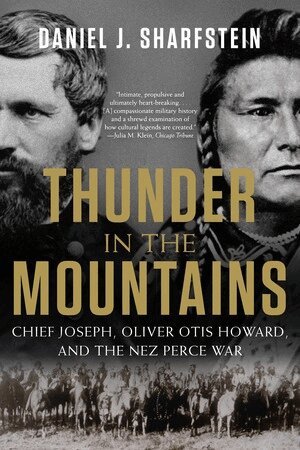
After the Civil War and Reconstruction, a new struggle raged in the Northern Rockies. In the summer of 1877, General Oliver Otis Howard, a champion of African American civil rights, ruthlessly pursued hundreds of Nez Perce families who resisted moving onto a reservation. Standing in his way was Chief Joseph, a young leader who never stopped advocating for Native American sovereignty and equal rights. Thunder in the Mountains is the spellbinding story of two legendary figures and their epic clash of ideas about the meaning of freedom and the role of government in American life.
E-bok
Engelska, 201174 kr
Läs direkt efter köp
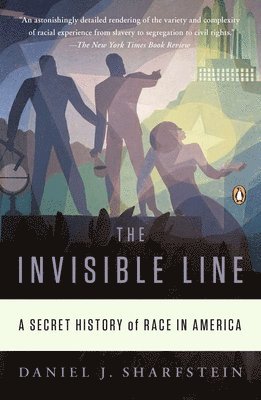
"The Invisible Line" shines light on one of the most important, but too often hidden, aspects of American history and culture. Sharfstein''s narrative of three families negotiating America''s punishing racial terrain is a must read for all who are interested in the construction of race in the United States." --Annette Gordon-Reed, Pulitzer Prize winning author of The Hemingses of Monticello In America, race is a riddle. The stories we tell about our past have calcified into the fiction that we are neatly divided into black or white. It is only with the widespread availability of DNA testing and the boom in genealogical research that the frequency with which individuals and entire families crossed the color line has become clear. In this sweeping history, Daniel J. Sharfstein unravels the stories of three families who represent the complexity of race in America and force us to rethink our basic assumptions about who we are. The Gibsons were wealthy landowners in the South Carolina backcountry who became white in the 1760s, ascending to the heights of the Southern elite and ultimately to the U.S. Senate. The Spencers were hardscrabble farmers in the hills of Eastern Kentucky, joining an isolated Appalachian community in the 1840s and for the better part of a century hovering on the line between white and black. The Walls were fixtures of the rising black middle class in post-Civil War Washington, D.C., only to give up everything they had fought for to become white at the dawn of the twentieth century. Together, their interwoven and intersecting stories uncover a forgotten America in which the rules of race were something to be believed but not necessarily obeyed. Defining their identities first as people of color and later as whites, these families provide a lens for understanding how people thought about and experienced race and how these ideas and experiences evolved-how the very meaning of black and white changed-over time. Cutting through centuries of myth, amnesia, and poisonous racial politics, The Invisible Line will change the way we talk about race, racism, and civil rights.
Inbunden, Engelska, 2017
270 kr
Tillfälligt slut
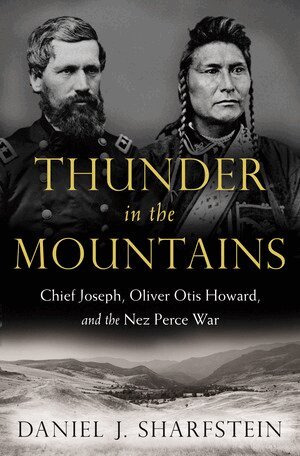
Oliver Otis Howard thought he was a man of destiny. Chosen to lead the Freedmen’s Bureau after the Civil War, the Union Army general was entrusted with the era’s most crucial task: helping millions of former slaves claim the rights of citizens. He was energized by the belief that abolition and Reconstruction, the country’s great struggles for liberty and equality, were God’s plan for himself and the nation. To honor his righteous commitment to a new American freedom, Howard University was named for him.But as the nation’s politics curdled in the 1870s, General Howard exiled himself from Washington, D.C., rejoined the army, and was sent across the continent to command forces in the Pacific Northwest. Shattered by Reconstruction’s collapse, he assumed a new mission: forcing Native Americans to become Christian farmers on government reservations.Howard’s plans for redemption in the West ran headlong into the resistance of Chief Joseph, a young Nez Perce leader in northeastern Oregon who refused to leave his ancestral land. Claiming equal rights for Native Americans, Joseph was determined to find his way to the center of American power and convince the government to acknowledge his people’s humanity and capacity for citizenship. Although his words echoed the very ideas about liberty and equality that Howard had championed during Reconstruction, in the summer of 1877 the general and his troops ruthlessly pursued hundreds of Nez Perce families through the stark and unforgiving Northern Rockies. An odyssey and a tragedy, their devastating war transfixed the nation and immortalized Chief Joseph as a hero to generations of Americans.Recreating the Nez Perce War through the voices of its survivors, Daniel J. Sharfstein’s visionary history of the West casts Howard’s turn away from civil rights alongside the nation’s rejection of racial equality and embrace of empire. The conflict becomes a pivotal struggle over who gets to claim the American dream: a battle of ideas about the meaning of freedom and equality, the mechanics of American power, and the limits of what the government can and should do for its people. The war that Howard and Joseph fought is one that Americans continue to fight today.