
Danny Troger – författare
2 765 kr
Läs direkt efter köp
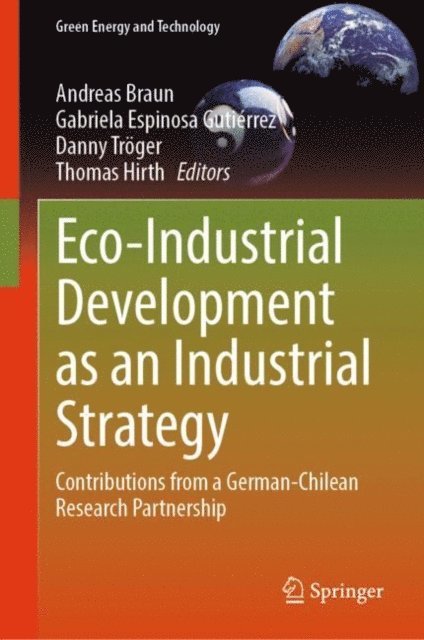
This book reports on the results of a 6-year international collaboration between four universities such as the Karlsruhe Institute of Technology (Germany), the Universidad de Chile, the Universidad Austral de Chile and the Universidad de Concepcion (Chile) on the topic of Eco-Industrial Development, i.e. on how industry can learn from ecosystems in order to increase its sustainability. On the one hand, this book presents the findings of the projects run by the network of researchers from Chile and Germany, including chapters on renewable energy production, circular economy, sustainable agriculture, and social and environmental impact assessment, among others. On the other hand, it highlights the importance of international academic collaboration in order to achieve sustainable transformations in industry, while also providing insights into the particular challenges and opportunities of eco-industrial development in Chile. All in all, this book provides both academics and professionals with a timely snapshot on principles and best practices for industrial sustainability and sustainable development.
1 078 kr
Läs direkt efter köp
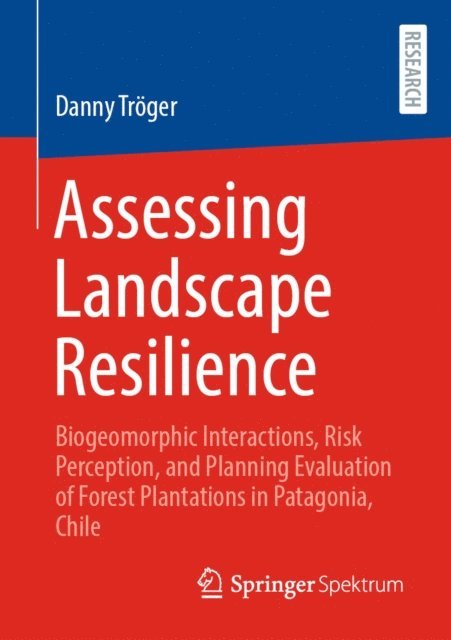
This book examines the extent to which exotic pine plantations are a suitable strategy for maintaining the essential functions, structures, processes and identity of the Patagonian landscape over time. To this end, it integrates three empirical studies with inter- and transdisciplinary approaches under the theoretical framework of landscape resilience.
The first study analyses the biogeomorphic interactions of different land uses and their relevance for soil conservation and landslide mitigation. The second study examines perceptions of natural hazards and focuses on networks of human and non-human actors that maintain landscape resilience. The results of these two studies are incorporated into the planning evaluation of land zoning and alternative strategies are developed, inspired by normative polycentric governance.
It is concluded that Pinus plantations partially fulfil their ecological objectives of erosion control and landslide mitigation. However, their performance lags behind that of secondary forests with native species and they create new risks such as reduced biodiversity, increased risk of wildfires and conflicts with local identity. The book concludes with new research questions of trans-regional importance.