Daphne S. Barbour – författare
Visar alla böcker från författaren Daphne S. Barbour. Handla med fri frakt och snabb leverans.
6 produkter
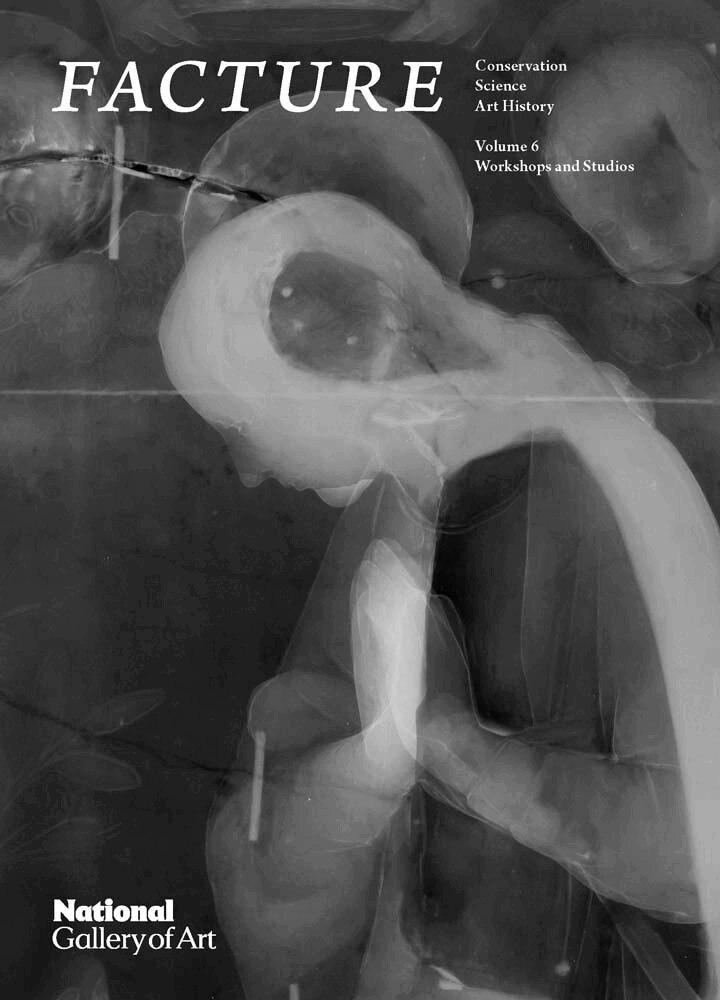
Facture: Conservation, Science, Art History
Volume 6: Workshops and Studios
Häftad, 2023
340 kr
Lägg i varukorg
A technical examination of artists’ workshops and studios across history and media, told through the collections of the National Gallery of Art Volume 6 of the National Gallery of Art’s biennial conservation research journal Facture explores the themes of workshops and studios in different cultural …
Edgar Degas Sculpture
Av Suzanne Glover Lindsay, Daphne S. Barbour m. fl.
Inbunden, 2011
1110 kr
Lägg i varukorg
As an artist, Edgar Degas (1834-1917) defies easy description. Allied with the French impressionists through his commitment to portraying modern life, he also took an independent course, preferring line over color and the visible brushstroke, and working in a studio instead of out-of-doors. He is …
Facture: Conservation, Science, Art History
Volume 1: Renaissance Masterworks
Av Daphne S. Barbour, E. Melanie Gifford
Häftad, 2013
342 kr
Tillfälligt slut
The National Gallery of Art introduces a new journal presenting the latest conservation research on works in its collection. Named for “the manner in which things are made,” Facture addresses aspects of conservation from treatment and technical art history to scientific research. The inaugural …
Facture: Conservation, Science, Art History
Volume 2: Art in Context
Av Daphne S. Barbour, E. Melanie Gifford
Häftad, 2015
342 kr
Tillfälligt slut
Facture presents the latest conservation research on masterpieces from the National Gallery of Art, Washington, spanning the early Renaissance through the present and encompassing a range of media. Volume 2 examines great art of two very different eras—the Italian Renaissance and the 20th …
Facture: Conservation, Science, Art History
Volume 3: Degas
Av Daphne S. Barbour, Barbara Hepburn Berrie m. fl.
Häftad, 2017
342 kr
Tillfälligt slut
This volume of Facture, a biennial journal that presents the latest conservation research on works of art at the National Gallery of Art, Washington, focuses exclusively on conservation treatment, technical art history, and scientific research related to masterpieces by the beloved French artist …
Facture: Conservation, Science, Art History
Volume 4: Series, Multiples, Replicas
Av Daphne S. Barbour, Suzanne Quillen Lomax
Häftad, 2020
342 kr
Tillfälligt slut
A rigorous and wide-ranging investigation of the techniques and reasons behind the artistic practice of replicationVolume 4 of the National Gallery of Art’s biennial conservation research journal Facture examines the complex themes of series, multiples, and replicas. With a broad historical purview …