Daron Acemoglu – författare
Visar alla böcker från författaren Daron Acemoglu. Handla med fri frakt och snabb leverans.
69 produkter
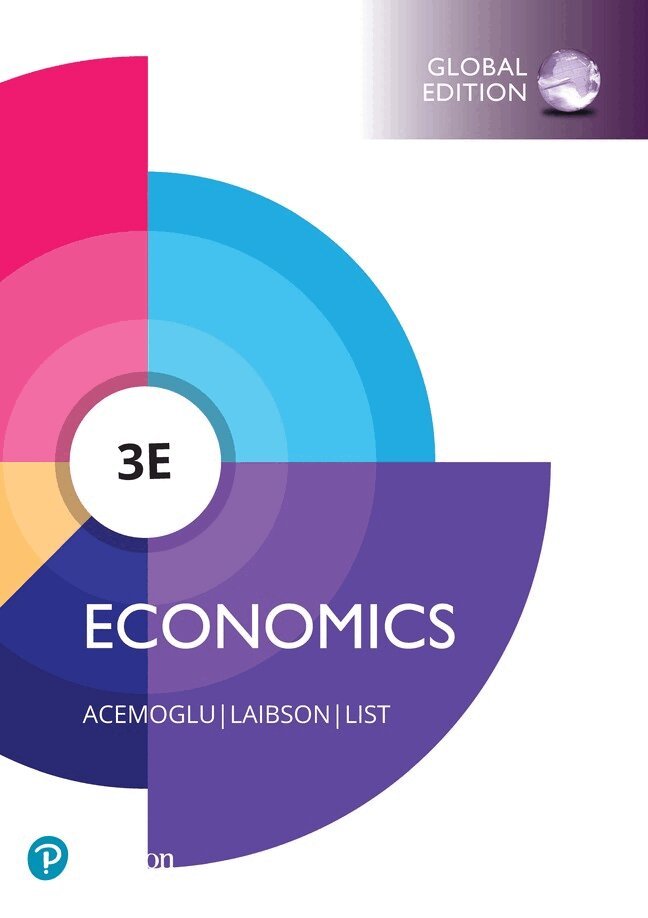
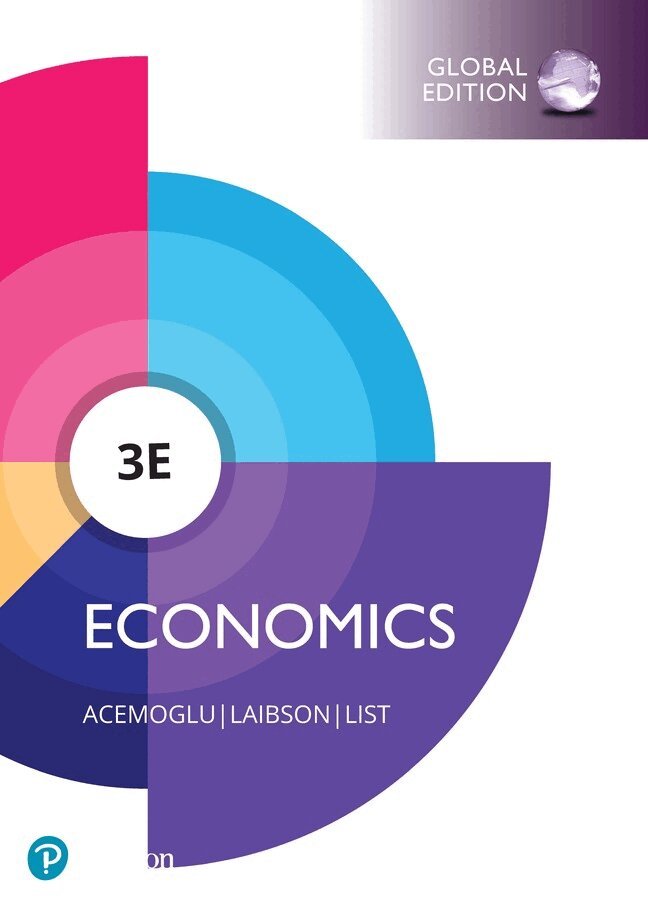
Economics, Global Edition
Av Daron Acemoglu, David Laibson m. fl.
Häftad, 2021
1254 kr
Lägg i varukorg
Forcourses in the principles of economics. An evidence-based approach to economics Throughout Economics , 3rd Edition, authors DaronAcemoglu, David Laibson, and John List use real economic questions anddata to help you learn about the world around you. Taking a freshapproach, they use the themes of …
Varför är inte hela världen rik? : om makt, framsteg och teknik
Av Daron Acemoglu, Simon Johnson m. fl.
Inbunden, 2025
4,0 utav 5 stjärnor. Totalt antal röster: (4)
268 kr
Lägg i varukorg
Varför misslyckas vissa länder? Varför blomstrar andra? Hur påverkar maktbalans, teknologiska framsteg och historiska vägval utvecklingen i våra samhällen och nationer? I Varför är inte hela världen rik? presenteras utdrag från tre banbrytande verk skrivna av Daron Acemoglu, James A. Robinson och …
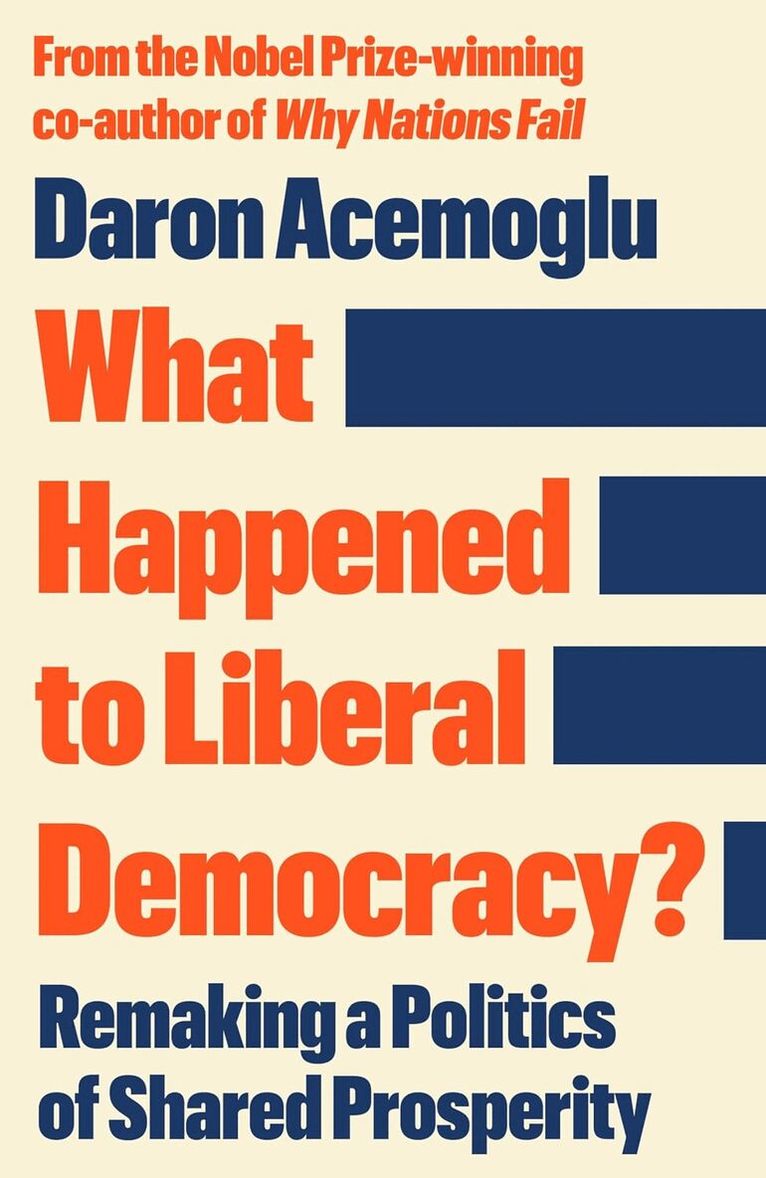
What Happened to Liberal Democracy?
Remaking a Politics of Shared Prosperity - FROM THE WINNER OF THE NOBEL PRIZE IN ECONOMICS
Häftad, 2026
208 kr
Lägg i varukorg
'Timely ... an important call to arms' FINANCIAL TIMES'A must-read' THOMAS PIKETTY, author of Capital in the Twenty-First Century'A thoughtful solution to the most important question of modern democracy' JARED DIAMOND, author of Guns, Germs, and Steel'Brilliant and insightful a tour de force' …
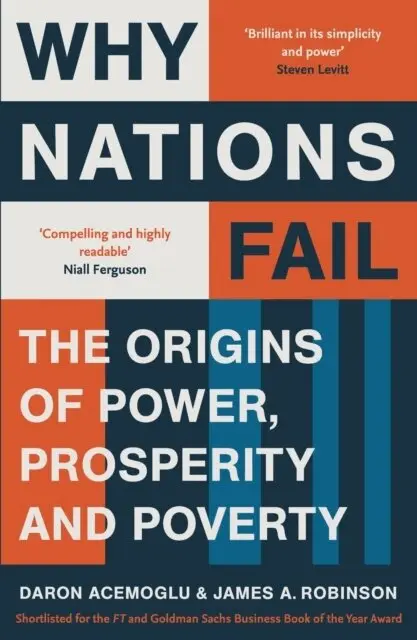
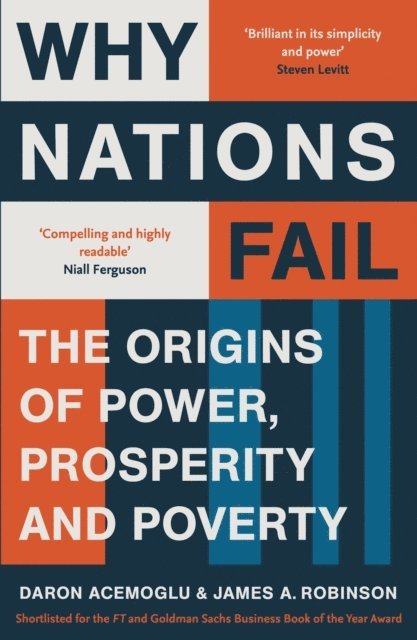
Why Nations Fail
FROM THE WINNERS OF THE NOBEL PRIZE IN ECONOMICS: The Origins of Power, Prosperity and Poverty
Av Daron Acemoglu, James A. Robinson
Häftad, 2013
4,5 utav 5 stjärnor. Totalt antal röster: (11)
178 kr
Lägg i varukorg
BY THE NOBEL PRIZE-WINNING ECONOMISTS DARON ACEMOGLU & JAMES A. ROBINSON Shortlisted for the Financial Times Business Book of the Year AwardWhy are some nations more prosperous than others? Why Nations Fail sets out to answer this question, with a compelling and elegantly argued new theory: that it …
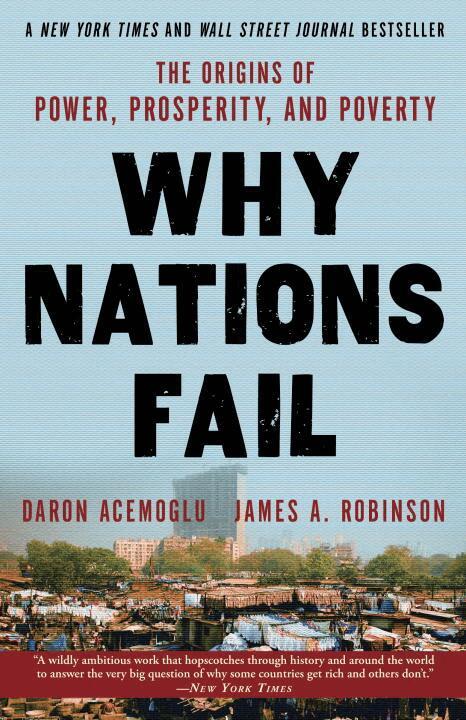
Why Nations Fail
The Origins of Power, Prosperity, and Poverty
Av Daron Acemoglu, James A. Robinson
Häftad, 2013
4,0 utav 5 stjärnor. Totalt antal röster: (1)
180 kr
Lägg i varukorg
Brilliant and engagingly written, Why Nations Fail answers the question that has stumped the experts for centuries: Why are some nations rich and others poor, divided by wealth and poverty, health and sickness, food and famine? Is it culture, the weather, geography? Perhaps ignorance of what the …
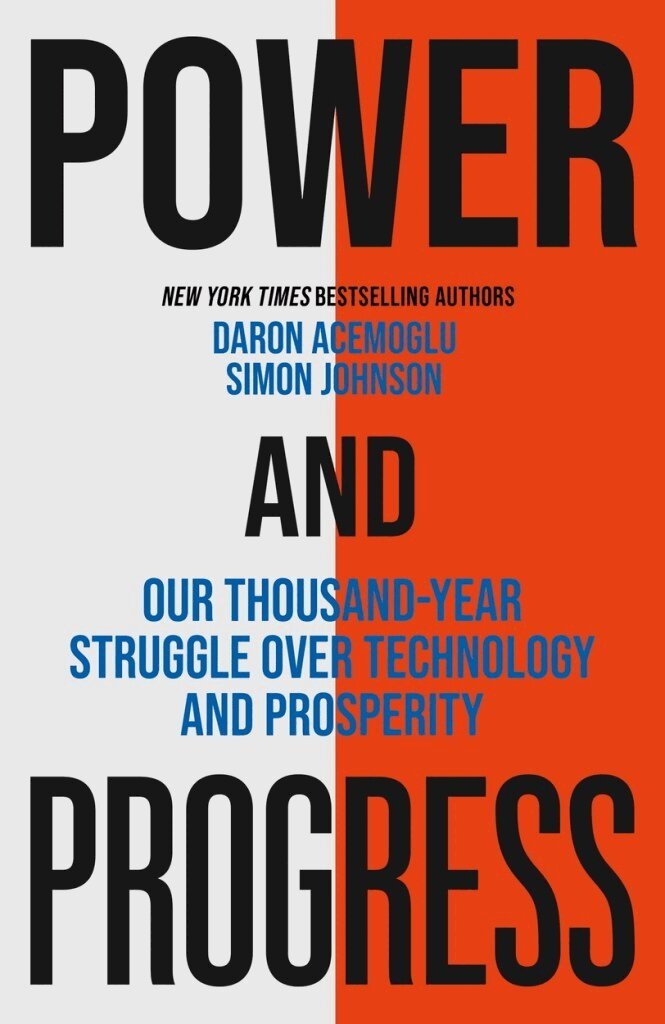
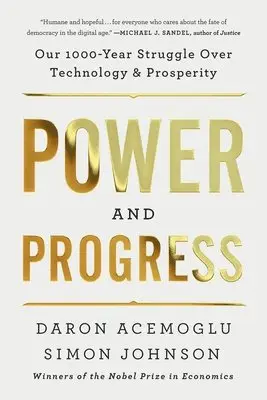
Power and Progress
Our Thousand-Year Struggle Over Technology and Prosperity | Winners of the 2024 Nobel Prize for Economics
Av Simon Johnson, Daron Acemoglu
Häftad, 2024
5,0 utav 5 stjärnor. Totalt antal röster: (1)
193 kr
Lägg i varukorg
WINNERS OF THE 2024 NOBEL PRIZE FOR ECONOMICSLONGLISTED FOR THE BAILLIE GIFFORD PRIZELONGLISTED FOR THE FINANCIAL TIMES AND SCHRODERS BUSINESS BOOK OF THE YEARSHORTLISTED FOR THE LIONEL GELBER PRIZEA FINANCIAL TIMES TECHNOLOGY BOOK OF THE YEARUPDATED WITH A NEW PREFACE'The blueprint we need for the …
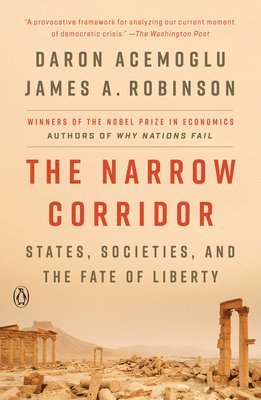
Narrow Corridor
States, Societies, and the Fate of Liberty
Av Daron Acemoglu, James A. Robinson
Häftad, 2020
5,0 utav 5 stjärnor. Totalt antal röster: (2)
196 kr
Lägg i varukorg
From the winners of the 2024 Nobel Prize for Economics and the authors of the international bestseller Why Nations Fail "Why is it so difficult to develop and sustain liberal democracy? The best recent work on this subject comes from a remarkable pair of scholars, Daron Acemoglu and James A. …
Why Nations Fail
The Origins of Power, Prosperity, and Poverty
Av Daron Acemoglu, James A. Robinson
Inbunden, 2012
4,0 utav 5 stjärnor. Totalt antal röster: (1)
354 kr
Lägg i varukorg
NEW YORK TIMES AND WALL STREET JOURNAL BESTSELLER • From two winners of the 2024 Nobel Prize in Economic Sciences, “who have demonstrated the importance of societal institutions for a country’s prosperity” “A wildly ambitious work that hopscotches through history and around the world to answer the …
Varför är inte hela världen rik? Om makt, framsteg och teknik
Av Simon Johnson, James A. Robinson m. fl.
E-bok, 2025
213 kr
Lägg i varukorg
Varför misslyckas vissa länder? Varför blomstrar andra? Hur påverkar maktbalans, teknologiska framsteg och historiska vägval utvecklingen i våra samhällen och nationer? I Varför är inte hela världen rik? presenteras utdrag från tre banbrytande verk skrivna av Daron Acemoglu, James A. Robinson och …
Why Nations Fail
The Origins of Power, Prosperity, and Poverty
Av James A. Robinson, Daron Acemoglu
E-bok, 2012
186 kr
Lägg i varukorg
Brilliant and engagingly written, Why Nations Fail answers the question that has stumped the experts for centuries: Why are some nations rich and others poor, divided by wealth and poverty, health and sickness, food and famine? Is it culture, the weather, geography? Perhaps ignorance of what the …
En liberal kanon för tjugohundratalet
Av Johan Norberg, Andreas Johansson Heniö m. fl.
Häftad, 2026
231 kr
Lägg i varukorg
Ett kvartssekel har gått sedan millennieskiftet, en tid som har inneburit alltifrån finans- och migrationskriser och kriget mot terrorismen till arabiska våren och högerpopulismens återtåg. Det har förts debatter om identitetspolitik och tolerans. Världen har sett makalösa innovationer, stora …
Power and Progress: Our Thousand-Year Struggle Over Technology and Prosperity
Av Daron Acemoglu, Simon Johnson
Häftad, 2024
260 kr
Lägg i varukorg
Why Nations Fail
FROM THE WINNERS OF THE NOBEL PRIZE IN ECONOMICS: The Origins of Power, Prosperity and Poverty
Av Daron Acemoglu, James A. Robinson
E-bok, 2012
162 kr
Lägg i varukorg
BY THE NOBEL PRIZE-WINNING ECONOMISTS DARON ACEMOGLU & JAMES A. ROBINSON Shortlisted for the Financial Times Business Book of the Year AwardWhy are some nations more prosperous than others? Why Nations Fail sets out to answer this question, with a compelling and elegantly argued new theory: that it …
What Happened to Liberal Democracy?
Remaking a Politics of Shared Prosperity - FROM THE WINNER OF THE NOBEL PRIZE IN ECONOMICS
Inbunden, 2026
271 kr
Lägg i varukorg
'Timely ... an important call to arms' FINANCIAL TIMES'A must-read' THOMAS PIKETTY, author of Capital in the Twenty-First Century'A thoughtful solution to the most important question of modern democracy' JARED DIAMOND, author of Guns, Germs, and Steel'Brilliant and insightful a tour de force' …
What Happened to Liberal Democracy?
Häftad, 2026
252 kr
Lägg i varukorg
The dissolution of the Soviet Union in 1991 raised hopes that we were one step closer to the triumph of liberalism. Soon, many predicted, we would all be living in functional liberal democracies. Sustained economic growth would benefit all segments of society and war would be a relic of the past. A …
Economics, Global Edition
Av Daron Acemoglu, David Laibson m. fl.
2021
708 kr
Lägg i varukorg
Forcourses in the principles of economics. An evidence-based approach to economics Throughout Economics , 3rd Edition, authors DaronAcemoglu, David Laibson, and John List use real economic questions anddata to help you learn about the world around you. Taking a freshapproach, they use the themes of …
Economics, Global Edition + MyLab Economics with Pearson eText (Package)
Av Daron Acemoglu, David Laibson m. fl.
2022
1461 kr
Lägg i varukorg
Forcourses in the principles of economics. An evidence-based approach to economics Throughout Economics , 3rd Edition, authors DaronAcemoglu, David Laibson, and John List use real economic questions anddata to help you learn about the world around you. Taking a freshapproach, they use the themes of …
What Happened to Liberal Democracy?
Remaking a Politics of Shared Prosperity
Häftad, 2026
365 kr
Lägg i varukorg
From Daron Acemoglu, 2024 Nobel laureate in economics and coauthor of Why Nations Fail , an ambitious and expansive inquiry into the biggest story in global politics over the last hundred years: the rise and fall of liberal democracy. "A very important work and a must-read." —Thomas Piketty, #1 New …
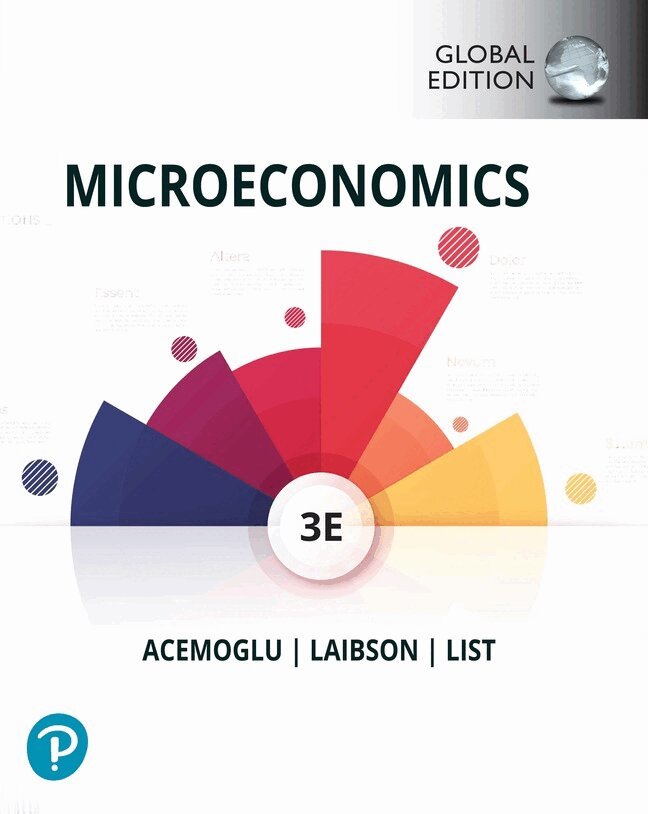
Microeconomics, Global Edition
Av Daron Acemoglu, David Laibson m. fl.
Häftad, 2021
1254 kr
Lägg i varukorg
Microeconomics presents real economic questions and data to help you learn about the world around you. The text uses themes of optimization, equilibrium, and empiricism to not only illustrate the power of simple economic ideas, but also to explain and predict what's happening in today's society. In …
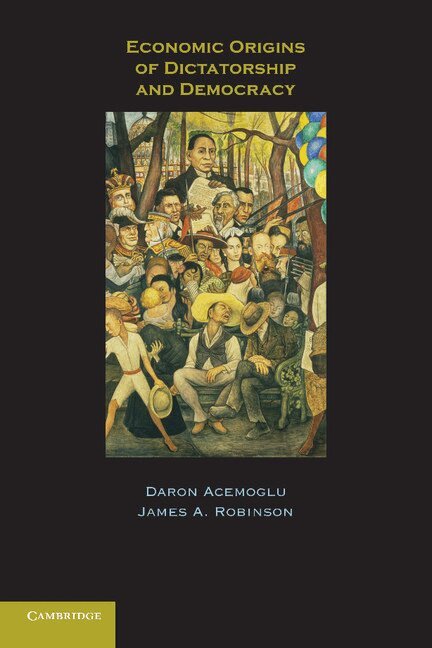
Economic Origins of Dictatorship and Democracy
Av Daron Acemoglu, James A. Robinson
Häftad, 2009
422 kr
Lägg i varukorg
This book develops a framework for analyzing the creation and consolidation of democracy. Different social groups prefer different political institutions because of the way they allocate political power and resources. Thus democracy is preferred by the majority of citizens, but opposed by elites. …
Narrow Corridor
How Nations Struggle for Liberty
Av Daron Acemoglu, James A. Robinson
Häftad, 2020
143 kr
Lägg i varukorg
FROM THE WINNERS OF THE NOBEL PRIZE IN ECONOMICSOne of the Financial Times' Best Books of 2019One of Kirkus Reviews' Best Books of 2019Shortlisted for the Lionel Gelber Prize'This book is more original and exciting than its predecessor...the highly influential Why Nations Fail’ Martin Wolf, …
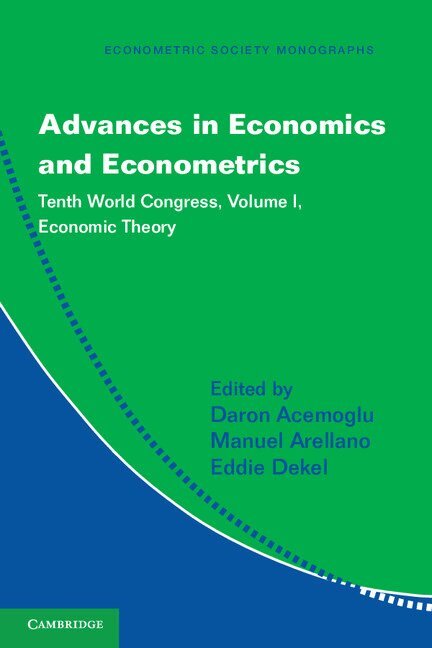
Advances in Economics and Econometrics
Tenth World Congress
Av Daron Acemoglu, Manuel Arellano m. fl.
Häftad, 2013
921 kr
Lägg i varukorg
This is the first of three volumes containing edited versions of papers and commentaries presented at invited symposium sessions of the Tenth World Congress of the Econometric Society, held in Shanghai in August 2010. The papers summarize and interpret key developments in economics and econometrics …
Introduction to Modern Economic Growth
Inbunden, 2009
705 kr
Lägg i varukorg
Introduction to Modern Economic Growth is a groundbreaking text from one of today's leading economists. Daron Acemoglu gives graduate students not only the tools to analyze growth and related macroeconomic problems, but also the broad perspective needed to apply those tools to the big-picture …
Narrow Corridor
How Nations Struggle for Liberty
Av Daron Acemoglu, James A. Robinson
E-bok, 2019
125 kr
Lägg i varukorg
'As enjoyable as it is thought-provoking' Jared DiamondBy the authors of the international bestseller Why Nations Fail, based on decades of research, this powerful new big-picture framework explains how some countries develop towards and provide liberty while others fall to despotism, anarchy or …
NBER Macroeconomics Annual 2009
Volume 24
Av Daron Acemoglu, Kenneth Rogoff m. fl.
Häftad, 2010
992 kr
Lägg i varukorg
"The NBER Macroeconomics Annual" provides a forum for important debates in contemporary macroeconomics and major developments in the theory of macroeconomic analysis and policy that include leading economists from a variety of fields. The papers and accompanying discussions in "NBER Macroeconomics …
Microeconomics, Global Edition -- Pearson eText (OLP)
Av Daron Acemoglu, David Laibson m. fl.
2021
693 kr
Lägg i varukorg
For courses in the principles of microeconomics. Throughout Microeconomics, 3rd Edition , authors Daron Acemoglu, David Laibson, and John List use real economic questions and data to help you learn about the world around you. Taking a fresh approach, they use the themes of optimisation, …
NBER Macroeconomics Annual 2010, Volume 25
Volume 25
Av Daron Acemoglu, Michael Woodford
Häftad, 2011
1030 kr
Lägg i varukorg
"The NBER Macroeconomics Annual" features theoretical and empirical contributions to the study of macroeconomics, addressing central issues within the discipline. These issues range from short-run macroeconomic fluctuations to international economic crises and long-run economic growth. Continuing …
Narrow Corridor
States, Societies, and the Fate of Liberty
Av James A. Robinson, Daron Acemoglu
Ljudbok, 2019
188 kr
Lägg i varukorg
Brought to you by Penguin. By the authors of the international bestseller Why Nations Fail , based on decades of research, this powerful new big-picture framework explains how some countries develop towards and provide liberty while others fall to despotism, anarchy or asphyxiating norms - and …
NBER Macroeconomics Annual 2006
Av Daron Acemoglu, Kenneth Rogoff m. fl.
Häftad, 2007
636 kr
Lägg i varukorg
Economic Origins of Dictatorship and Democracy
Av Daron Acemoglu, James A. Robinson
Inbunden, 2005
1475 kr
Lägg i varukorg
This book develops a framework for analyzing the creation and consolidation of democracy. Different social groups prefer different political institutions because of the way they allocate political power and resources. Thus democracy is preferred by the majority of citizens, but opposed by elites. …