Darryl K. Brown – författare
Visar alla böcker från författaren Darryl K. Brown. Handla med fri frakt och snabb leverans.
6 produkter
6 produkter
Inbunden, Engelska, 2016
898 kr
Skickas inom 5-8 vardagar
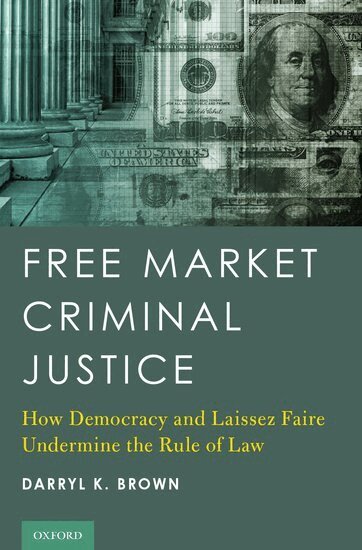
Free Market Criminal Justice offers a critique of the ideology behind the US criminal justice system. It argues that the distinctive ideology shaping American criminal processes is a commitment to a set of values in institutional design as divided into two categories - "democracy" and "markets". Here, democracy describes the ideas and practices of politically responsive, popularly accountable governance. Markets refers to norms, premises and mechanisms of private ordering in contrast to public management; competition between private agents acting for self-interest.Arguing against recent attempts to re-invigorate democratic processes in criminal justice, this book claims that there are significant downsides to a criminal justice system that favors democratic processes over legal regulation. The commitment to democracy has undermined the rule of law in American criminal justice resulting in mass incarceration and wrongful convictions, particularly as institutional democracy goes hand in hand with the development of market-inspired mechanisms. This book concludes with proposals for reforms to rebuild the rule of law in the criminal process.
E-bok
PDF, Engelska, 2015885 kr
Läs direkt efter köp
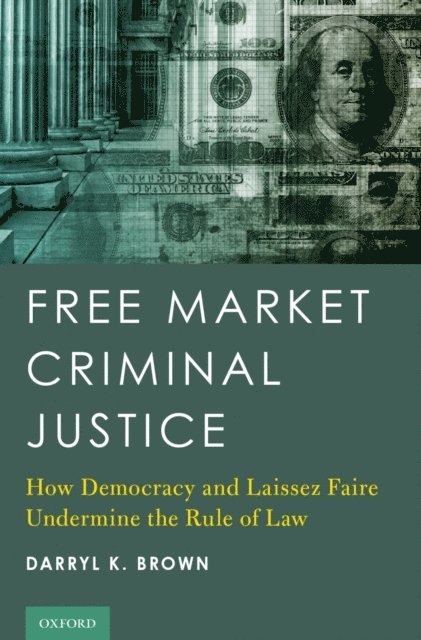
Free Market Criminal Justice explains how faith in democratic politics and free markets has undermined the rule of law in US criminal process. America''s unique political development, characterized by skepticism of government power, has restrained the state''s role not only in the economic realm but also in key parts of its criminal justice systems. From charging decisions through trials or guilty pleas and appeals, legal safeguards against bias, wrongful convictions, and excessive punishment rely more on politics and laissez-faire economic ideas than on enforceable rules and duties. Prosecutorial discretion is checked not by legal standards but by popular elections, and plea bargaining law is wholly built on a faith in unregulated markets-in contrast to the systems in other common law countries that also have neoliberal economies, adversarial process, and high guilty plea rates. This book argues that democratic and market ideas have led to more partisan prosecutors, narrower duties of evidence disclosure, and to a right to defense counsel that carefully accommodates preexisting wealth inequalities. Most important, democratic and market values have diminished the responsibility of judges-and of the state itself-for the accuracy and integrity of court judgments. Paradoxically, skepticism of government has expanded state power, reduced checks on executive officials, marginalized juries, and contributed to record incarceration rates. In contrast to recent arguments for re-invigorating democracy in criminal process, Free Market Criminal Justice argues that, to strengthen the rule of law, US criminal justice needs less democracy, fewer market mechanisms, and more law.
E-bok
Engelska, 2015917 kr
Läs direkt efter köp
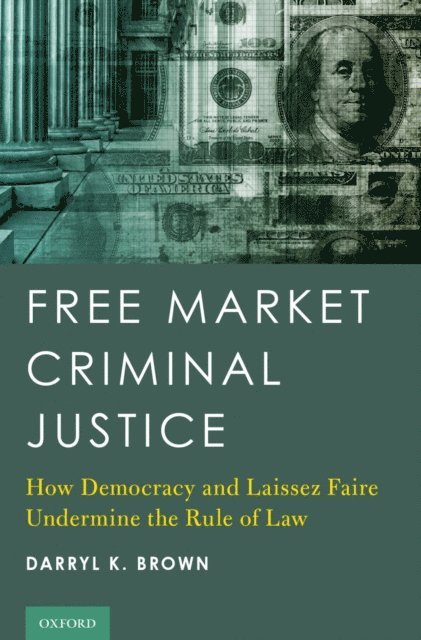
Free Market Criminal Justice explains how faith in democratic politics and free markets has undermined the rule of law in US criminal process. America''s unique political development, characterized by skepticism of government power, has restrained the state''s role not only in the economic realm but also in key parts of its criminal justice systems. From charging decisions through trials or guilty pleas and appeals, legal safeguards against bias, wrongful convictions, and excessive punishment rely more on politics and laissez-faire economic ideas than on enforceable rules and duties. Prosecutorial discretion is checked not by legal standards but by popular elections, and plea bargaining law is wholly built on a faith in unregulated markets-in contrast to the systems in other common law countries that also have neoliberal economies, adversarial process, and high guilty plea rates. This book argues that democratic and market ideas have led to more partisan prosecutors, narrower duties of evidence disclosure, and to a right to defense counsel that carefully accommodates preexisting wealth inequalities. Most important, democratic and market values have diminished the responsibility of judges-and of the state itself-for the accuracy and integrity of court judgments. Paradoxically, skepticism of government has expanded state power, reduced checks on executive officials, marginalized juries, and contributed to record incarceration rates. In contrast to recent arguments for re-invigorating democracy in criminal process, Free Market Criminal Justice argues that, to strengthen the rule of law, US criminal justice needs less democracy, fewer market mechanisms, and more law.
Inbunden, Engelska, 2019
2 061 kr
Skickas inom 5-8 vardagar
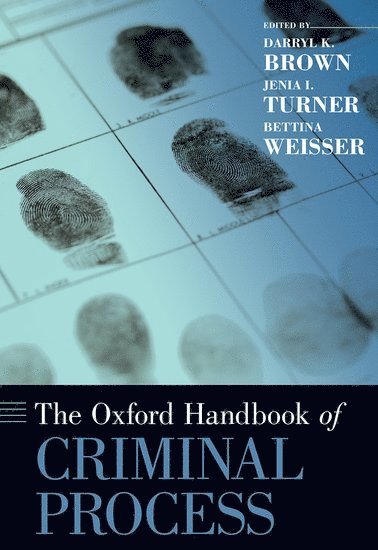
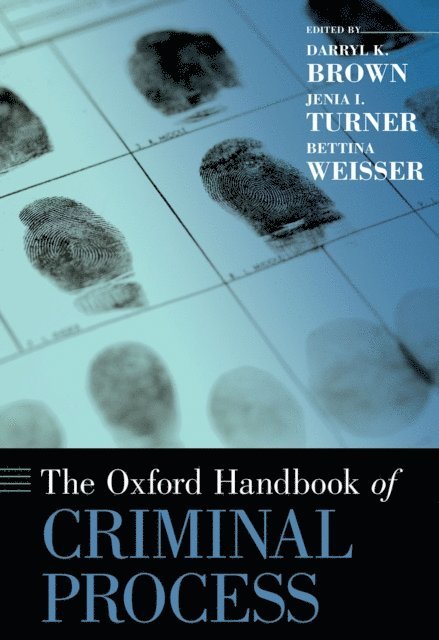
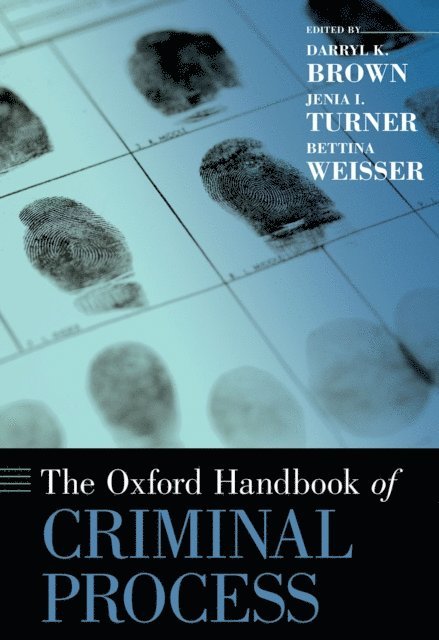
The Oxford Handbook of Criminal Process surveys the topics and issues in the field of criminal process, including the laws, institutions, and practices of the criminal justice administration. The process begins with arrests or with crime investigation such as searches for evidence. It continues through trial or some alternative form of adjudication such as plea bargaining that may lead to conviction and punishment, and it includes post-conviction events such as appeals and various procedures for addressing miscarriages of justice. Across more than 40 chapters, this Handbook provides a descriptive overview of the subject sufficient to serve as a durable reference source, and more importantly to offer contemporary critical or analytical perspectives on those subjects by leading scholars in the field. Topics covered include history, procedure, investigation, prosecution, evidence, adjudication, and appeal.
E-bok
PDF, Engelska, 20192 047 kr
Läs direkt efter köp
The Oxford Handbook of Criminal Process surveys the topics and issues in the field of criminal process, including the laws, institutions, and practices of the criminal justice administration. The process begins with arrests or with crime investigation such as searches for evidence. It continues through trial or some alternative form of adjudication such as plea bargaining that may lead to conviction and punishment, and it includes post-conviction events such as appeals and various procedures for addressing miscarriages of justice. Across more than 40 chapters, this Handbook provides a descriptive overview of the subject sufficient to serve as a durable reference source, and more importantly to offer contemporary critical or analytical perspectives on those subjects by leading scholars in the field. Topics covered include history, procedure, investigation, prosecution, evidence, adjudication, and appeal.
E-bok
Engelska, 20192 047 kr
Läs direkt efter köp
The Oxford Handbook of Criminal Process surveys the topics and issues in the field of criminal process, including the laws, institutions, and practices of the criminal justice administration. The process begins with arrests or with crime investigation such as searches for evidence. It continues through trial or some alternative form of adjudication such as plea bargaining that may lead to conviction and punishment, and it includes post-conviction events such as appeals and various procedures for addressing miscarriages of justice. Across more than 40 chapters, this Handbook provides a descriptive overview of the subject sufficient to serve as a durable reference source, and more importantly to offer contemporary critical or analytical perspectives on those subjects by leading scholars in the field. Topics covered include history, procedure, investigation, prosecution, evidence, adjudication, and appeal.