Dauda Garuba – författare
Visar alla böcker från författaren Dauda Garuba. Handla med fri frakt och snabb leverans.
2 produkter
2 produkter
E-bok
PDF, Engelska, 2011801 kr
Läs direkt efter köp
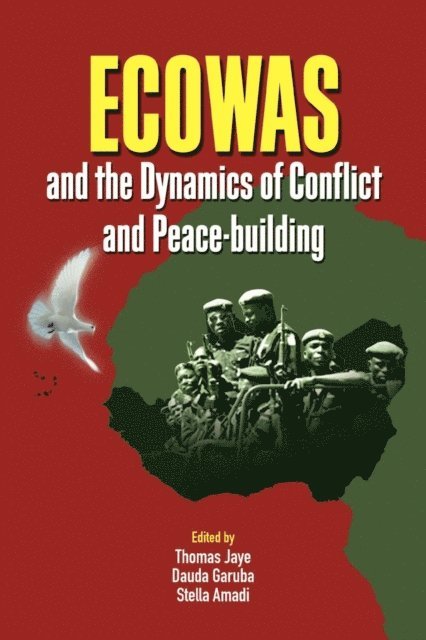
ECOWAS and the Dynamics of Conflict and Peace-building testifies to the fact that we cannot talk of West African affairs, more so of conflict and peace-building, without talking about ECOWAS. For over two decades now, West Africa has remained one of Africa,s most conflict-ridden regions. It has been a theatre of some of the most atrocious brutalities in the modern world. It has, nonetheless, witnessed one of the most ambitious internal efforts towards finding regional solutions to conflicts through ECOWAS. The lead role of ECOMOG , the ECOWAS peacekeeping force , in search of peaceful solutions to civil wars in Liberia, Sierra Leone, Guinea Bissau and Cote d,Ivoire has yielded a mix of successes and failures. In this book, the authors take a candid look at the role that ECOWAS has played and show how the sub-regional organisation has stabilised and created new conditions conducive to nation building in a number of cases. Conversely, the book shows that ECOWAS has aggravated, if not created, new tensions in yet other cases. The comparative advantage that ECOWAS has derived from these experiences is reflected in the various mechanisms, protocols and conventions that are now in place to ensure a more comprehensive conflict prevention framework. This book provides a nuanced analysis of the above issues and other dynamics of conflicts in the region. It also interrogates the roles played by ECOWAS and various other actors in the context of the complex interplay between natural resource governance, corruption, demography and the youth bulge, gender and the conflicting interests of national, regional and international players.
E-bok
Engelska, 2013223 kr
Läs direkt efter köp
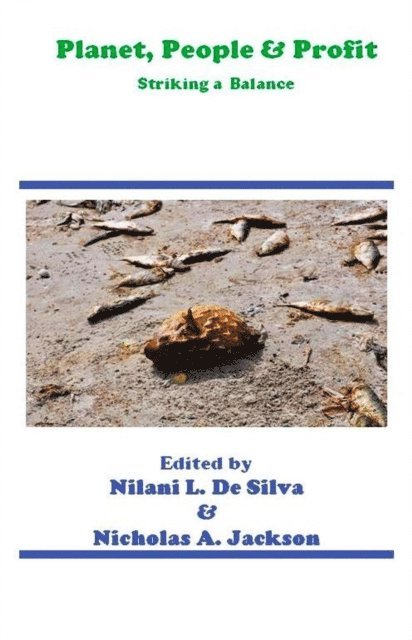
This is a book about social and environmental decay in African rural landscapes endowed with natural resources. The authors present evidence based research from Cameroon-Chad, Lesotho, Niger Delta, Nigeria, East Congo, Rwanda, Sudan and Ghana to illustrate how the planet, people and profit, so far, has failed to strike a balance and provide rec-ommendations based on findings the way forward. Many of the arguments focus on the local as well rnational political economy in which resources are extracted and exported and the impact on social and environment life and landscape in rural Africa. Automatic operation of the market and market actors'' philanthropy to help communities'' impoverished rural folk sounded old fashioned or resemble neo-colonialism was arbitrated.Term CSR, came into being whereby rural African people were theoretically able to get satisfaction as they drank toxic water as long as the companies were paying them back in kind under these companies'' respective voluntary CSR interventions. The problem is that commercial soceities were created with multinational corporations in the lead. States found it hard to reverse or slow down the process at least until they could get a hang of it. Open market policies continue to remain resistent to such challenges despite mounting critique from many cor-ners. FDI is the buzzword and the saviour that alleviates Af-rica''s poverty. Although a broader consensus has emerged within and outside of Africa and other developing countries about fundamental defects in the economic model and free market principles through which large multinationals conduct business, raw materials continue to flow from poor countries to rich countries with very little challenge. All this proves that the present way of doing business in Africa. Trade pacts need to be reopened in order to bring forth changes. This has become even more important now with the Red Capitalism.