Dauvit Broun - Böcker
Visar alla böcker från författaren Dauvit Broun. Handla med fri frakt och snabb leverans.
8 produkter
8 produkter
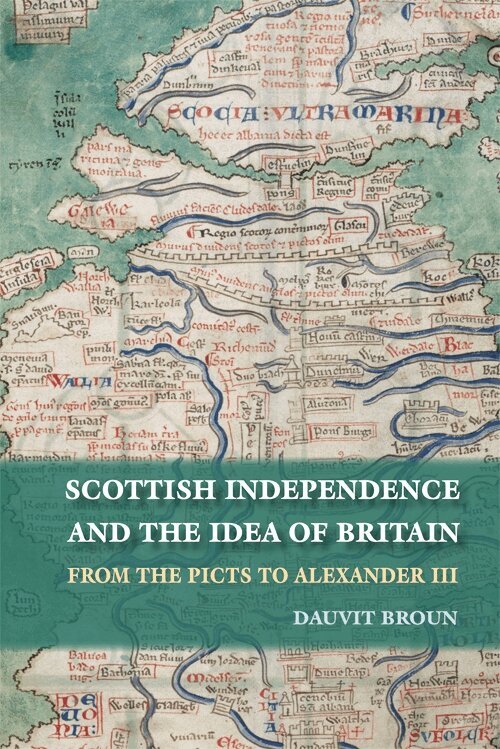
Scottish Independence and the Idea of Britain
From the Picts to Alexander III
Inbunden, Engelska, 2007
1 563 kr
Skickas inom 7-10 vardagar
When did Scots first think of Scotland as an independent kingdom? What did they think was Scotland’s place in Britain before the age of Wallace and Bruce? The answers argued in this book offer a fresh perspective on the question of Scotland’s relationship with Britain. It challenges the standard concept of the Scots as an ancient nation whose British identity only emerged in the early modern era, but also provides new evidence that the idea of Scotland as an independent kingdom was older than the age of Wallace and Bruce.This leads to radical reassessments of a range of fundamental issues: the fate of Pictish identity and the origins of Alba, the status of Scottish kingship vis-à-vis England, the papacy’s recognition of the independence of the Scottish Church, and the idea of Scottish freedom. It also sheds new light on the authorship of John of Fordun’s chronicle, the first full-scale history of the Scots, and offers an historical explanation of the widespread English inability to distinguish between England and Britain. All this is placed in the wider context of ideas of ultimate secular power in Britain and Ireland and the construction of national histories in this period. The book concludes with a fresh perspective on the origin of national identity, and the medieval and specifically Scottish contribution to understanding what is often regarded as an exclusively modern phenomenon.
1 084 kr
Kommande
306 kr
Kommande
669 kr
Skickas inom 3-6 vardagar
What did Scots think of Scotland’s place in Britain before Wallace and Bruce? When did they first see it as an independent kingdom?The answers put forward in this book provide a fresh perspective on Scotland’s relationship with Britain. Broun challenges the idea that the Scots were an ancient nation whose British identity only emerged later on, in the early modern era, and provides new evidence that the idea of Scotland as an independent kingdom in actual fact predated Wallace and Bruce. This leads him to radically reassess several fundamental issues: the fate of Pictish identity and the origins of Alba; the status of Scottish kingship vis-à-vis England; the papacy’s recognition of the independence of the Scottish Church; and the idea of Scottish freedom. He also sheds new light on the authorship of John of Fordun’s 'Chronicle' – the first full-scale history of the Scots – and explains, in historical terms, the widespread English inability to distinguish between England and Britain.Broun places his arguments in the wider context of the concepts of ultimate secular power in Britain and Ireland and the construction of national histories which were emerging in the middle ages. In conclusion, he casts a fresh aspect on how a Scottish national identity emerged and how the medieval era and, more specifically the Scots, contributed to what is often regarded as an exclusively modern phenomenon.
964 kr
Kommande
247 kr
Kommande
Del 18 - Studies in Celtic History
Irish Identity of the Kingdom of the Scots in the Twelfth and Thirteenth Centuries
Inbunden, Engelska, 1999
1 083 kr
Skickas inom 10-15 vardagar
An examination of the Scottish kingdom's historic links with Ireland, and the beginnings of a Scottish national identity from c. 1290.The close ties between Gaels of Ireland and Scotland are well known, but in the twelfth and thirteenth centuries the elite in the core areas of the kingdom of the Scots apparently turned their backs on Gaelic culture. This book takes a new look at the issue, investigating the extent to which Scottish men of letters of the period identified the Scottish kingdom and its inhabitants with Ireland, and exploring the function of the kingdom's Irish identity. DrBroun argues that a perceived historical link with Ireland was a fundamental feature of the kingdom's identity throughout the period, and discusses the beginnings of a Scottish national identity in the 1290s and early 1300s. His evidence is based on a thorough examination of accounts of Scottish origins, the royal genealogy, and regnal lists, which articulated perceptions of the kingdom's identity; included are new editions of the origin-legend material inBook I of Fordun's Chronica Gentis Scottorum; hitherto unknown witnesses of Scottish king-lists; and texts of the royal genealogy.Dr DAUVIT BROUNis lecturer in Scottish history at the University of Glasgow.
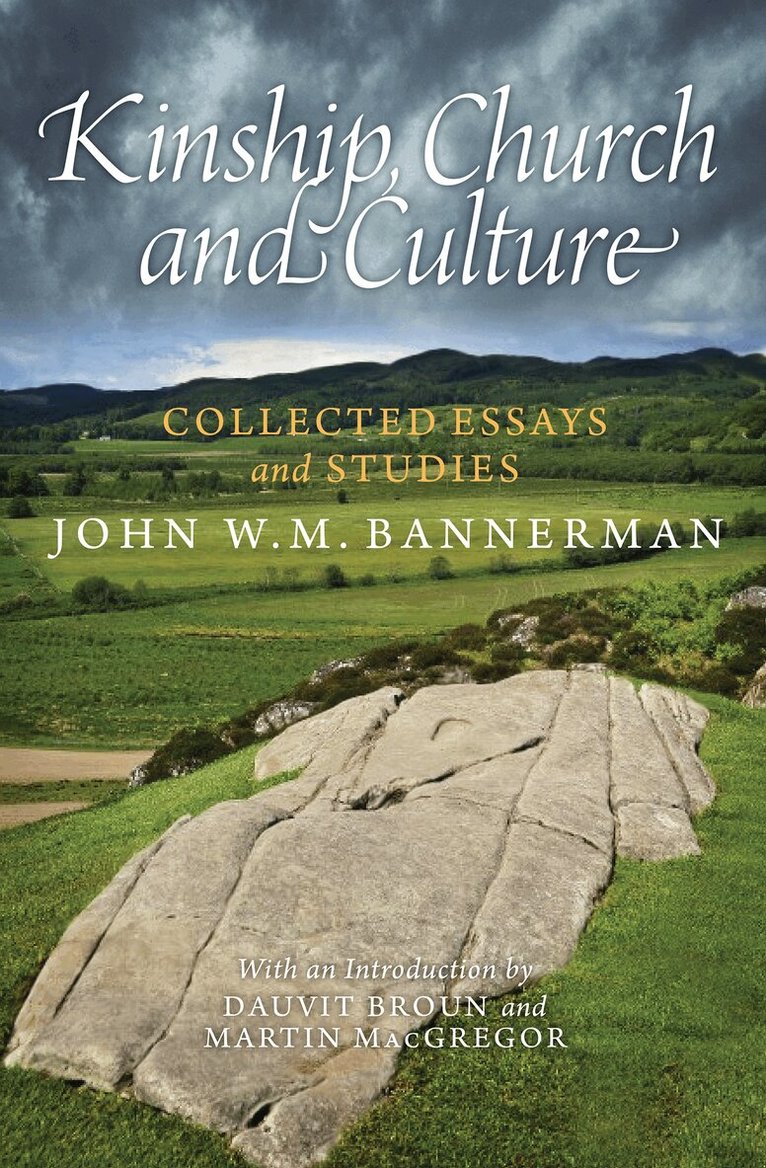
Kinship, Church and Culture
Collected Essays and Studies by John W. M. Bannerman
Häftad, Engelska, 2016
336 kr
Tillfälligt slut
John Bannerman (1932-2008) saw the history of Scotland from a Gaelic perspective, and his outstanding scholarship made that perspective impossible to ignore. As a historian, his natural home was the era between the Romans and the twelfth century when the Scottish kingdom first began to take shape, but he also wrote extensively on the MacDonald Lordship of the Isles in the fourteenth and fifteenth centuries, while his work on the Beatons, the notable Gaelic medical kindred, reached into the early eighteenth century. Across this long millennium, Bannerman ranged and wrote with authority and insight on what he termed the 'kin-based society', with special emphasis upon its church and culture, and its relationship with Ireland.This collection opens with Bannerman's ground-breaking and hugely influential edition and discussion of Senchus fer nAlban ('The History of the Men of Scotland'), which featured in his Studies in the History of Dalriada (1974), now long out of print. To this have been added all of his published essays, plus an essay-length study of the Lordship of the Isles which first featured as an appendix in Late Medieval Monumental Sculpture in the West Highlands (1977).The book will be of interest to anyone who wants to know more about the Gaelic dimension to Scotland's past and present.