David A. Crespy – författare
Visar alla böcker från författaren David A. Crespy. Handla med fri frakt och snabb leverans.
4 produkter
4 produkter
Inbunden, Engelska, 2025
2 522 kr
Skickas inom 10-15 vardagar
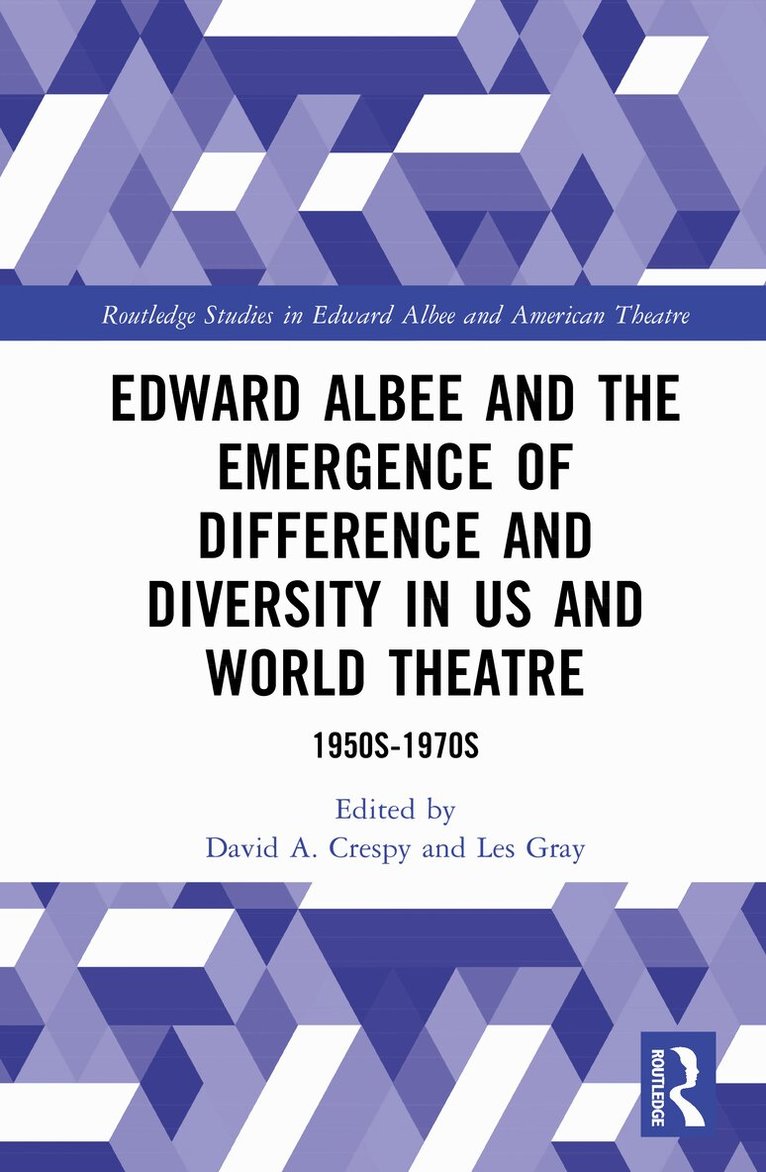
This collection of essays seeks to present articles that examine the early ventures of the 1960s and 1970s in the progressive theatre of identity with a new contemporary view, considering the intersection of race, gender, ethnicity, economic class, and sexual orientation.In 1964, Edward Albee and his producers, Richard Barr and Clinton Wilder, produced Funnyhouse of a Negro by Adrienne Kennedy, and Dutchman by Amiri Baraka (then, Leroi Jones), and by 1968, had produced the seminal gay drama, The Boys in the Band by Mart Crowley. No other major American playwright of this period (including Thornton Wilder, Arthur Miller, Tennessee Williams, or William Inge) produced the plays of their junior colleagues with a specific focus on difference and diversity. For most scholars, these productions and Albee’s involvement in them are a somewhat obscure footnote in theatre history. But they remain important for their early support of diverse voices. Even as Albee’s career was skyrocketing, he and his producers had begun a producing project that sowed the seeds of diversity, equity, and inclusion in a decidedly anti-racist, decolonizing, and progressive move that still resonates powerfully today. While this book is not a hagiography and does not intend to paint Albee as without his own critical failings in terms of diversity in his own work and that of others, this volume of theatre history, dramatic literature, and performance essays takes a detailed, critical approach to Albee’s engagement with other initiating plays, productions, producers, theatre companies, theatre artists, and performances in the United States that pushed the dial toward difference and diversity in the late 1950s through the late 1970s, beginning the formations of new theatres of identity across the United States.This volume will be of great interest to students and scholars in theatre and performance studies.
E-bok
PDF, Engelska, 2025858 kr
Läs direkt efter köp
This collection of essays seeks to present articles that examine the early ventures of the 1960s and 1970s in the progressive theatre of identity with a new contemporary view, considering the intersection of race, gender, ethnicity, economic class, and sexual orientation.In 1964, Edward Albee and his producers, Richard Barr and Clinton Wilder, produced Funnyhouse of a Negro by Adrienne Kennedy, and Dutchman by Amiri Baraka (then, Leroi Jones), and by 1968, had produced the seminal gay drama, The Boys in the Band by Mart Crowley. No other major American playwright of this period (including Thornton Wilder, Arthur Miller, Tennessee Williams, or William Inge) produced the plays of their junior colleagues with a specific focus on difference and diversity. For most scholars, these productions and Albee's involvement in them are a somewhat obscure footnote in theatre history. But they remain important for their early support of diverse voices. Even as Albee's career was skyrocketing, he and his producers had begun a producing project that sowed the seeds of diversity, equity, and inclusion in a decidedly anti-racist, decolonizing, and progressive move that still resonates powerfully today. While this book is not a hagiography and does not intend to paint Albee as without his own critical failings in terms of diversity in his own work and that of others, this volume of theatre history, dramatic literature, and performance essays takes a detailed, critical approach to Albee's engagement with other initiating plays, productions, producers, theatre companies, theatre artists, and performances in the United States that pushed the dial toward difference and diversity in the late 1950s through the late 1970s, beginning the formations of new theatres of identity across the United States.This volume will be of great interest to students and scholars in theatre and performance studies.
E-bok
Engelska, 2025858 kr
Läs direkt efter köp
This collection of essays seeks to present articles that examine the early ventures of the 1960s and 1970s in the progressive theatre of identity with a new contemporary view, considering the intersection of race, gender, ethnicity, economic class, and sexual orientation.In 1964, Edward Albee and his producers, Richard Barr and Clinton Wilder, produced Funnyhouse of a Negro by Adrienne Kennedy, and Dutchman by Amiri Baraka (then, Leroi Jones), and by 1968, had produced the seminal gay drama, The Boys in the Band by Mart Crowley. No other major American playwright of this period (including Thornton Wilder, Arthur Miller, Tennessee Williams, or William Inge) produced the plays of their junior colleagues with a specific focus on difference and diversity. For most scholars, these productions and Albee's involvement in them are a somewhat obscure footnote in theatre history. But they remain important for their early support of diverse voices. Even as Albee's career was skyrocketing, he and his producers had begun a producing project that sowed the seeds of diversity, equity, and inclusion in a decidedly anti-racist, decolonizing, and progressive move that still resonates powerfully today. While this book is not a hagiography and does not intend to paint Albee as without his own critical failings in terms of diversity in his own work and that of others, this volume of theatre history, dramatic literature, and performance essays takes a detailed, critical approach to Albee's engagement with other initiating plays, productions, producers, theatre companies, theatre artists, and performances in the United States that pushed the dial toward difference and diversity in the late 1950s through the late 1970s, beginning the formations of new theatres of identity across the United States.This volume will be of great interest to students and scholars in theatre and performance studies.
E-bok
PDF, Engelska, 20241 917 kr
Läs direkt efter köp
Dreamwork for Dramatic Writing: Dreamwrighting for Stage and Screen teaches you how to use your dreams, content, form, and structure, to write surprisingly unique new drama for film and stage. It is an exciting departure from traditional linear, dramatic technique, and addresses both playwriting and screenwriting, as the profession is increasingly populated by writers who work in both stage and screen. Developed through 25 years of teaching award-winning playwrights in the University of Missouri's Writing for Performance Program, and based upon the phenomenological research of renowned performance theorist Bert O. States, this book offers a foundational, step-by-step organic guide to non-traditional, non-linear technique that will help writers beat cliched, tired dramatic writing and provides stimulating new exercises to transform their work.