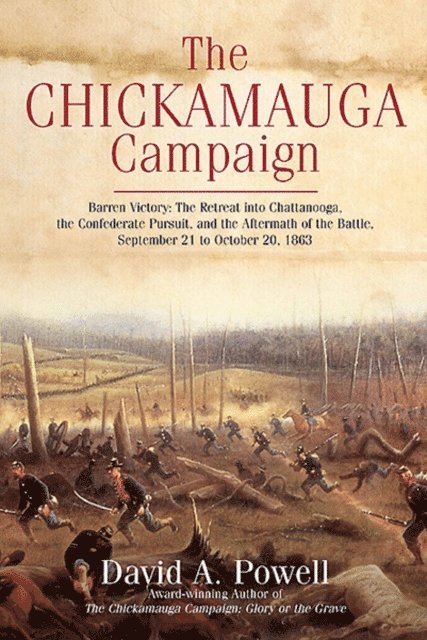
David A. Powell – författare
Visar alla böcker från författaren David A. Powell. Handla med fri frakt och snabb leverans.
7 produkter
7 produkter
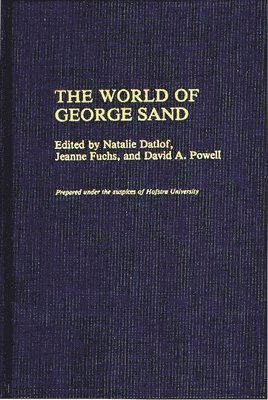
Inbunden, Engelska, 1991
1 180 kr
Skickas inom 10-15 vardagar
Bringing together a variety of critical approaches and interdisciplinary perspectives, this work reflects the continuing vitality and breadth of George Sand scholarship around the world. It contains twenty-eight papers and a keynote address presented at the Seventh International George Sand Conference. Contributors include leading European, American, and Asian scholars in the field.The volume opens with essays by Henri Peyre and Marilyn French focusing on George Sand's relation to her own period and society and her continuing relevance to modern readers. The next three sections are devoted to an examination of Sand's work in specific genres: the novel, travel writing, and autobiography. Other subject areas addressed include the relation of text to personal ideology, political views, and sexual politics and identity. The remaining chapters explore Sand's relationships with her contemporaries, including Alfred de Musset, Balzac, Flaubert, and Alexandre Dumas fils. Presenting the best in current scholarship in the field, this work will be of interest for studies and courses relating to nineteenth century women writers, French literature, women's studies, cultural and social history, and related subjects.
Inbunden, Engelska, 2015
1 114 kr
Skickas
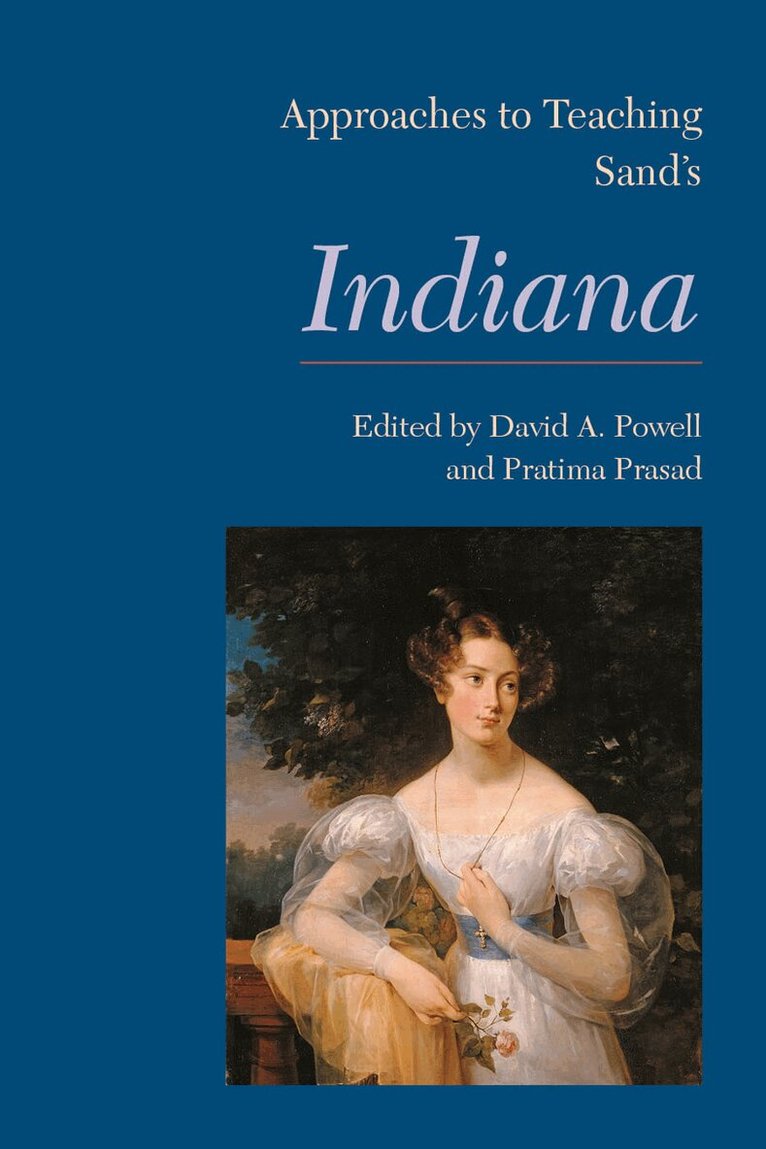
Indiana, George Sand's first solo novel, opens with the eponymous heroine brooding and bored in her husband's French countryside estate, far from her native Ile Bourbon (now Réunion). Written in 1832, the novel appeared during a period of French history marked by revolution and regime change, civil unrest and labor concerns, and slave revolts and the abolitionist movement, when women faced rigid social constraints and had limited rights within the institution of marriage. With this politically charged history serving as a backdrop for the novel, Sand brings together Romanticism, realism, and the idealism that would characterize her work, presenting what was deemed by her contemporaries a faithful and candid representation of nineteenth-century France.This volume gathers pedagogical essays that will enhance the teaching of Indiana and contribute to students' understanding and appreciation of the novel. The first part gives an overview of editions and translations of the novel and recommends useful background readings. Contributors to the second part present various approaches to the novel, focusing on four themes: modes of literary narration, gender and feminism, slavery and colonialism, and historical and political upheaval. Each essay offers a fresh perspective on Indiana, suited not only to courses on French Romanticism and realism but also to interdisciplinary discussions of French colonial history or law.
Häftad, Engelska, 2015
489 kr
Skickas inom 5-8 vardagar
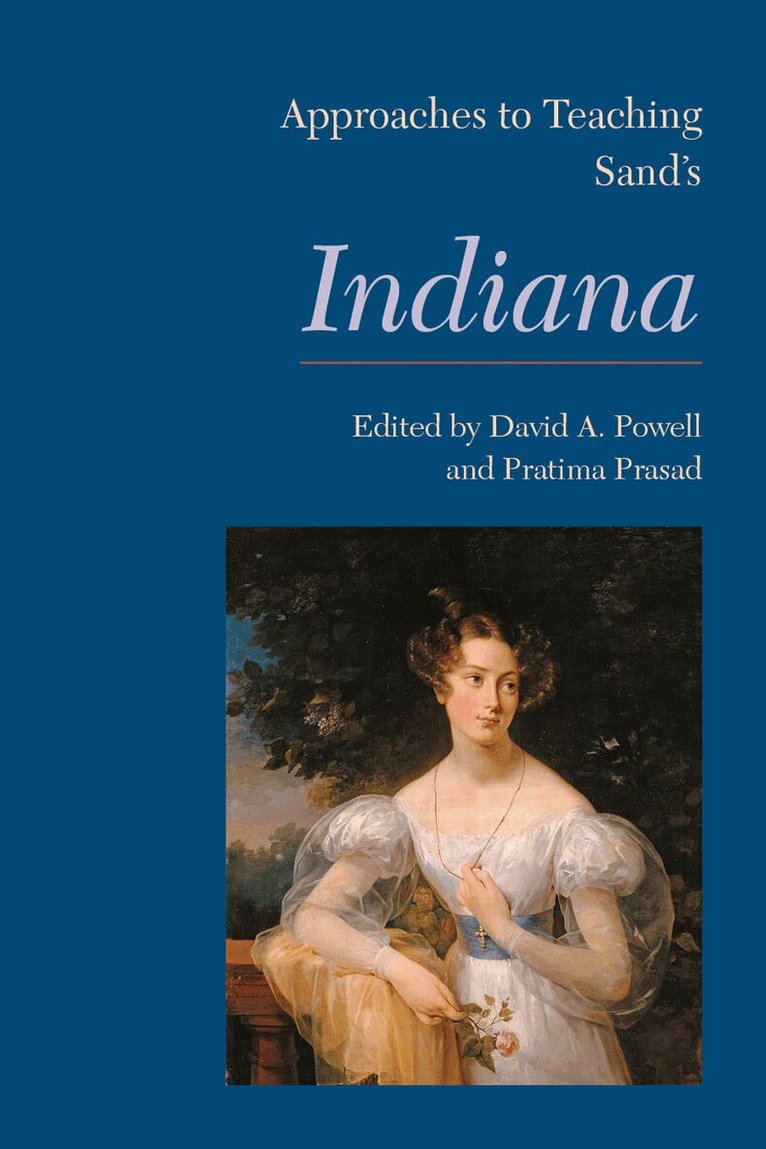
Indiana, George Sand's first solo novel, opens with the eponymous heroine brooding and bored in her husband's French countryside estate, far from her native Ile Bourbon (now Réunion). Written in 1832, the novel appeared during a period of French history marked by revolution and regime change, civil unrest and labor concerns, and slave revolts and the abolitionist movement, when women faced rigid social constraints and had limited rights within the institution of marriage. With this politically charged history serving as a backdrop for the novel, Sand brings together Romanticism, realism, and the idealism that would characterize her work, presenting what was deemed by her contemporaries a faithful and candid representation of nineteenth-century France.This volume gathers pedagogical essays that will enhance the teaching of Indiana and contribute to students' understanding and appreciation of the novel. The first part gives an overview of editions and translations of the novel and recommends useful background readings. Contributors to the second part present various approaches to the novel, focusing on four themes: modes of literary narration, gender and feminism, slavery and colonialism, and historical and political upheaval. Each essay offers a fresh perspective on Indiana, suited not only to courses on French Romanticism and realism but also to interdisciplinary discussions of French colonial history or law.
Inbunden, Engelska, 2025
281 kr
Skickas
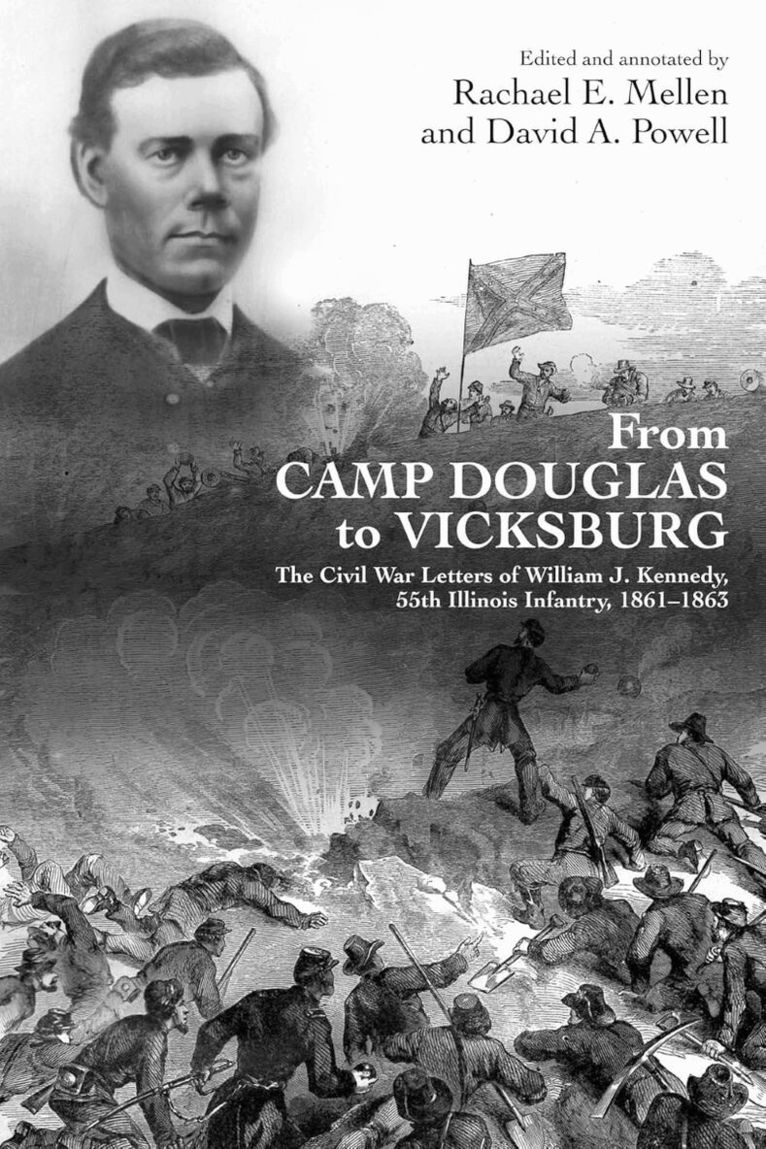
Wars change the course of history and touch in intensely personal ways the lives of everyone involved. Thankfully, surviving firsthand accounts offer modern readers a deeply personal window into earlier times. From Camp Douglas to Vicksburg: The Civil War Letters of William J. Kennedy, 55th Illinois Infantry, 1861-1863, edited and annotated by Rachael E. Mellen and David A. Powell, constitutes a rich and informative glimpse into one such life.William J. Kennedy was a second-generation Irish-American born in New York in 1827. By 1861 he was a harness-maker running his own business in the small town of LaSalle, Illinois. When Governor Yates called for volunteers, Kennedy jumped at the chance. He even recruited many of his friends and relatives into Company G of the 55th Illinois Infantry, a new regiment being organized in Chicago under Col. David Stuart. Kennedy had ambitions to become a captain and, like most men his age, dreamed of battlefield heroics.With a sharp eye and an even sharper wit, Kennedy played the role of embedded reporter during some of the most momentous events in the Western Theater. His letters to his wife Jane, family members, and friends are often as detailed as newspaper accounts and battle reports. His observations span the gamut, from corruption in the army and the alien culture in Tennessee and Mississippi, to his unyielding confidence in President Lincoln’s judgment. Most students of the war will treasure his previously unseen descriptions of the fighting at Shiloh, the siege of Corinth, the triumphal entry into Memphis, the disaster of Chickasaw Bayou, and the misery of digging canals around Vicksburg. Sadly, it was there, on the undulating hills near the Mississippi River during the final fatal assault against that fortress, that William lost his life.His original letters reside in the Abraham Lincoln Presidential Library and Archives in Springfield, Illinois. A genealogical long shot led Mellen to discover the connection between her family and the letters at the library. Editors Mellen and Powell used their expertise to sift through genealogical records, histories of the war, and other regimental accounts to flesh out the people, places, and events that can now be shared with everyone. These documents have brought William Kennedy and his family back to life for their 21st century relatives and a wider audience.From Camp Douglas to Vicksburg adds significantly to the historiography of the war and is one of the finest Western Theater letter collections to reach print in many years.
Inbunden, Engelska, 2025
422 kr
Skickas inom 3-6 vardagar
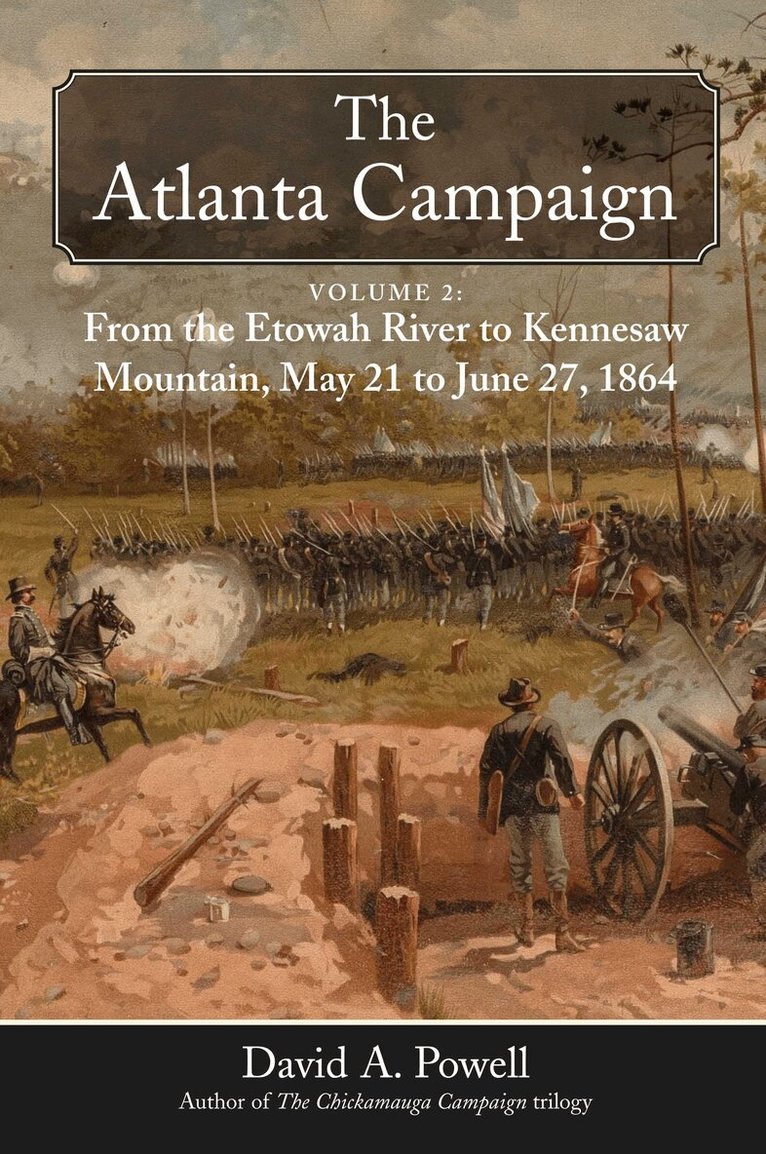
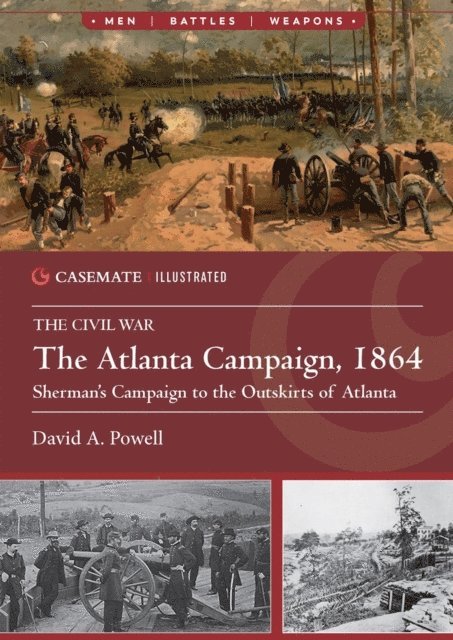
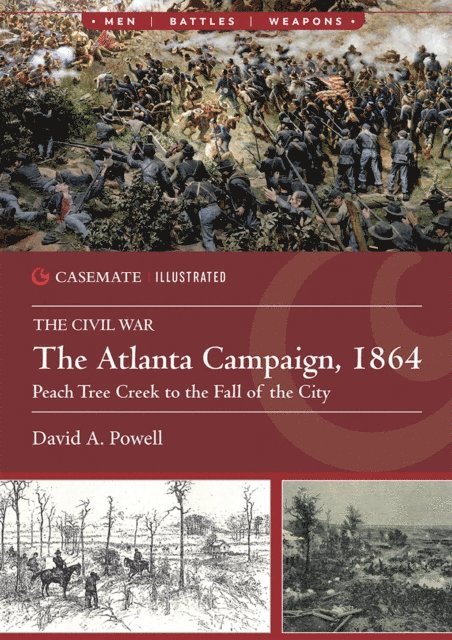
The scope, drama, and importance of the 1864 Atlanta Campaign was on a par with Ulysses S. Grant’s Overland Campaign in Virginia. Despite its criticality and massive array of primary source material, the north Georgia operations have lingered in the shadows of other campaigns. Award-winning author David Powell’s first of five installments, The Atlanta Campaign: Volume 1: Dalton to Cassville, May 1–19, 1864, treated the opening phase of the campaign—weeks of maneuver and several days of heavy fighting at Resaca, after which the Confederates slipped out of Sherman’s traps and escaped across the Oostanaula and Etowah rivers. His second offering, From the Etowah River to Kennesaw Mountain, May 21 to June 27, 1864, marches with the armies and their leaders deeper into Georgia.The heavyweight match unfolding between Grant and Lee in the Wilderness and fields and woodlots of Spotsylvania increased the pressure on Sherman to do everything he could to prevent Joe Johnston from sending troops to reinforce Virginia. Sherman had closed half the distance to Johnston’s base at Atlanta, but the Army of Tennessee had grown in numbers, and the odds that were once 2 to 1 against it were now almost even.Sherman opened the second phase of the campaign on May 23 by throwing his army across the Etowah. Instead of moving down the railroad to Allatoona, however, he marched west of Marietta to Dallas. The next five weeks were by some measures the hardest of the entire summer as maneuvering gave way to trench warfare, first along the New Hope Line, then Pine and Lost mountains, along the Mud Creek Line, and finally, atop the imposing slopes of Kennesaw Mountain. The daily grind, punctuated by periodic assaults at New Hope Church, Pickett’s Mill, Gilgal Church, and Pigeon and Cheatham hills, took a terrible toll on both armies. The heavy rain through most of June made life in the field a misery, sick lists spiked, and men and horses broke down or died. As June drew to a close, neither side could claim victory. Sherman remained undaunted. He would return to flanking, and this time, Atlanta was a mere dozen miles distant.This multi-volume study is based heavily on hundreds of primary accounts (many of which have never been used), 21 original maps, a firm understanding of the terrain, and a keen grasp of military strategy and tactics. Powell’s The Atlanta Campaign is this generation’s definitive treatment of one of the most important and fascinating confrontations of the entire Civil War. And it will stand the test of time.
Häftad, Engelska, 2026
231 kr
Kommande
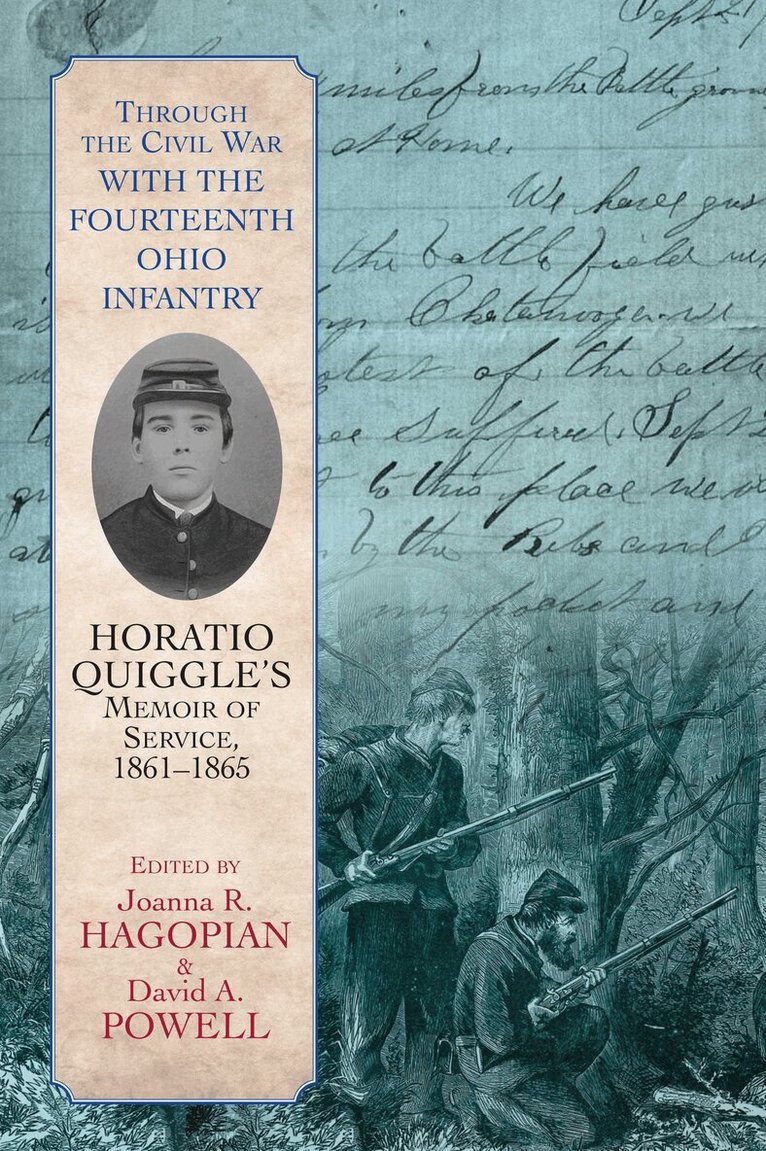
Horatio Quiggle was that rarest of Civil War soldiers, serving continuously from the conflict’s outset to its conclusion. He initially joined the 14th Ohio Infantry, a three-month militia unit from northwestern Ohio, in April 1861. After its term expired that August, he promptly reenrolled in the three-year organization of the 14th, serving with the Army of the Ohio (later christened the Army of the Cumberland). On December 17, 1863, he again reenlisted for the duration of the war, not mustering out until the summer of 1865. His enduring commitment offers a unique perspective on the entire wartime experience.Through the Civil War with the Fourteenth Ohio Infantry: Horatio Quiggle’s Memoir of Service, 1861-1865 presents a fascinating, previously unpublished glimpse into the life of this “fighting regiment” and the men who filled its ranks. The 14th Ohio earned its reputation as a formidable combat unit. Out of a total enrollment of 1,404, the regiment suffered significant losses: 146 men killed in action, 186 to disease and accident, and 329 to non-lethal wounds. It fought at Mill Springs in early 1862 and engaged repeatedly under Generals Don C. Buell, William S. Rosecrans, and George H. Thomas. Among its most brutal engagements were the battles in Georgia at Chickamauga in September 1863, and a year later at Jonesboro outside Atlanta. Quiggle’s firsthand descriptions of Chickamauga’s bloody scenes are particularly striking, offering vivid insight into the realities of combat.Though he escaped serious physical injury, Quiggle endured profound personal loss, including his brother, late in the war. His memoir offers a poignant and often humorous recounting of his experiences, imbued with deep humanity. Enlisting as a 23-year-old farmer, he emerged from the conflict a profoundly transformed individual. While rich in detail and drawn from his wartime diary, Quiggle’s memoir does not present a purely tactical or analytical history of the 14th Ohio Infantry. Given the scarcity of other primary sources for the 14th, the Quiggle manuscript stands as an invaluable addition to the history of the 14th Ohio and the broader narrative of the war in the Western Theater.
The Atlanta Campaign: Volume 3: From the Chattahoochee to Peach Tree Creek, June 28 to July 20, 1864
Inbunden, Engelska, 2026
422 kr
Kommande