David A. Wolff – författare
Visar alla böcker från författaren David A. Wolff. Handla med fri frakt och snabb leverans.
5 produkter
5 produkter
Häftad, Engelska, 2009
216 kr
Skickas inom 3-6 vardagar
Much of Seth Bullock’s modern renown comes from television, motion pictures, and his friendship with President Theodore Roosevelt. But Bullock was much more than the frontier law enforcer portrayed in fictional accounts. In Seth Bullock: Black Hills Lawman, David Wolff examines the life work of Bullock as he helped build Deadwood, found the town of Belle Fourche, and promote the Black Hills. Wolff explores the many ventures that Bullock delved into once he moved from Montana to the Black Hills at the start of the gold rush in 1876. He points out that Bullock quickly became an integral part of the burgeoning community, attempting to create a lasting legacy for himself by working within local and regional politics, through his various businesses, and in his many positions at the forefront of Black Hills law enforcement and forest management. Bullock’s life epitomized that of many entrepreneurs and pioneers across the nation, and Wolff describes the struggles and successes that this thinker and dreamer experienced in his forty-three years in the Black Hills. Seth Bullock: Black Hills Lawman is the third book in the South Dakota Biography Series, which highlights some of the state’s most famous residents.
Häftad, Engelska, 2024
227 kr
Skickas inom 5-8 vardagar
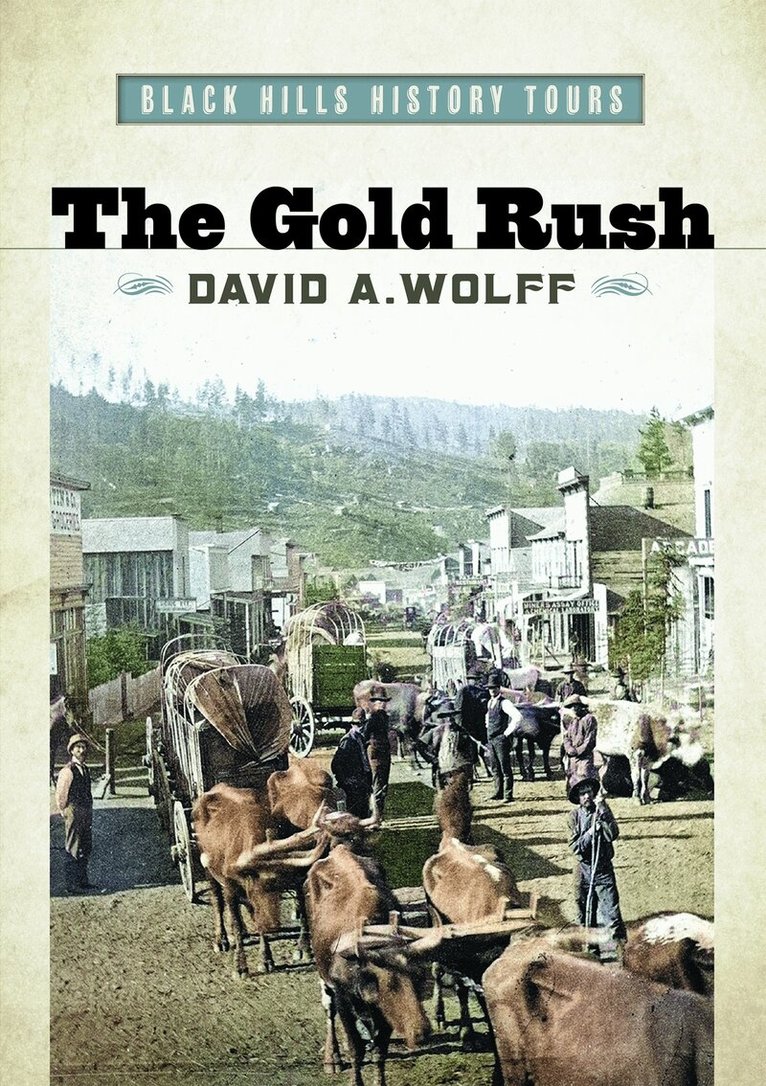
From military expeditions to gold mining boomtowns, outlandish business ventures to stunning national parks, the Black Hills teem with history as rich as their natural beauty. Inspired by field trips that he organized at Black Hills State University, David A. Wolff has distilled decades of experience exploring, researching, and teaching the history of this majestic region into accessible and informative self-guided tours.The discovery of gold in the Lakotas' sacred Paha Sapa in 1874 quickly attracted thousands of people in search of easy fortune, transforming the Black Hills into a series of gold camps. In "The Gold Rush," you can follow in their footsteps, from Custer to Hill City, Keystone to Galena, Deadwood to Mystic and beyond. Featuring maps by the South Dakota Department of Transportation and dozens of photographs, Wolff's historical synopsis provides just the right amount of context for each site on the route, along with precise mileage and directions. By tour's end, you will have completed a mini-course in Black Hills history!
Häftad, Engelska, 2025
227 kr
Skickas inom 5-8 vardagar
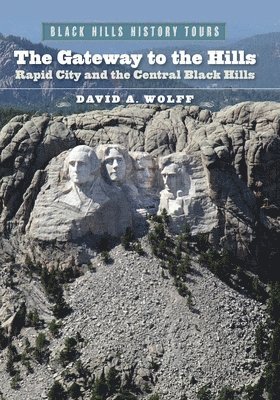
From military expeditions to gold mining boomtowns, outlandish business ventures to stunning national parks, the Black Hills teem with history as rich as their natural beauty. Inspired by field trips that he organized for his classes at Black Hills State University, David A. Wolff has distilled decades of experience exploring, researching, and teaching the history of this majestic region into accessible and informative self-guided tours.In February 1876, John Brennan and his associates decided to abandon their mining claims and create a service center modeled on Denver, Colorado. Dubbed Rapid City, the town overcame a rocky start to become “the Gateway to the Black Hills.” In this tour, you will discover how Rapid City and the gold towns of the Central Hills adapted to changing times and conquered the dreaded boom-and-bust cycle. Featuring maps by the South Dakota Department of Transportation and dozens of photographs, Wolff’s historical synopsis provides just the right amount of context for each site on the route, along with precise mileage and directions. By tour’s end, you will have completed a mini-course in Black Hills history!
Häftad, Engelska, 2026
254 kr
Skickas inom 11-20 vardagar
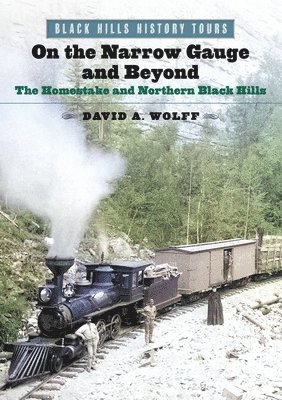
From military expeditions to gold mining boomtowns, outlandish business ventures to stunning national parks, the Black Hills teem with history as rich as their natural beauty. Inspired by field trips that he organized at Black Hills State University, David A. Wolff has distilled decades of experience exploring, researching, and teaching the history of this majestic region into accessible and informative self-guided tours. Thousands of gold miners hoped to make their fortunes in the Black Hills, but only a handful of mines carried such riches. Peerless among them was the Homestake, which became one of the largest gold mines in the world. On the Narrow Gauge and Beyond details the impact that the Homestake, the railroads, the timber companies, Fort Meade, and other crucial enterprises had on the Northern Black Hills. Featuring maps by the South Dakota Department of Transportation and dozens of photographs, Wolff’s historical synopsis provides just the right amount of context for each site on the route, along with precise mileage and directions. By tour’s end, you will have completed a mini-course in Black Hills history!
Häftad, Engelska, 2014
272 kr
Tillfälligt slut
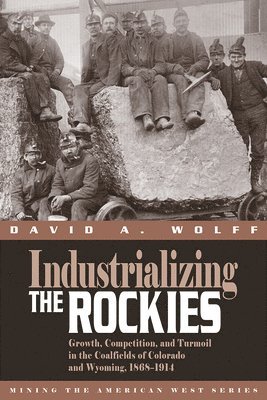
The two defining moments of Western coalfield labor relations have been massacres: Wyoming's Rock Springs Massacre of 1885 and Colorado's Ludlow Massacre of 1914. But it wasn't just the company guns that were responsible for the deaths of 28 Chinese coal miners and 13 women and children. It was the result of racial tensions and the economics of the coal industry itself.In Industrializing the Rockies, David A. Wolff places these deadly conflicts and strikes in the context of the Western coal industry from its inception in 1868 to the age of maturity in the early twentieth century. The result is the first book-length study of the emergence of coalfield labor relations and a general overview of the role of coal mining in the American West.Wolff examines the coal companies and the owners' initial motivations for investment and how these motivations changed over time. He documents the move from speculation to stability in the commodities market, and how this was reflected in the development of companies and company towns.Industrializing the Rockies also examines the workers and their workplaces: how the miners and laborers struggled to maintain mining as a craft and how the workforce changed, ethnically and racially, eventually leading to the emergence of a strong national union. Wolff shines light on the business of coal mining detailing the market and economic forces that influenced companies and deeply affected the lives of the workers.