David Brodbeck – författare
Visar alla böcker från författaren David Brodbeck. Handla med fri frakt och snabb leverans.
4 produkter
4 produkter
Inbunden, Engelska, 2014
723 kr
Skickas inom 5-8 vardagar
This is an open access title. It is available to read and download as a free PDF version on Oxford Academic and is made available under a Creative Commons Attribution 4.0 International licence. Defining Deutschtum: Political Ideology, German Identity, and Music-Critical Discourse in Liberal Vienna offers a nuanced look at the intersection of music, cultural identity, and political ideology in late-nineteenth-century Vienna. Drawing on an extensive selection of writings in the city's political press, correspondence, archival documents, and a large body of recent scholarship in late Habsburg cultural and political history, author David Brodbeck argues that Vienna's music critics were important agents in the public sphere whose writings gave voice to distinct, sometimes competing ideological positions. These conflicting positions are exemplified especially well in their critical writings about the music of three notable composers of the day who were Austrian citizens but not ethnic Germans: Carl G
E-bok
PDF, Engelska, 2014411 kr
Läs direkt efter köp
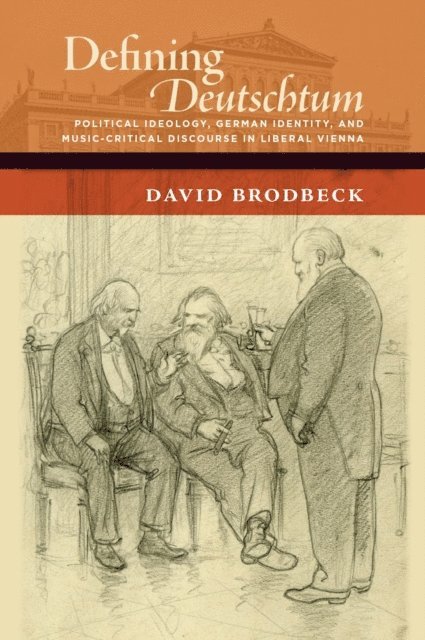
Defining Deutschtum: Political Ideology, German Identity, and Music-Critical Discourse in Liberal Vienna offers a nuanced look at the intersection of music, cultural identity, and political ideology in late-nineteenth-century Vienna. Drawing on an extensive selection of writings in the city''s political press, correspondence, archival documents, and a large body of recent scholarship in late Habsburg cultural and political history, author David Brodbeck argues that Vienna''s music critics were important agents in the public sphere whose writings gave voice to distinct, sometimes competing ideological positions. These conflicting positions are exemplified especially well in their critical writings about the music of three notable composers of the day who were Austrian citizens but not ethnic Germans: Carl Goldmark, a Jew from German West Hungary, and the Czechs Bed?ich Smetana and Anton?n Dvo??k. Often at stake in the critical discourse was the question of who and what could be deemed ?German? in the multinational Austrian state. For critics such as Eduard Hanslick and Ludwig Speidel, traditional German liberals who came of age in the years around 1848, ?Germanness? was an attribute that could be earned by any ambitious bourgeois-including Jews and those of non-German nationality-by embracing German cultural values. The more nationally inflected liberalism evident in the writings of Theodor Helm, with its particularist rhetoric of German national property in a time of Czech gains at German expense, was typical of those in the next generation, educated during the 1860s. The radical student politics of the 1880s, with its embrace of racialist antisemitism and irredentist German nationalism, just as surely shaped the discourse of certain young Wagnerian critics who emerged at the end of the century. This body of music-critical writing reveals a continuum of exclusivity, from a conception of Germanness rooted in social class and cultural elitism to one based in blood. Brodbeck neatly counters decades of musicological scholarship and offers a unique insight into the diverse ways in which educated German Austrians conceived of Germanness in music and understood their relationship to their non-German fellow citizens. Defining Deutschtum is sure to be an essential text for scholars of music history, cultural studies, and late 19th century Central European culture and society.
Del 203 - Eastman Studies in Music
Brahms Patriotic and Political
Inbunden, Engelska, 2025
1 150 kr
Skickas inom 5-8 vardagar
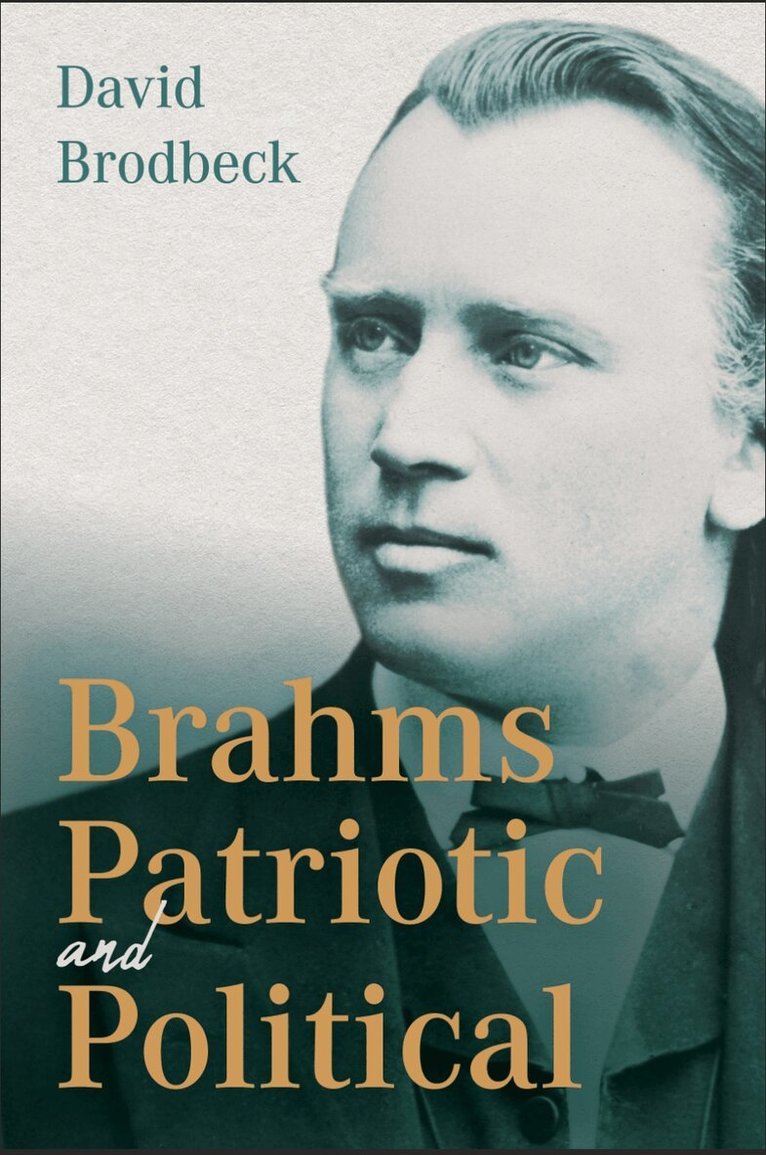
Offers a historical context in which to understand how Brahms's three most intensely political and nationalistic works interact with questions of German patriotism, liberalism and nationalism.Johannes Brahms rarely composed music that engaged the national-political issues of the day. Three of his works, though, do precisely this: the Fünf Lieder für Männerchor; the Triumphlied for eight-part chorus and orchestra; and the Fest- und Gedenksprüche for eight-part chorus a cappella. In Brahms Patriotic and Political, David Brodbeck challenges notions that Brahms's political music evinces embarrassing anticipations of later Prussian militarism and German chauvinism. Instead, he provides a thick historical context in which to read these works and offers a more nuanced understanding of the intersections of Brahms's music and questions of German patriotism, liberalism, and nationalism than has been customary in the field of historical musicology. In particular, Brodbeck relates the Männerchor-Lieder to the debate over how and in what form a German nation-state might be achieved; he relates the Triumphlied to the euphoria but also the solemnity that attended the foundation of the German Reich; and he relates the Fest- und Gedenksprüche to the necessary work of instilling in the diverse German people a genuine sense of national belonging. At the same time, he traces Brahms's changing attitude toward Otto von Bismarck, the "Blacksmith of the Reich," whom he originally loathed but, in time, came to venerate.Brahms Patriotic and Political will appeal to readers with interests in both nineteenth-century German music and Central European history.
Häftad, Engelska, 2025
116 kr
Skickas inom 3-6 vardagar