
David Brophy – författare
Visar alla böcker från författaren . Handla med fri frakt och snabb leverans.
6 produkter
6 produkter
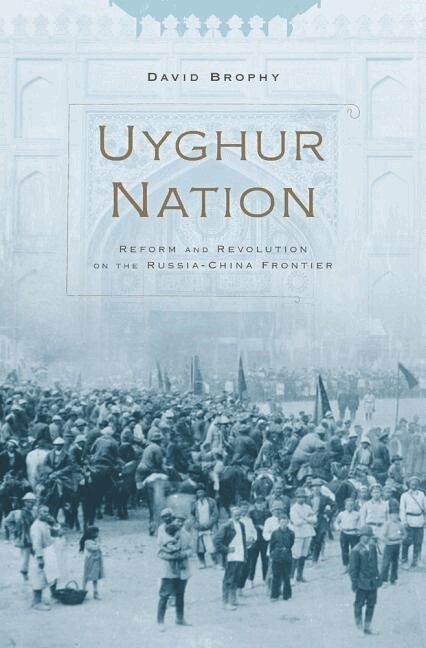
Inbunden, Engelska, 2016
432 kr
Skickas inom 10-15 vardagar
The meeting of the Russian and Qing empires in the nineteenth century had dramatic consequences for Central Asia’s Muslim communities. Along this frontier, a new political space emerged, shaped by competing imperial and spiritual loyalties, cross-border economic and social ties, and the revolutions that engulfed Russia and China in the early twentieth century. David Brophy explores how a community of Central Asian Muslims responded to these historic changes by reinventing themselves as the modern Uyghur nation.As exiles and émigrés, traders and seasonal laborers, a diverse diaspora of Muslims from China’s northwest province of Xinjiang spread to Russian territory, where they became enmeshed in political and intellectual currents among Russia’s Muslims. From the many national and transnational discourses of identity that circulated in this mixed community, the rhetoric of Uyghur nationhood emerged as a rallying point in the tumult of the Bolshevik Revolution and Russian Civil War. Working both with and against Soviet policy, a shifting alliance of constituencies invoked the idea of a Uyghur nation to secure a place for itself in Soviet Central Asia and to spread the revolution to Xinjiang. Although its existence was contested in the fractious politics of the 1920s, in the 1930s the Uyghur nation achieved official recognition in the Soviet Union and China.Grounded in a wealth of little-known archives from across Eurasia, Uyghur Nation offers a bottom-up perspective on nation-building in the Soviet Union and China and provides crucial background to the ongoing contest for the history and identity of Xinjiang.
E-bok
Engelska, 2021213 kr
Läs direkt efter köp
In 2014, Chinese president Xi Jinping said there was an 'ocean of goodwill' between our country and his. Since then, that ocean has shown dramatic signs of freezing over. Australia is in the grip of a China panic. How did we get here, and what's the way out?In this brilliant book, David Brophy takes apart Australia s China debate its strange alliances and diplomatic failures. Justified criticism of China has too often given way to paranoia and exaggeration. While the xenophobic right hovers in the wings, some of the loudest voices decrying Chinese subversion come, unexpectedly, from the left. They call for new security laws, increased scrutiny of Chinese Australians and, if necessary, military force a prescription for a sharp rightward turn in Australian politics. In China Panic, Brophy offers a progressive alternative. Instead of punitive moves and chest-beating that will only make Australia more like China, we need solutions and strategies that strengthen Australian democracy. The most stimulating book I've read on the most important question facing Australian foreign and strategic policy. Brophy is not just answering questions others have asked, he's asking new questions. Allan Gyngell, author of Fear of Abandonment Anyone who wants to know how and why Australia s China narrative has descended to such a dismal point needs to read China Panic. Wanning Sun, professor of media and communications, UTS David Brophy dissects the cliches and prejudices . . . China Panic is essential reading. Linda Jaivin, author of The Shortest History of China
Häftad, Engelska, 2021
278 kr
Skickas inom 5-8 vardagar
Inbunden, Engelska, 2023
3 657 kr
Skickas inom 10-15 vardagar
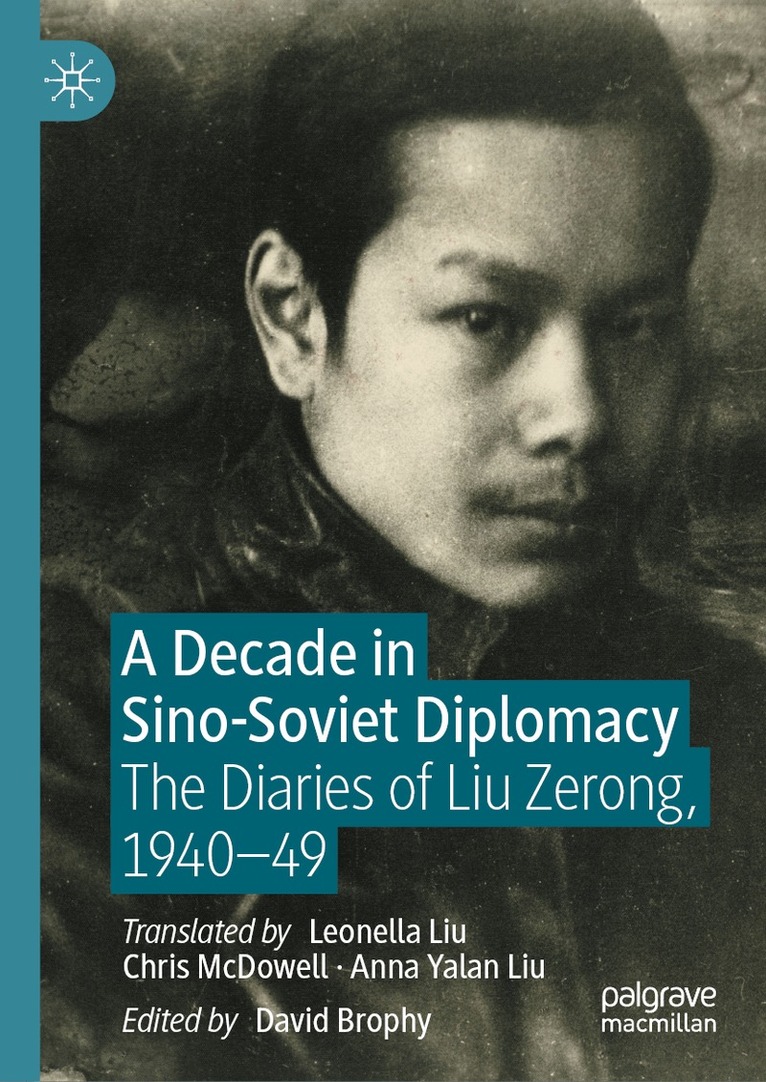
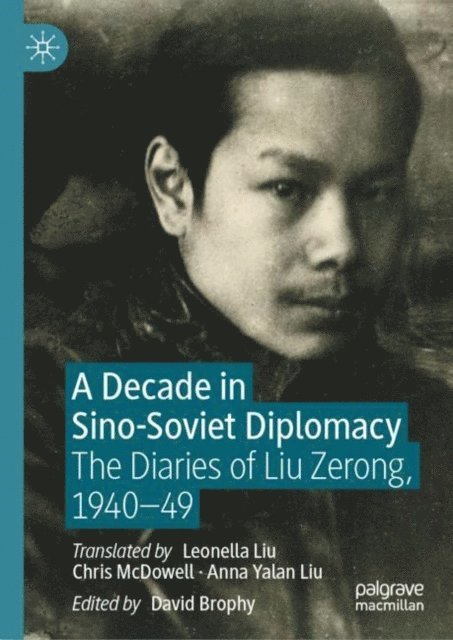
This book sheds important new light on Sino-Soviet relations and the politics of the Xinjiang region, publishing for the first time the complete diaries of Liu Zerong, who served as diplomat and foreign ministry envoy from 1940-49. In doing so it provides a chronicle of the downfall of Nationalist Party rule in the crucial frontier region of Xinjiang and its incorporation into the People’s Republic of China. The diaries are introduced with a biographical study of Liu, and a discussion of China’s international position during World War II and the post-war situation in Xinjiang, which at the time was divided between a sphere of GMD control and the Soviet-aligned East Turkistan Republic. Both in the Moscow embassy, and in the Xinjiang provincial administration in Ürümchi, Liu Zerong was Republican China’s most senior Russian-speaking representative, whose task it was to engage on a daily basis with his Soviet counterparts. His extensive diaries therefore offer a unique insight into this tense decade of Sino-Soviet diplomacy, and will be of interest to a wide range of scholars in fields of Chinese and international history.
E-bok
Engelska, 20234 554 kr
Läs direkt efter köp
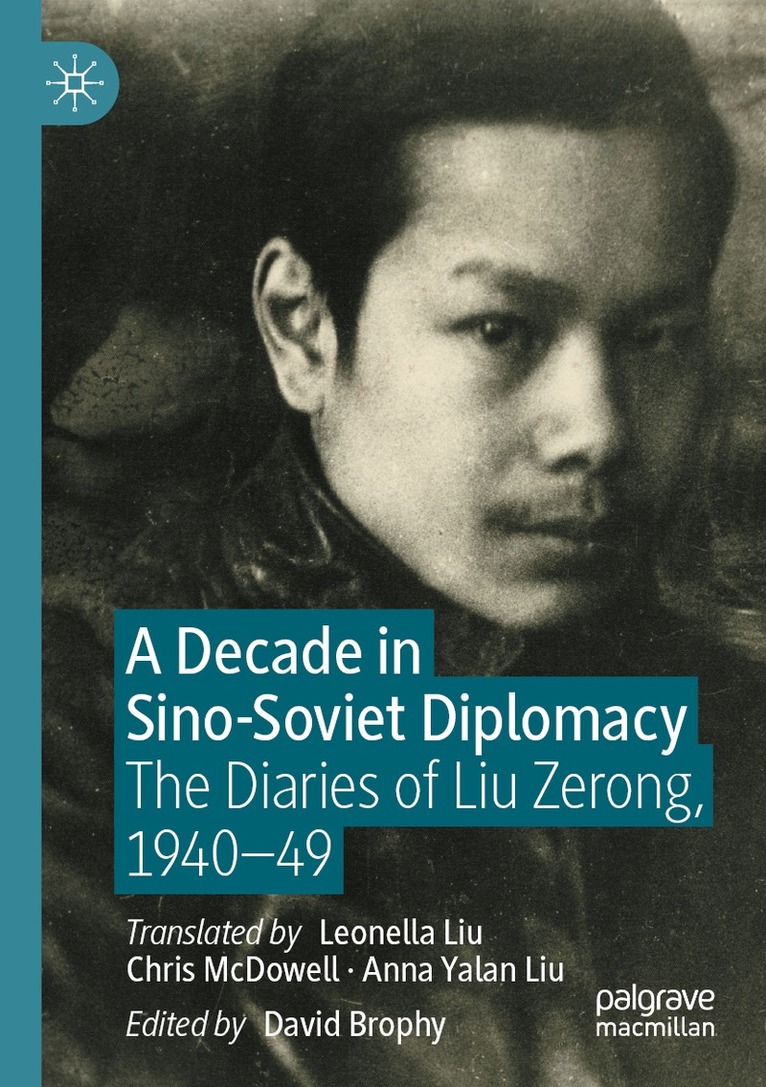
This book will illuminate Xinjiang studies as never before, publishing for the first time the complete diaries of Liu Zerong, governor of Xinjiang during World War II, illuminating the origin of contemporary policies for smaller ethnic groups in the new China that emerged in 1949. The diaries are introduced with a biographical study of Liu, and a discussion of the historical context of World War II and the post-war situation in Xinjiang, which was divided into rival spheres of KMT control, and the Soviet-aligned East Turkistan Republic. Both in the Moscow embassy, and in the provincial administration of Ürümchi, Liu Zerong was Republican China’s chief Russian-speaking representative, whose task it was to engage on a daily basis with his Soviet counterparts. His extensive diaries therefore offer a unique insight into this tense decade of Sino-Soviet diplomacy, and will be of interest to a wide range of scholars in fields of Chinese and international history. The accompanying set of essays by the world''s leading Xinjiang scholars confirm this volume''s status as a key text for scholars, policymakers and others seeking to understand Chinese policies in Xinjiang.
Häftad, Engelska, 2025
3 657 kr
Skickas inom 10-15 vardagar
This book sheds important new light on Sino-Soviet relations and the politics of the Xinjiang region, publishing for the first time the complete diaries of Liu Zerong, who served as diplomat and foreign ministry envoy from 1940-49. In doing so it provides a chronicle of the downfall of Nationalist Party rule in the crucial frontier region of Xinjiang and its incorporation into the People’s Republic of China. The diaries are introduced with a biographical study of Liu, and a discussion of China’s international position during World War II and the post-war situation in Xinjiang, which at the time was divided between a sphere of GMD control and the Soviet-aligned East Turkistan Republic. Both in the Moscow embassy, and in the Xinjiang provincial administration in Ürümchi, Liu Zerong was Republican China’s most senior Russian-speaking representative, whose task it was to engage on a daily basis with his Soviet counterparts. His extensive diaries therefore offer a unique insight into this tense decade of Sino-Soviet diplomacy, and will be of interest to a wide range of scholars in fields of Chinese and international history.