David E. Kelly – författare
Visar alla böcker från författaren . Handla med fri frakt och snabb leverans.
7 produkter
7 produkter
Häftad, Engelska
559 kr
Skickas inom 3-6 vardagar
E-bok
Engelska, 202556 kr
Läs direkt efter köp
Italy in the 1580's and in a town just south of Florence, a doctor is mourning the death of his young daughter. She has been cruelly taken from him by a plague that has swept through his village. In despair at his failure to save her from the disease, he begs God to spare his remaining child, his heir from the same fate, vowing to undertake a great pilgrimage if he survives. His son endured. As time and the pestilence moves on, his life returns to a sort of normality but the thought of the debt that needs to be repaid to God is weighing heavily on his mind. In a bid to unburden himself, he goes to meet with a family friend, a priest who is considered an expert in the art of pilgrimage . The priest suggests that he should take a route north, believing that a short journey like that to Rome, would not do justice to the great miracle that had been gifted to him, after all, the contrition must match the granted privilege. Leaving his wife and son, he travels from his home in Arezzo, setting off on the epic journey to visit some of the great wonders of the medieval age, meeting the good, the bad and the mad along the way. He travels over the Alps by the Great St Bernard Pass, walking north through Switzerland then up through France before crossing the channel into Elizabethan England, a country hostile to foreign catholics like himself. Under constant suspicion, he makes his way across this alien land before sailing to Ireland to do penance at the shrine of a once famous Saint, Begnet, on a tiny island just off the coast of this mystical land.
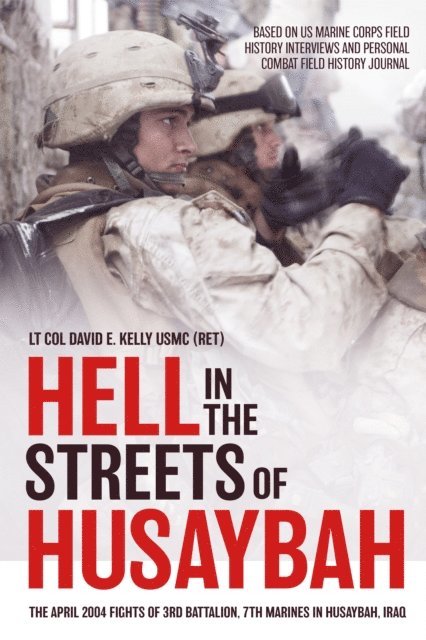
Hell in the Streets of Husaybah
The April 2004 Fights of 3rd Battalion, 7th Marines in Husaybah, Iraq
E-bok
Engelska, 2022170 kr
Läs direkt efter köp
First-person accounts chronicling the 3/7 Marines engaging in intense street-by-street fighting to put down an uprising in Iraq in April 2004.During the April 2004 fights throughout Iraq, most media attention was focused on the city of Fallujah. However, at the same time, out on the border with Syria in and around the city of Husaybah, fighting was equally intense.This book tells the story of that period through many first-person accounts of intense fighting in the town of Husaybah, Iraq, during. It is based on interviews with Marines at all levels of the fight, from battalion commander Lieutenant Colonel Matt Lopez, USMC, to infantrymen and squad leaders. When the Lima Company commander Captain Richard Gannon (Call sign Lima 6) was killed on entry to an enemy-held building, the company''s executive officer, Lieutenant Dominique Neal (Lima 5) informed his Marines that he had assumed command with the radio message, "Lima 5 is now Lima 6." It also details the heroic actions of Corporal Jason Dunham who saved the Marines around him by covering an enemy grenade with his body.Praise for Hell in the Streets of Husaybah"The young riflemen do not sound like college professors, and the officers occasionally seem to be weighing their words. . . . The overall effect is mesmerizing, as the reader is transported onto the battlefield, firefight-by-firefight, and even granted a glimpse or two into how individual Marines felt about what was happening." —The Journal of America''s Military Past
Inbunden, Engelska, 2023
409 kr
Skickas
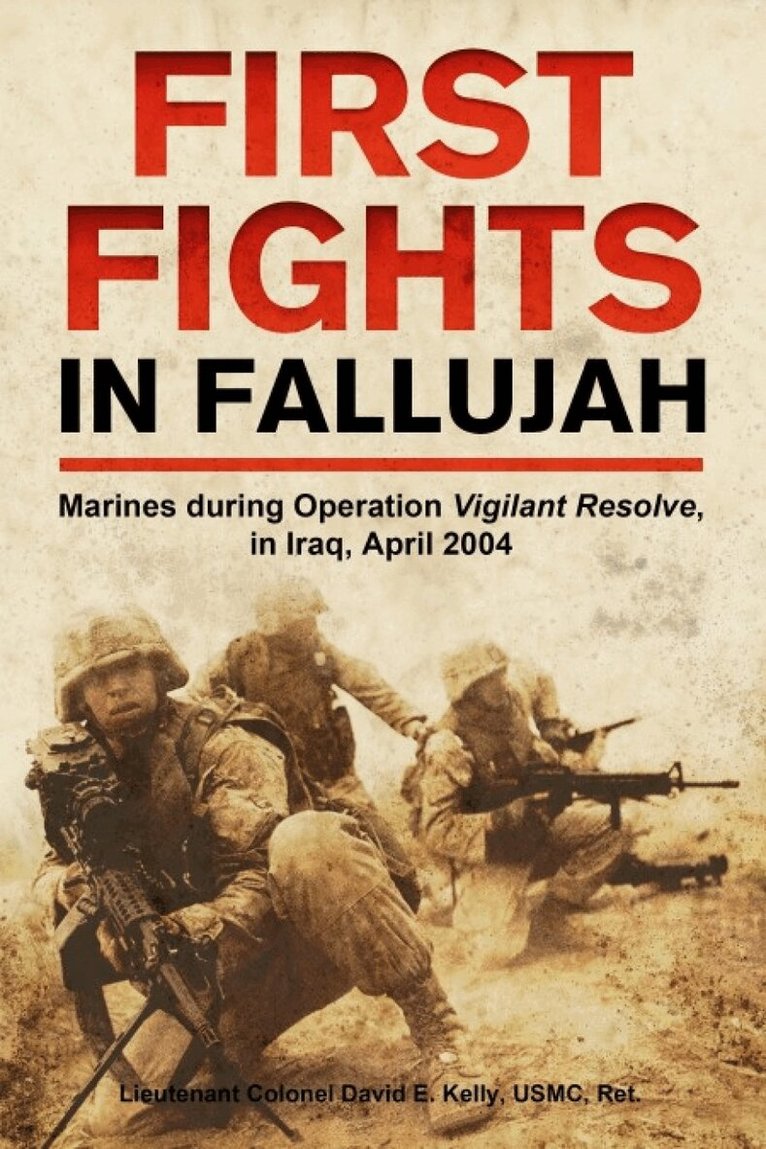
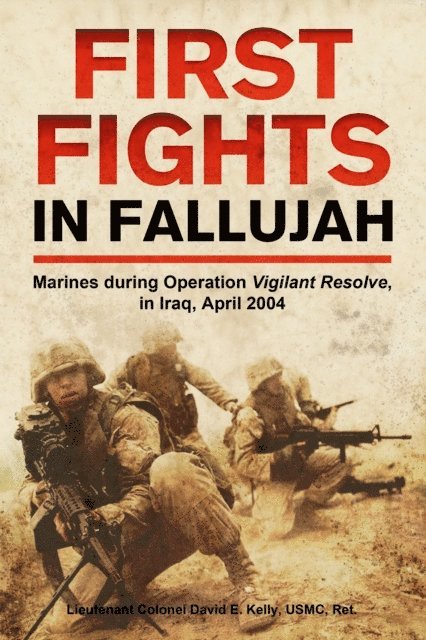
In March 2004, the unprovoked ambush, killing and desecration of the bodies of American civilian security contractors in Fallujah, Iraq, caused the National Command Authorities in Washington, DC. to demand that the newly arrived Marine Expeditionary Force there take action against the perpetrators and other insurgent forces. Planned Stability and Support Operations were cast aside as insurgent fighters dared the Marines to enter Fallujah. Marine infantrymen, tankers, helicopter crews, and amphibious vehicle drivers all pitched into high-intensity battles and firefights during the first fights of Fallujah in April 2004. Across the board cooperation and innovation marked these fighting Marines in combined arms fights that no one expected. Marines fought in the streets, conducted house-to-house searches, cleared buildings of enemy, and used tank main guns in direct support of urban environment operations. Helicopter crews supported operations on the ground with rockets and machine-gun fire, and Amtrac Marines transported forces to face enemy RPG and machine-gun fire. Marines from infantry squad members to a battalion commander were interviewed by Marine Corps field historians within days or weeks of the events at nearby combat outposts and camps. This book combines these interview notes and the words of the men themselves to create a unique narrative of Marines in this combat.
E-bok
PDF, Engelska, 2023214 kr
Läs direkt efter köp
"This book will add to the long and distinguished collection of marine history and is well worth the read for anyone interested in personal accounts of modern combat. It also provides a good snapshot into urban combat and the tactics and techniques necessary to succeed in it." — Military ReviewIn March 2004, the unprovoked ambush killing and desecration of the bodies of American civilian security contractors in Fallujah, Iraq, caused the National Command Authorities in Washington, DC. to demand that the newly arrived Marine Expeditionary Force there take action against the perpetrators and other insurgent forces. Planned Stability and Support Operations were cast aside as insurgent fighters dared the Marines to enter Fallujah. Marine infantrymen, tankers, helicopter crews, and amphibious vehicle drivers all pitched into high-intensity battles and firefights during the first fights of Fallujah in April 2004. Across the board cooperation and innovation marked these fighting Marines in combined arms fights that no one expected. Marines fought in the streets, conducted house-to-house searches, cleared buildings of enemy, and used tank main guns in direct support of urban environment operations. Helicopter crews supported operations on the ground with rockets and machine-gun fire, and Amtrac Marines transported forces to face enemy RPG and machine-gun fire. Marines from infantry squad members to a battalion commander were interviewed by Marine Corps field historians within days or weeks of the events at nearby combat outposts and camps. This book combines these interview notes and the words of the men themselves to create a unique narrative of Marines in this combat. Casualties only stiffened the will of the Marines to crush the enemy. A late April political plan called for the withdrawal of Marine forces from the city, and Marines at every level, though frustrated, understood the need to allow this attempted solution to play itself out.
E-bok
Engelska, 2024285 kr
Läs direkt efter köp
"Lt. Col. David E. Kelly has done it again! From the gripping title to his closing thoughts, he has brought a slice of recent Marine Corps history to life. His technique—part diary, part narrative, part oral history—creates a powerful ‘you are there’ effect."— Colonel Nicholas Reynolds, USMC (Ret.), NR, New York Times best-selling author and former head of USMC Field HistoryIn 2004, most areas of Al Anbar province in Iraq exploded into wide-scale insurgencies and attacks on US and allied forces. In both Fallujah and throughout Al Anbar province, elements of the 1st Marine Division engaged in a wide range of operations, ranging from control of border crossings in Western Iraq, to infantry-centered urban combat in Ramadi, the provincial capital. Unique to many of these actions was the use of the Marine Corps’ Light Armored Vehicle, the LAV 25. These vehicles screened large areas of desert, searched for hidden IEDs along highways, and provided extra firepower for infantry units in combat. Using LAVs, the 1st LAR Battalion, with attached infantry company Echo 2/7, patrolled large stretches of the borders with Syria and Jordan as well as highways used for commerce and smuggling. In addition to providing camp security and raid elements for the 1st LAR Battalion, Echo Company also dispatched two infantry platoons to supervise border crossings with Jordan. During Operation Vigilant Resolve the 1st LAR Battalion drove from the Western border areas to Fallujah to support the Operation when Marine forces isolated the city in April. An LAR company from Camp LeJeune—Delta Company 2nd LAR Battalion—under Captain Ladd Wilkie Shepard, provided added firepower to the fighting on the outskirts of Fallujah. This company suffered its first deaths from a large vehicle-born IED that destroyed one of its LAVs during a routine patrol near the city. Delta Company supported the efforts of Regimental Combat Team 1 in Fallujah. In the city of Ramadi, insurgents created a hostile environment for the infantry Marines of the 2nd Battalion, 4th Marine Regiment, almost as soon as they arrived. These Marines, assisted by a US Army mechanized brigade, fought nearly daily, culminating in a particularly deadly ambush for the Marines of Echo Company, 2/4, in April 2004. The Marines of the LAV and infantry units tell their stories of preparations for deployment to Iraq, early actions on arrival, and fighting under a variety of locations and conditions in the early part of 2004. They have created a remarkable legacy of their actions, highlighted by their own words.
Inbunden, Engelska, 2024
334 kr
Tillfälligt slut
In 2006, the shock and awe campaign of securing the major cities had ended, and the Iraq War had moved into an alien phase for the clandestine operators of Blackflag1. Their motto "swift, silent, deadly," the Marine operators of 2nd Reconnaissance Battalion were not intended for conventional warfare but they were now tasked with holding the Zaidon region of Iraq. In this deadly zone, where even Saddam would not send his most elite troops, the operators were faced with the war on a new front; fierce local tribes who proclaimed they would kill any who entered their lands, foreign insurgents or Marines alike.