David Farber – författare
Visar alla böcker från författaren David Farber. Handla med fri frakt och snabb leverans.
18 produkter
18 produkter
Häftad, Engelska, 2012
330 kr
Skickas inom 5-8 vardagar
The Rise and Fall of Modern American Conservatism tells the gripping story of perhaps the most significant political force of our time through the lives and careers of six leading figures at the heart of the movement. David Farber traces the history of modern conservatism from its revolt against New Deal liberalism, to its breathtaking resurgence under Ronald Reagan, to its spectacular defeat with the election of Barack Obama. Farber paints vivid portraits of Robert Taft, William F. Buckley Jr., Barry Goldwater, Phyllis Schlafly, Ronald Reagan, and George W. Bush. He shows how these outspoken, charismatic, and frequently controversial conservative leaders were united by a shared insistence on the primacy of social order, national security, and economic liberty.Farber demonstrates how they built a versatile movement capable of gaining and holding power, from Taft's opposition to the New Deal to Buckley's founding of the National Review as the intellectual standard-bearer of modern conservatism; from Goldwater's crusade against leftist politics and his failed 1964 bid for the presidency to Schlafly's rejection of feminism in favor of traditional gender roles and family values; and from Reagan's city upon a hill to conservatism's downfall with Bush's ambitious presidency. The Rise and Fall of Modern American Conservatism provides rare insight into how conservatives captured the American political imagination by claiming moral superiority, downplaying economic inequality, relishing bellicosity, and embracing nationalism. This concise and accessible history reveals how these conservative leaders discovered a winning formula that enabled them to forge a powerful and formidable political majority.
Inbunden, Engelska, 2013
409 kr
Skickas inom 3-6 vardagar
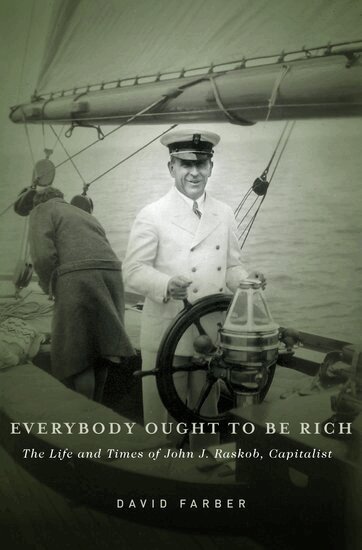
John Raskob is not a name that looms large but his greatest building casts a shadow on us every day. Financier of the Empire State Building, Raskob was a self-made businessman who worked for DuPont and for GM and famously invented with the idea for consumer credit, which he first offered to individual car buyers (GMAC). A friend of New York Governor Al Smith, Raskob became active in New York politics and ran the Democratic National Committee and Smith's campaign for the presidency. He invested his own fortune heavily in the Empire State Building, built at the height of the Great Depression. A colorful figure, Raskob's life evokes the roaring twenties, the Catholic elite, the boardrooms of America's biggest corporations, and the rags-to-riches tale that is central to the American dream. His most famous interview was entitled "Everybody Ought to Be Rich" in Ladies' Home Journal in August 1929-on the eve of the stock market crash--and his personal achievement of such extraordinary wealth and power highlight just how far he came traveled from a teenage candy seller on the railway between Lockport and Buffalo. His wide circle of business associates and personal acquaintances included Water Chrysler, the DuPonts, Alfred Sloane, Franklin Roosevelt, Joseph Kennedy, Western miners, and the Pope. He lived his own creed: "Go ahead and do things. The bigger the better, if your fundamentals are sound. Avoid procrastination."
Häftad, Engelska, 1994
198 kr
Skickas inom 5-8 vardagar
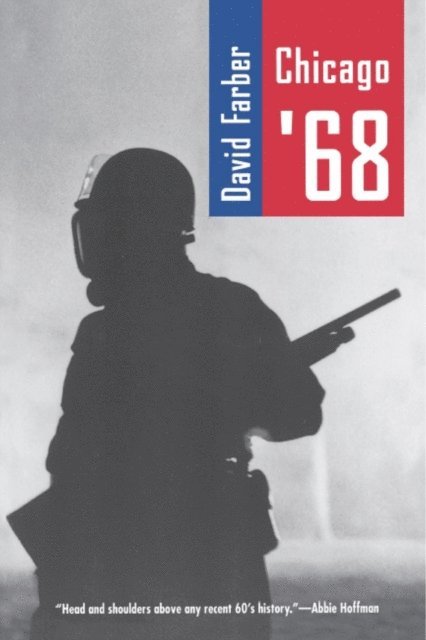
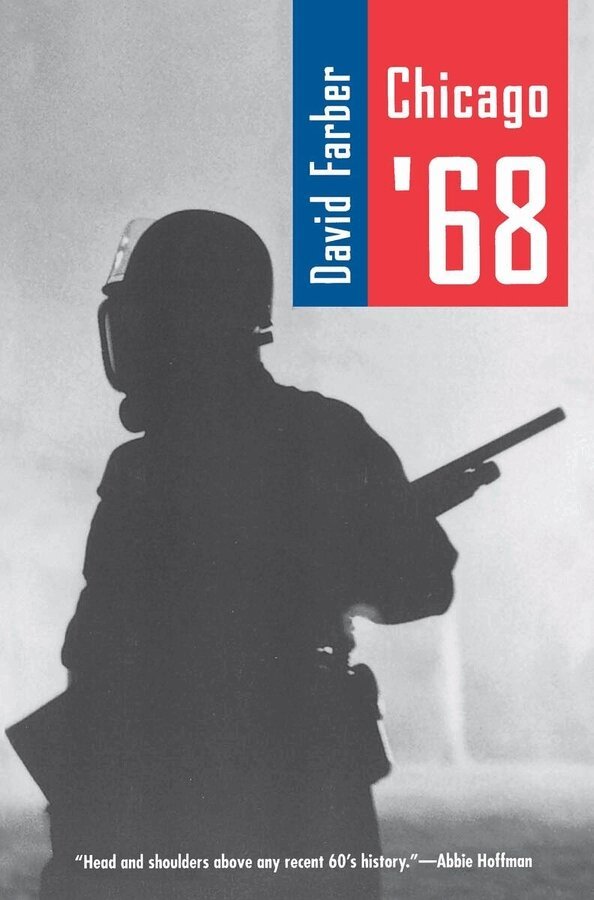
Entertaining and scrupulously researched, Chicago '68 reconstructs the 1968 Democratic Convention in Chicago—an epochal moment in American cultural and political history. By drawing on a wide range of sources, Farber tells and retells the story of the protests in three different voices, from the perspectives of the major protagonists—the Yippies, the National Mobilization to End the War, and Mayor Richard J. Daley and his police. He brilliantly recreates all the excitement and drama, the violently charged action and language of this period of crisis, giving life to the whole set of cultural experiences we call "the sixties." "Chicago '68 was a watershed summer. Chicago '68 is a watershed book. Farber succeeds in presenting a sensitive, fairminded composite portrait that is at once a model of fine narrative history and an example of how one can walk the intellectual tightrope between 'reporting one's findings' and offering judgements about them."—Peter I. Rose, Contemporary Sociology
Häftad, Engelska, 2005
162 kr
Skickas inom 5-8 vardagar
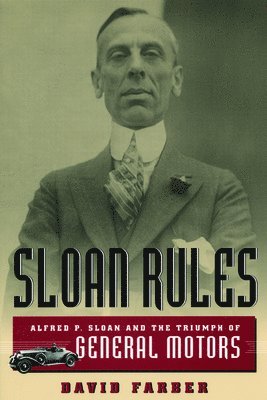
Alfred P. Sloan Jr. became the president of General Motors in 1923 and stepped down as its CEO in 1946. During this time, he led GM past the Ford Motor Company and on to international business triumph by virtue of his brilliant managerial practices and his insights into the new consumer economy he and GM helped to produce. Bill Gates has said that Sloan's 1964 management tome, My Years with General Motors, "is probably the best book to read if you want to read only one book about business." And if you want to read only one book about Sloan, that book should be historian David Farber's Sloan Rules.Here, for the first time, is a study of both the difficult man and the pathbreaking executive. Sloan Rules reveals the GM genius as not only a driven manager of men, machines, money, and markets but also a passionate and not always wise participant in the great events of his day. Sloan, for example, reviled Franklin Roosevelt and the New Deal; he firmly believed that politicians, government bureaucrats, and union leaders knew next to nothing about the workings of the new consumer economy, and he did his best to stop them from intervening in the private enterprise system. He was instrumental in transforming GM from the country's largest producer of cars into the mainstay of America's "Arsenal of Democracy" during World War II; after the war, he bet GM's future on renewed American prosperity and helped lead the country into a period of economic abundance. Through his business genius, his sometimes myopic social vision, and his vast fortune, Sloan was an architect of the corporate-dominated global society we live in today.David Farber's story of America's first corporate genius is biography of the highest order, a portrait of an extraordinarily compelling and skillful man who shaped his era and ours.
Inbunden, Engelska, 2001
2 717 kr
Skickas inom 3-6 vardagar
The 1960s continue to be the subject of passionate debate and political controversy, a touchstone in struggles over the meaning of the American past and the direction of the American future. Amid the polemics and the myths, making sense of the Sixties and its legacies presents a challenge. This book is for all those who want to take it on. Because there are so many facets to this unique and transformative era, this volume offers multiple approaches and perspectives. The first section gives a lively narrative overview of the decade's major policies, events, and cultural changes. The second presents ten original interpretative essays from prominent historians about significant and controversial issues from the Vietnam War to the sexual revolution, followed by a concise encyclopedia articles organized alphabetically. This section could stand as a reference work in itself and serves to supplement the narrative. Subsequent sections include short topical essays, special subjects, a brief chronology, and finally an extensive annotated bibliography with ample information on books, films, and electronic resources for further exploration.With interesting facts, statistics, and comparisons presented in almanac style as well as the expertise of prominent scholars, The Columbia Guide to America in the 1960s is the most complete guide to an enduringly fascinating era.
Häftad, Engelska, 2003
742 kr
Skickas inom 3-6 vardagar
The 1960s continue to be the subject of passionate debate and political controversy, a touchstone in struggles over the meaning of the American past and the direction of the American future. Amid the polemics and the myths, making sense of the Sixties and its legacies presents a challenge. This book is for all those who want to take it on. Because there are so many facets to this unique and transformative era, this volume offers multiple approaches and perspectives. The first section gives a lively narrative overview of the decade's major policies, events, and cultural changes. The second presents ten original interpretative essays from prominent historians about significant and controversial issues from the Vietnam War to the sexual revolution, followed by a concise encyclopedia articles organized alphabetically. This section could stand as a reference work in itself and serves to supplement the narrative. Subsequent sections include short topical essays, special subjects, a brief chronology, and finally an extensive annotated bibliography with ample information on books, films, and electronic resources for further exploration.With interesting facts, statistics, and comparisons presented in almanac style as well as the expertise of prominent scholars, The Columbia Guide to America in the 1960s is the most complete guide to an enduringly fascinating era.
Häftad, Engelska, 2006
298 kr
Skickas inom 5-8 vardagar
On November 4, 1979, Iranian militants stormed the United States Embassy in Tehran and took sixty-six Americans captive. Thus began the Iran Hostage Crisis, an affair that captivated the American public for 444 days and marked America's first confrontation with the forces of radical Islam. Using hundreds of recently declassified government documents, historian David Farber takes the first in-depth look at the hostage crisis, examining its lessons for America's contemporary War on Terrorism. Unlike other histories of the subject, Farber's vivid and fast-paced narrative looks beyond the day-to-day circumstances of the crisis, using the events leading up to the ordeal as a means for understanding it. The book paints a portrait of the 1970s in the United States as an era of failed expectations in a nation plagued by uncertainty and anxiety. It reveals an American government ill prepared for the fall of the Shah of Iran and unable to reckon with the Ayatollah Khomeini and his militant Islamic followers.Farber's account is filled with fresh insights regarding the central players in the crisis: Khomeini emerges as an astute strategist, single-mindedly dedicated to creating an Islamic state. The Americans' student-captors appear as less-than-organized youths, having prepared for only a symbolic sit-in with just a three-day supply of food. ABC news chief Roone Arledge, newly installed and eager for ratings, is cited as a critical catalyst in elevating the hostages to cause celebre status. Throughout the book there emerge eerie parallels to the current terrorism crisis. Then as now, Farber demonstrates, politicians failed to grasp the depth of anger that Islamic fundamentalists harbored toward the United States, and Americans dismissed threats from terrorist groups as the crusades of ineffectual madmen. Taken Hostage is a timely and revealing history of America's first engagement with terrorism and Islamic fundamentalism, one that provides a chilling reminder that the past is only prologue.
Inbunden, Engelska, 2007
378 kr
Skickas inom 5-8 vardagar
It has never been more important for Americans to understand why the world both hates and loves the United States. In What They Think of Us, a remarkable group of writers from the Middle East, Europe, Asia, and Latin America describes the world's profoundly ambivalent attitudes toward the United States--before and since 9/11. While many people around the world continue to see the United States as a model despite the Iraq war and the war on terror, the U.S. response to 9/11 has undoubtedly intensified global anti-Americanism. What They Think of Us reveals that substantial goodwill toward America still exists, but that this sympathy is in peril--and that there is an immense gap between how Americans view their country and how it is viewed abroad. Drawing on broad research and personal experience while avoiding anecdotalism and polemics, the writers gathered here combine political, cultural, and historical analysis to explain how people in different parts of the world see the United States. They show that not all anti-Americanism can be blamed on U.S. foreign policy.America is disliked not just for what it does but also for what it is, and perceptions of both are profoundly shaped--and sometimes warped--by the domestic realities of the countries where anti-Americanism thrives. In addition to analyzing America's battered global reputation, these writers propose ways the United States and other countries can build better relations through greater understanding and respect.
Häftad, Engelska, 2004
328 kr
Skickas inom 10-15 vardagar
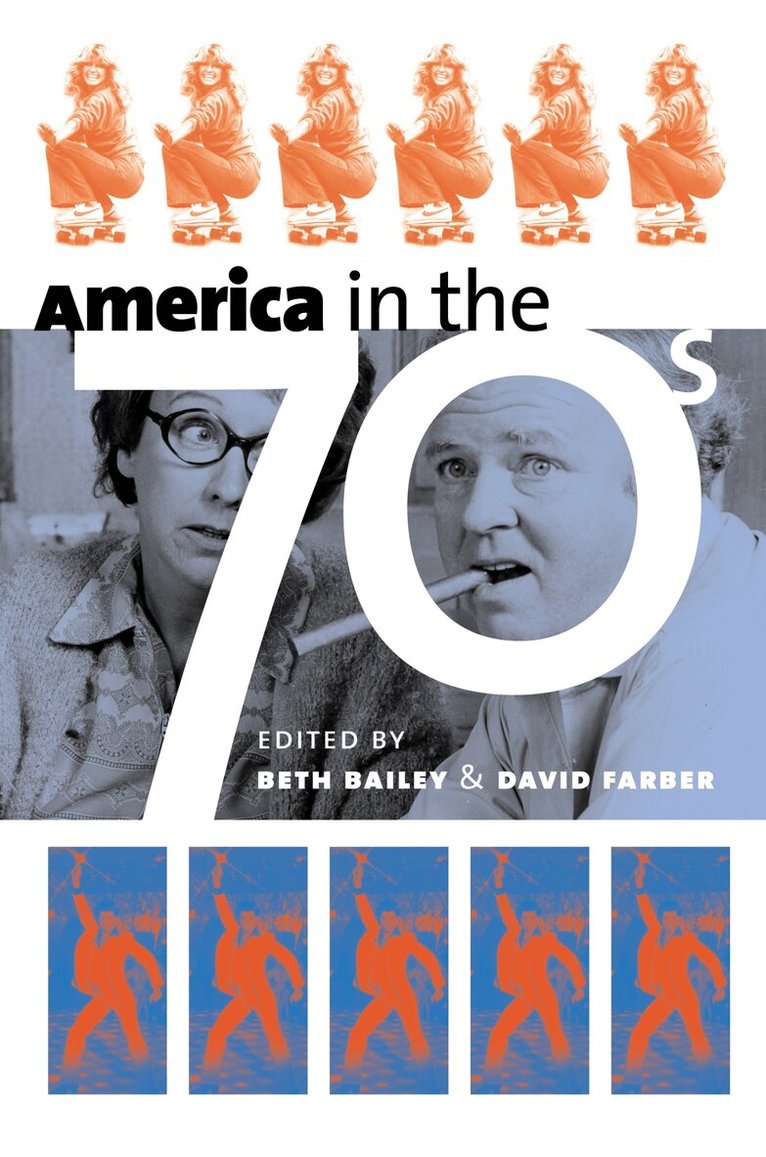
Tucked between the activist Sixties and the conservative Eighties lies a largely misunderstood and still under-appreciated decade. Now nine leading scholars of postwar America offer a revealing look at the Seventies and their rightful place in the epic narrative of American history. This is the first major work to relate the economic decline and cultural despair of the Seventies to the creative efforts that would reshape American society. Dogged by economic and political crises at home and foreign policy failures abroad, Americans responded to a growing sense of uncertainty in a variety of ways. Some explored the new freedoms promised by the social change movements of the late Sixties. Some challenged the technological verities that ruled corporate America. Others sought to create autonomous zones in the ruins of decaying cities or on the bleak landscape of anemic suburbia. And, against a backdrop of massive economic dislocation and bicentennial celebrations, many Americans struggled to redefine patriotism and the meaning of the American dream.
Häftad, Engelska, 2019
301 kr
Skickas inom 11-20 vardagar
In the United States, December 7, 1941, may live in infamy, in President Franklin D. Roosevelt’s phrase, but for most Americans the date’s significance begins and ends with the attack on Pearl Harbor. On December 8 (December 7 on the other side of the International Date Line) Japanese military forces hit eight major targets, all but one on western colonial possessions and military outposts in the Pacific: Kota Bharu on the northeast coast of Malaya (now Malaysia); Thailand, the one site not claimed by a western power; Pearl Harbor, O’ahu; Singapore, key to the defense of Britain’s Asian empire; Guam, the only island in the Mariana chain not controlled by Japan; Wake Island; Hong Kong; and the Philippines. Told from multiple perspectives, the stories of these attacks reveal the arc of imperialism, colonialism, and burgeoning nationalism in the Pacific world.In Beyond Pearl Harbor renowned scholars hailing from four continents and representing six nations reinterpret the meaning of the coordinated, and devastating, attacks of December 7/8, 1941. Working from a variety of angles, they revise and expand, to an unprecedented Extent, what we understand about these events—in particular, how Japan’s overwhelming, if short-lived, victories contributed to emerging solidarities and nationalist identities within and across Pacific societies. In their essays we see how various elite actors incorporated the attacks into new regimes of knowledge and expertise that challenged and displaced existing hierarchies. Extending far beyond Pearl Harbor, the events of December 1941, as we see in this volume, are part of a story of clashing empires and anti-colonial visions—a story whose outcome, even now, remains to be seen.
Häftad, Engelska, 1994
467 kr
Skickas inom 10-15 vardagar
This collection of original essays represents some of the most exciting ways in which historians are beginning to paint the 1960s onto the larger canvas of American history. While the first literature about this turbulent period was written largely by participants, many of the contributors to this volume are young scholars who came of age intellectually in the 1970s and 1980s and thus write from fresh perspectives. The essayists ask fundamental questions about how much America really changed in the 1960s and why certain changes took place. In separate chapters, they explore how the great issues of the decade--the war in Vietnam, race relations, youth culture, the status of women, the public role of private enterprise--were shaped by evolutions in the nature of cultural authority and political legitimacy. They argue that the whirlwind of events and problems we call the Sixties can only be understood in the context of the larger history of post-World War II America. Contents ""Growth Liberalism in the Sixties: Great Societies at Home and Grand Designs Abroad,"" by Robert M. Collins ""The American State and the Vietnam War: A Genealogy of Power,"" by Mary Sheila McMahon ""And That's the Way It Was: The Vietnam War on the Network Nightly News,"" by Chester J. Pach, Jr. ""Race, Ethnicity, and the Evolution of Political Legitimacy,"" by David R. Colburn and George E. Pozzetta ""Nothing Distant about It: Women's Liberation and Sixties Radicalism,"" by Alice Echols ""The New American Revolution: The Movement and Business,"" by Terry H. Anderson ""Who'll Stop the Rain?: Youth Culture, Rock 'n' Roll, and Social Crises,"" by George Lipsitz ""Sexual Revolution(s),"" by Beth Bailey ""The Politics of Civility,"" by Kenneth Cmiel ""The Silent Majority and Talk about Revolution,"" by David Farber
Häftad, Engelska, 2003
334 kr
Skickas inom 5-8 vardagar
Inbunden, Engelska, 2019
449 kr
Skickas inom 5-8 vardagar
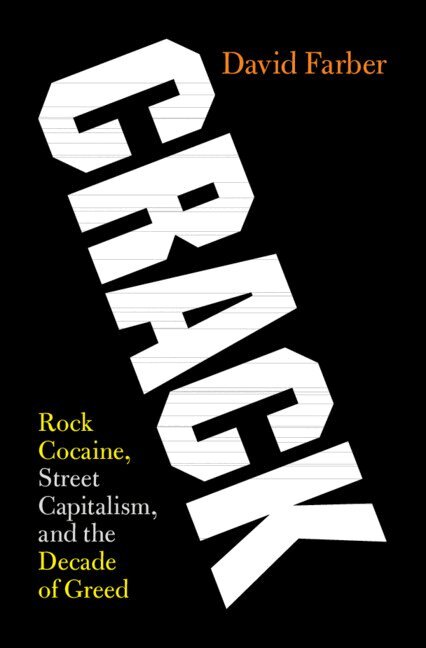
A shattering account of the crack cocaine years from award-winning American historian David Farber, Crack tells the story of the young men who bet their lives on the rewards of selling 'rock' cocaine, the people who gave themselves over to the crack pipe, and the often-merciless authorities who incarcerated legions of African Americans caught in the crack cocaine underworld. Based on interviews, archival research, judicial records, underground videos, and prison memoirs, Crack explains why, in a de-industrializing America in which market forces ruled and entrepreneurial risk-taking was celebrated, the crack industry was a lucrative enterprise for the 'Horatio Alger boys' of their place and time. These young, predominately African American entrepreneurs were profit-sharing partners in a deviant, criminal form of economic globalization. Hip Hop artists often celebrated their exploits but overwhelmingly, Americans - across racial lines -did not. Crack takes a hard look at the dark side of late twentieth-century capitalism.
Häftad, Engelska, 2022
176 kr
Skickas inom 7-10 vardagar
A shattering account of the crack cocaine years from award-winning American historian David Farber, Crack tells the story of the young men who bet their lives on the rewards of selling 'rock' cocaine, the people who gave themselves over to the crack pipe, and the often-merciless authorities who incarcerated legions of African Americans caught in the crack cocaine underworld. Based on interviews, archival research, judicial records, underground videos, and prison memoirs, Crack explains why, in a de-industrializing America in which market forces ruled and entrepreneurial risk-taking was celebrated, the crack industry was a lucrative enterprise for the 'Horatio Alger boys' of their place and time. These young, predominately African American entrepreneurs were profit-sharing partners in a deviant, criminal form of economic globalization. Hip Hop artists often celebrated their exploits but overwhelmingly, Americans - across racial lines -did not. Crack takes a hard look at the dark side of late twentieth-century capitalism.
Häftad, Engelska, 2023
183 kr
Skickas inom 5-8 vardagar
Inbunden, Engelska, 2021
997 kr
Skickas inom 10-15 vardagar
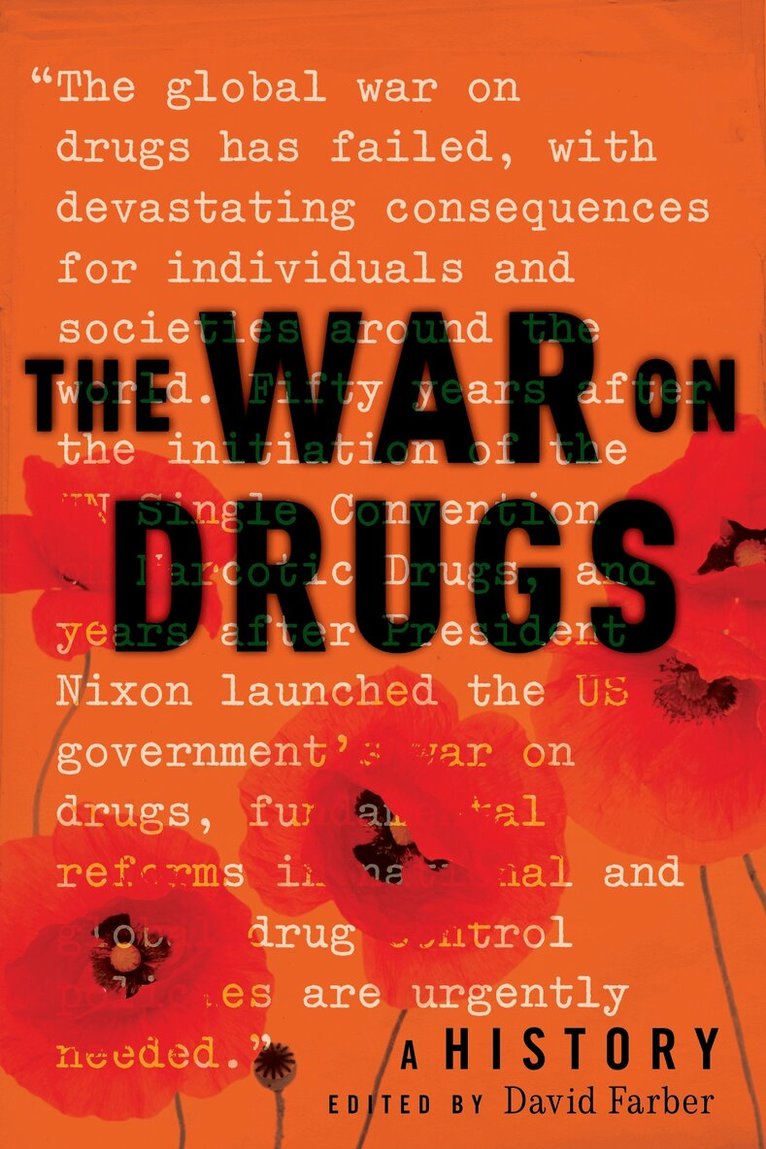
A revealing look at the history and legacy of the "War on Drugs"Fifty years after President Richard Nixon declared a "War on Drugs," the United States government has spent over a trillion dollars fighting a losing battle. In recent years, about 1.5 million people have been arrested annually on drug charges—most of them involving cannabis—and nearly 500,000 Americans are currently incarcerated for drug offenses. Today, as a response to the dire human and financial costs, Americans are fast losing their faith that a War on Drugs is fair, moral, or effective.In a rare multi-faceted overview of the underground drug market, featuring historical and ethnographic accounts of illegal drug production, distribution, and sales, The War on Drugs: A History examines how drug war policies contributed to the making of the carceral state, racial injustice, regulatory disasters, and a massive underground economy. At the same time, the collection explores how aggressive anti-drug policies produced a "deviant" form of globalization that offered economically marginalized people an economic life-line as players in a remunerative transnational supply and distribution network of illicit drugs. While several essays demonstrate how government enforcement of drug laws disproportionately punished marginalized suppliers and users, other essays assess how anti-drug warriors denigrated science and medical expertise by encouraging moral panics that contributed to the blanket criminalization of certain drugs. By analyzing the key issues, debates, events, and actors surrounding the War on Drugs, this timely and impressive volume provides a deeper understanding of the role these policies have played in making our current political landscape and how we can find the way forward to a more just and humane drug policy regime.
Häftad, Engelska, 2021
364 kr
Skickas inom 5-8 vardagar
A revealing look at the history and legacy of the "War on Drugs"Fifty years after President Richard Nixon declared a "War on Drugs," the United States government has spent over a trillion dollars fighting a losing battle. In recent years, about 1.5 million people have been arrested annually on drug charges—most of them involving cannabis—and nearly 500,000 Americans are currently incarcerated for drug offenses. Today, as a response to the dire human and financial costs, Americans are fast losing their faith that a War on Drugs is fair, moral, or effective.In a rare multi-faceted overview of the underground drug market, featuring historical and ethnographic accounts of illegal drug production, distribution, and sales, The War on Drugs: A History examines how drug war policies contributed to the making of the carceral state, racial injustice, regulatory disasters, and a massive underground economy. At the same time, the collection explores how aggressive anti-drug policies produced a "deviant" form of globalization that offered economically marginalized people an economic life-line as players in a remunerative transnational supply and distribution network of illicit drugs. While several essays demonstrate how government enforcement of drug laws disproportionately punished marginalized suppliers and users, other essays assess how anti-drug warriors denigrated science and medical expertise by encouraging moral panics that contributed to the blanket criminalization of certain drugs. By analyzing the key issues, debates, events, and actors surrounding the War on Drugs, this timely and impressive volume provides a deeper understanding of the role these policies have played in making our current political landscape and how we can find the way forward to a more just and humane drug policy regime.
Häftad, Engelska, 1994
275 kr
Tillfälligt slut
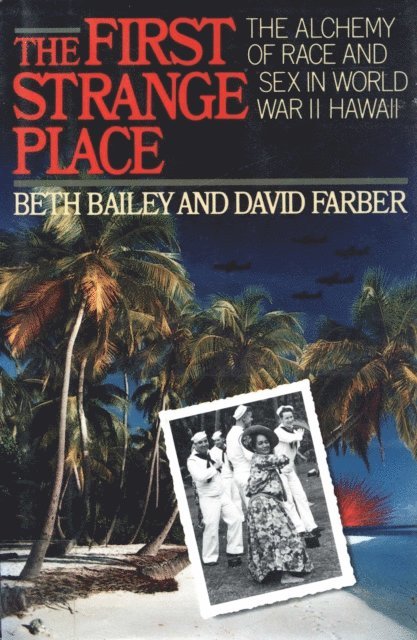
As the forward base and staging area for all US military operations in the Pacific during World War II, Hawaii was the "first strange place" for close to a million soldiers, sailors and marines on their way to the horrors of war. But Hawaii was also the first strange place on another kind of journey, toward the new American society that would begin to emerge in the post-war era. Unlike the rigid and static social order of pre-war America, this was to be a highly mobile and volatile society of mixed racial and cultural influences, one above all in which women and minorities would increasingly demand and receive equal status. Drawing on documents, diaries, memoirs and interviews, Beth Bailey and David Farber show how these unprecedented changes were tested and explored in the highly charged environment of wartime Hawaii.