David Harriman – författare
Visar alla böcker från författaren David Harriman. Handla med fri frakt och snabb leverans.
4 produkter
4 produkter
Häftad, Engelska, 2010
298 kr
Skickas inom 5-8 vardagar
Häftad, Engelska, 1999
406 kr
Skickas inom 5-8 vardagar
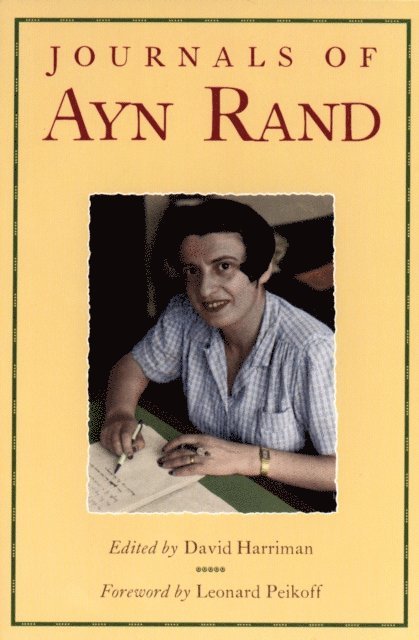
The private journals of one of the most influential writers of the twentieth century reveal the progression of Rand's literary and philosophical ideals.
E-bok
Engelska, 1999314 kr
Läs direkt efter köp
Rarely has a writer and thinker of the stature of Ayn Rand afforded us access to her most intimate thoughts and feelings. From Journals of Ayn Rand, we gain an invaluable new understanding and appreciation of the woman, the artist, and the philosopher, and of the enduring legacy she has left us.Rand comes vibrantly to life as an untried screenwriter in Hollywood, creating stories that reflect her youthful vision of the world. We see her painful memories of communist Russia and her struggles to convey them in We the Living. Most fascinating is the intricate, step-by-step process through which she created the plots and characters of her two masterworks, The Fountainhead and Atlas Shrugged, and the years of painstaking research that imbued the novels with their powerful authenticity. Complete with reflections on her legendary screenplay concerning the making of the atomic bomb and tantalizing descriptions of projects cut short by her death, Journals of Ayn Rand illuminates the mind and heart of an extraordinary woman as no biography or memoir ever could. On these vivid pages, Ayn Rand lives.
E-bok
Engelska, 201071 kr
Läs direkt efter köp
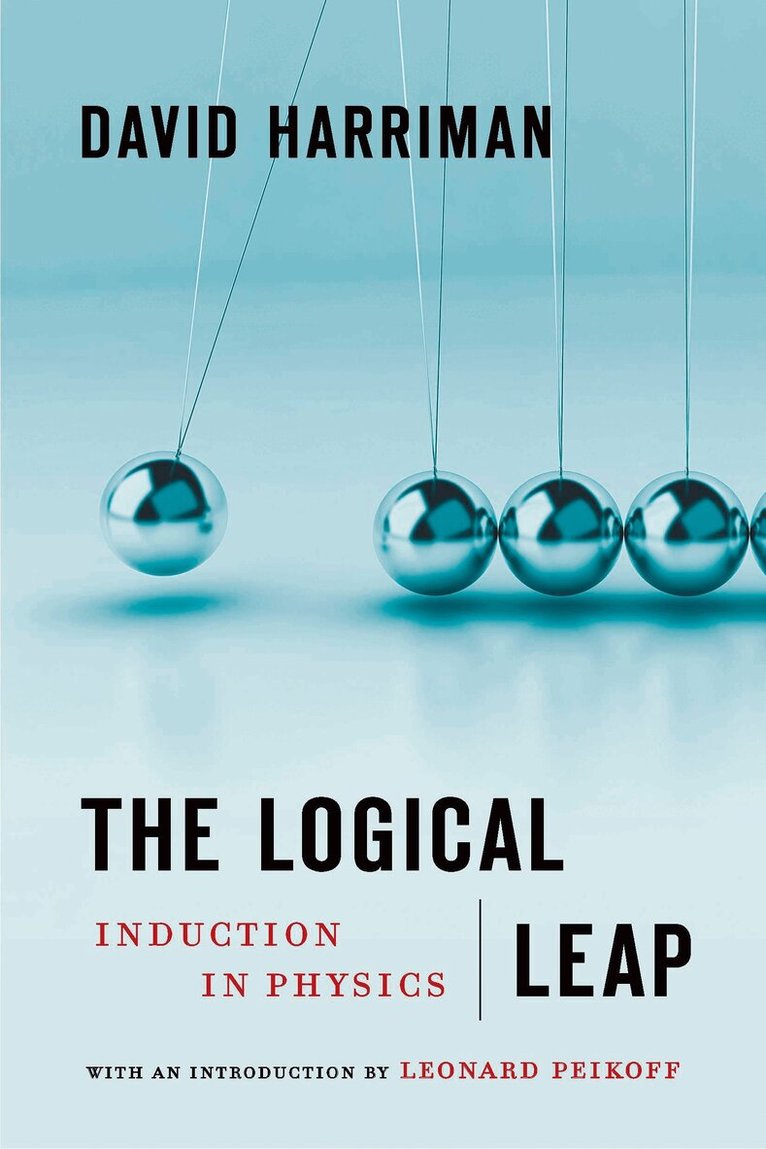
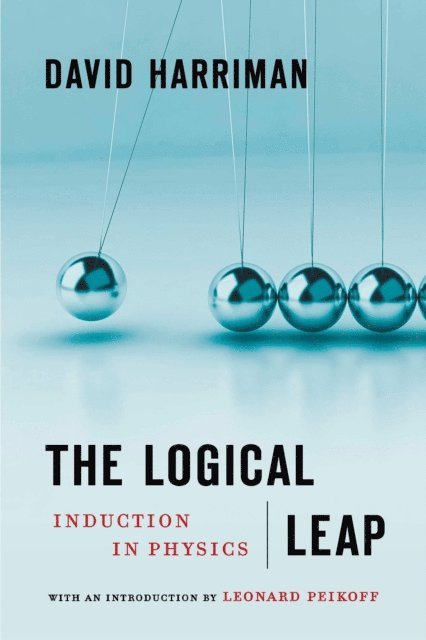
A groundbreaking solution to the problem of induction, based on Ayn Rand''s theory of concepts. Inspired by and expanding on a series of lectures presented by Leonard Peikoff, David Harriman presents a fascinating answer to the problem of induction-the epistemological question of how we can know the truth of inductive generalizations. Ayn Rand presented her revolutionary theory of concepts in her book Introduction to Objectivist Epistemology. As Dr. Peikoff subsequently explored the concept of induction, he sought out David Harriman, a physicist who had taught philosophy, for his expert knowledge of the scientific discovery process. Here, Harriman presents the result of a collaboration between scientist and philosopher. Beginning with a detailed discussion of the role of mathematics and experimentation in validating generalizations in physics-looking closely at the reasoning of scientists such as Galileo, Kepler, Newton, Lavoisier, and Maxwell-Harriman skillfully argues that the inductive method used in philosophy is in principle indistinguishable from the method used in physics.