David Hatherly - Böcker
Visar alla böcker från författaren David Hatherly. Handla med fri frakt och snabb leverans.
5 produkter
5 produkter
806 kr
Skickas inom 7-10 vardagar
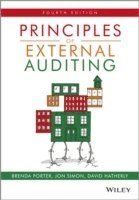
Principles of External Auditing has become established as one of the leading textbooks for students studying auditing. Striking a careful balance between theory and practice, the book describes and explains, in non-technical language, the nature of the audit function and the principles of the audit process.The book covers international auditing and accounting standards and relevant statute and case law. It explains the fundamental concepts of auditing and takes the reader through the various stages of the audit process. It also discusses topical aspects of auditing such as legal liability, audit risk, quality control, and the impact of information technology.Brenda Porter is currently visiting Professor at Exeter University and Chulalongkorn University, Bangkok.
Audit and the Art of Thinking Differently
Making the Connections that Inspire a Better Future
Häftad, Engelska, 2026
665 kr
Kommande
By thinking differently about audit, this exciting book establishes that the conceptual core of audit itself is the art of thinking differently: the making of those new connections that inspire the creativity and confidence to challenge established thinking and provide actionable insight. Audit is reconceptualised as a vital, creative, engine of progress – in society, the economy, the environment and in the appropriate use of technology. Progress requires confidence in the future. Audit addresses whether an audited entity is deserving of confidence and capable of developing - with deserved confidence flowing from creativity, sustainability, resilience and fair treatment. Audit becomes a form of social conscience, responding to, evaluating and influencing the ideas and ideals that a society or an entity within a society holds dear. Through such framing, audit no longer observes from the sidelines but drives progress in business and society more generally. Whilst audit’s traditional notions of conformity, control and compliance can be readily captured by a machine, the insight, imagination and inspiration that comes from thinking differently is fundamentally human. In this respect, the future of audit and of humanity converge. This book is not just for auditors and accountants concerned about the future of their profession but is an invitation to all with an interest in the future well-being of business and society to reformulate how they view audit.
Audit and the Art of Thinking Differently
Making the Connections that Inspire a Better Future
Inbunden, Engelska, 2026
2 325 kr
Kommande
By thinking differently about audit, this exciting book establishes that the conceptual core of audit itself is the art of thinking differently: the making of those new connections that inspire the creativity and confidence to challenge established thinking and provide actionable insight. Audit is reconceptualised as a vital, creative, engine of progress – in society, the economy, the environment and in the appropriate use of technology. Progress requires confidence in the future. Audit addresses whether an audited entity is deserving of confidence and capable of developing - with deserved confidence flowing from creativity, sustainability, resilience and fair treatment. Audit becomes a form of social conscience, responding to, evaluating and influencing the ideas and ideals that a society or an entity within a society holds dear. Through such framing, audit no longer observes from the sidelines but drives progress in business and society more generally. Whilst audit’s traditional notions of conformity, control and compliance can be readily captured by a machine, the insight, imagination and inspiration that comes from thinking differently is fundamentally human. In this respect, the future of audit and of humanity converge. This book is not just for auditors and accountants concerned about the future of their profession but is an invitation to all with an interest in the future well-being of business and society to reformulate how they view audit.
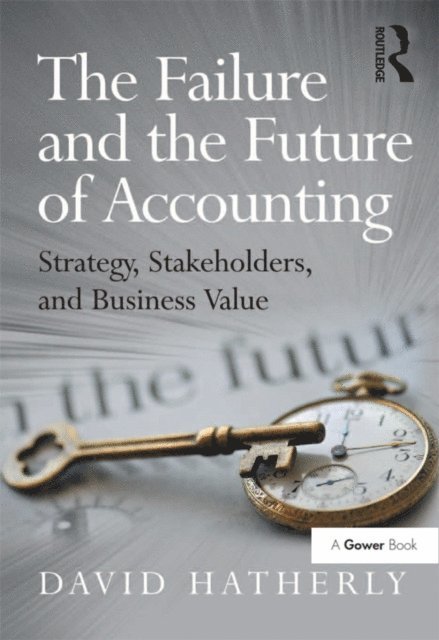
Failure and the Future of Accounting
Strategy, Stakeholders, and Business Value
Häftad, Engelska, 2024
594 kr
Skickas inom 10-15 vardagar
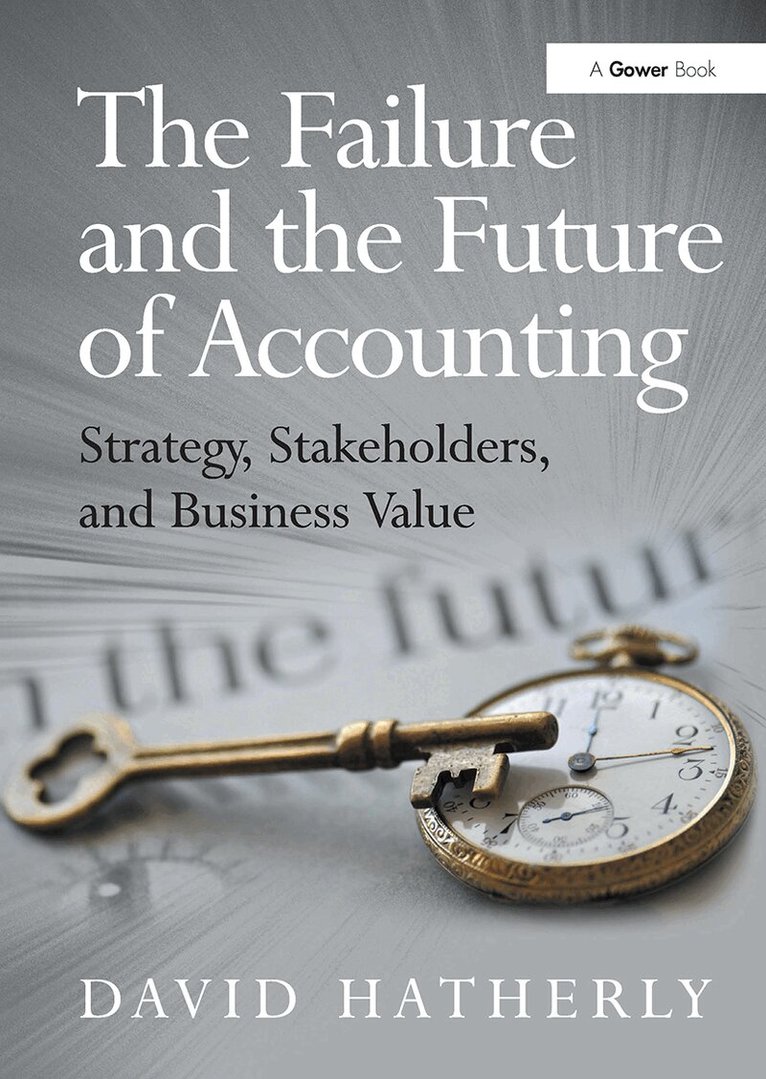
In The Failure and the Future of Accounting, David Hatherly rethinks accounting in the light of a financial crisis which exposed its limitations. He reminds us that in the run up to 2008 the accounts of financial institutions reported increasing profits and healthy balance sheets whilst their business models were undermining their own financial health and the economy. Accounts failed to provide appropriate feedback on business performance. This failure illustrated a general problem. There is a need in all companies for better alignment between the business model and the accounting model. To understand the performance of the business we need to know how much value is created and how value is created, who it is created for, what kind of value is created and how it is measured. Here, Professor Hatherly provides an accounting model that addresses all these questions. Coordinating business as strategy, business as a stakeholder network and business as value, the four slice (4S) accounting model overcomes the complexity and incoherence of existing accounting standards. It allows managers and shareholders to analyse the effectiveness of the business model and for management to be held to account. It prevents the misreporting of speculative gains as distributable income and therefore allows capital to be better allocated towards productive enterprise, making financial crises less likely. With its insights into both accounting and business more generally, this book is essential reading for accountants and accountancy students and for those running businesses of any description.
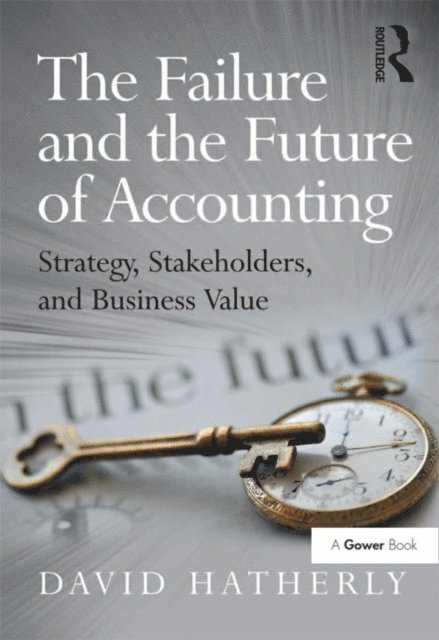
Failure and the Future of Accounting
Strategy, Stakeholders, and Business Value
Inbunden, Engelska, 2013
2 220 kr
Skickas inom 10-15 vardagar
In The Failure and the Future of Accounting, David Hatherly rethinks accounting in the light of a financial crisis which exposed its limitations. He reminds us that in the run up to 2008 the accounts of financial institutions reported increasing profits and healthy balance sheets whilst their business models were undermining their own financial health and the economy. Accounts failed to provide appropriate feedback on business performance. This failure illustrated a general problem. There is a need in all companies for better alignment between the business model and the accounting model. To understand the performance of the business we need to know how much value is created and how value is created, who it is created for, what kind of value is created and how it is measured. Here, Professor Hatherly provides an accounting model that addresses all these questions. Coordinating business as strategy, business as a stakeholder network and business as value, the four slice (4S) accounting model overcomes the complexity and incoherence of existing accounting standards. It allows managers and shareholders to analyse the effectiveness of the business model and for management to be held to account. It prevents the misreporting of speculative gains as distributable income and therefore allows capital to be better allocated towards productive enterprise, making financial crises less likely. With its insights into both accounting and business more generally, this book is essential reading for accountants and accountancy students and for those running businesses of any description.