David Hendy – författare
Visar alla böcker från författaren David Hendy. Handla med fri frakt och snabb leverans.
14 produkter
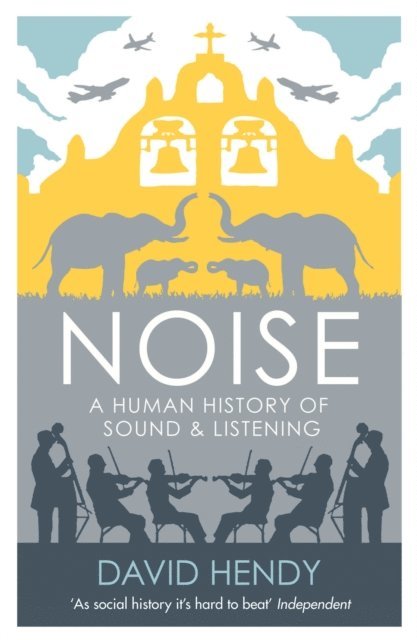
Noise
A Human History of Sound and Listening
Av David Hendy
E-bok, 2013
84 kr
Lägg i varukorg
What if history had a sound track? What would it tell us about ourselves? Based on a thirty-part BBC Radio series and podcast, Noise explores the human dramas that have revolved around sound at various points in the last 100,000 years, allowing us to think in fresh ways about the meaning of our …
Public Service Broadcasting
Av David Hendy
Häftad, 2013
430 kr
Lägg i varukorg
Challenging the opinion that public service broadcasting is a thing of the past, David Hendy explains its importance in the present – and in the future. Written by a leading expert in the field, this book explores the development of public service broadcasting, outlining the key debates and issues, …
Radio in the Global Age
Av David Hendy
Inbunden, 2000
846 kr
Lägg i varukorg
Radio in the Global Age offers a fresh, up-to-date, and wide-ranging introduction to the role of radio in contemporary society. It places radio, for the first time, in a global context, and pays special attention to the impact of the Internet, digitalization and globalization on the …
Radio in the Global Age
Av David Hendy
Häftad, 2000
273 kr
Lägg i varukorg
Radio in the Global Age offers a fresh, up-to-date, and wide-ranging introduction to the role of radio in contemporary society. It places radio, for the first time, in a global context, and pays special attention to the impact of the Internet, digitalization and globalization on the …
Radio in the Global Age
Av David Hendy
E-bok, 2013
310 kr
Lägg i varukorg
Radio in the Global Age offers a fresh, up-to-date, and wide-ranging introduction to the role of radio in contemporary society. It places radio, for the first time, in a global context, and pays special attention to the impact of the Internet, digitalization and globalization on the …
Public Service Broadcasting
Av David Hendy
E-bok, 2013
468 kr
Lägg i varukorg
Challenging the opinion that public service broadcasting is a thing of the past, David Hendy explains its importance in the present and in the future. Written by a leading expert in the field, this book explores the development of public service broadcasting, outlining the key debates and issues, …
Public Service Broadcasting
Av David Hendy
E-bok, 2013
468 kr
Lägg i varukorg
Challenging the opinion that public service broadcasting is a thing of the past, David Hendy explains its importance in the present – and in the future. Written by a leading expert in the field, this book explores the development of public service broadcasting, outlining the key debates and issues, …
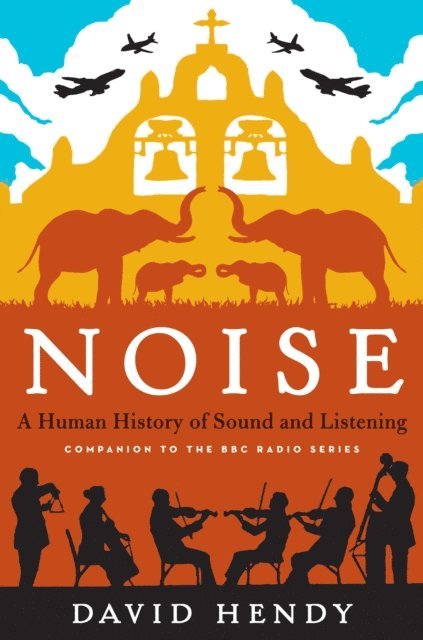
Noise
A Human History of Sound and Listening
Av David Hendy
Häftad, 2014
149 kr
Lägg i varukorg
Prehistoric drummers used natural acoustics to recreate natural sound. In classical Europe, orators turned the human voice into a lyrical instrument. In Buddhist temples, the icons' ears were exaggerated to represent their spiritual power. And in modern metropolises we are battered by the roar of …
BBC
A People's History
Av David Hendy
Häftad, 2022
158 kr
Lägg i varukorg
'Thorough and engaging ... you can't understand England without understanding the BBC' New York Times'Fascinating and informative' Daily Telegraph'A dramatic tale of innovation and determination' GuardianIn 1922, a tiny group of men and women came together to found the BBC, using what had been a …
BBC
A People's History
Av David Hendy
E-bok, 2022
122 kr
Lägg i varukorg
''Thorough and engaging ... you can''t understand England without understanding the BBC'' New York Times''Fascinating and informative'' Daily Telegraph''A dramatic tale of innovation and determination'' GuardianIn 1922, a tiny group of men and women came together to found the BBC, using what had …
Circus
The Men and Women Who Fought Nazi Germany Over the Airwaves
Av David Hendy
Inbunden, 2027
280 kr
Kommande
In 1941, a secret radio station deep in the English countryside prepared its first broadcast to occupied Europe. What followed was an hour of misinformation and slander about Hitler and his cronies - all delivered in the earthy voice of a disgruntled Nazi officer. Shocked and thrilled, ordinary …
Noise
A Human History of Sound and Listening
Av David Hendy
E-bok, 2013
147 kr
Lägg i varukorg
Prehistoric drummers used natural acoustics to recreate natural sound. In classical Europe, orators turned the human voice into a lyrical instrument. In Buddhist temples, the icons'' ears were exaggerated to represent their spiritual power. And in modern metropolises we are battered by the roar of …