David Hunter – författare
509 kr
Läs direkt efter köp
885 kr
Läs direkt efter köp
1 196 kr
Skickas inom 5-8 vardagar
904 kr
Skickas inom 5-8 vardagar
509 kr
Läs direkt efter köp
1 036 kr
Skickas inom 5-8 vardagar
1 501 kr
Skickas inom 7-10 vardagar
991 kr
Läs direkt efter köp
392 kr
Skickas inom 5-8 vardagar
973 kr
Skickas inom 10-15 vardagar
1 325 kr
Skickas inom 10-15 vardagar
590 kr
Skickas inom 10-15 vardagar
298 kr
Skickas inom 5-8 vardagar
1 629 kr
Skickas inom 5-8 vardagar
11 kr
Läs direkt efter köp
682 kr
Läs direkt efter köp
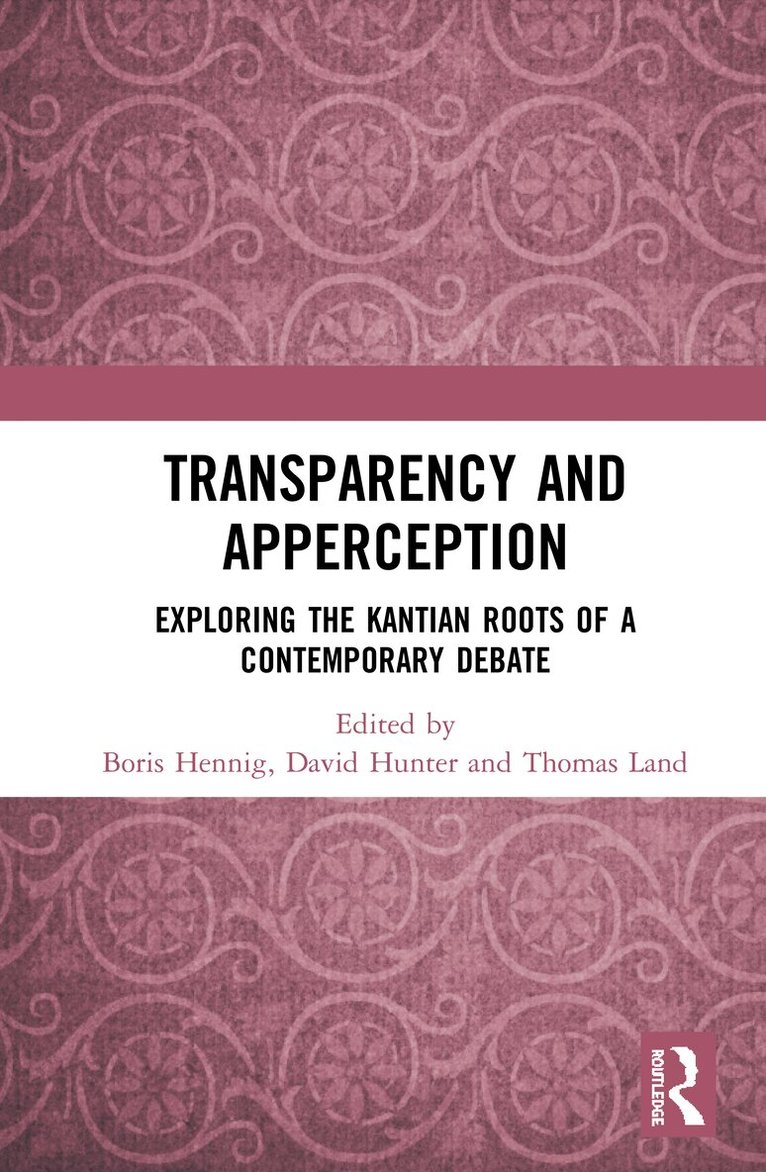
Transparency and Apperception: Exploring the Kantian Roots of a Contemporary Debate explores the links between the idea that belief is transparent and Kant’s claims about apperception.
Transparency is the idea that a person can answer questions about whether she, for instance, believes something by considering, not her own psychological states, but the objects and properties the belief is about. This marks a sharp contrast between a first-person and third-person perspective on one’s current mental states. This idea has deep roots in Kant’s doctrine of apperception, the claim that the human mind is essentially self-conscious, and Kant held that it underlies the responsibility that a person has for certain of their own mental states. Nevertheless, the idea of transparency and its roots in apperception remain obscure and give rise to difficult methodological and exegetical questions. The contributions in this work address these questions and will be required reading for anyone working on this intersection of the philosophy of mind and language, and epistemology.
The chapters in this book were originally published in a special issue of the Canadian Journal of Philosophy.
682 kr
Läs direkt efter köp
Transparency and Apperception: Exploring the Kantian Roots of a Contemporary Debate explores the links between the idea that belief is transparent and Kant’s claims about apperception.
Transparency is the idea that a person can answer questions about whether she, for instance, believes something by considering, not her own psychological states, but the objects and properties the belief is about. This marks a sharp contrast between a first-person and third-person perspective on one’s current mental states. This idea has deep roots in Kant’s doctrine of apperception, the claim that the human mind is essentially self-conscious, and Kant held that it underlies the responsibility that a person has for certain of their own mental states. Nevertheless, the idea of transparency and its roots in apperception remain obscure and give rise to difficult methodological and exegetical questions. The contributions in this work address these questions and will be required reading for anyone working on this intersection of the philosophy of mind and language, and epistemology.
The chapters in this book were originally published in a special issue of the Canadian Journal of Philosophy.
415 kr
Skickas inom 5-8 vardagar
297 kr
Skickas inom 5-8 vardagar
535 kr
Skickas inom 5-8 vardagar
415 kr
Skickas inom 5-8 vardagar
687 kr
Skickas inom 10-15 vardagar
2 227 kr
Skickas inom 10-15 vardagar
795 kr
Läs direkt efter köp
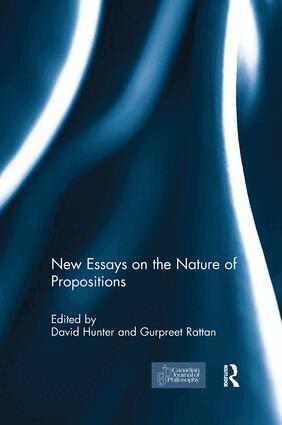
These are exciting times for philosophical theorizing about propositions, with the last 15 years seeing the development of new approaches and the emergence of new theorists. Propositions have been invoked to explain thought and cognition, the nature and attribution of mental states, language and communication, and in philosophical treatments of truth, necessity and possibility. According to Frege and Russell, and their followers, propositions are structured mind- and language-independent abstract objects which have essential and intrinsic truth-conditions.
Some recent theorizing doubts whether propositions really exist and, if they do, asks how we can grasp, entertain and know them? But most of the doubt concerns whether the abstract approach to propositions can really explain them. Are propositions really structured, and if so where does their structure come from? How does this structure form a unity, and does it need to? Are the representational and structural properties of propositions really independent of those of thinking and language? What does it mean to say that an object occurs in or is a constituent of a proposition?
The volume takes up these and other questions, both as they apply to the abstract object approach and also to the more recently developed approaches. While the volume as a whole does not definitively and unequivocally reject the abstract objection approach, for the most part, the papers explore new critical and constructive directions. This book was originally published as a special issue of the Canadian Journal of Philosophy.
795 kr
Läs direkt efter köp
These are exciting times for philosophical theorizing about propositions, with the last 15 years seeing the development of new approaches and the emergence of new theorists. Propositions have been invoked to explain thought and cognition, the nature and attribution of mental states, language and communication, and in philosophical treatments of truth, necessity and possibility. According to Frege and Russell, and their followers, propositions are structured mind- and language-independent abstract objects which have essential and intrinsic truth-conditions.
Some recent theorizing doubts whether propositions really exist and, if they do, asks how we can grasp, entertain and know them? But most of the doubt concerns whether the abstract approach to propositions can really explain them. Are propositions really structured, and if so where does their structure come from? How does this structure form a unity, and does it need to? Are the representational and structural properties of propositions really independent of those of thinking and language? What does it mean to say that an object occurs in or is a constituent of a proposition?
The volume takes up these and other questions, both as they apply to the abstract object approach and also to the more recently developed approaches. While the volume as a whole does not definitively and unequivocally reject the abstract objection approach, for the most part, the papers explore new critical and constructive directions. This book was originally published as a special issue of the Canadian Journal of Philosophy.
32 kr
Läs direkt efter köp
32 kr
Läs direkt efter köp
32 kr
Läs direkt efter köp
71 kr
Läs direkt efter köp
428 kr
Skickas inom 3-6 vardagar