David J. Livingstone - Böcker
Visar alla böcker från författaren David J. Livingstone. Handla med fri frakt och snabb leverans.
5 produkter
5 produkter
908 kr
Skickas inom 7-10 vardagar
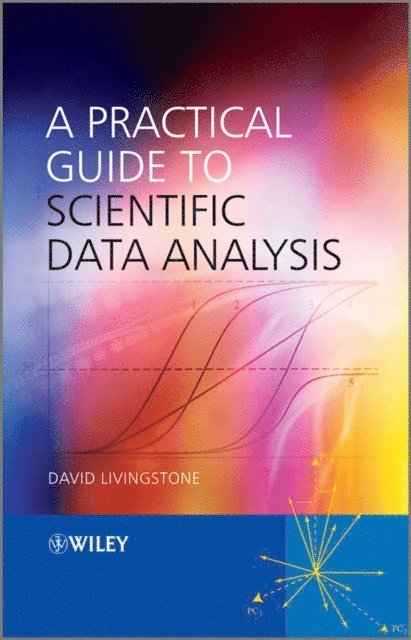
Inspired by the author's need for practical guidance in the processes of data analysis, A Practical Guide to Scientific Data Analysis has been written as a statistical companion for the working scientist. This handbook of data analysis with worked examples focuses on the application of mathematical and statistical techniques and the interpretation of their results. Covering the most common statistical methods for examining and exploring relationships in data, the text includes extensive examples from a variety of scientific disciplines.The chapters are organised logically, from planning an experiment, through examining and displaying the data, to constructing quantitative models. Each chapter is intended to stand alone so that casual users can refer to the section that is most appropriate to their problem.Written by a highly qualified and internationally respected author this text: Presents statistics for the non-statisticianExplains a variety of methods to extract information from dataDescribes the application of statistical methods to the design of “performance chemicals”Emphasises the application of statistical techniques and the interpretation of their resultsOf practical use to chemists, biochemists, pharmacists, biologists and researchers from many other scientific disciplines in both industry and academia.
585 kr
Skickas inom 7-10 vardagar
This book provides students in human geography with a vital resource - a collection of writings critical to understanding the field as a whole and revealing the interactions of its component parts. It is designed to give students ready access to the literature their studies are most likely to lead them to consult. The book is divided into five parts. Parts I and II describe the nature of the enterprise and show the origins and current state of thinking on central issues. Part III is concerned with interactions between nature, culture and landscape. Part IV considers area differences and geographic units such as region, place and locality. Part V provides insights into the concepts of space, time and space-time. The editors have provided a general introduction, introductions to each part and contextual notes for each chapter. Each part concludes with sections of further reading by subject and the volume ends with a time chart of the main developments in geography.This collection of seminal articles aims to be revealing, challenging and engaging. It amply demonstrates why human geography is a subject worthy of the student's engagement and provides a vital and rewarding resource for its understanding.
1 095 kr
Skickas inom 10-15 vardagar
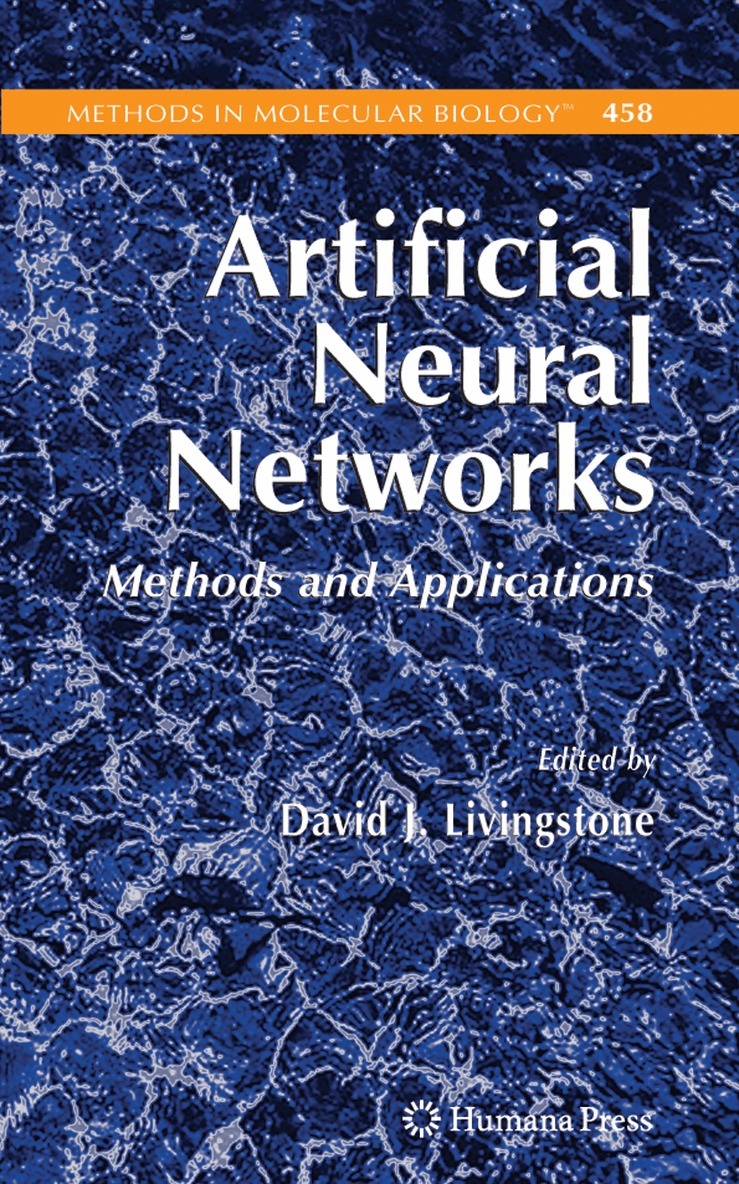
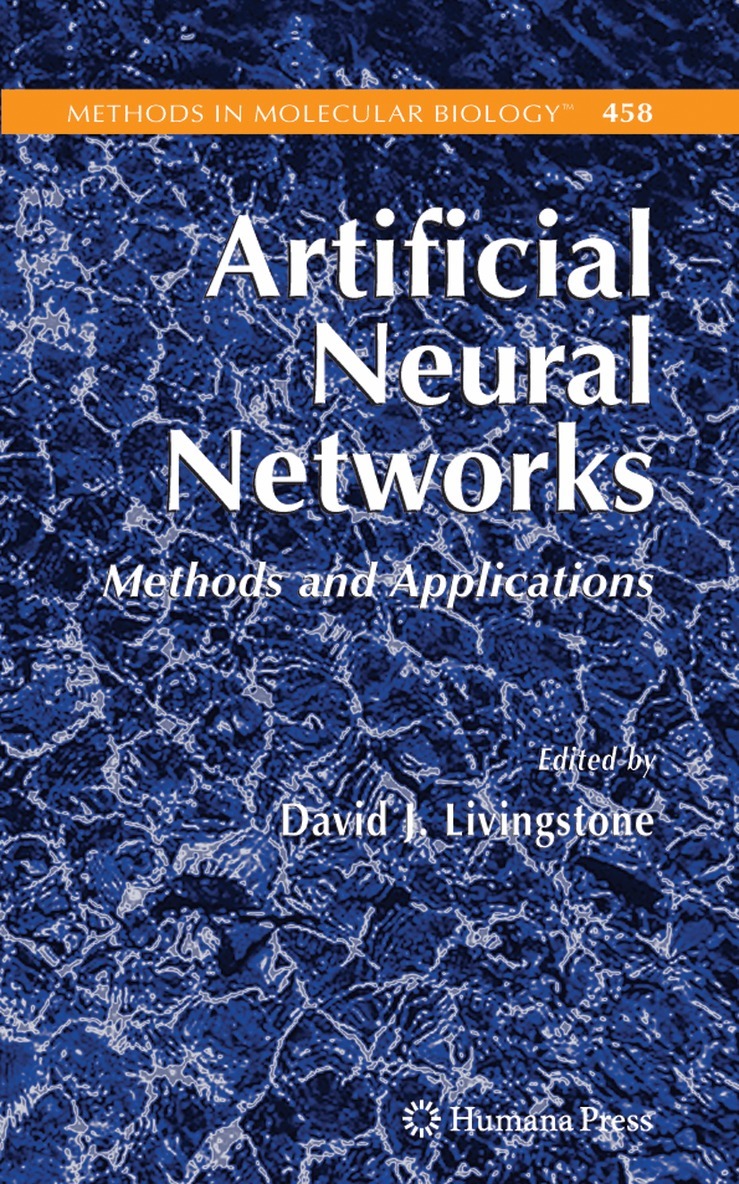
As an extension of artificial intelligence research, artificial neural networks (ANN) aim to simulate intelligent behavior by mimicking the way that biological neural networks function. In Artificial Neural Networks, an international panel of experts report the history of the application of ANN to chemical and biological problems, provide a guide to network architectures, training and the extraction of rules from trained networks, and cover many cutting-edge examples of the application of ANN to chemistry and biology. In the tradition of the highly successful Methods in Molecular Biology™ series, this volume exhibits clear, easy-to-use information with many step-by-step laboratory protocols.Comprehensive and state-of-the-art, Artificial Neural Networks is an excellent guide to this accelerating technological field of study.
987 kr
Skickas inom 10-15 vardagar
As an extension of artificial intelligence research, artificial neural networks (ANN) aim to simulate intelligent behavior by mimicking the way that biological neural networks function. In Artificial Neural Networks, an international panel of experts report the history of the application of ANN to chemical and biological problems, provide a guide to network architectures, training and the extraction of rules from trained networks, and cover many cutting-edge examples of the application of ANN to chemistry and biology. In the tradition of the highly successful Methods in Molecular Biology™ series, this volume exhibits clear, easy-to-use information with many step-by-step laboratory protocols.Comprehensive and state-of-the-art, Artificial Neural Networks is an excellent guide to this accelerating technological field of study.
2 617 kr
Skickas inom 5-8 vardagar
This book brings together drug design practitioners, all leaders in their field, who are actively advancing the field of quantitative methods to guide drug discovery, from structure-based design to empirical statistical models - from rule-based approaches to toxicology to the fields of bioinformatics and systems biology. The aim of the book is to show how various facets of the drug discovery process can be addressed in a quantitative fashion (ie: numerical analysis to enable robust predictions to be made). Each chapter includes a brief review of the topic showing the historical development of quantitative approaches, a survey/summary of the current state-of-the-art, a selection of well chosen examples with some worked through and an appreciation of what problems remain to be overcome as well as an indication of how the field may develop. After an overview of quantitative approaches to drug design the book describes the development of concepts of "drug-like properties", of quantitative structure-activity relationships and molecular modelling, and in particular, structure-based design approaches to guide lead optimisation. How to manage and describe chemical structures, underpins all quantitative approaches to drug design and these are described in the following chapters. The next chapter covers the value of a quantitative approach, and also the challenge which is to describe the confidence in any prediction, and methods to assess predictive model quality. The later chapters describe the application of quantitative approaches to describing and optimising potency, selectivity, drug metabolism and pharmacokinetic properties and toxicology, and the design of chemical libraries to feed the screening approaches to lead generation that underpin modern drug discovery. Finally the book describes the impact of bioinformatics, current status of predicting ligand affinity direct from the protein structure, and the application of quantitative approaches to predicting environmental risk. The book provides a summary of the current state-of-the-art in quantitative approaches to drug design, and future opportunities, but it also provides inspiration to drug design practitioners to apply careful design, to make best use of the quantitative methods that are available, while continuing to improve them. Drug discovery still relies heavily on random screening and empirical screening cascades to identify leads and drugs and the process has many failures to deliver only a small handful of drugs. With the rapidly escalating costs of drug discovery and development together with spiralling delivery, quantitative approaches hold the promise of shifting the balance of success, to enable drug discovery to maintain its economic viability.