David Kachlík - Böcker
Visar alla böcker från författaren David Kachlík. Handla med fri frakt och snabb leverans.
3 produkter
3 produkter
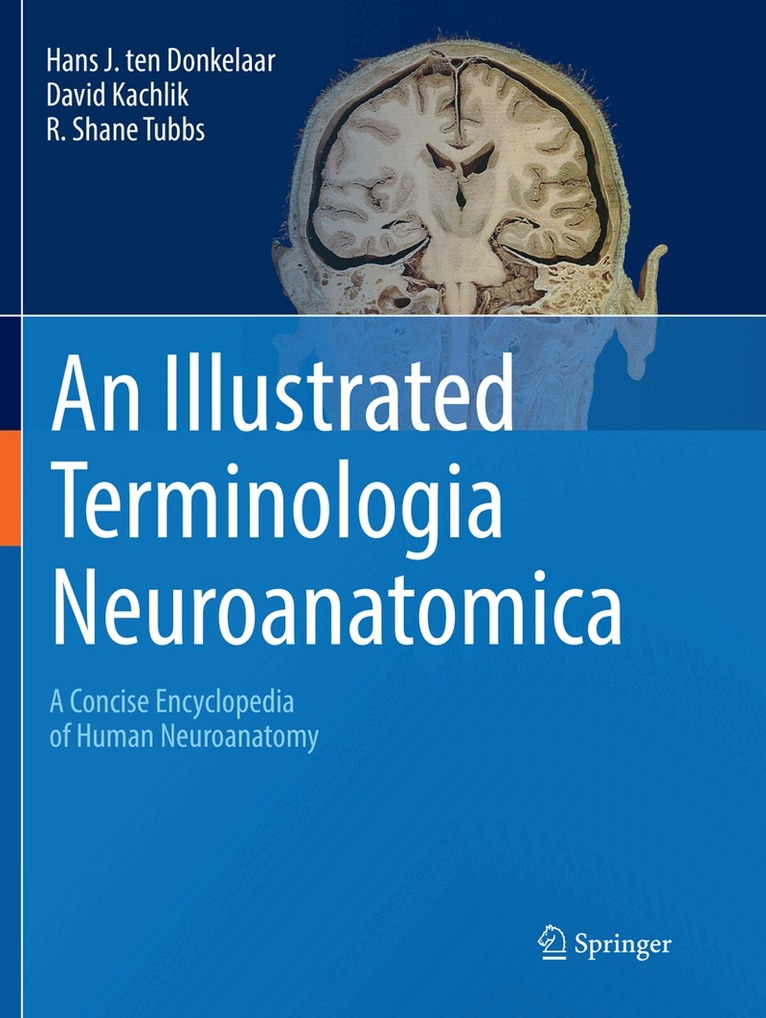
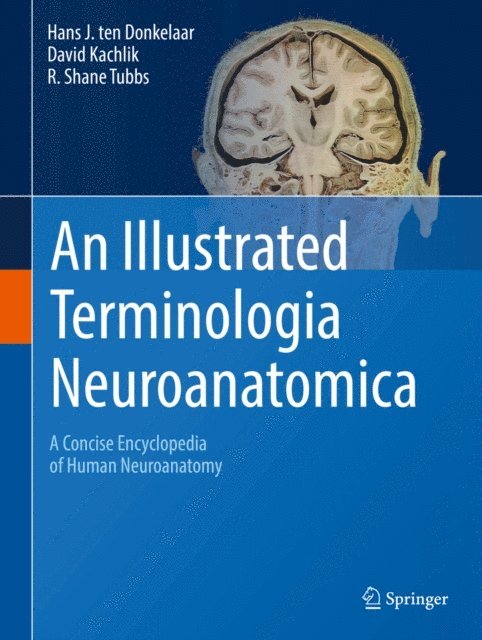
Illustrated Terminologia Neuroanatomica
A Concise Encyclopedia of Human Neuroanatomy
Häftad, Engelska, 2018
3 046 kr
Skickas inom 10-15 vardagar
This book is unique in that it provides the reader with the most up-to-date terminology used to describe the human nervous system (central and peripheral) and the related sensory organs, i.e., the Terminologia Neuroanatomica (TNA), the official terminology of the IFAA (International Federation of Associations of Anatomists). The book provides a succinct but detailed review of the neuroanatomical structures of the human body and will greatly benefit not only various specialists such as (neuro)anatomists, neurologists and neuroscientists, but also students taking neuroanatomy and neuroscience courses. The book offers a high yield, combined presentation of neuroanatomical illustrations and text and provides the reader a ‘one-stop source’ for studying the intricacies of the human nervous system and its sensory organs. It includes an alphabetical list of official English terms and synonyms with the official Latin terms and synonyms from the TNA. With regard to the entries, the nameof the item in standardized English is provided, followed by synonyms and the official TNA Latin term, Latin synonyms and eponyms, a short description and in many cases one or more illustrations. To facilitate the use of illustrations, certain entries such as the gyri or sulci of the cerebral cortex are presented together with extensive cross-references. Terms that form part of a certain structure (such as the amygdaloid body, the thalamus and the hypothalamus) are listed under the respective structure. Segments and branches of arteries are discussed under the main artery, for example the A1–A5 segments under the anterior cerebral artery. Most nerves can be found following their origin from the brachial, cervical and lumbosacral plexuses. However, the major nerves of the limbs are discussed separately, as are the cranial nerves. Nuclei can be found by their English name or under Nuclei by their eponym.
2 178 kr
Skickas inom 10-15 vardagar
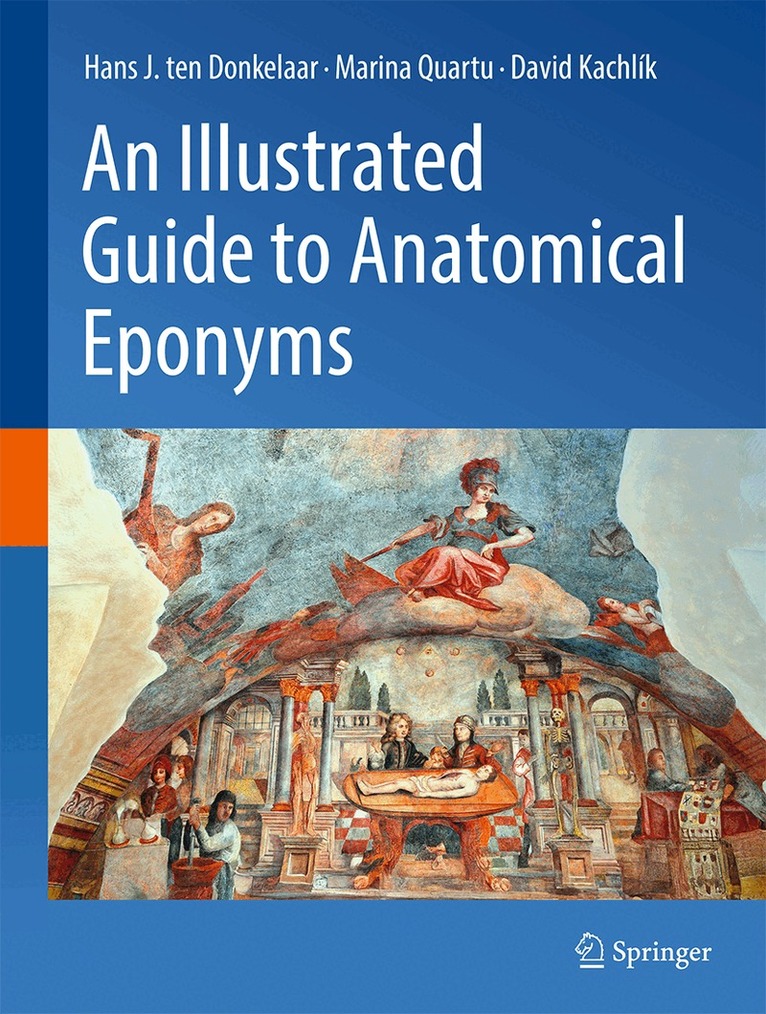
This book provides a comprehensive overview of the anatomical eponyms in use in anatomy and in clinical disciplines. It includes brief descriptions of those to whom eponyms were given with personal data, their relevant publications and illustrations. For the illustrations, engravings, portraits or photographs are included as well as examples of the original illustrations or newer ones showing what is meant by a certain eponym. The book contains three Sections: Section I The Classical Anatomical Eponyms, in which the major classical eponyms on arteries, bands, bodies, bundles, canals, corpuscles, ducts, fasciae, fibres, folds, foramina, fossae, ganglia, glands, ligaments, membranes, muscles, nerves, nodes, nuclei, plexuses, spaces, triangles, tubercles, valves and veins are summarized. This Section clearly shows that in various countries, different eponyms are given for the same structure. Section II lists the anatomical eponyms together with some relevant histological, embryological and anthropological eponyms, from A-Z. In Section III, anatomical eponyms in use in Abdominal Surgery, Dentistry, Neurology, Obstetrics and Gynaecology, Oncology, Ophthalmology, Orthopaedics, Otology, Phlebology, and Radiology of the Digestive System are discussed. Sections II and III are both abundantly illustrated. The book is intended for advanced medical students, anatomists, and clinicians using anatomical eponyms in their daily practice. Unique to the book is the combination of descriptions of the anatomical eponyms with illustrations.
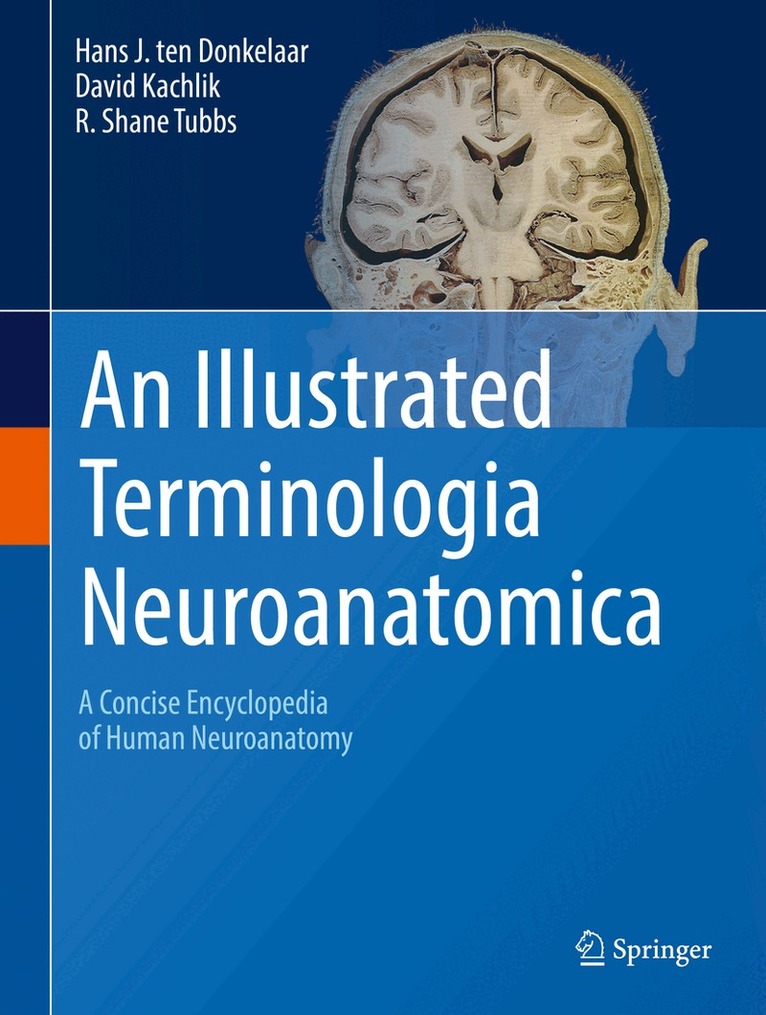
Illustrated Terminologia Neuroanatomica
A Concise Encyclopedia of Human Neuroanatomy
Inbunden, Engelska, 2018
3 046 kr
Skickas inom 10-15 vardagar
This book is unique in that it provides the reader with the most up-to-date terminology used to describe the human nervous system (central and peripheral) and the related sensory organs, i.e., the Terminologia Neuroanatomica (TNA), the official terminology of the IFAA (International Federation of Associations of Anatomists). The book provides a succinct but detailed review of the neuroanatomical structures of the human body and will greatly benefit not only various specialists such as (neuro)anatomists, neurologists and neuroscientists, but also students taking neuroanatomy and neuroscience courses. The book offers a high yield, combined presentation of neuroanatomical illustrations and text and provides the reader a ‘one-stop source’ for studying the intricacies of the human nervous system and its sensory organs. It includes an alphabetical list of official English terms and synonyms with the official Latin terms and synonyms from the TNA. With regard to the entries, the nameof the item in standardized English is provided, followed by synonyms and the official TNA Latin term, Latin synonyms and eponyms, a short description and in many cases one or more illustrations. To facilitate the use of illustrations, certain entries such as the gyri or sulci of the cerebral cortex are presented together with extensive cross-references. Terms that form part of a certain structure (such as the amygdaloid body, the thalamus and the hypothalamus) are listed under the respective structure. Segments and branches of arteries are discussed under the main artery, for example the A1–A5 segments under the anterior cerebral artery. Most nerves can be found following their origin from the brachial, cervical and lumbosacral plexuses. However, the major nerves of the limbs are discussed separately, as are the cranial nerves. Nuclei can be found by their English name or under Nuclei by their eponym.