David Kovacs – författare
Visar alla böcker från författaren David Kovacs. Handla med fri frakt och snabb leverans.
10 produkter
10 produkter
Inbunden, Engelska, 2026
2 519 kr
Skickas inom 5-8 vardagar
This volume presents a newly edited text of Euripides' Electra with a scene-by-scene and line-by-line commentary that addresses a wide variety of questions, including the nature of Euripidean tragedy. In his Introduction and across several discussions in the commentary, David Kovacs presents an alternative to the current scholarly consensus on Euripides. Scholars following this consensus tell us that Euripides' play is a cynical take on the old story of Orestes' and Electra's revenge on Aegisthus and Clytaemestra. Both of the principal figures, we are told, are morally diminished, Electra inter alia by her excessive hatred of Clytaemestra and Orestes by his cynical reliance on Aegisthus' hospitable nature to get himself invited to the sacrifice at which he will kill his host. It is also alleged that this play virtually excludes the gods, who are part and parcel of the tragic genre. Kovacs shows that these and similar unfavourable judgements fail to take note of the practice of the other tragedians and also overlook evidence from Euripides' text, such as the frequent mention of the gods, that locate the play squarely within the tragic genre. What emerges is a play that is well constructed and thematically integrated; a play whose novelties--and an Athenian audience would not have wanted a play on an oft-treated myth to lack novelty--are all new ways of producing tragic effects found also in Aeschylus and Sophocles; a play that gives greater scope to the tragic view of the universe than even the corresponding plays of Aeschylus and Sophocles, thereby confirming Aristotle's judgement that Euripides is 'the most tragic of the poets'; in short, a play that can be called a tragedy without qualification. The gap between Euripides' original manuscript and the earliest complete copy we possess is nearly two millennia. This volume makes a considerable number of suggestions for improving a Greek text that has been badly corrupted over this period of manual copying.
Inbunden, Engelska, 2020
660 kr
Skickas inom 7-10 vardagar
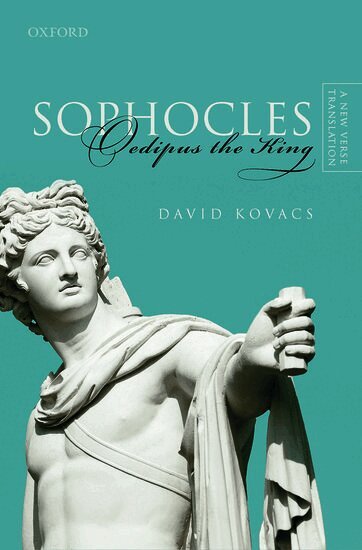
Oedipus the King is the best-known play we have from the pen of Sophocles and was recognized as a masterpiece in Aristotle's Poetics, which cites the play more often than any other as an example of how to write tragedy. The principal character is the king of a city ravaged by a mysterious plague, who consults Apollo at Delphi and is told that the plague will end only when those who killed the previous king, Laius, are found and punished. He launches an investigation, in the course of which he learns not only that he is himself the killer, but that Laius was his father and Laius' widow, whom he married, his own mother. As a result of this revelation Oedipus changes from being a respected king and conscientious investigator into a polluted and self-blinded outcast. This volume presents a highly-polished English verse translation of Sophocles' powerful play which renders both the beauty of his language and the horror of the events being dramatized. A detailed introduction and notes clearly elucidate how the plot is constructed and the meaning this construction implies, as well as how Sophocles ably concealed the fact that his characters act in ways which differ from what we expect in real life. It also addresses influential misinterpretations, thereby offering an accessible and authoritative introduction to the play that will be of benefit to a wide range of readers.
Häftad, Engelska, 2020
260 kr
Skickas inom 5-8 vardagar
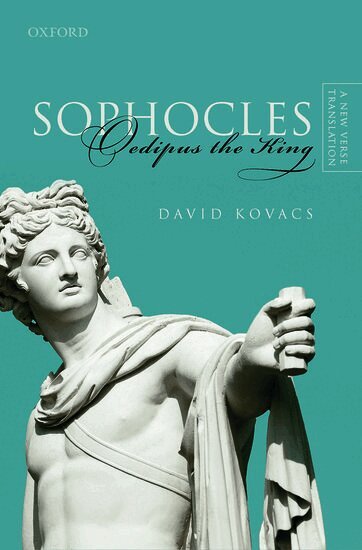
Oedipus the King is the best-known play we have from the pen of Sophocles and was recognized as a masterpiece in Aristotle's Poetics, which cites the play more often than any other as an example of how to write tragedy. The principal character is the king of a city ravaged by a mysterious plague, who consults Apollo at Delphi and is told that the plague will end only when those who killed the previous king, Laius, are found and punished. He launches an investigation, in the course of which he learns not only that he is himself the killer, but that Laius was his father and Laius' widow, whom he married, his own mother. As a result of this revelation Oedipus changes from being a respected king and conscientious investigator into a polluted and self-blinded outcast. This volume presents a highly-polished English verse translation of Sophocles' powerful play which renders both the beauty of his language and the horror of the events being dramatized. A detailed introduction and notes clearly elucidate how the plot is constructed and the meaning this construction implies, as well as how Sophocles ably concealed the fact that his characters act in ways which differ from what we expect in real life. It also addresses influential misinterpretations, thereby offering an accessible and authoritative introduction to the play that will be of benefit to a wide range of readers.
Inbunden, Engelska, 2018
1 893 kr
Skickas inom 5-8 vardagar
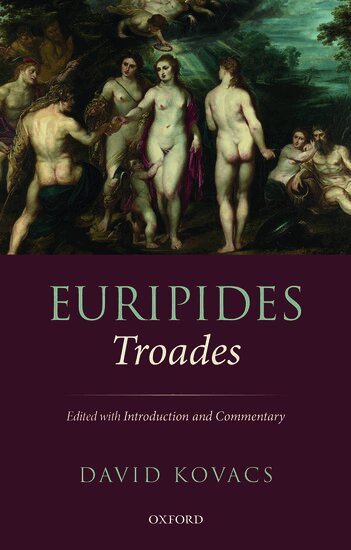
This volume presents a newly edited text of Euripides' Troades, with a scene-by-scene and line-by-line commentary that brings centuries of classical scholarship to bear on a wide variety of questions. These include the interpretation of the play as part of a trilogy (its companion plays were Alexandros and Palamedes, of which we have only fragments), the contribution of the various scenes, speeches, and choral odes to the play, the style and usage of Euripides, and the stage action of the original performance. Since the play was performed in 415, shortly after the Athenian subjugation of Melos, it has frequently been interpreted as a criticism of Athenian foreign policy. The Introduction provides numerous converging arguments against this view and also shows that those who hold it are forced to ignore a greate deal of the text and cannot account for the Helen episode. The commentary, in addition to discussing the topics named above, interrogates the play's intellectual content, topics such as the nature of human success, vicissitude in mortal life, and the workings of the gods in the world, and re-evaluates the way the play's first audience were meant to react to the worldviews of Hecuba and others. It also examines carefully all the places where the text is insecure, places where there are significant variants or where what is transmitted is open to challenge. The book is written with the needs of both comparative beginners and seasoned classical scholars in mind.
Del 484 - Loeb Classical Library
Children of Heracles. Hippolytus. Andromache. Hecuba
Inbunden, Engelska, 1995
357 kr
Skickas inom 5-8 vardagar
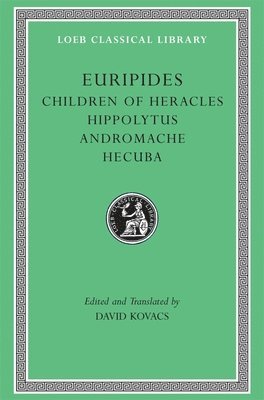
Four plays by ancient Greece’s third great tragedian.One of antiquity’s greatest poets, Euripides has been prized in every age for the pathos, terror, and intellectual probing of his dramatic creations. The new Loeb Classical Library edition of his plays is in six volumes.Volume II contains Children of Heracles, about Athens’ protection of the dead hero’s children; Hippolytus, which tells of the punishment Aphrodite inflicts on a man who refuses to worship her; Andromache and Hecuba, the tragic stories of two noble Trojan women after their city’s fall.
Del 12 - Loeb Classical Library
Cyclops. Alcestis. Medea
Inbunden, Engelska, 1994
357 kr
Skickas inom 5-8 vardagar
Three plays by ancient Greece’s third great tragedian.One of antiquity’s greatest poets, Euripides has been prized in every age for the pathos, terror, and intellectual probing of his dramatic creations. The new Loeb Classical Library edition of his plays is in six volumes.In Volume I of the edition are Cyclops, the only complete satyr play that has survived from antiquity; Alcestis, the story of a woman who agrees, in order to save her husband’s life, to die in his place; and Medea, a revenge tragedy in which Medea kills her own children to punish their father.
Del 9 - Loeb Classical Library
Suppliant Women. Electra. Heracles
Inbunden, Engelska, 1998
357 kr
Skickas inom 5-8 vardagar
Three plays by ancient Greece’s third great tragedian.One of antiquity’s greatest poets, Euripides has been prized in every age for the pathos, terror, and intellectual probing of his dramatic creations. The new Loeb Classical Library edition of his plays is in six volumes.Volume III contains three plays. Suppliant Women reflects on the rule of law; Electra gives Euripides’ version of the legend of Clytaemestra’s murder by her children; Heracles testifies to the fragility of human happiness.
Del 10 - Loeb Classical Library
Trojan Women. Iphigenia among the Taurians. Ion
Inbunden, Engelska, 1999
357 kr
Skickas inom 5-8 vardagar
Three plays by ancient Greece’s third great tragedian.One of antiquity’s greatest poets, Euripides has been prized in every age for the pathos, terror, and intellectual probing of his dramatic creations. The new Loeb Classical Library edition of his plays is in six volumes.Three plays are in Volume IV. Trojan Women concerns the tragic unpredictability of life; Iphigenia among the Taurians and Ion exhibit tragic themes and situations but end happily with joyful reunions.
Del 11 - Loeb Classical Library
Helen. Phoenician Women. Orestes
Inbunden, Engelska, 2002
357 kr
Skickas inom 5-8 vardagar
Three plays by ancient Greece’s third great tragedian.One of antiquity’s greatest poets, Euripides has been prized in every age for the pathos, terror, and intellectual probing of his dramatic creations. The new Loeb Classical Library edition of his plays is in six volumes.Helen, in Volume V, employs an alternative history in which a virtuous and faithful Helen was falsely blamed for the actions of her divinely created double in Troy. Here too are Phoenician Women, the battle between the sons of Oedipus for control of Thebes; and Orestes, recasting Orestes’ lot after he murdered his mother.
Del 495 - Loeb Classical Library
Bacchae. Iphigenia at Aulis. Rhesus
Inbunden, Engelska, 2003
357 kr
Skickas inom 5-8 vardagar
Three plays by ancient Greece’s third great tragedian.One of antiquity’s greatest poets, Euripides has been prized in every age for the pathos, terror, and intellectual probing of his dramatic creations. The new Loeb Classical Library edition of his plays is in six volumes.In Bacchae, one of the great masterpieces of the tragic genre, Euripides tells the story of king Pentheus’ resistance to the worship of Dionysus and his horrific punishment by the god: dismemberment at the hands of Theban women. Iphigenia at Aulis, also in Volume VI, recounts the sacrifice of Agamemnon’s daughter to Artemis, the price exacted by the goddess for favorable sailing winds. Rhesus dramatizes a pivotal incident in the Trojan War. This play is probably not by Euripides; but it does give a sample of what tragedy was like after the great fifth-century playwrights.