David Kucera - Böcker
Visar alla böcker från författaren David Kucera. Handla med fri frakt och snabb leverans.
5 produkter
5 produkter
2 306 kr
Skickas inom 10-15 vardagar
Gender, Growth and Trade examines the role of women as a flexible, contingent workforce in Germany and Japan. This unique comparative study of two of the world's foremost industrialized economies situates empirical results in the context of broader cultural concerns, considering issues such as market flexibility, unemployment, union policy and labour market institutions.
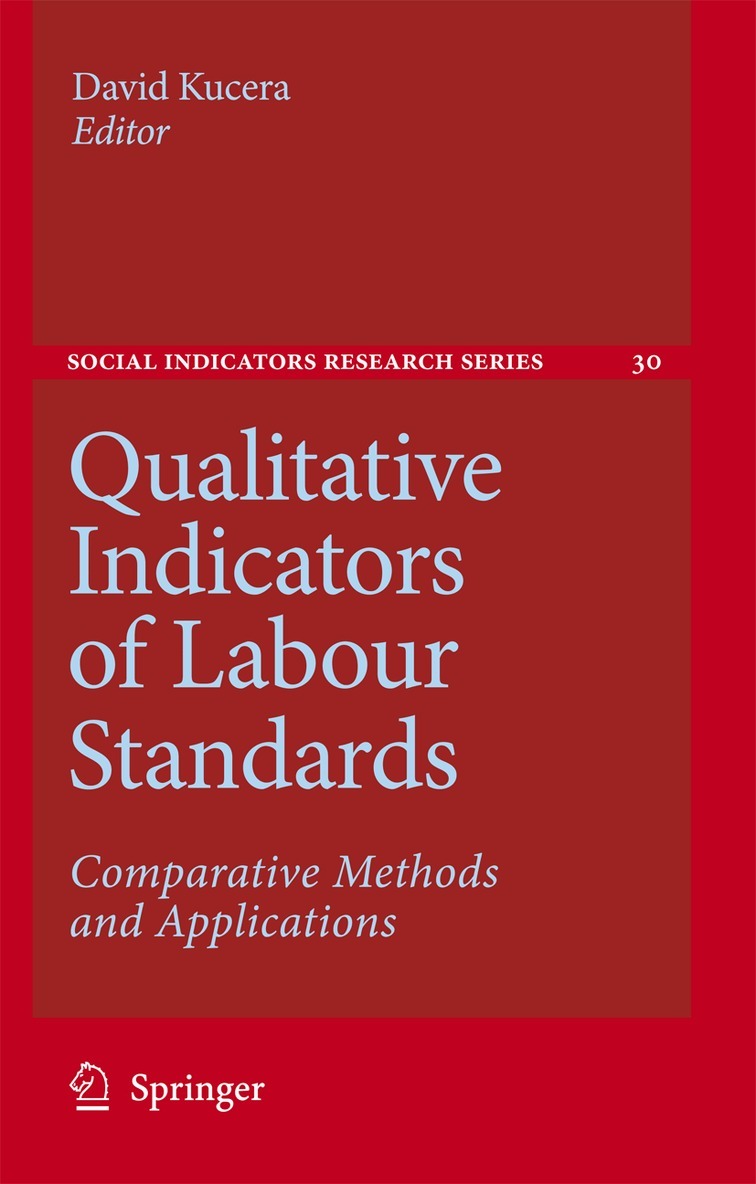
Qualitative Indicators of Labour Standards
Comparative Methods and Applications
Inbunden, Engelska, 2007
979 kr
Skickas inom 10-15 vardagar
Recent years have witnessed a rapidly growing interest in the use and construction of "qualitative" indicators of labour standards.Qualitative indicators, while generally having numerical values, are based on such methods as grading by experts, the coding of legislation, and the coding of other textual sources addressing violations of a more de facto nature. Measuring compliance with labour standards is an undertaking intrinsically fraught with difficulty. For there are a number of possible sources of measurement error, both random and non-random, that are unique to such indicators, on top of those that affect qualitative and quantitative indicators alike. The growing use of qualitative indicators of labour standards thus raises a number of questions about comparative methods of construction as well as the appropriateness of particular methods for particular applications. This volume results from a seminar that was organized to address these and related questions.
194 kr
Skickas inom 5-8 vardagar
319 kr
Skickas inom 5-8 vardagar
Qualitative Indicators of Labour Standards
Comparative Methods and Applications
Häftad, Engelska, 2010
979 kr
Skickas inom 10-15 vardagar
Recent years have witnessed a rapidly growing interest in the use and construction of "qualitative" indicators of labour standards.Qualitative indicators, while generally having numerical values, are based on such methods as grading by experts, the coding of legislation, and the coding of other textual sources addressing violations of a more de facto nature. Measuring compliance with labour standards is an undertaking intrinsically fraught with difficulty. For there are a number of possible sources of measurement error, both random and non-random, that are unique to such indicators, on top of those that affect qualitative and quantitative indicators alike. The growing use of qualitative indicators of labour standards thus raises a number of questions about comparative methods of construction as well as the appropriateness of particular methods for particular applications. This volume results from a seminar that was organized to address these and related questions.